
Bank of America Q2 Preview: Steady Growth, Digital Push, and Rising Costs in Focus

Shearing sheep
July 14, 2025
GoGPT Summarizes Articles
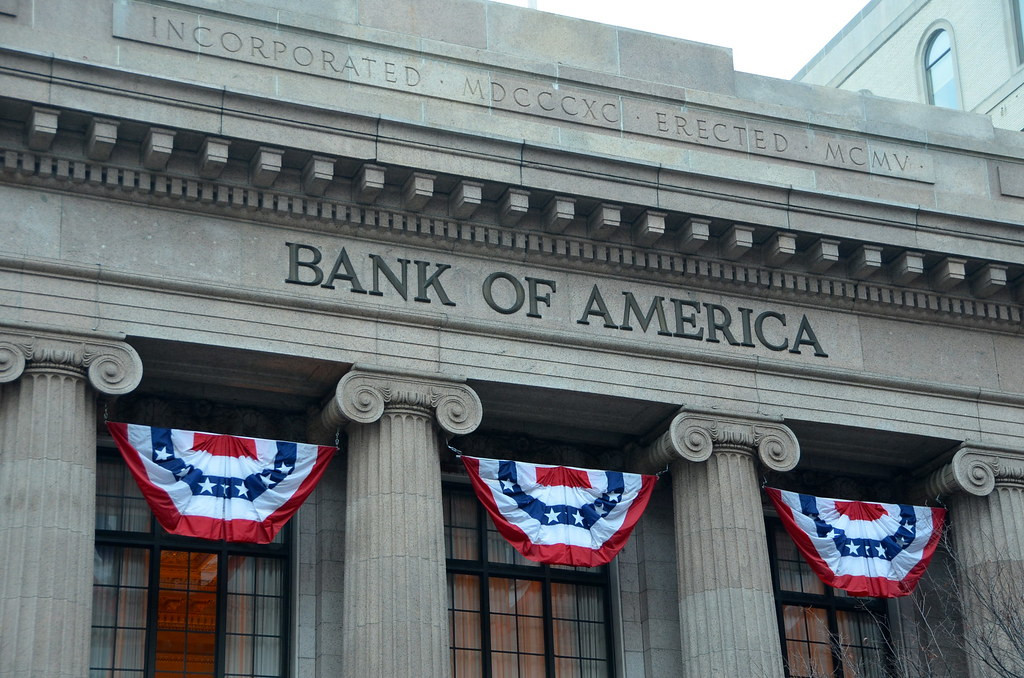
Bank of America ($BAC) is set to unveil its Q2 2025 earnings before the U.S. markets open on July 16, with the investor call scheduled for 8 a.m. ET. While consensus forecasts are positive, the key question remains: can the bank balance near-term cost pressures with its medium-term growth ambitions?
Revenue and Earnings Projections
Wall Street analysts expect Bank of America to report earnings of $0.86 per share, up 3.6% year-over-year, with revenues forecast at $26.61 billion, a 4.9% increase from the same quarter last year. Notably, consensus EPS estimates have been revised up by 0.8% over the past 30 days, suggesting rising analyst confidence heading into the release.
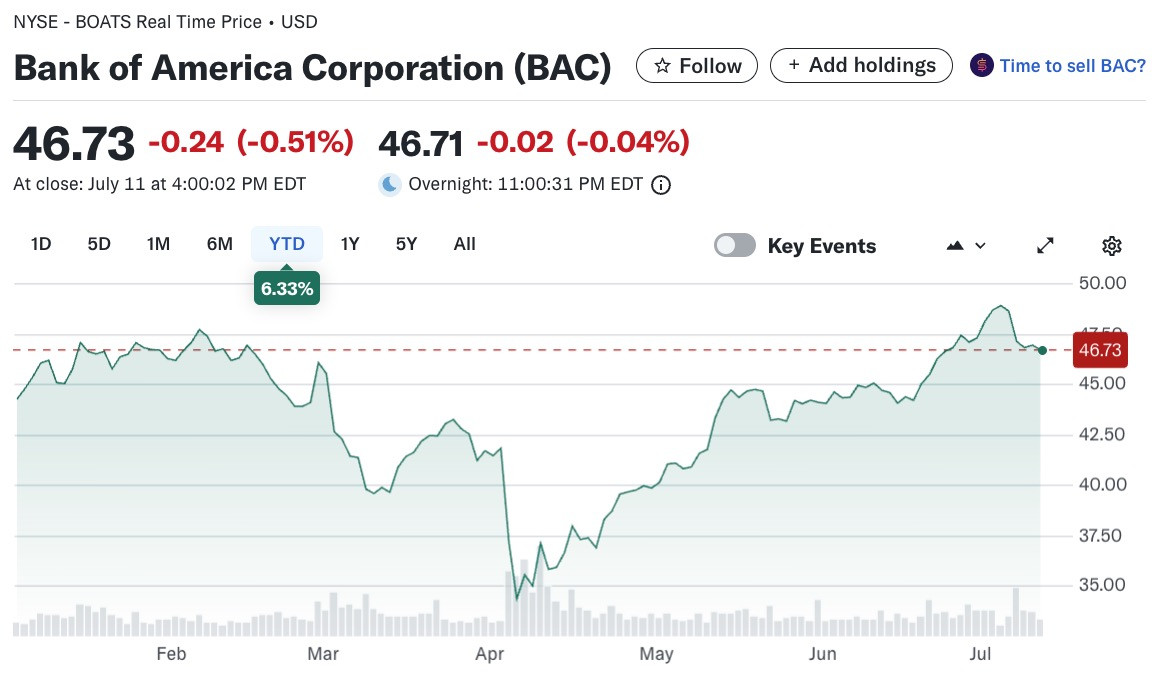
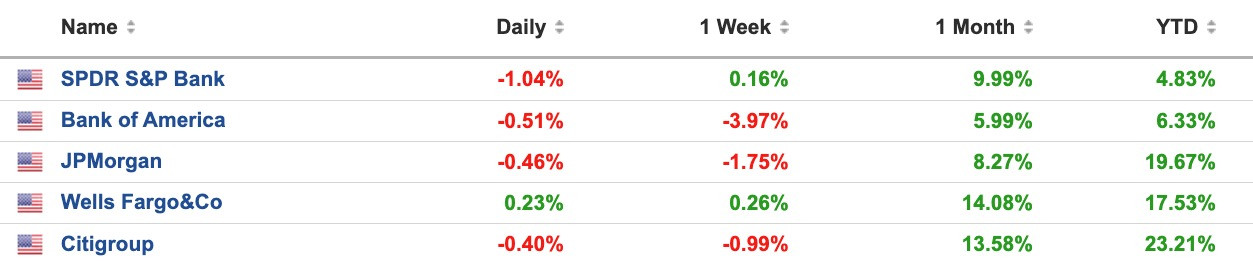
Year-to-date, BAC shares are up approximately +6.33%, trailing peers such as JPMorgan $JPM (+19.67%), Wells Fargo $WFC (+17.53%), and Citigroup $C (+23.21%), yet still outperforming the broader bank ETF ($KBE), which has gained 4.83%. This modest performance may reflect investor caution toward BAC’s expense-heavy growth strategy.
Key Growth Driver: Net Interest Income (NII)
A central pillar of Bank of America's growth outlook is its net interest income. The bank projects 6–7% NII growth for 2025, supported by solid loan demand, robust deposit balances, and a "higher-for-longer" rate environment. Management expects sequential NII growth throughout the year, with Q4 guidance of $15.5 billion to $15.7 billion, implying an 8.7% increase over current levels.
This momentum highlights BAC’s potential to expand its net interest margin and drive medium-term profitability without being overly exposed to interest rate volatility.
Complementing this is the bank’s aggressive branch expansion. BAC plans to open over 150 new financial centers by 2027, targeting both new and existing markets to enhance customer engagement and fuel NII growth. This underscores BAC’s commitment to a hybrid strategy of physical presence and digital integration.
Digital Engagement and Cross-Selling
Alongside its physical expansion, Bank of America continues to push forward with digital transformation. Its AI-driven virtual assistant Erica now accounts for over 2.5 billion interactions, while total digital client engagements have surpassed 26 billion. Peer-to-peer payments through Zelle also remain a key engagement tool.
These efforts go beyond efficiency—they support BAC’s broader cross-selling strategy. By seamlessly integrating digital and branch services, the bank aims to increase penetration in areas like mortgages, auto loans, and credit cards, ultimately boosting non-interest income and client stickiness.
The Challenge: Rising Expenses
The downside to this growth strategy is rising costs. Management expects non-interest expenses to increase 2–3% in 2025, primarily due to investments in new branches, renovations of existing centers, and continued tech enhancements. While these expenses are part of a long-term growth plan, investors will be looking for reassurances on cost control and margin stability during the earnings call.
Capital Return Outlook
Bank of America’s recent stress test results highlighted its capital strength, leading the company to announce an 8% dividend increase to $0.28 per share, effective Q3. In Q1, BAC also repurchased $4.5 billion of its own shares—the highest quarterly buyback since 2019. Its Common Equity Tier 1 (CET1) ratio remains strong, providing ample flexibility amid evolving regulatory and macro conditions. Meanwhile, Moody’s has reaffirmed the bank’s stable long-term credit outlook.
Analyst Ratings
Despite underperformance versus peers, analysts maintain a generally constructive stance on BAC:
-
J.P. Morgan raised its target from $43.50 to $48, maintaining a Buy rating.
-
Citigroup raised its target from $51 to $54, also maintaining Buy.
-
Stifel moved to $53, Buy.
-
Wells Fargo reaffirmed its Buy rating with a target of $56.
-
Truist upgraded to $53, Buy.
-
HSBC, while lifting its target to $51, downgraded the stock to Hold.
-
RBC maintained an Outperform rating with a target of $53.
Across the board, the 12-month price target range spans $42 to $57, with the average clustered between $50 and $51—suggesting moderate upside from current levels.
My Take
Bank of America heads into Q2 earnings from a position of steady strength—buoyed by stable revenue growth, digital momentum, and consistent capital returns. However, rising costs and lagging share performance relative to peers continue to cloud sentiment.
The earnings call will be crucial. Investors will look for clarity on three fronts:
-
Can the bank maintain its 6–7% NII growth target?
-
Is expense growth under control, or will it drag margins further?
-
Are new branches delivering measurable value?
If BAC can reinforce confidence in its expansion strategy while showing discipline on costs and capital return, the stock may finally start to close the gap with its peers. But if margin concerns persist, the market may continue to price in a cautious stance.
#Q2 Earnings Hunter: Share Your Stories#$Bank of America Corporation(BAC)#$JPMorgan Chase & Co.(JPM)#$Wells Fargo & Co.(WFC)#$Citigroup Inc.(C)#$SPDR S&P Bank ETF(KBE)