
Trump Talks 200% Tariffs on Drugs but Pharma Stocks Barely Flinch

When a U.S. president threatens an entire industry with 200% tariffs, you’d expect panic. But this time, Wall Street didn’t blink.
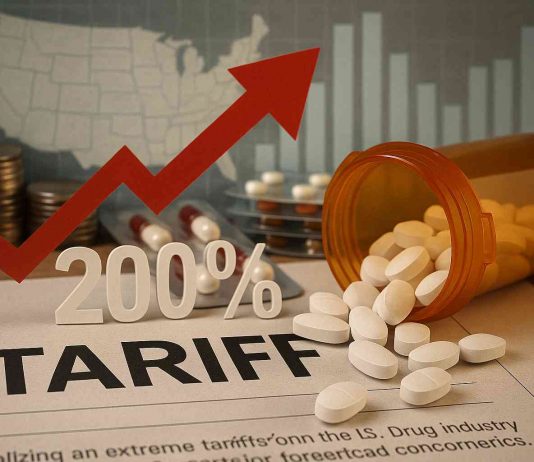
Since Donald Trump said on Tuesday that imported pharmaceuticals could face massive new tariffs, the NYSE Arca Pharmaceutical Index has actually inched up—outperforming the broader market. The S&P 500 stayed flat over the same period.
That might sound puzzling, but there’s a reason. For investors, it’s not the size of the tariff that matters. It’s the timing.
A Threat with a Long Runway
Trump did drop the eye-popping 200% figure. But he also added a key detail: a generous grace period.
“We’re going to give people about a year, year and a half,” he said, referring to the time companies would have to adapt before tariffs kick in.
For Wall Street, that sounded more like a warning shot than a policy about to land. And analysts quickly did the math. If the grace period starts late this year and lasts 18 months, that pushes the real impact to sometime in 2027. Add in stockpiling, and the industry might be able to delay the hit until 2028 or beyond. That’s more than enough time to build out new drug manufacturing capacity in the U.S.—a process that typically takes 3–4 years.
Tariffs as a Nudge Not a Hammer
Trump’s goal isn’t necessarily to collect more tariffs. It’s to force drug companies to bring production home. And by that measure, he’s already making progress.
The industry has responded in two big ways. First, it’s been hoarding supply. According to The Wall Street Journal, U.S. imports of hormone-based drugs from Ireland—used in blockbuster weight-loss and diabetes treatments—have surged to $36 billion so far this year, more than double last year’s total. That’s stockpiling in action.
Second, companies are starting to spend serious money to ramp up domestic manufacturing. Eli Lilly, for example, has committed to investing $27 billion to expand its U.S. production footprint.
Why Pharma Left in the First Place
Pharmaceutical companies didn’t shift production overseas by accident. It was about taxes.
Countries like Ireland offer ultra-low corporate tax rates, and companies can register their intellectual property there to reduce global tax burdens even further. Moving production back to the U.S. means higher tax bills—unless there’s something to offset the cost.
That’s where Trump’s “Big Beautiful Bill” comes in. The legislation allows companies to immediately deduct R&D and capital spending, and raises the cap on interest expense deductions. In short, it makes building in America a lot more affordable.
So How Much Will It Hurt? Maybe Not That Much
Take Merck, for example. The company is planning to manufacture a new version of its blockbuster cancer drug Keytruda in the U.S. According to analysts at Jefferies, even with tariffs, smart moves like early stockpiling, phasing in production shifts, and trimming costs could reduce the earnings hit to just 1%–2% by 2027–2028.
That’s actually less than the impact Jefferies previously estimated for a smaller 25% tariff—because the current plan allows more time and more flexibility.
Deals Are Back as the Sector Adjusts
Another sign that pharma isn’t panicking: big deals are back on the table.
Merck just announced a $10 billion acquisition of Verona Pharma. That follows Eli Lilly’s $1.3 billion agreement to buy Verve Therapeutics and other recent transactions. The return of deal activity suggests that the sector is adapting to the new normal under Trump’s second term—and learning to live with policy uncertainty.
A Rare Alignment Between Policy and Industry
If things go the way the White House intends, the U.S. pharmaceutical supply chain could look very different by the end of Trump’s term—with more cutting-edge drug production taking place on American soil.
And surprisingly, that could work out for both sides. The administration gets to claim a manufacturing win. Pharma companies get predictability, a long transition period, and some financial carrots to ease the pain.
Looking Ahead
This isn’t just about pharma. The bigger message here is that strategic self-sufficiency is back on the policy agenda in Washington—and that message is getting louder.
For companies that rely heavily on global supply chains, the key question now is: Who’s next?