
Highlights of the Hedge Fund Company Coatue Has Released Its Annual Investment Market Report

Hedge fund company Coatue has released its annual investment market report, a 102-page PPT packed with information. Here are the key highlights:
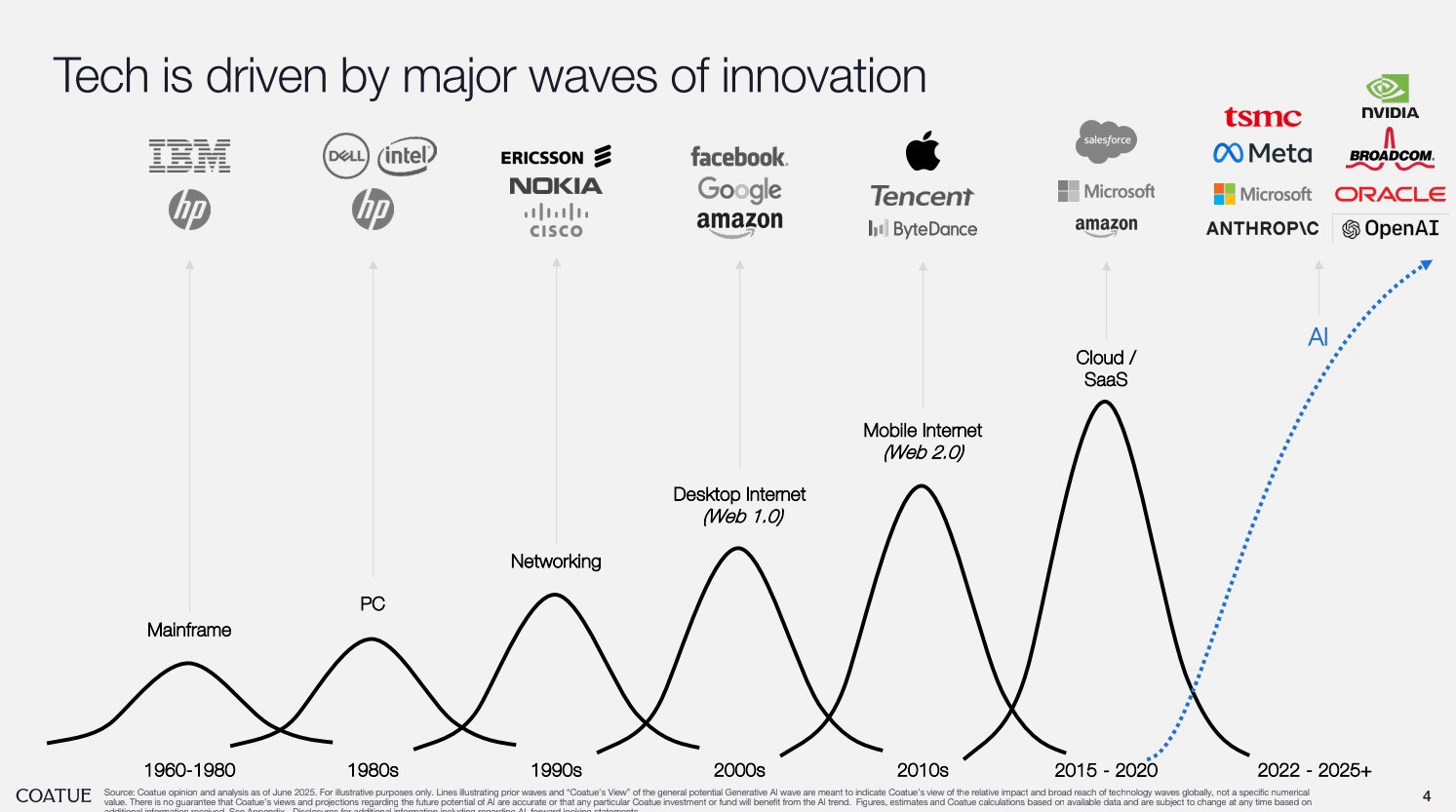
1 - From a macro perspective, the cycle of technological innovation is accelerating. New opportunities are now occurring every 3-5 years instead of every 10-20 years, with each generation having a greater impact than the last.
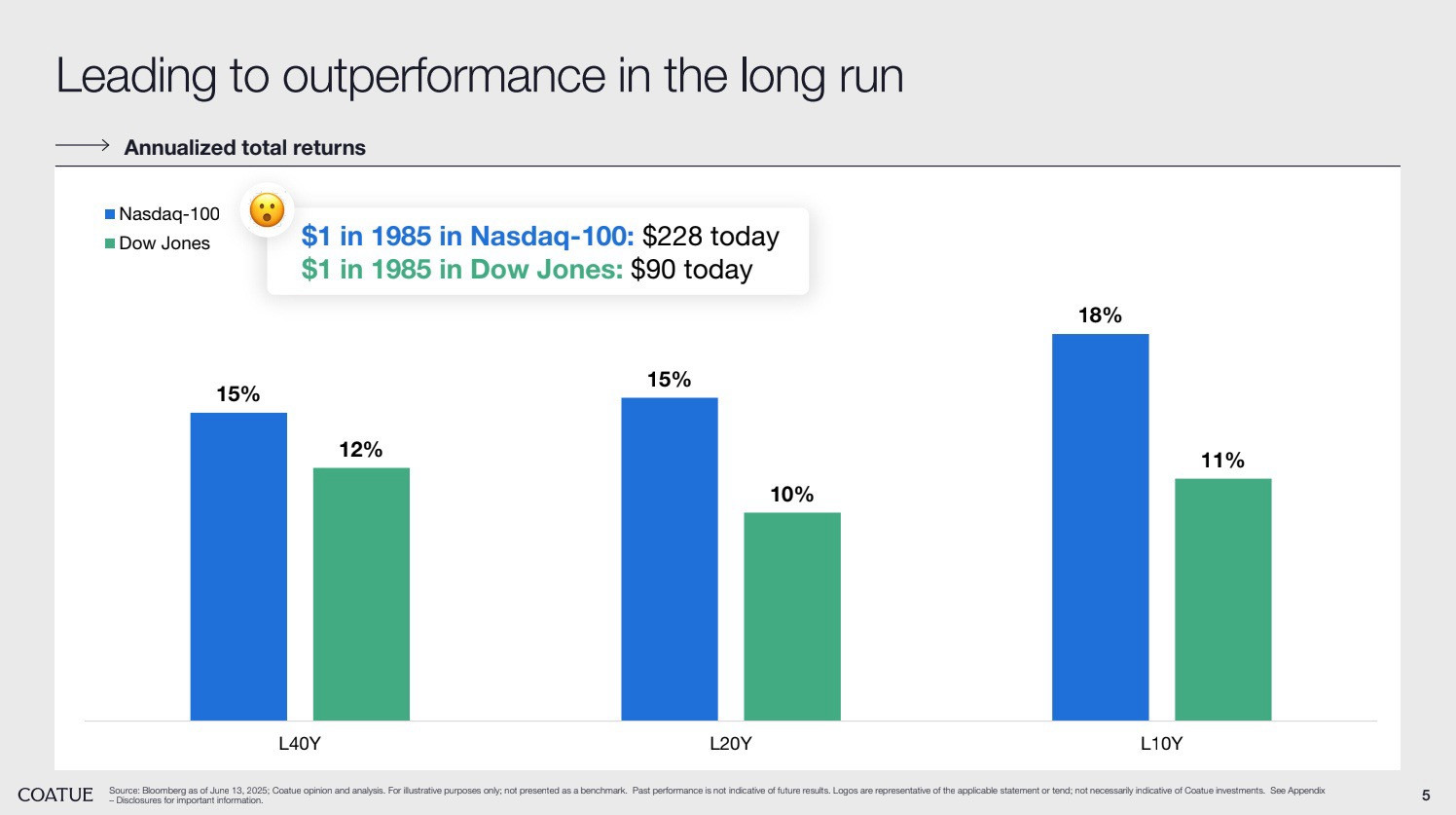
2 - Over the past 40 years, the tech industry has far outperformed industrial/blue-chip stocks. A $1 investment in 1985 would yield returns of 228 times for NASDAQ and 90 times for Dow Jones today.
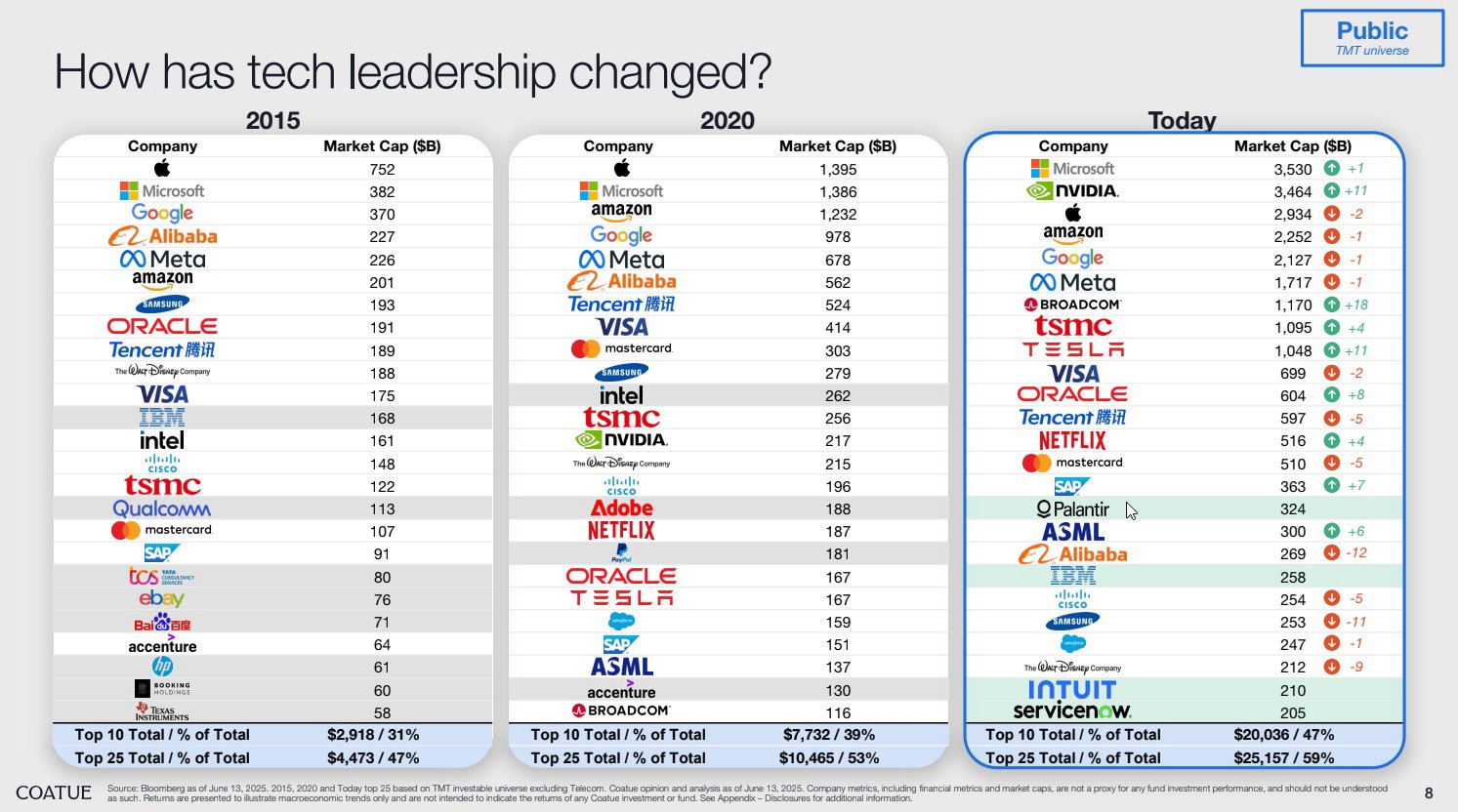
3 - The trend of performance-based dominance is also evident in tech companies' distribution. In 2015, the total market cap of the Top 10 was only $2.9 trillion, accounting for 31% of the industry. This year, it has reached $20 trillion, representing 47% of the total market value.
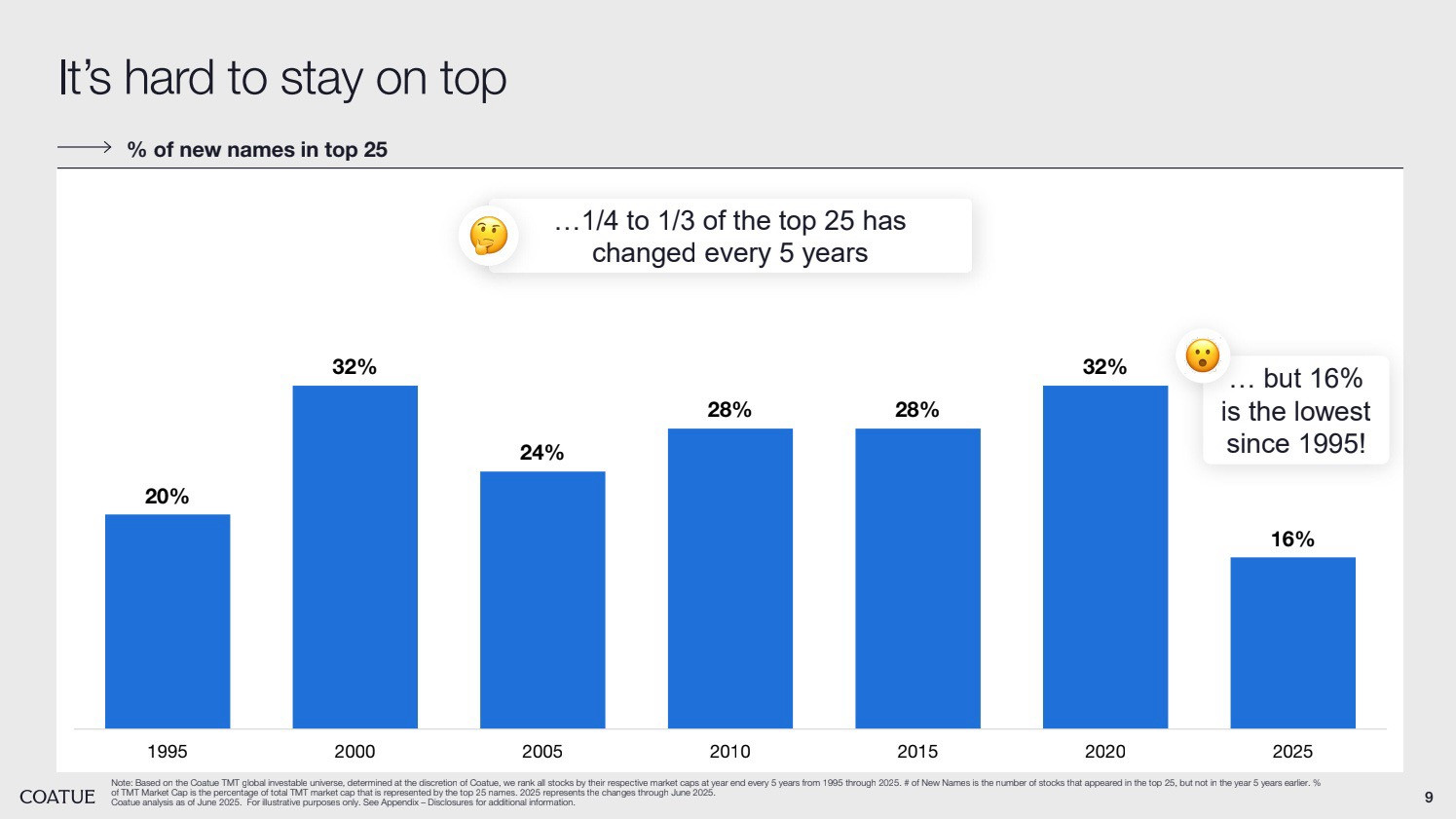
4 - Maintaining leadership is not easy. Every year, 20%-30% of top companies fall behind. However, this year has seen the most pronounced "class solidification" with only a 16% turnover rate, partly due to the year not being over yet.
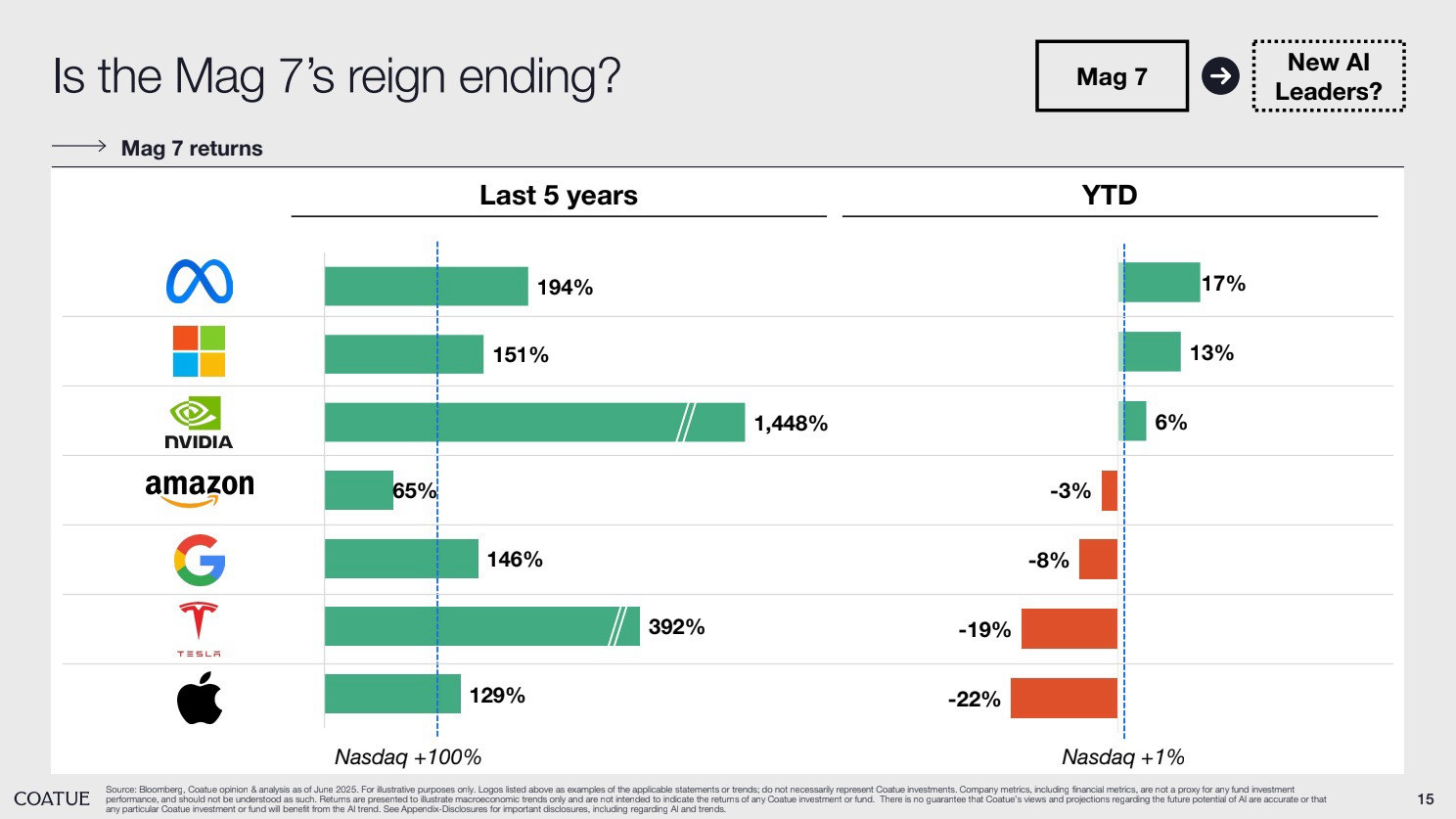
5 - Tech giants represented by the "Mag 7" have entered an overall correction period this year. Compared to the high growth of the past 5 years, 4 out of 7 companies have experienced varying degrees of decline.
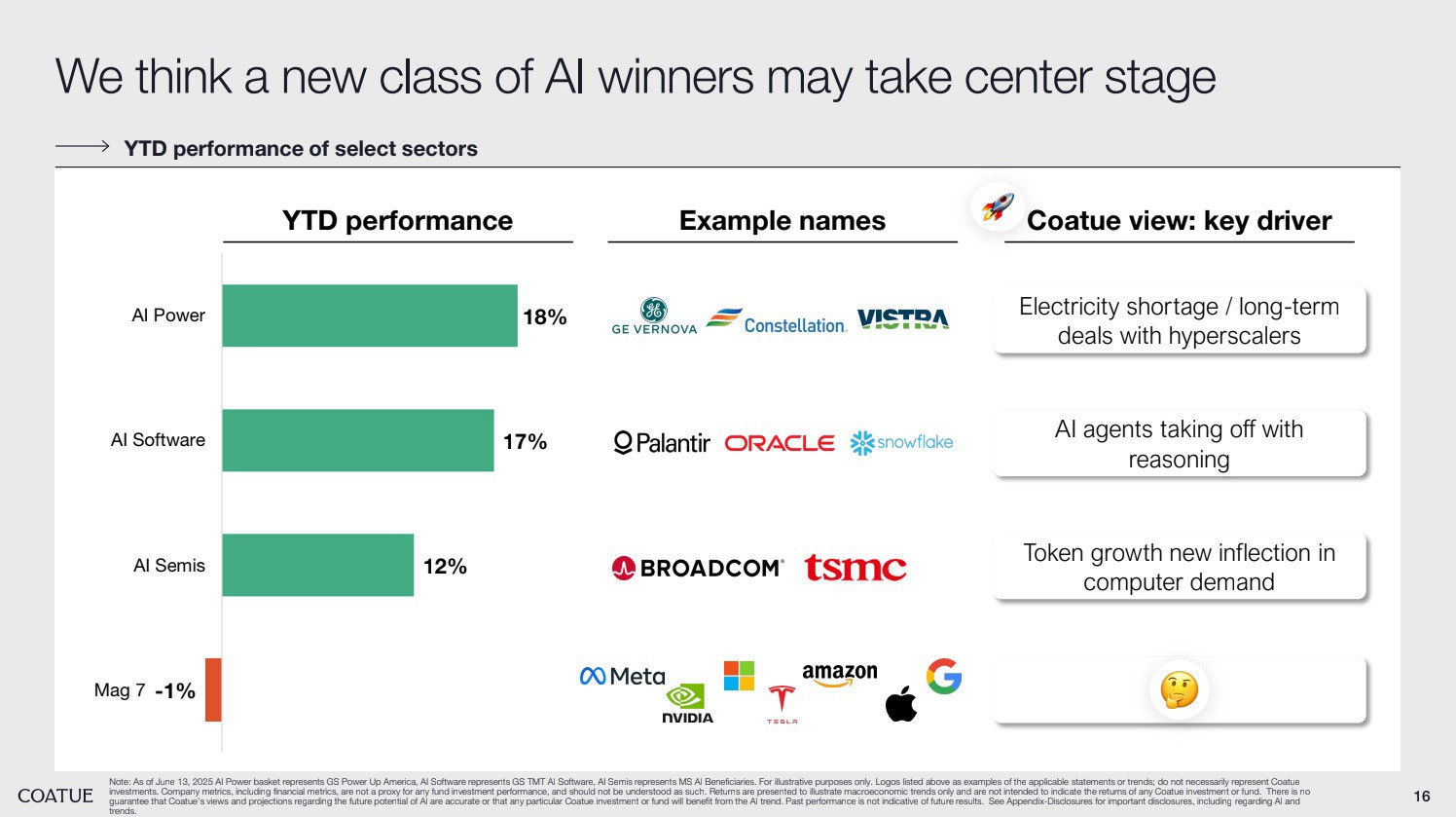
6 - As old leaders exhaust their strength, new ones arise. AI infrastructure has performed well in the secondary market this year, with double-digit growth in energy, software, and semiconductors.
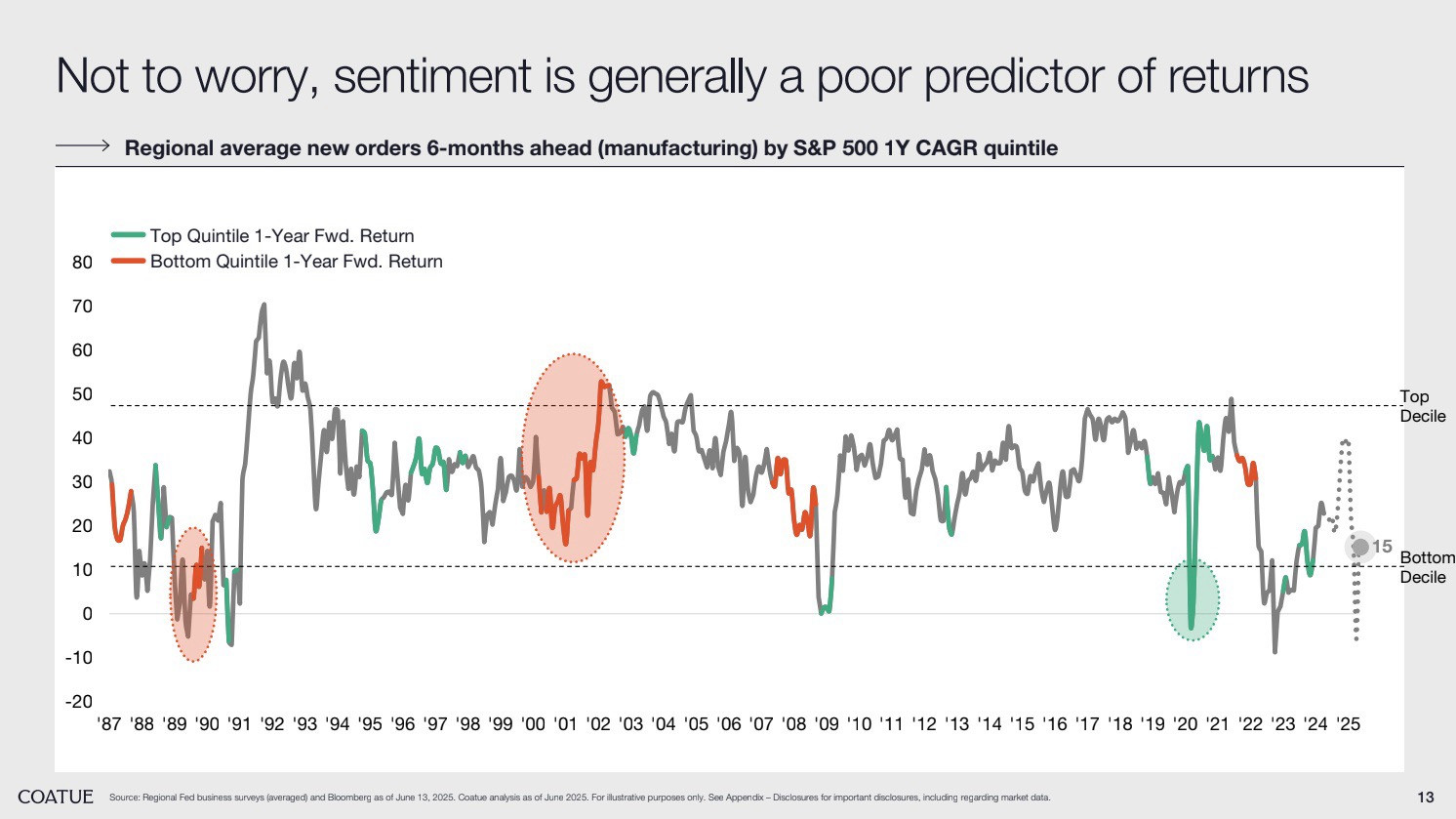
7 - Divergence between market and sentiment remains common. There's a 20% chance of achieving the highest annual return when buying the S&P 500 index during low confidence periods. Warren Buffett's "Be greedy when others are fearful" principle is gaining more value.
8 - ChatGPT's growth is "unprecedented." Not only in consumer business, but the proportion of paying enterprise users has also increased from 28% two years ago to 42%, while Google's traffic has decreased by 8%.

9 - OpenAI has achieved unprecedented funding levels, surpassing the sum of the largest annual financings in the primary market over the past 6 years, akin to receiving an unlimited credit card.

10 - AI has reactivated venture capital and become the core driver of capital flow.
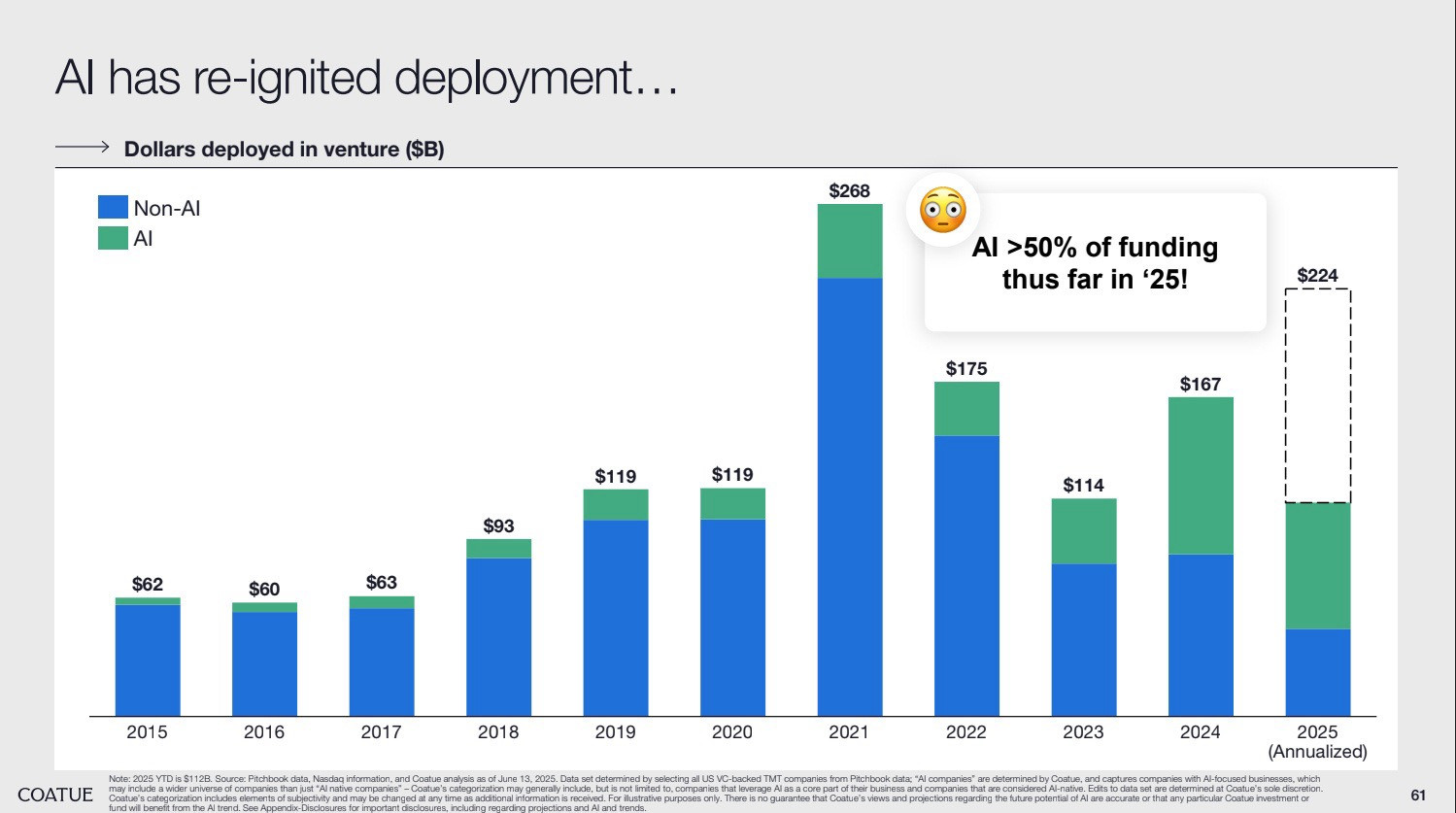
11 - Although 2021 looked prosperous, it was the result of zero-interest rate loose policies, with poor actual returns.
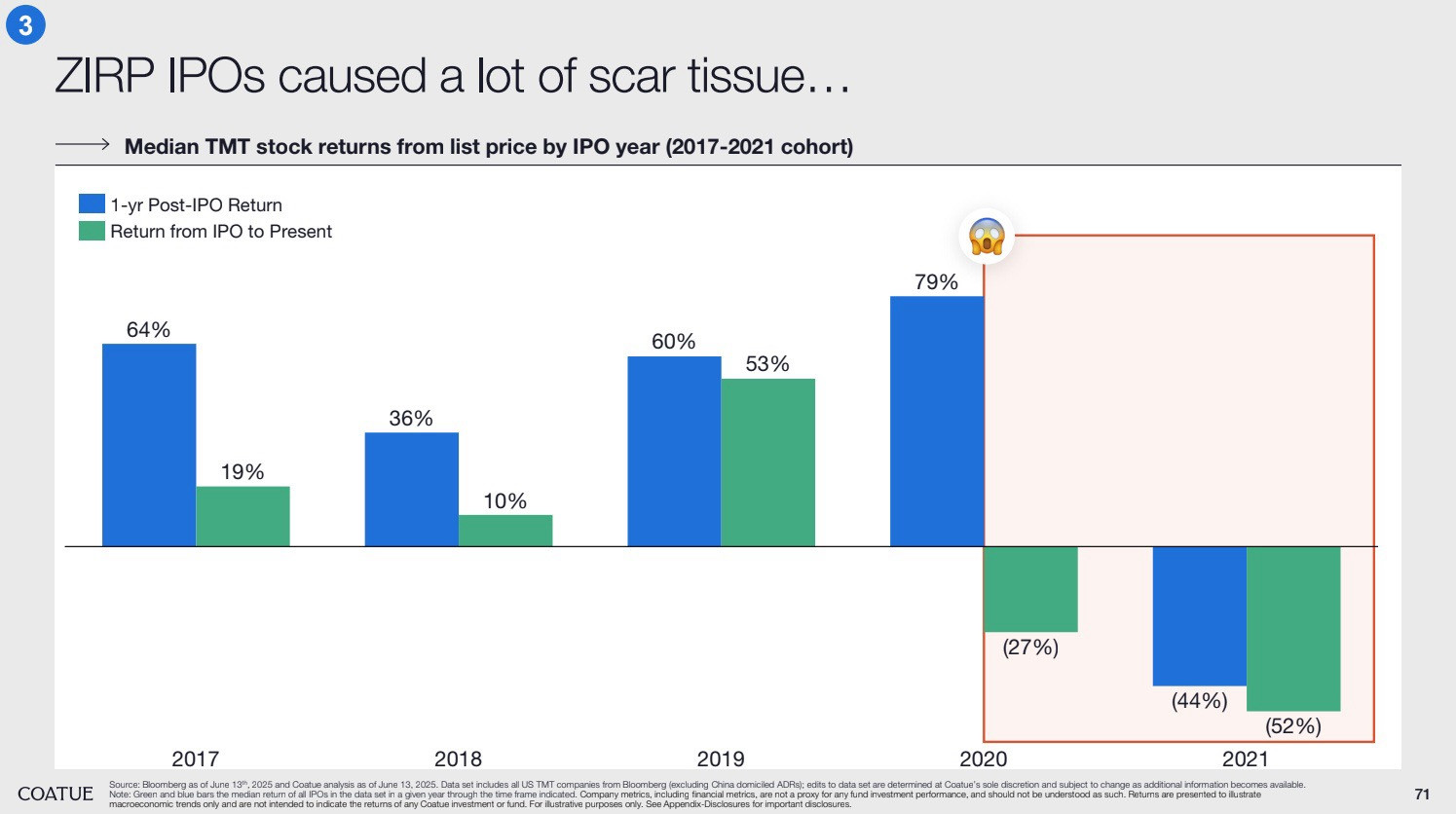
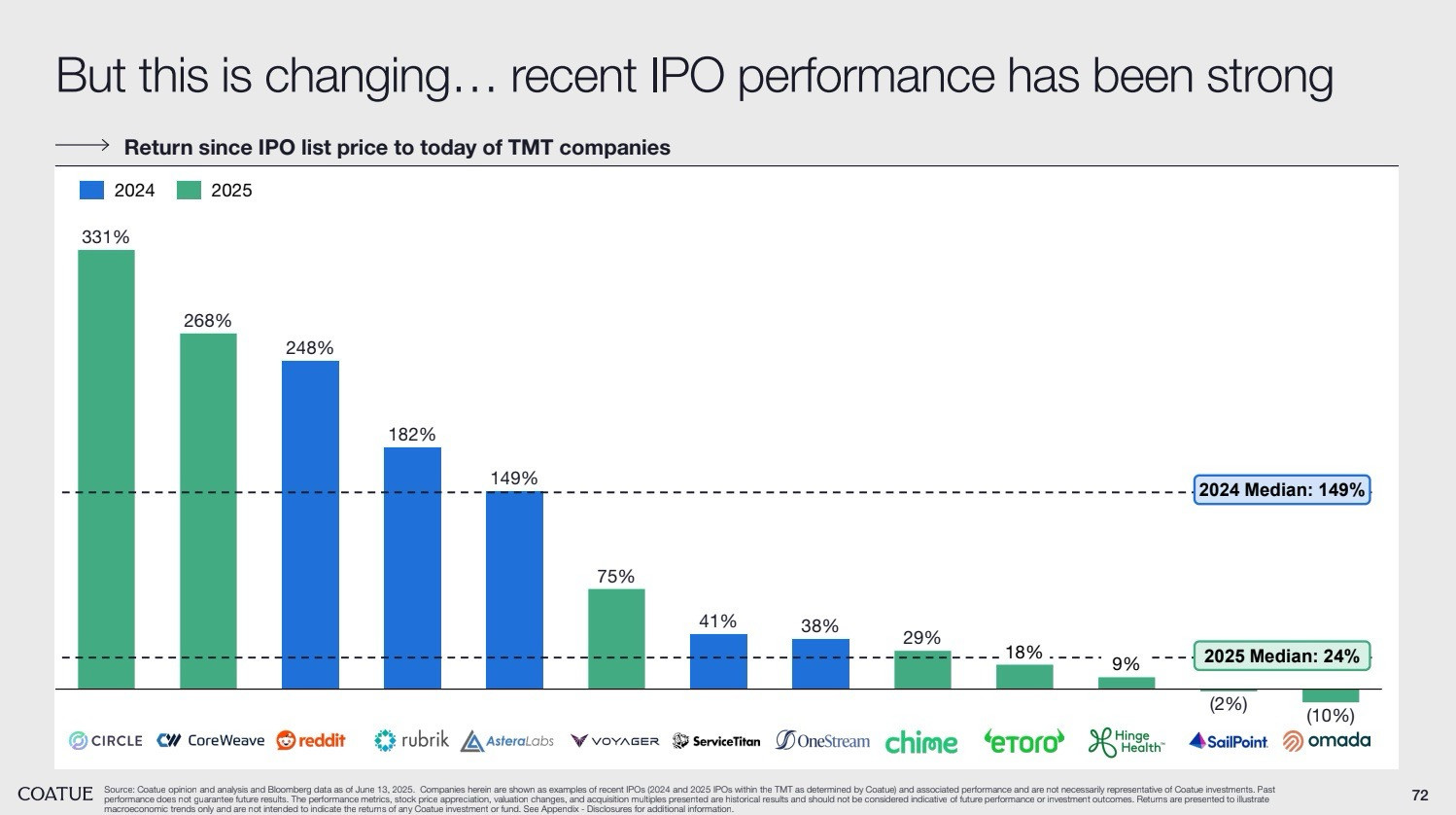
12 - Fortunately, this "trauma" is being repaired, with improvements in investment, M&A, exit activity, and return rates.
13 - Models are the hottest investment track in the AI industry, accounting for 62% of capital expenditure, followed by infrastructure at 14%, applications at 13%, robotics at 7%, and semiconductors at 4%.
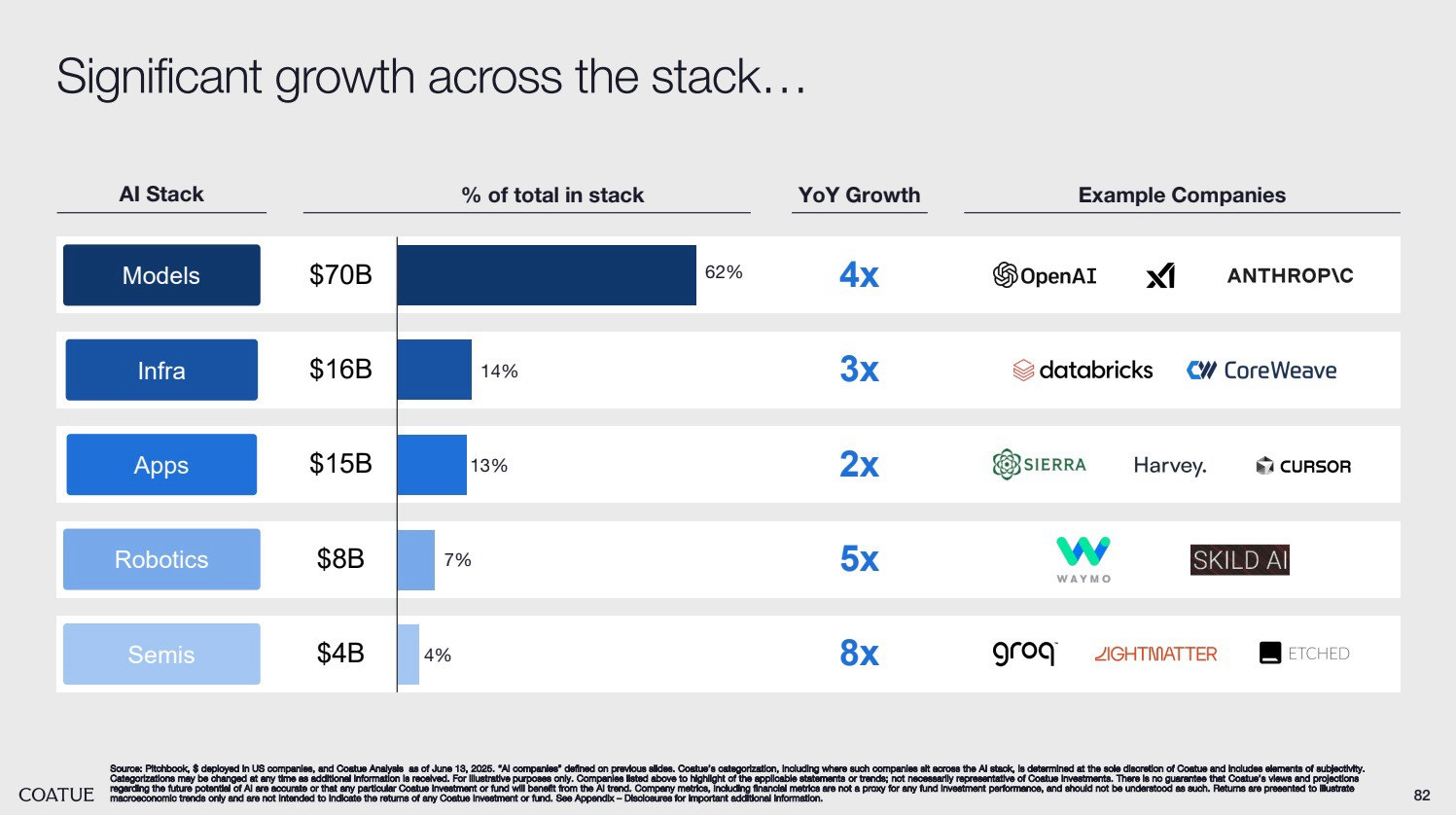
14 - Mainstream AI companies have collectively added $15 billion in annualized revenue in 2 years, which is quite strong. Token consumption has increased 6-fold in 12 months.

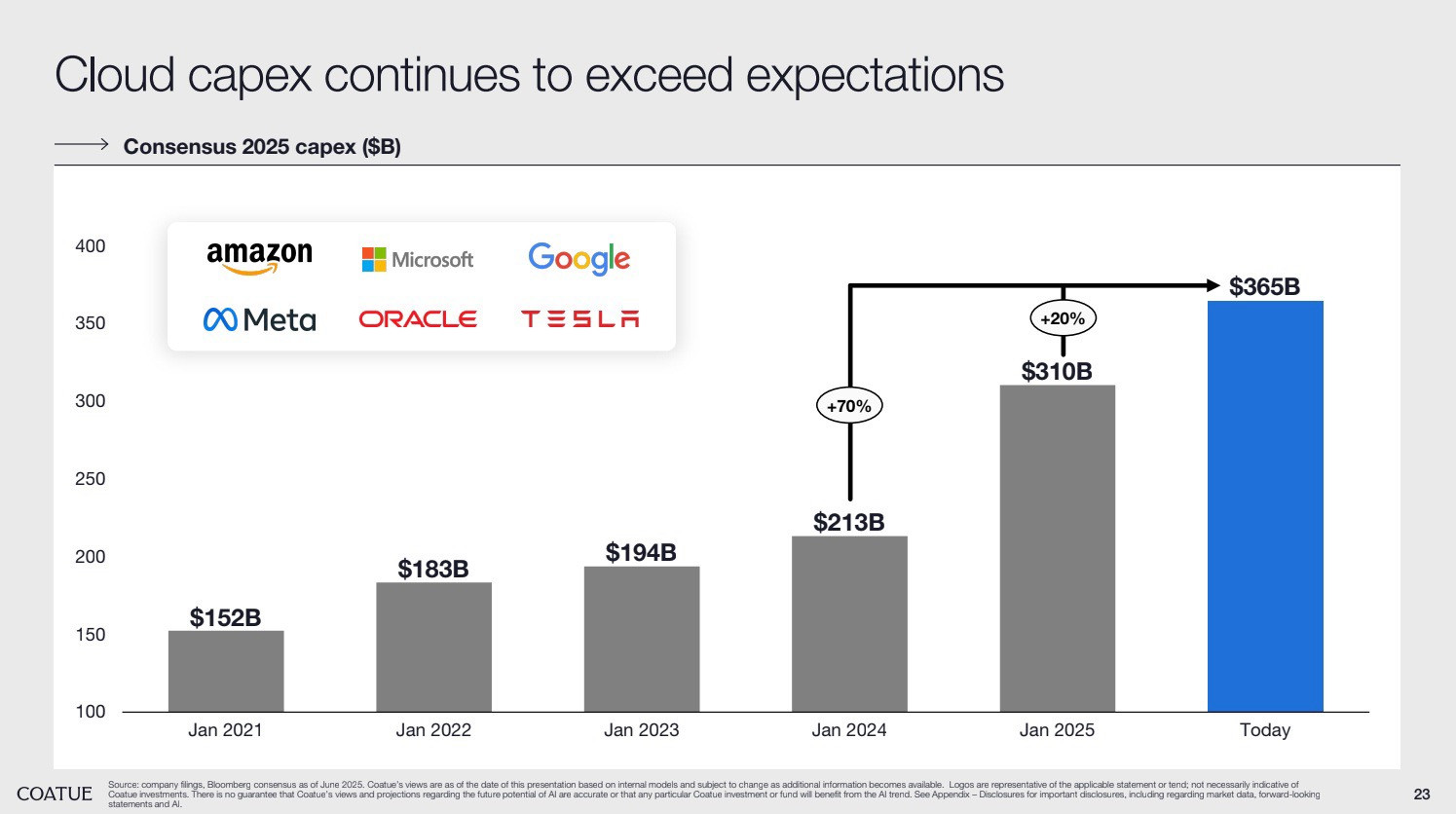
15 - Cloud services are thriving, continuing to serve as an excellent business model, expected to create $365 billion in value this year.
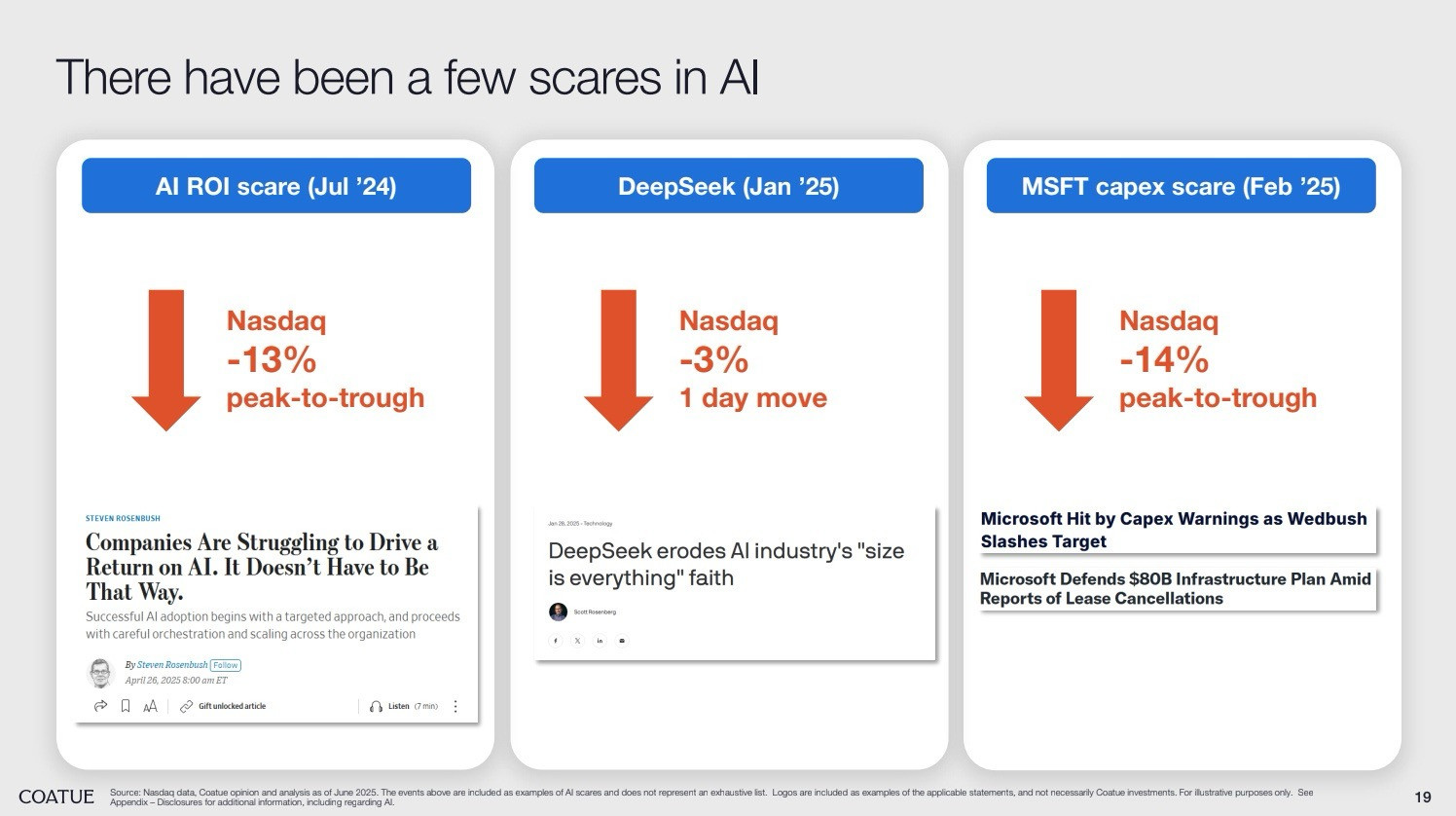
16 - Increased global uncertainty has made NASDAQ more sensitive. There have been at least 3 declines due to external influences in the past year: WSJ leading the pessimism about AI being a bubble, DeepSeek's sudden emergence, and Microsoft's rating downgrade by investment banks due to high expenses.
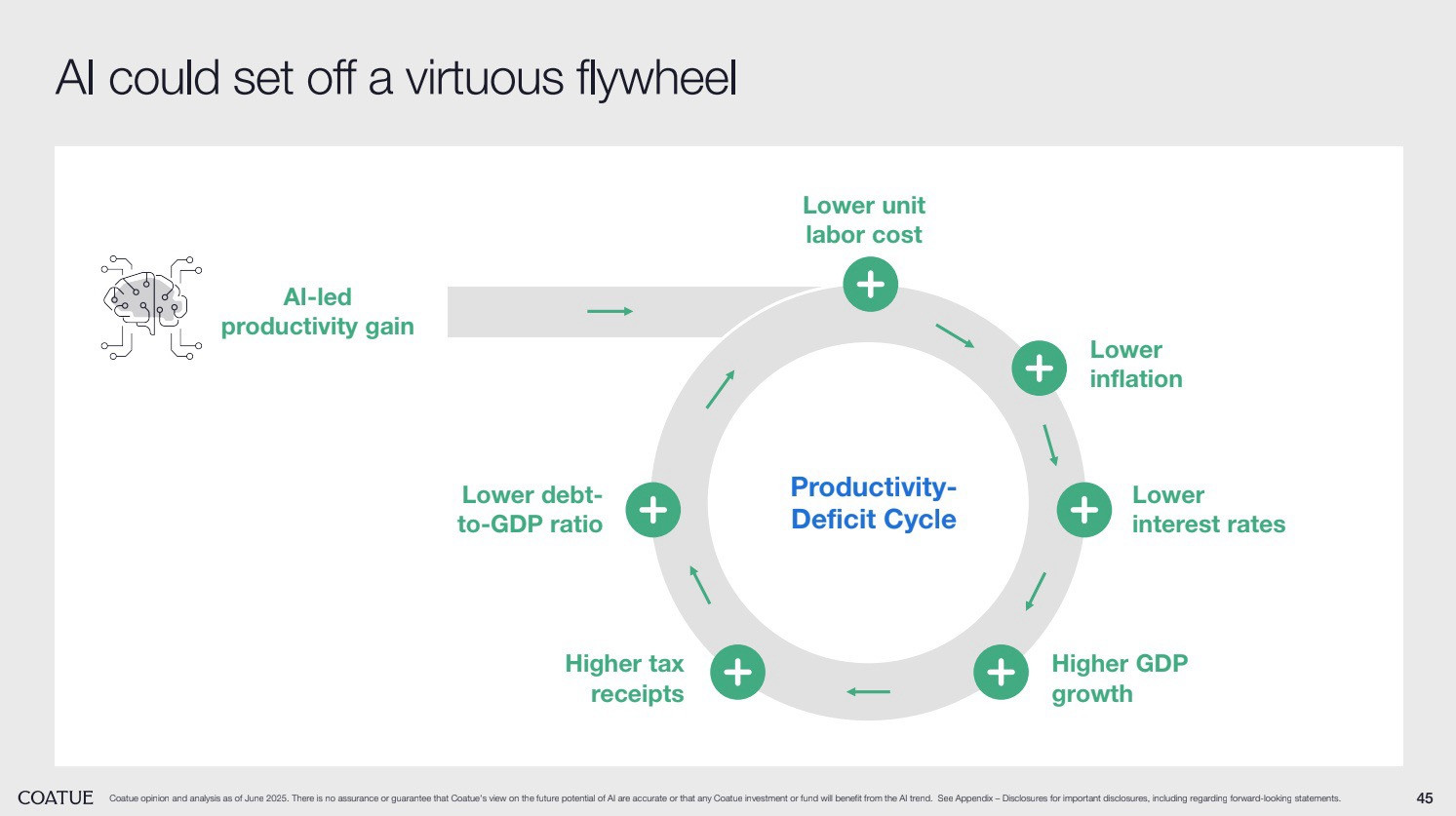
17 - Overall, optimism outweighs pessimism. The flywheel effect brought by AI involves productivity improvement - cost optimization - lower inflation - lower interest rates - GDP growth - active fiscal policies - capital investment - productivity improvement.
Finally, Coatue compared the indexed prices of Bitcoin, gold, and NASDAQ, finding that Bitcoin had both the largest gains and losses, exemplifying the saying "wealth and honor are sought in danger.."