
Jensen Huang: Nvidia to Start Selling H20 Chips to China

On July 15, Nvidia announced it is resubmitting an application to resume sales of its H20 GPU.
The U.S. government has assured Nvidia that it will grant the necessary licenses, with the company hoping to begin deliveries as soon as possible.
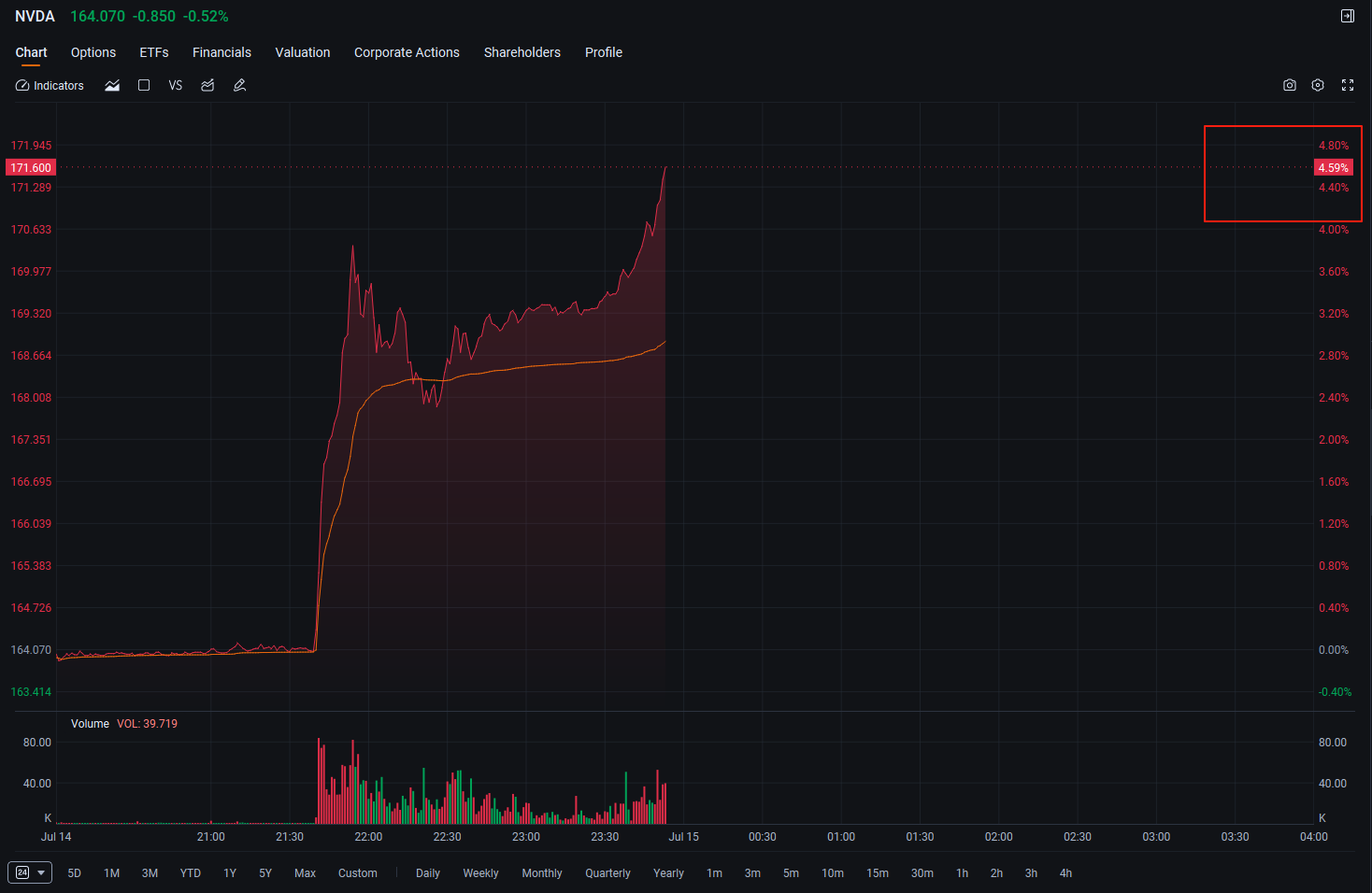
As of this writing, Nvidia's after-hours stock price has risen nearly 5%, with market sentiment generally optimistic.
Simultaneously, Nvidia is launching a new, fully compatible RTX PRO GPU tailored for the Chinese market. The H20, an AI chip previously “custom-made” for China, was added to U.S. export controls in April this year.
Nvidia founder and CEO Jensen Huang stated in an interview: “The U.S. government has approved our export license, and we can start shipping, so we will begin selling H20 to the Chinese market. I’m incredibly excited to ship H20 soon; it’s truly a very, very good piece of news.
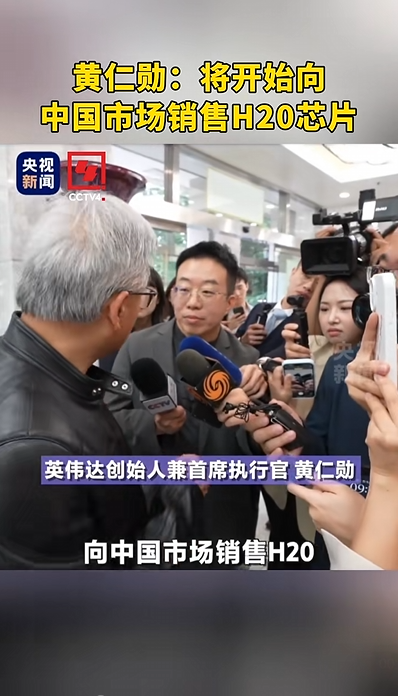
Jensen Huang gives an interview in China
Past Background
The U.S. government decided in April this year to ban Nvidia from selling its H20 chips to the Chinese market.
The H20, launched to comply with U.S. export restrictions, is an AI accelerator designed specifically for the Chinese market.
Based on Nvidia’s Hopper architecture with advanced CoWoS packaging technology, the H20 is better suited for vertical model training and inference but cannot meet the needs of trillion-parameter large model training, with overall performance slightly higher than the 910B.
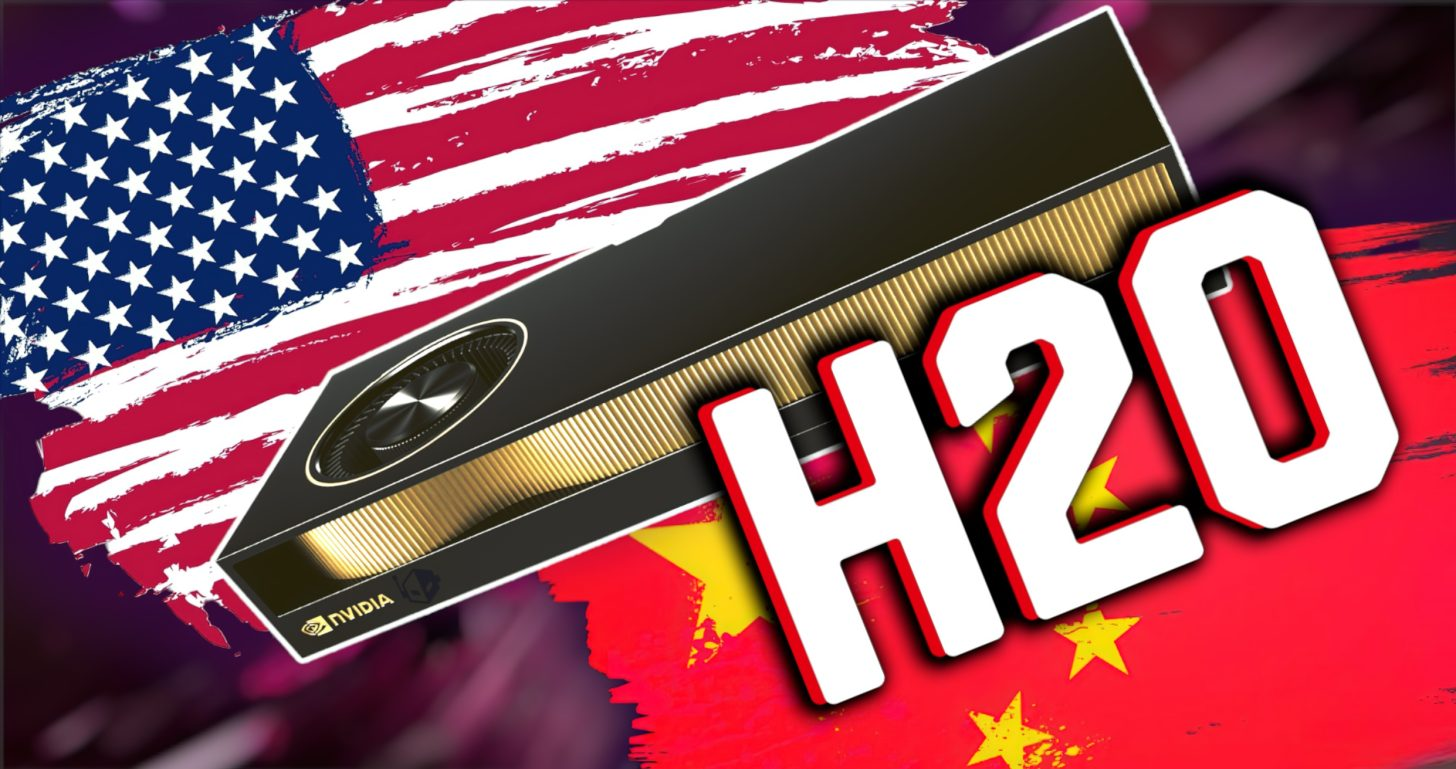
The H20 was launched at the end of 2023 and was the most advanced Nvidia chip legally available to Chinese buyers for AI large model training and inference.
Compared to the H100, which Nvidia primarily sells, the H20 underwent significant performance adjustments.
Nvidia previously stated that, given H20-related inventory and orders, the company will record approximately $5.5 billion in charges in the first quarter of fiscal year 2026 (ending April 27, 2025).
Opinion
Nvidia’s after-hours stock surge already says it all.
If Nvidia resumes chip sales to China, the previous provisions and the drop after the ban could be entirely offset.
We won’t dwell on this—it’s undoubtedly a major positive for Nvidia.
What I’m pondering now is whether the issuance of this Nvidia chip license signals a trend toward eased U.S.-China relations.
I think this is very important. If U.S.-China relations improve, many things could change, with the two giants potentially dominating and overshadowing other nations.
This is something I believe we need to watch closely.