
Structural Shift Behind Hong Kong’s IPO Comeback – Report Decoded
Kevin Insights
July 20, 2025
GoGPT Summarizes Articles
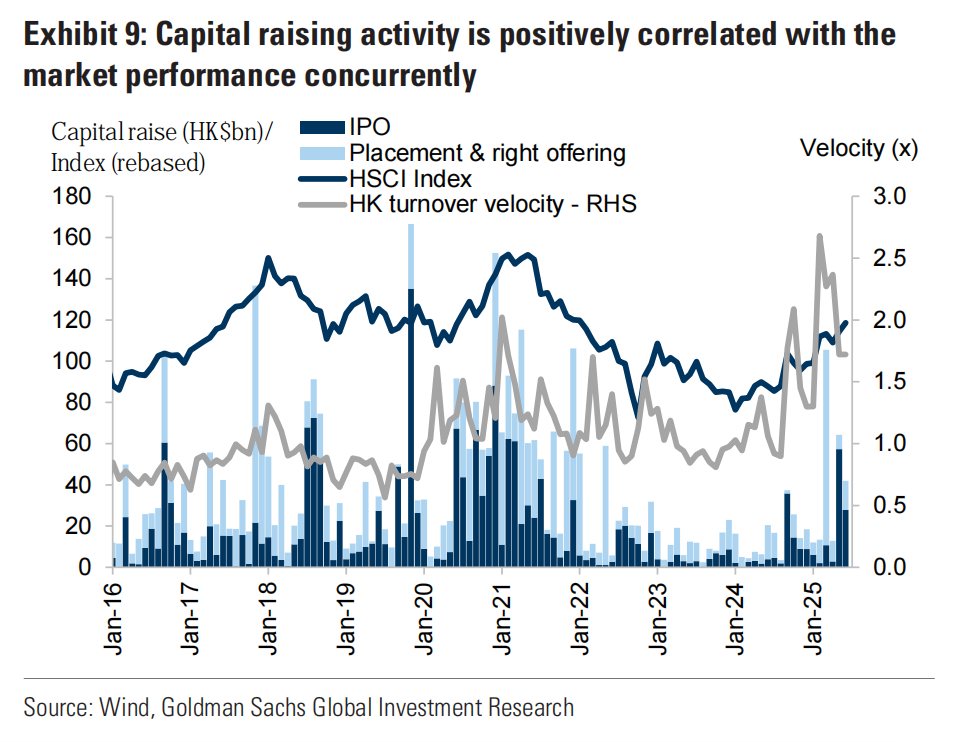
After years in the doldrums, Hong Kong's IPO market is roaring back — and it's more than just a sentiment-driven rally. According to a July 16 report from Goldman Sachs Global Investment Research, the resurgence reflects a policy-fueled structural shift in Asia’s capital landscape, with implications that extend far beyond the city’s skyline.
Momentum by the Numbers
As of mid-July 2025, 51 companies have gone public on HKEX, raising HK$124 billion (~US$15.9 billion). This already surpasses the full-year total for 2024 (HK$88 billion), marking the strongest capital-raising pace in recent memory. With over 200 IPO applications now in the pipeline, momentum is clearly building.
Goldman Sachs calls this a sharp reversal from the post-2021 downturn. Between 2022 and 2024, annual IPO proceeds in Hong Kong averaged just US$10 billion — roughly one-third of the activity seen in the five years prior. The current surge, in their view, represents a fundamental reawakening of the city's capital markets.
Why Now?
Goldman Sachs identifies four structural drivers behind the resurgence:
1. Policy Support from Both Mainland and Hong Kong
-
In April 2024, China’s CSRC introduced its “Five Measures,” encouraging leading mainland enterprises to list in Hong Kong.
-
HKEX, meanwhile, streamlined its listing process and opened new channels for biotech and tech firms, including Weighted Voting Rights (WVR) structures — all part of a coordinated push to attract global capital.
2. Bottlenecks in A-Share Listings
3. Improved Market Sentiment
With the Hang Seng Index up 20% and HSTECH up 17% YTD, global investors are paying attention again. Lower interest rates (HIBOR), AI optimism, and easing U.S.-China tensions are driving capital back into China-linked equities.
4. Rising Demand for Dual Listings
Chinese ADRs and A-shares are increasingly seeking dual listings in Hong Kong, both to mitigate U.S. delisting risks and to access Southbound capital from mainland investors. Notably, Goldman highlights that 80% of U.S. institutional investors in Chinese ADRs already hold HK-listed equivalents, enabling a smoother shift in liquidity.
Who’s Buying These IPOs?
Goldman notes a broad resurgence in both institutional and retail participation:
-
42% of capital raised so far in 2025 came from cornerstone investors, with two-thirds from international funds.
-
Global long-term allocators, including sovereign wealth and pension funds, have returned after a multi-year pullback.
-
Retail demand has surged as well, even though the average demand-to-offer ratio has fallen to 9% (down from the five-year average of 25%). Goldman interprets this as a sign of growing public risk appetite rather than waning interest.
Post-IPO Performance: Beating Expectations
According to the report, IPOs in 2024–2025 are outperforming historical trends by a wide margin:
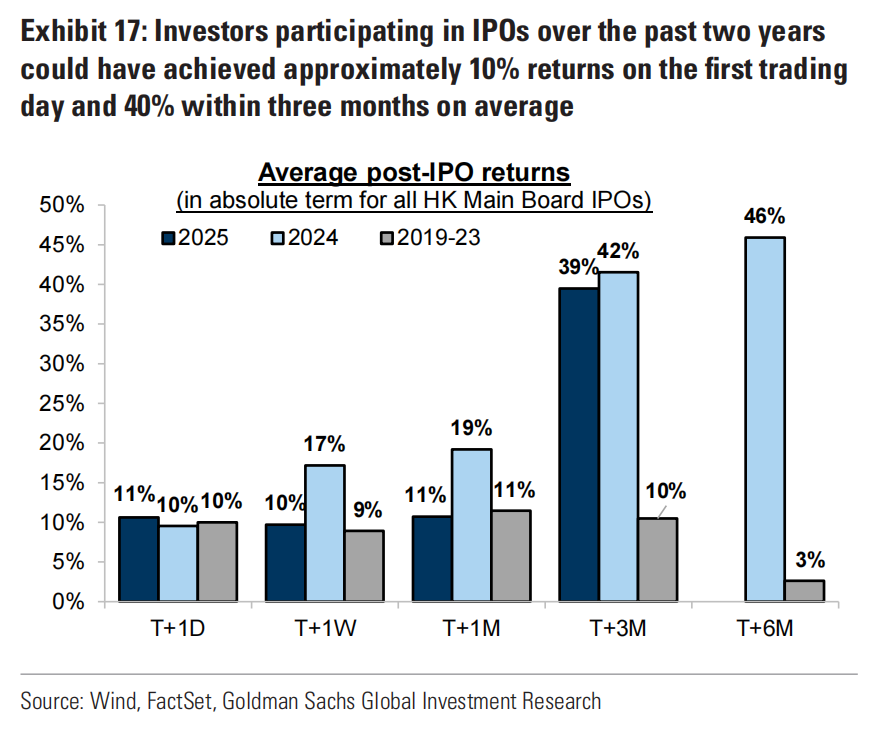
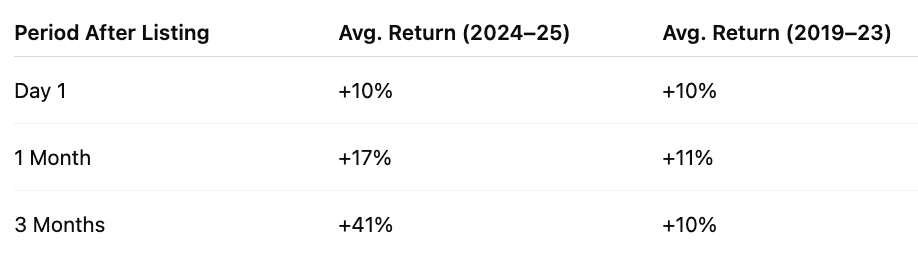
Goldman’s data shows that companies with 30–50% cornerstone ownership and high revenue growth tend to deliver the best post-IPO returns. Interestingly, company size was not a significant factor in performance differentials.
Southbound Inclusion & Index Boost
A key structural advantage of listing in Hong Kong is eligibility for Southbound trading and index inclusion:
-
Primary listings — unlike secondary ones — qualify for Southbound access, opening the door to mainland investors.
-
US$134 billion in passive AUM tracks MSCI China indices, and US$28 billion follows the Hang Seng Index.
-
Goldman estimates that once included, Southbound ownership of newly dual-listed stocks typically rises 7–16% within a year, often acting as a tailwind for share prices.
Investment Implications — Goldman’s Take
Goldman Sachs outlines several beneficiaries of this IPO revival:
-
HKEX and China brokers with offshore business exposure
-
Consumer, Tech, and Healthcare sectors — IPOs in these areas have delivered the strongest post-listing returns
-
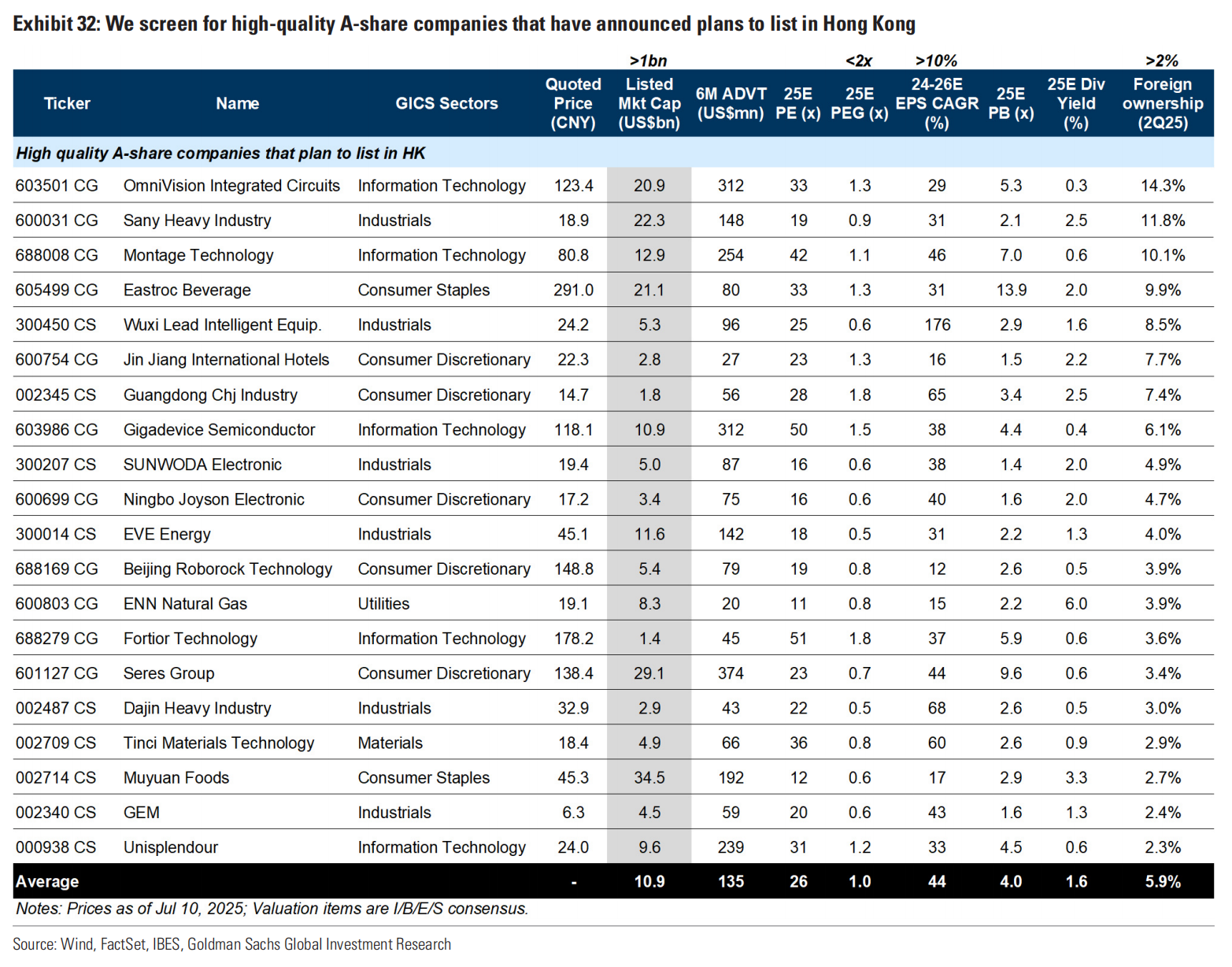
High-quality A-share names planning HK listings, especially those with strong foreign ownership and EPS growth
In the report, Goldman screens 20 A-share companies with announced plans to list in Hong Kong. These firms have >10% EPS CAGR (2024–26) and PEG ratios <2x — suggesting both growth and valuation support. Flagged names include Midea, CATL, and Hengrui Pharma.
Final Word
This is not just a speculative rally — it's a structural realignment of Asia’s equity capital markets. As Goldman Sachs puts it, Hong Kong's IPO resurgence is being driven by policy coordination, regulatory arbitrage, and cross-border capital flow optimization.
For investors, this could be a window of opportunity — not just to capture short-term post-IPO gains, but to reengage with China through a more transparent and globally accessible platform.
#Decoding Report Insights