
Hedge Funds Dump Japan Stocks at Record Pace, Election Sparks Market Jitters

Last week, Japan’s Senate election concluded, with initial exit polls indicating that the ruling coalition lost its majority, suggesting inevitable political turbulence ahead for the country.
According to Goldman Sachs’ latest report, global hedge funds sold off Japanese stocks at the fastest pace in two and a half months before the election results were announced. This month, the Nikkei 225 and Topix indices fell 1.7% and 0.6% respectively, underperforming global stock indices.
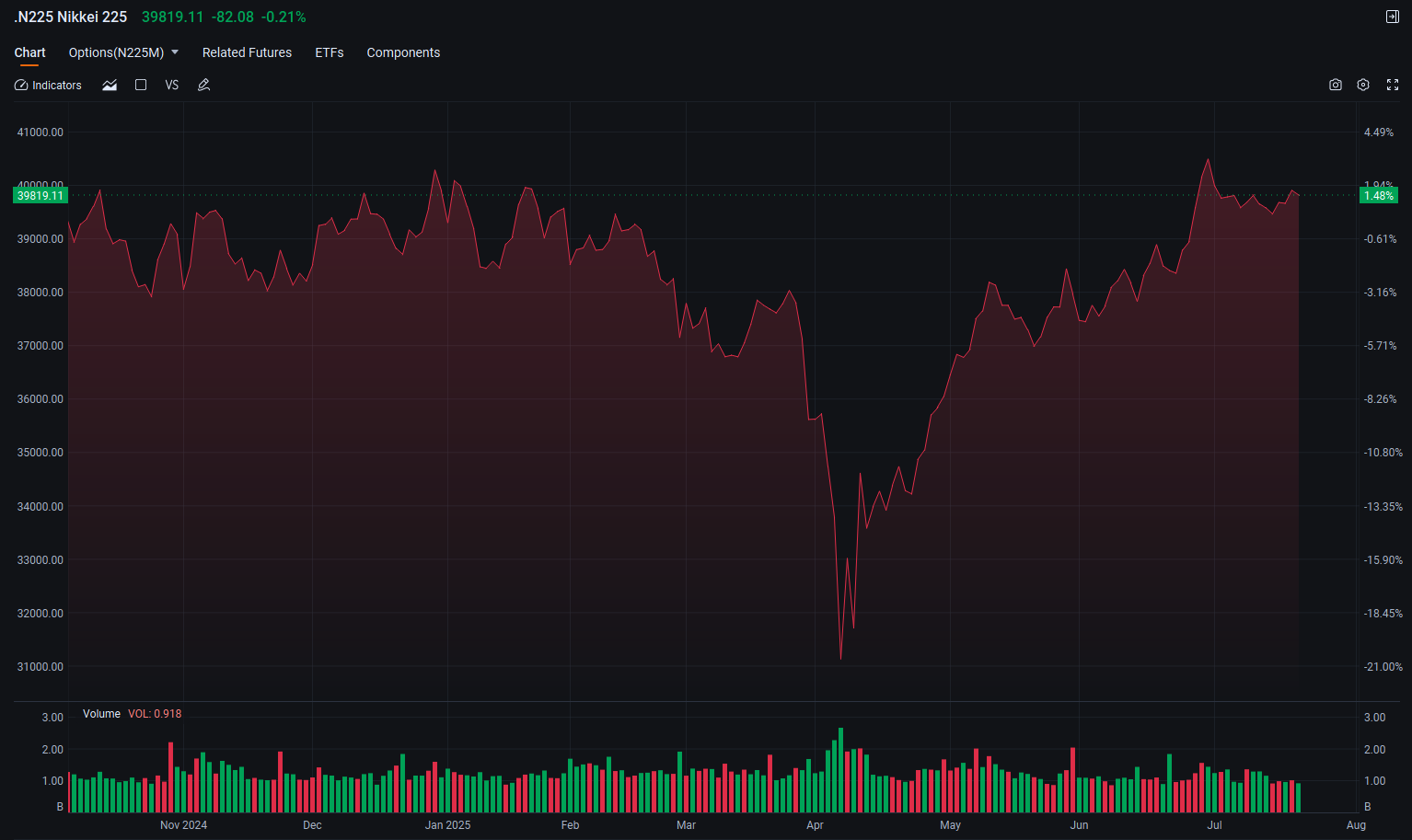
Goldman Sachs analysis suggests that last week’s sell-off was driven by an increase in short positions and a mild reduction in long positions. However, hedge funds’ overall allocation to Japanese stocks remains 0.6 percentage points higher than Japan’s weight in the MSCI World Index.
On Monday, Japanese markets are closed for a holiday, but Nikkei 225 futures edged higher, and the yen saw a slight appreciation. Analysts note that last Sunday’s election results are fully priced in, which may limit the downside for Japan’s financial markets in the short term.
Mixed Outlook
With the loss of majority in both the House of Representatives and the Senate, market participants now worry that Prime Minister Ishiba may face a risk of ouster. This political uncertainty has heightened concerns over policy gridlock and Japan’s fiscal trajectory.
However, despite the rapid sell-off by global hedge funds, Japan’s risk markets have not seen a sharp correction, possibly indicating that the market has already absorbed the unease from the Senate election. Most investors believe that, barring new policy shocks, the downside for Japanese stocks is limited.
That said, some point out that long-term policy uncertainty could pressure Japan’s bond market and raise doubts about the country’s long-term investment appeal.
On another note, the market is awaiting the outcome of U.S.-Japan trade negotiations before August 1. Analysts warn that if no progress is made by then, the situation could worsen, with the yen’s movements likely to remain volatile.