
Silicon Valley AI Talent War - A Report from WSJ

WSJ's report on the AI talent war in Silicon Valley is both fluent and concise, with high readability:
Last Friday, hundreds of employees at AI startup Windsurf gathered in the office to celebrate their impending $3 billion acquisition by OpenAI. The marketing team had even prepared promotional videos.
Then the unexpected happened: The CEO quietly took a small group of "chosen" employees to join Google. These individuals received seven-figure signing bonuses, while the remaining employees were left behind in what had become an empty shell of a company. Upon hearing this news, many employees broke down in tears.
On the morning of the first workday, another twist occurred. The remaining Windsurf employees were called into an office again and received a second notice: as the remainder of the company, they would be acquired by a former competitor.
This was just an ordinary weekend in Silicon Valley in 2025.
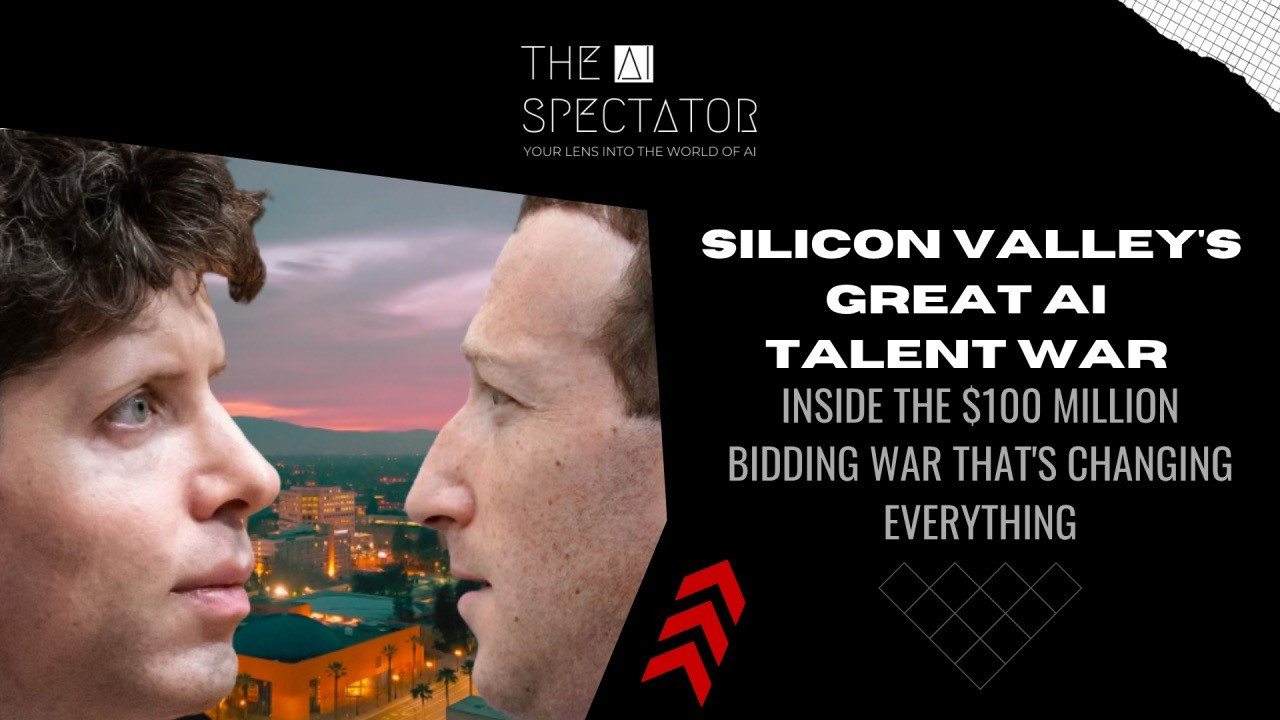
The war for talent among the world's wealthiest companies is unfolding with unprecedented efficiency, deals, and betrayals. Those brilliant, previously undervalued researchers now command salaries on par with top NBA players and Hollywood stars.
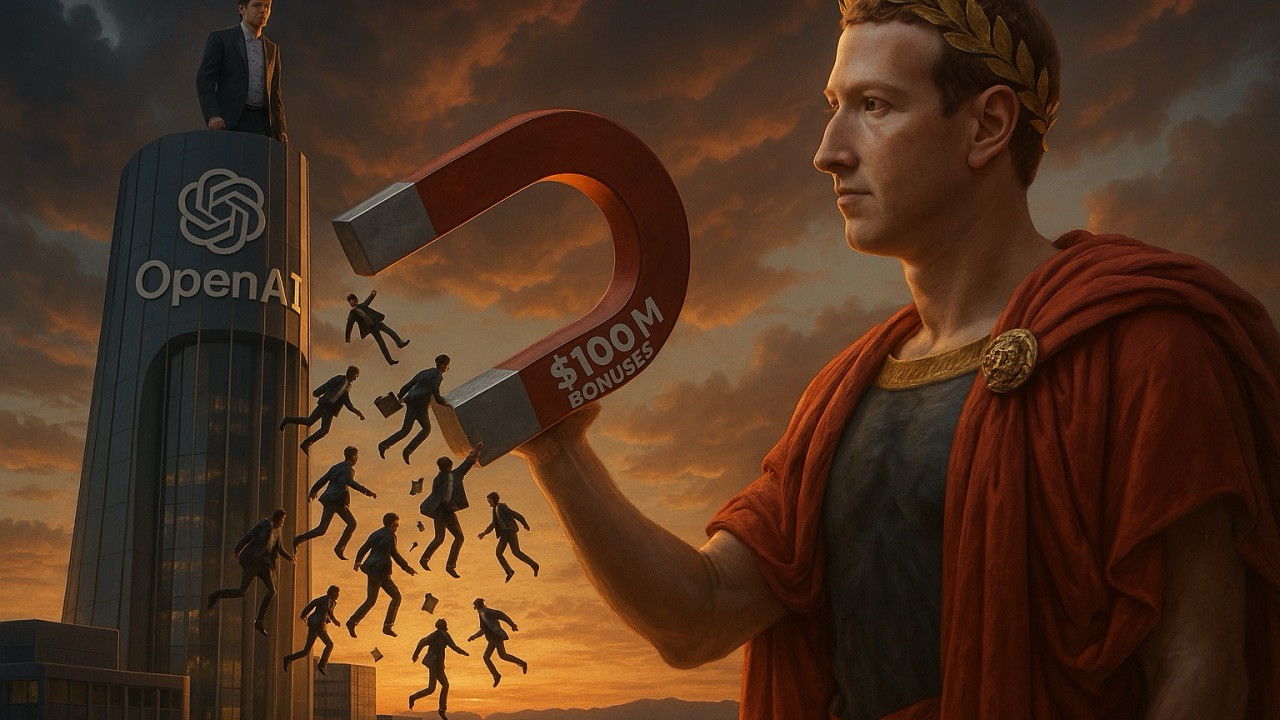
At the center of the storm is Meta. Zuckerberg, in his quest to build an AI "dream team," began aggressively poaching talent with time-sensitive offers. Researchers who were approached had to decide on the same day, or the offer would expire, rendering traditional negotiation strategies of the poached companies ineffective.
As the main competitor being poached from, OpenAI's Sam Altman called this behavior a "battle between missionaries and mercenaries," suggesting that those who joined Meta for money were mercenaries, while those who chose to stay at OpenAI were steadfast missionaries.
Zuckerberg took offense to this and wrote a post in response, saying that Meta's true appeal to talent lies in its ability to provide the massive computational resources researchers need for breakthroughs. In terms of per capita disposable computing power, no company could match Meta.
However, many people proved that money wasn't the most important factor. This included OpenAI's chief scientist, Mark Chen. During an interview, Zuckerberg offered Chen a total package worth $1 billion. Chen hesitated for a moment before replying that he was happy at OpenAI and wasn't considering a move.
At least 10 other OpenAI employees turned down Zuckerberg's offer of $300 million over 4 years - with $100 million to be deposited in the first year.
Chen described it as watching a home invasion unfold and helped reassure employees that management wasn't sitting idly by. A new compensation incentive plan would soon be introduced. "If other companies pressure you with ridiculous expire-if-not-accepted offers, tell them not to push. This is an important decision, and pressure is disrespectful to you," he said.
However, the interview with Chen indirectly inspired Zuckerberg to consider the possibility of using money to attract talent. He subsequently created a list titled "People We Want" and his team obtained contact information for these individuals, arranging for them to meet Zuckerberg at his home - not the company office.
Zuckerberg ultimately chose Alexander Wang, the 28-year-old founder of data labeling company Scale, to lead Meta's super AI lab, spending $14 billion as a signing bonus. Wang announced his departure to join Meta to all Scale employees at their headquarters. The scene, with thunderous applause, was "like the ending of a Disney movie."
Almost immediately, OpenAI and Google terminated their contracts with Scale, which then began laying off employees.
Meta also poached the former CEO of GitHub and the current CEO of SSI, who were jointly running a venture capital firm. Zuckerberg generously bought 49% of this company's shares to help investors exit, then promptly dissolved it.
If you remember, SSI is the new company founded by Ilya Sutskever, OpenAI's former chief scientist who was ousted during their internal drama. Zuckerberg invited Sutskever to dinner at his home and proposed buying SSI. After being refused, he poached SSI's CEO. Sutskever was "very shocked" to learn his colleague had left so abruptly.
Returning to Windsurf's story, the deal with OpenAI fell through because OpenAI's largest investor opposed it. After the CEO abandoned the company to join Google, the interim CEO received an email from Cognition (Davin's developer), another AI programming company. The subject line was a simple word: "Chat?"
Over the weekend, Windsurf finalized its acquisition plan. The interim CEO told employees that everyone would benefit from the deal. This time, the long-awaited applause finally erupted.
At this point, some readers might ask: Mark Chen, Alexander Wang - these are Chinese names, aren't they?
Also, Windsurf's interim CEO's surname is Wang, and the acquiring company's CEO's surname is Wu. If you think about it, do you notice any patterns?
However, one noteworthy point is that top tech talent can now earn incomes comparable to top NBA and NFL athletes, which is commendable.