
Ahead of the Curve: Did AI and Ads Propel Google’s Stellar Q2?

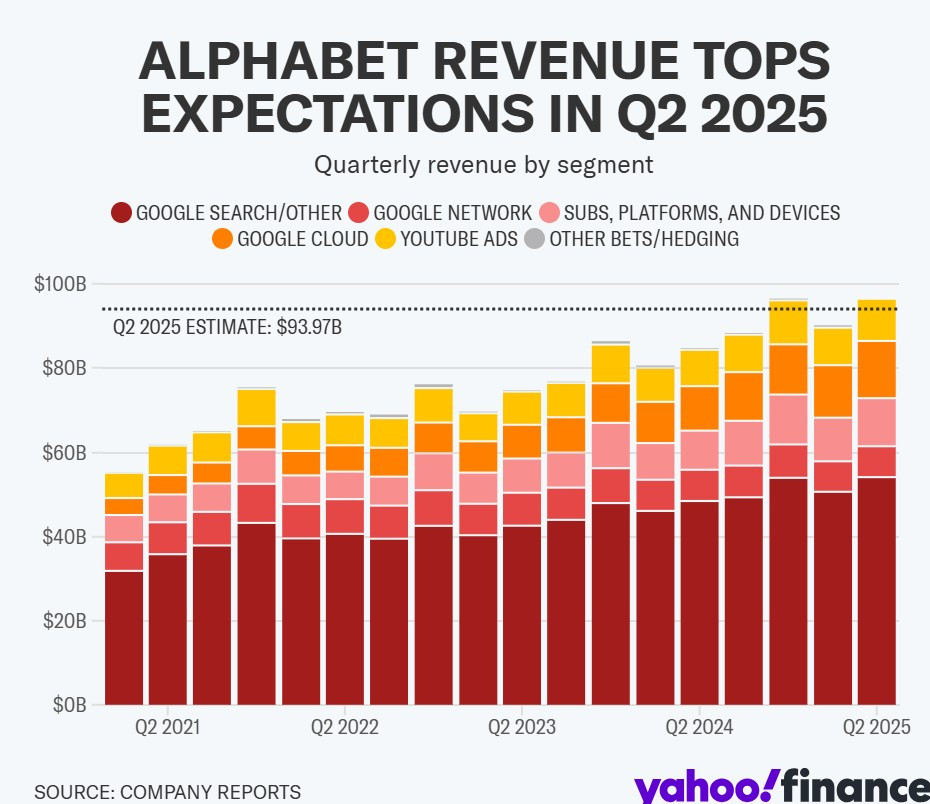
$GOOGL ’s Q2 financial release stunned the market with revenues of $96.4 billion, a 14 percent year-over-year rise that comfortably outpaced Street expectations of $94 billion.
Net profit soared to $28.2 billion, topping consensus by over $3 billion, and Q3 CapEx guidance was lifted to roughly $85 billion. Investors rewarded the beat, sending pre-market shares up more than 3 percent.
Chief Executive Sundar Pichai hailed “strong demand across every business” and reaffirmed $GOOGL ’s position at the AI vanguard. Advertising growth remained robust despite external headwinds, while Cloud revenues accelerated to a 32 percent gain. The tech giant also disclosed that token usage for its AI products has more than doubled since its May I/O debut.
By the Numbers: Key Takeaways
- Total revenue: $96.428 billion, +14% YoY.
- GAAP operating profit: $31.27 billion, +14%, vs. $31.1 billion expected.
- Ad revenue: $71.34 billion, +10.4%, led by Search up 11.7% to $54.19
- YouTube income: $9.796 billion, +13.1%.
- Network ads: $7.354 billion, ‑2%.
- Cloud revenue: $13.624 billion, +32%, with $2.83 billion in operating profit.
- OpEx: $26.118 billion, R&D at $13.808 billion (14% of sales).
- Free cash flow: $5.3 billion, pressured by higher CapEx.
- Token usage: Increased from 4.8 million to 9.8 million trillion per month since May.
Advertising Resilience: Can Tariffs and AI Fears Unsettle Google?
Despite recent trade-tariff anxieties, $GOOGL ’s ads segment delivered a 10.4 percent uplift to $71.3 billion. Search ad sales rose 11.7 percent, outstripping the $52.9 billion consensus, driven by robust retail and financial services demand.
Nielsen data even show YouTube watch time share climbing in U.S. streaming, reinforcing investors’ confidence in sustained ad engagement.
May’s Apple-Safari downturn triggered a one‑day stock slide amid worries that AI‑powered search alternatives could dent core volumes.
Yet $GOOGL ’s search market share held firm, and AI Overviews usage jumped from 1.5 billion to 2 billion monthly unique users in Q2, proving the company’s AI enhancements are attracting—not repelling—users.
YouTube ad revenues also beat expectations, tallying $9.8 billion versus $9.56 billion forecast. Direct‑response ads led growth, closely followed by brand campaigns.
While U.S. election-cycle spending may create tougher year-on-year comps later in 2025, YouTube’s engagement and advertiser interest remain pillars of Google’s ad ecosystem.
Emerging challenges include high-basis comparisons driven by 2024’s political ad surge and potential regulatory headwinds.
However, $GOOGL ’s sustained introduction of AI search innovations appears to be warding off competitive encroachments, helping maintain growth momentum in an otherwise uncertain macro context.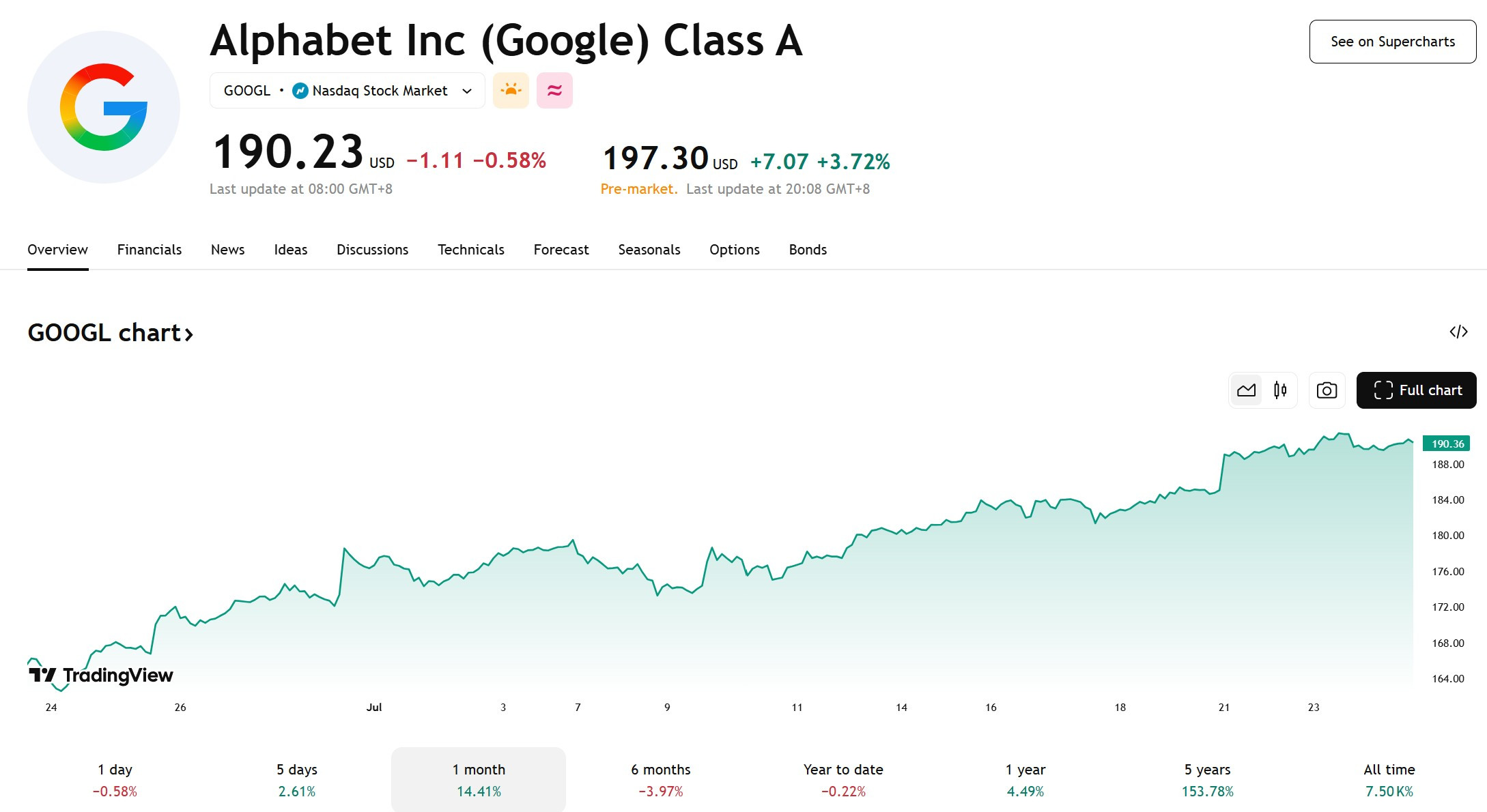
Cloud Momentum: What’s Fueling a 32% YoY Surge?
Google Cloud once again outpaced consensus with $13.624 billion in revenues, up 32 percent year-over-year.
The business also reported $2.83 billion in operating profit—a remarkable 141 percent jump—underscoring cloud’s transition from investment-heavy to profitability focus. Backlog orders grew 18 percent sequentially to $106 billion, with new mega‑deals worth over $1 billion signed in H1.
CEO Pichai noted strong product demand and accelerated server deployments, forecasting a tight supply-demand balance through 2026.
Cloud’s growth is anchored by AI services, data analytics, and enterprise migrations, and Google’s deep AI integration differentiates it from peers. Its top-tier networking and global infrastructure further fortify competitive positioning.
Margin improvements were evident as Cloud’s operating margin climbed to 21 percent, up 300 basis points from Q1. This was driven by efficiency gains in data‑center operations and economies of scale in AI training workloads.
With annualized Cloud revenue now topping $50 billion, Google is on track to narrow the gap with its largest cloud rivals.
Guidance Upsized and Margins Under the Hood
Amid Q2’s upside, Google raised full-year capital expenditure guidance to approximately $85 billion. Roughly two-thirds of this will fund servers; the remainder supports data-center and network expansion.
This marks a meaningful increase from prior expectations and underscores management’s conviction in long-term AI infrastructure needs.
Overall gross margin held steady at 60 percent, while operating margin dipped two points to 32 percent, weighed by stepped-up R&D and data costs. R&D spend hit $13.8 billion (14 percent of sales), and marketing expenses totaled $7.1 billion (7 percent). These investments underpin Google’s AI roadmap and breadth of product enhancements.
Depreciation in Q2 climbed by $1.3 billion to $5 billion, reflecting prior CapEx and the build-out of AI-optimized infrastructure.
Management cautioned that Q3 deprecation could accelerate further. While these charges will weigh on short-term profits, they’re critical to sustaining Google’s AI‑driven growth engine.
AI Investment: Is the Token Boom Worth the Depreciation Risk?
Token consumption doubled from 4.8 million to 9.8 million trillion per month after Gemini 2.5 Pro and AI Overviews rolled out in Europe.
This surge evidences robust customer adoption and underscores AI’s centrality to Google’s growth thesis. From Search to Cloud, AI is reshaping every product line and revenue stream.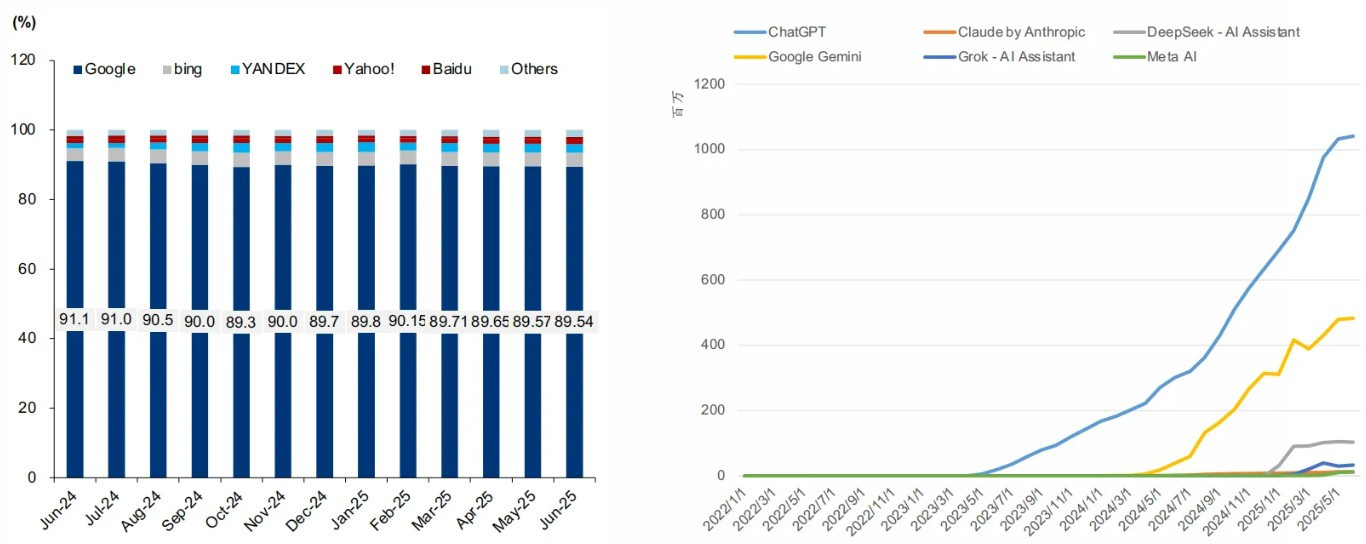
Pichai asserted, “AI is positively impacting every aspect of our business and driving strong growth momentum.” With AI Overviews monthly users climbing 33 percent in Q2 alone, Google’s early AI bets appear to be yielding user engagement and advertiser demand boosts across its ecosystem.
Looking Ahead, Google expects CapEx to remain elevated into 2026, driven by ongoing server and infrastructure deployments.
The company must balance maximizing AI capacity with prudent margin management, ensuring that AI-led revenue gains outpace the rising depreciation burden.
A New Chapter in Google’s Growth Story
Google’s Q2 results paint a picture of a company entering a new chapter, where AI and advertising coexist as dual engines of expansion. The results signal that management’s hefty infrastructure investments are finding payback in top-line strength and market leadership.
While election-driven ad cycles and regulatory scrutiny pose potential headwinds, Google’s sustained innovation in AI, combined with its unmatched ad network, has so far quelled investor concerns.
As 2025 progresses, all eyes will be on execution: can Google maintain this balance of growth, profitability, and visionary investment?
Given Q2’s outperformance and proactive CapEx guidance, the market appears to believe it can. By leaning into AI while sustaining ad momentum, Google is not just weathering disruptive change—it is defining the future of search, cloud, and beyond.