
Betting Big on Humanoids: Can China’s Robot Startups Deliver?

China’s humanoid robot sector is awash with fresh capital, driven by policy incentives and AI breakthroughs—but questions loom over whether these machines can ever be produced at scale or find profitable real-world uses.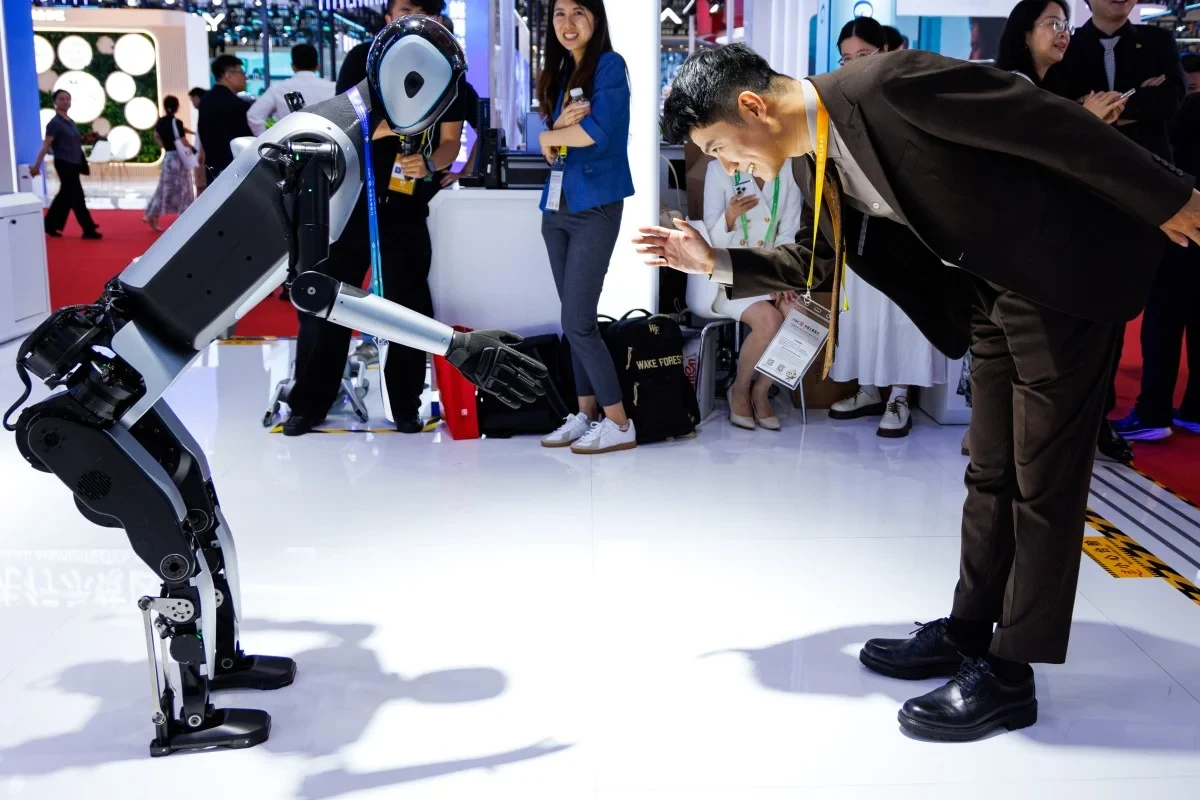
Key Takeaways
- Record financings abound: Headline players have raised billions of yuan in recent months, with 99 VC/PE deals already this year and traditional manufacturers joining the fray.
- Policy and AI converge: National and local guidance documents set ambitious targets for 2027, while “embodied AI” breakthroughs promise smarter, more autonomous machines.
- Mass production remains elusive: Most firms can only hand-craft dozens of units; scaling to hundreds or thousands will require new manufacturing methods and supply chains.
- Use-case debate intensifies: Industrial, service, and consumer applications each have proponents, but none have yet proven commercially viable at scale.
- Global competition heats up: With Tesla’s Optimus poised for 2026 ramp-up, China’s startups face both immense opportunity and stiff international rivalry.
Why the Gold Rush?
Investors sense a generational opportunity. In just one week, established players secured multi-billion-yuan rounds. Beyond dedicated robotics VCs, carmakers, battery giants, e-commerce champions, and industrial equipment firms are all committing capital—fearing they’ll be left behind in the next asymmetric shift.
A senior investor admitted, “We don’t normally chase hot sectors. But if you miss robots this year, you’ll never catch up.” That urgency has spurred 10.37 billion HKD raised by one collaborative-robot leader, earmarked for R&D, strategic acquisitions, and global expansion.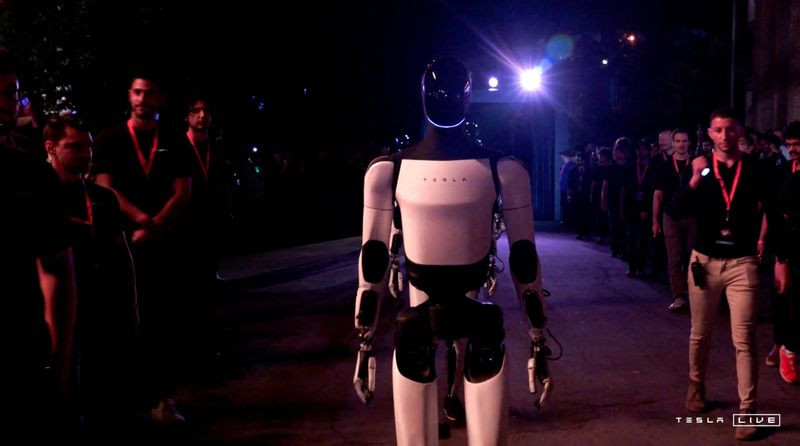
What’s Driving the Surge?
Policy Push: In April, the Ministry of Industry and Information Technology rolled out its “Humanoid Robot Innovation” guidance, calling for an internationally competitive ecosystem by 2027. Beijing’s own “Embodied AI” plan promises 1 000 unit annual outputs, 50+ mass-market products, and 100 large-scale deployments by the same year.
AI Breakthroughs: Executives point to “embodied large models” that merge perception, decision-making, and actuation. With foundational AI freely available, startups are building robot “brains” capable of contextual understanding and dexterous motion.
Can They Scale Up?
“Making a demo is trivial; mass production is agony,” says one public-relations director. Current production relies heavily on engineers hand-assembling each robot. Crossing from hundreds to thousands of units demands automated lines, supplier networks for precision parts like planetary roller screws, and dramatic cost reductions.
Most firms claim “batch output” only in the low hundreds, with a shared target of “1 000 units” looming. Yet complex software–hardware integration tests every assembly step, and quality standards for autonomous decision-making leave little margin for error.
Which Scenes Will Win?
Industrial Workhorses: Tesla’s Optimus and other contenders target factories, where precise, repetitive tasks can justify premium pricing. But even automotive assembly demands sub-millimeter accuracy—one misplaced screw can halt a line.
Service & Logistics: Warehouses and hotels offer semi-structured environments where robots can shuttle goods or greet guests. Several startups report multi-hotel pilot projects, yet commercial contracts remain under wraps.
Home Companions: Consumer-facing robots—once the stuff of sci-fi—face the toughest road. Dropping a single toy or forgetting to fetch a cup of tea risks consumer backlash. Regulation, safety, and reliability hurdles make widespread adoption a distant goal.
Investment Spotlights
- Yuejiang Robotics (02432.HK): Raised 10.37 billion HKD for Atom humanoid production and a converged platform integrating arms, legs, and six-legged dog robots.
- Zhongqing Robotics: Secured nearly CNY 1 billion in Pre-A++ and A1 rounds led by automaker backers and battery consortiums, targeting production scale-up and application roll-outs.
- Traditional players: Electric-motor leader ZhaoWei Mechatronics plans H-share issuance to fund robotic hands; NEV maker Seres quietly files “ROBOREX” trademarks and recruits AI talent; packaging-equipment firm Oriental Precision inks a joint development pact for embodied intelligence.
Roadblocks on the Assembly Line
Even with orders worth hundreds of millions, startups struggle to find suppliers able to churn out high-precision gear, actuators, and sensors at volume. The learning curve for multi-axis assembly, sensor calibration, and software integration remains steep. Industry analysts warn that until costs fall below critical thresholds, only deep-pocketed players will survive.
The Battle for Scenarios
Executives acknowledge a “route war” between B2B and B2C. Some argue that vertical, task-specific robots—arms on wheels or humanoid torsos with customized bases—will win industrial contracts first. Others maintain that social robots in retail and hospitality will capture consumer imagination, building brand loyalty before home penetration.
Looking Ahead: Who Will Thrive?
Global giant Tesla hints at 2026 volume production of Optimus, aiming for 1 million units/year by 2030. Meanwhile, Morgan Stanley predicts China’s humanoid market may exceed USD 5 trillion by 2050, with local startups positioned to grab the lion’s share through cheaper labor, government support, and rapid iteration.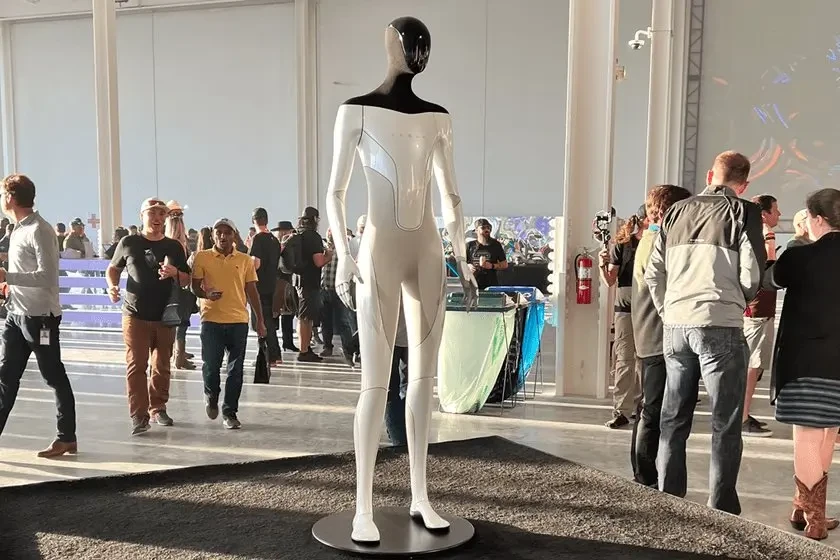
Yet the next 18 months are critical: only those who can marry robust AI “brains” with scalable manufacturing and validated pilots will transform today’s frenzy into tomorrow’s stable, profitable industry.
Conclusion
China’s humanoid robot sector rides a wave of record funding and government backing. But the ultimate test lies in proving that these complex machines can be built at scale and deployed where they deliver real economic value.
As investors and incumbents alike double down, the coming years will separate the demo-makers from the mass-producers—and determine whether humanoids become the next industrial revolution or remain high-tech curiosities.