
Tariff Showdown: Will US–EU Leaders Avert a Trade War?

As the August 1 deadline looms, the United States and European Union edge toward a landmark agreement on tariffs—most EU goods would face a 15% levy—but deep divisions over steel, autos, and pharmaceuticals threaten to derail the deal.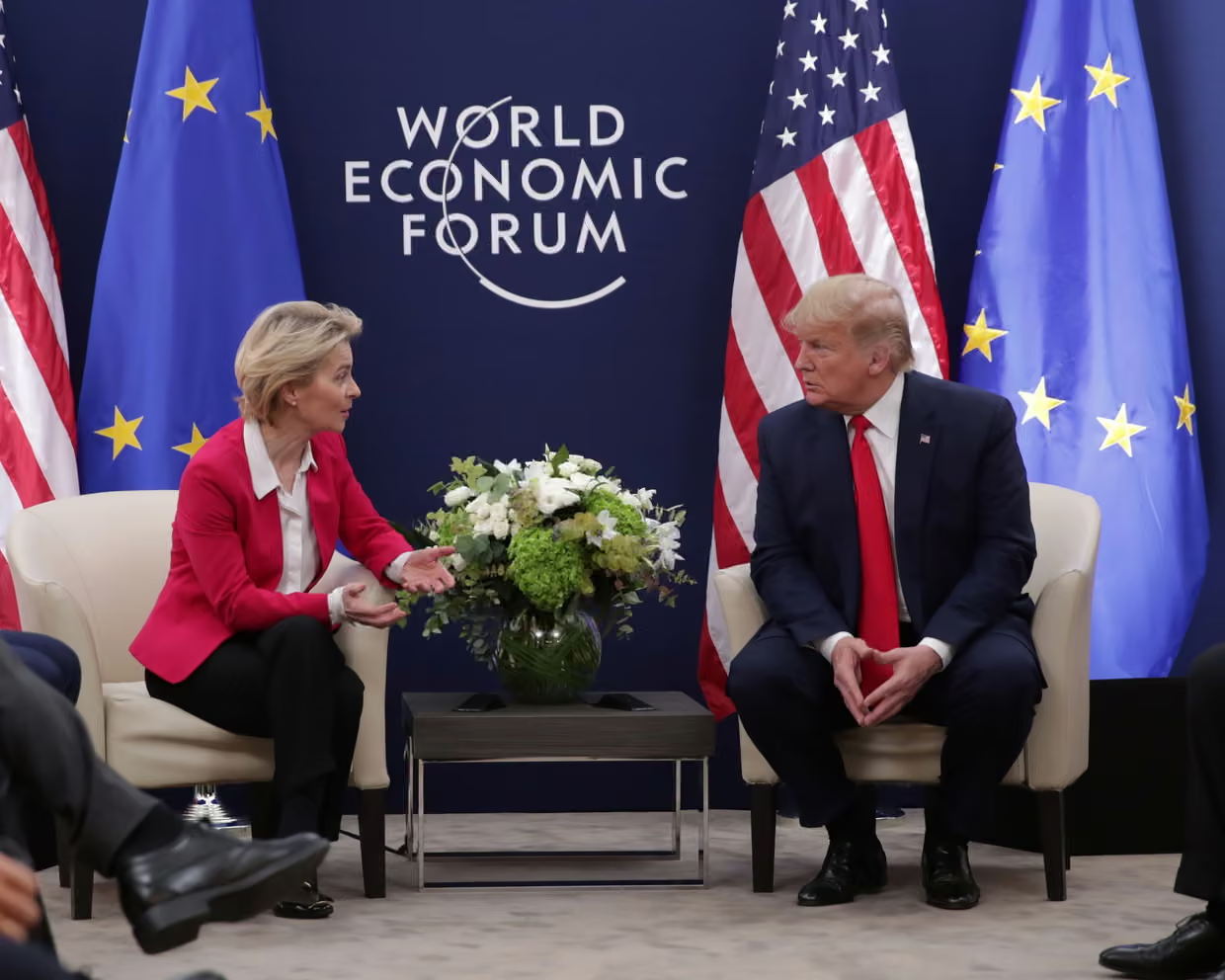
High-stakes talks, from late-night negotiations in Washington to a summit in Scotland, will determine if a full‑blown tariff clash can be avoided.
Key Takeaways
- Near-universal 15% tariff: Both sides tentatively agree that most EU exports will face a 15% U.S. duty—pending carve-outs and final rates.
- Critical sectors in limbo: Steel, automobiles, and especially pharmaceuticals remain unresolved, with the EU pushing for a 15% cap even on drugs.
- Quota vs. surcharge: Proposed quotas would shield in-quota steel and aluminum from excess 50% tariffs, but many details are unsettled.
- Deadline pressure: Talks extend through Saturday night in Washington, will climax at a Trump-von der Leyen meeting in Scotland on Sunday.
- Escalation risk: Failure to agree risks U.S. plans to hike tariffs to 30% on EU imports—and reciprocal EU duties on €100 billion of U.S. goods.
What’s the 15% Consensus About?
After months of tit-for-tat duties, negotiators have narrowed the gap: most EU-made machinery, wine, and consumer goods would face a uniform 15% U.S. tariff. This baseline rate offers simplicity, addressing both sides’ desire for stability. Yet exceptions, such as aerospace and certain medical devices, may qualify for lower duties under special carve‑outs.
Despite broad alignment, the architects of this deal must still define exactly which products earn exemptions—and how to enforce them. Without crystal-clear product lists, businesses risk tariff surprises, undermining confidence in any final agreement.
Why Is Pharma the Deal-Breaker?
The EU is adamant that pharmaceuticals—including both brand-name and generic drugs—should fall under the 15% ceiling. This “tax-rate upper bound” is vital for Europe’s €300 billion drug industry, says EU spokespeople. Washington, however, views medicines as a national security and public health exception, preferring higher levies to press for industry reforms.
Pharma’s fate may hinge on President Trump’s willingness to concede. EU insiders warn that if Washington insists on steeper drug duties, the entire agreement could collapse—forcing both sides back into months of renewed conflict.
Behind the High-Stakes Negotiations
From Friday night through Saturday, U.S. Commerce Secretary Gina Raimondo and EU negotiators haggled until the early hours, sparring over steel and auto duties. Sources describe tense exchanges over whether auto tariffs would mirror existing 25% U.S. duties, or drop to 15%.
Meanwhile, EU head Ursula von der Leyen flew to Glasgow on Saturday evening. She will meet President Trump on Sunday, hoping to bridge remaining gaps. Their rapport, tested by transatlantic disputes over defense and data privacy, now faces its stiffest challenge yet.
Quotas, Surcharges, and the 50% Sword
A hybrid model is on the table: in-quota steel and aluminum imports cleared under negotiated volumes would pay the base rate, while any overage incurs a 50% surcharge. Proponents argue this protects domestic producers while allowing predictable trade flows.
Critics caution that defining quotas—and enforcing them—could reignite disputes: which exporters qualify, and how is consumption measured? Without tight mechanisms, companies may face unexpected duty spikes, deterring investment.
Can They Seal the Deal by August 1?
Both sides insist they want a deal before midnight on July 31. Failure means Washington’s planned jump to 30% tariffs on EU goods—and Brussels’ own retaliatory duties on nearly €100 billion of U.S. exports.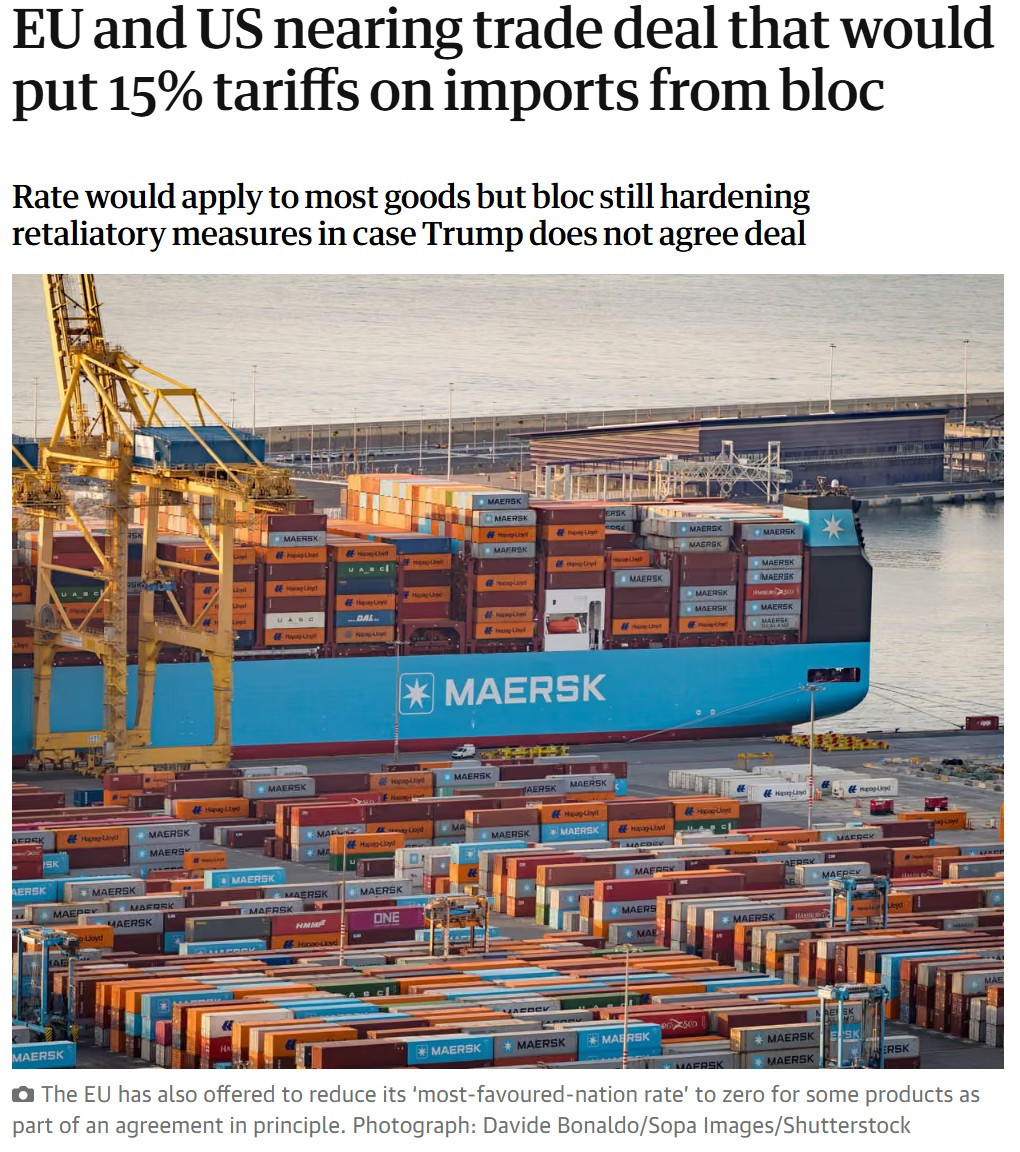
EU ambassadors will convene Sunday morning in Brussels to vet any provisional accord. Even if von der Leyen and Trump strike a deal, ambassadors must approve it—and member states could demand tweaks. With only hours left, every clause and comma is subject to last-minute reversal.
Conclusion
As world leaders prepare for a make‑or‑break summit in Scotland, the stakes could not be higher: a landmark tariff pact promises to calm the globe’s largest trading relationship—but only if two superpowers can reconcile competing interests on steel, autos, and especially pharmaceuticals.
Success would head off a tariff escalation that could roil markets and supply chains; failure risks a return to tit-for-tat duties, with costs borne by businesses and consumers on both sides of the Atlantic.