
Global Hedge Funds: AUM Hits Record High, Strongest Half-Year Net Inflows in a Decade, Betting Big on Gold with Highest Long Positions Since April

On July 18, global hedge fund research firm HFR released its latest Global Hedge Fund Industry Report, showing that after successfully navigating the intense market volatility triggered by tariff policies, hedge fund managers and institutional investors maintained robust risk appetite in Q2.
This renewed investor favor resulted in net inflows of $24.8 billion, a nearly threefold increase from the $7.2 billion in the same period last year and the highest quarterly net inflow since Q2 2014.
Adding the $12.5 billion net inflow from Q1, global hedge funds recorded a total of $37.3 billion in net inflows for the first half of 2025—the strongest half-year capital influx since 2015.
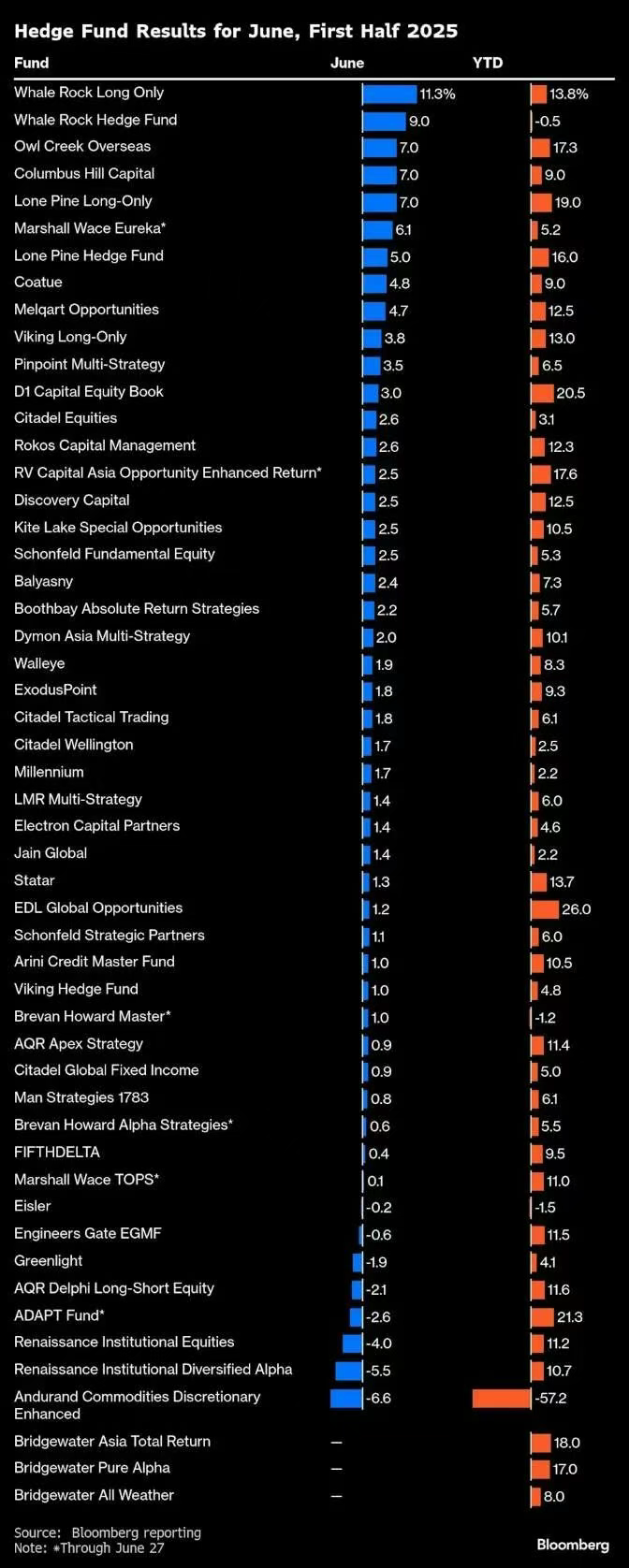
Additionally, according to Bloomberg data, several major hedge funds achieved double-digit returns in the first half of the year.
Notable examples include Bridgewater’s flagship Pure Alpha fund, up 17%, EDL Capital’s Global Opportunities strategy with a 26% annualized return, and D1 Capital Partners’ equity hedge strategy delivering a 20.5% annualized performance.
Hedge Funds Bet on Gold, Long Positions Hit Highest Since April
As the "tariff deadline" nears, safe-haven sentiment rises, pushing hedge funds’ bullish gold bets to their highest level since April.
Before progress in U.S.-EU trade talks, hedge fund managers increased their bullish gold positions.
Data from the U.S. Commodity Futures Trading Commission shows that, as of the week ending July 22, hedge funds raised their net long gold positions by 19% to 170,868 contracts, the highest in 16 weeks.
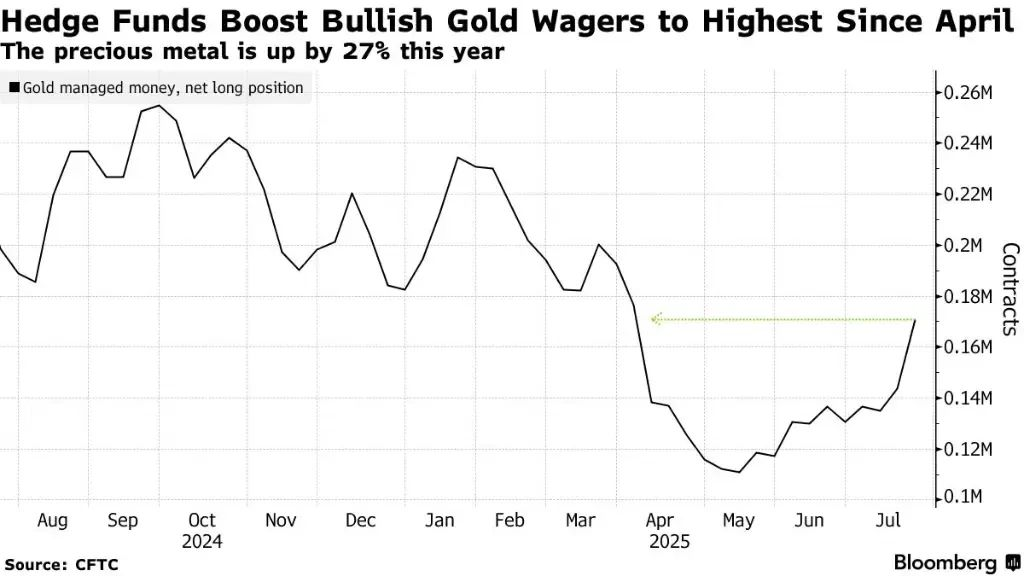
Market volatility and economic uncertainty from trade wars have driven investors toward safe-haven assets like gold, fueling a sustained price rally. Gold prices have risen 27% year-to-date.
The rise in long positions also benefits from ongoing central bank purchases, providing an additional buffer for gold prices.
Analysts note that while potential easing of trade tensions might reduce demand for safe-haven assets, gold continues to be strongly supported by central bank buying.
Countries’ persistent efforts to bolster gold reserves offer a solid fundamental foundation for its price.