
Robinhood’s Q2 Surge: Could Tokenization Be the Game-Changer?

Key Points
- Revenue projected at $913 million, up 33.9% YoY
- EPS expected at $0.311, up 47.9% YoY
- Trading income forecast at $508 million, up 55.5% YoY
- Interest income estimated at $307.8 million, up 8% YoY
- Recent Cannes launch: stock tokenization, Layer 2 chain, perpetual contracts, U.S. crypto staking

What to Expect from Q2 Results?
$HOOD is projected to post Q2 revenue of $913 million, up 33.9% year-over-year, with EPS of $0.311, a 47.9% increase. These figures, under US-GAAP, would represent one of the company’s strongest quarterly uplifts in recent memory.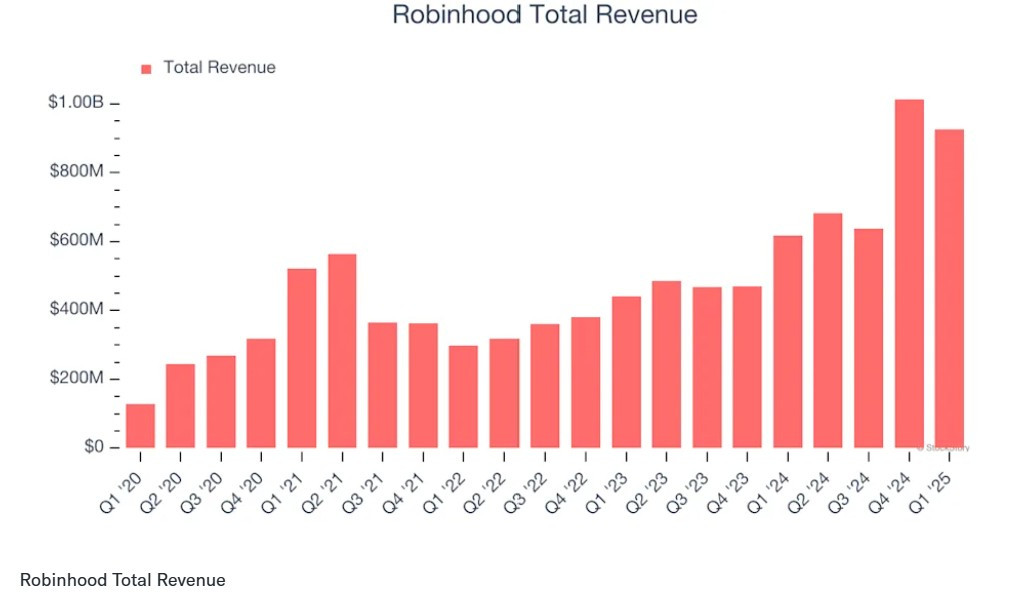
Beyond pure numbers, analysts expect trading income—driven by equities, options, and crypto—to account for over $508 million, up 55.5%. Interest income, buoyed by cash sweep rates, could add $307.8 million. Other revenues are set to reach $96 million, climbing 37.2%.
$HOOD ’s June product launch in Cannes introduced stock tokenization, a Layer 2 chain, perpetual contracts, and U.S. crypto staking. Those innovations have investors focused on future revenue streams and potential margin upside.
Against a backdrop of 6.57% June gains in the Nasdaq Composite and 70% higher trading volume year-over-year, $HOOD ’s Q2 could well outpace broad market growth, setting the tone for H2.
Corporate guidance and remarks on the WonderFi acquisition will also be closely parsed. Any commentary on merger‑related costs or timing could sway near-term stock volatility.
With implied post-earnings implied volatility at 9.22%, traders appear to brace for sizeable moves. The report may reshape consensus on Robinhood’s path to profitability.
Q2 Trading Momentum Delivers Impressive Growth
In May, $HOOD counted 25.90 million funded users, a net gain of 1.8 million over twelve months and 5,000 month‑over‑month. User expansion underscores the platform’s ongoing appeal among retail investors.
Total platform assets climbed to $255.3 billion—up 89% year-over-year and 10% from April—highlighting accelerated asset inflows as both existing and new customers allocate capital.
May net deposits reached $3.5 billion, marking a 44% increase over the trailing twelve months. Although annualized growth slowed from March’s 49% to 18%, the trend remains solidly positive.
Cash sweep balances hit $30.8 billion in May, up 52% year-over-year. Growth spanned both standard and Gold accounts, reflecting robust demand for yield-bearing cash products.
Margin debt surged to $9.0 billion, doubling year-over-year, with a 7% month-over-month uptick. Increased leverage underscores clients’ growing confidence and desire for amplified market exposure.
This sustained momentum in user growth and asset accumulation provides a sturdy base for trading-commission and interest income expansion in Q2.
Why Are Trading Volumes So Hot?
Equity notional volume jumped to $180.5 billion in May, up 108% year-over-year and 14% month-over-month, as retail engagement surged following market volatility and meme-stock narratives.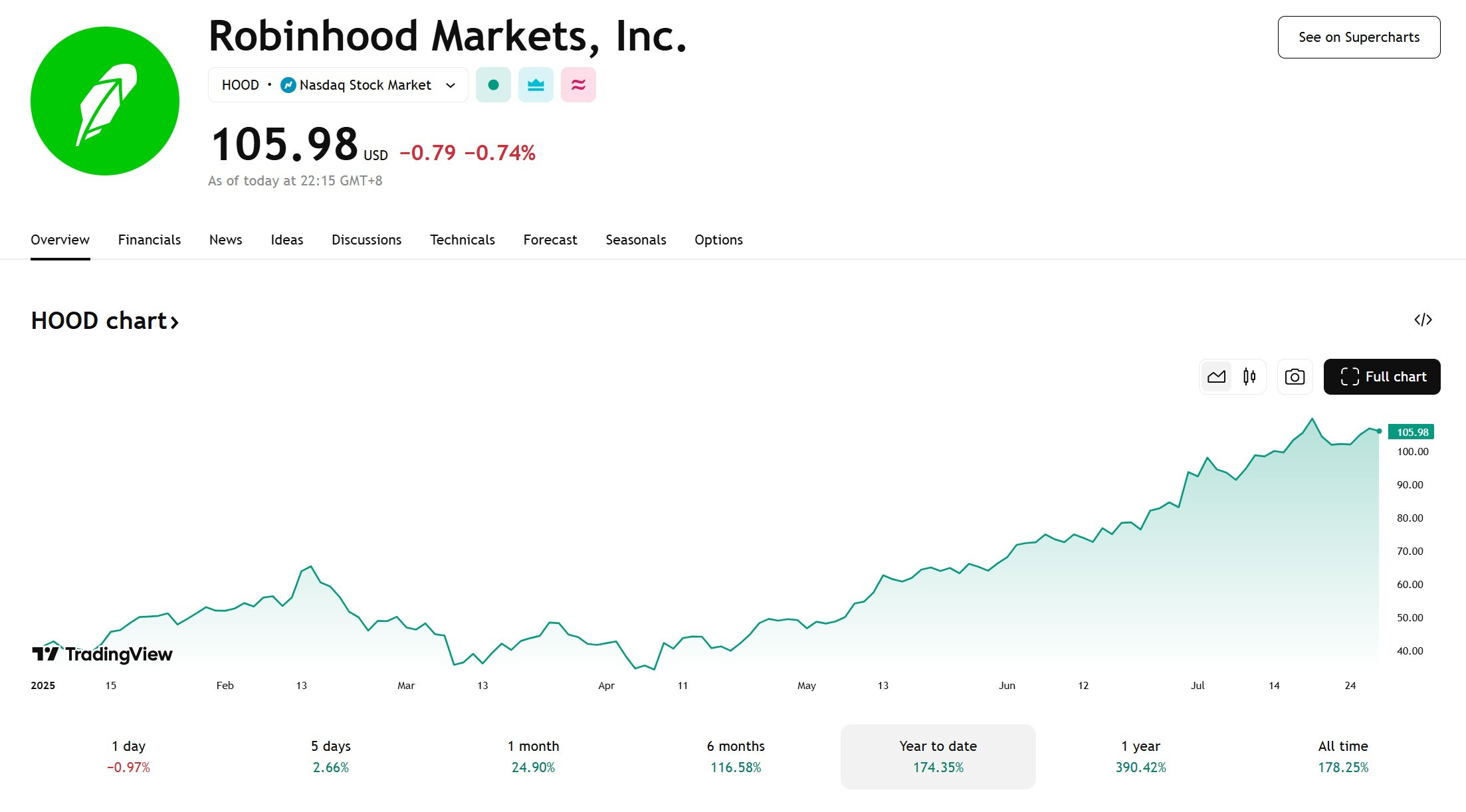
Options contract trading rose 36% year-over-year to 179.8 million contracts. Elevated hedging and speculative activity buoyed Robinhood’s PFOF revenues from market‑making partners.
Crypto volume rebounded strongly, reaching $11.7 billion in May, a 65% year-over-year increase. Renewed interest in Bitcoin and altcoins drove a resurgence in digital‑asset trading commissions.
These volume trends suggest that Q2 trading revenue could exceed expectations, especially as PFOF rates remain attractive versus peers and regulatory scrutiny abates.
Broad market drivers—including rising volatility and institutional flows—should continue to feed retail trading, offering further upside for Robinhood’s commission and fee‑based revenues.
Given these indicators, investors may view the Q2 trading figures as a bellwether for sustained retail market participation in 2025.
How Will Tokenization Reshape Robinhood?
In Europe, Robinhood now offers tokenized U.S. stocks and ETFs on Arbitrum’s Layer 2 chain. Eligible clients can trade 24/5, earn dividends directly, and avoid traditional commissions.
Tokens are minted from Robinhood’s inventory pool. If stocks run low, Robinhood buys shares via its U.S. broker, holds them in segregated accounts, then issues equivalent tokens on Arbitrum L2.
Off‑market hours trading shifts to exchanges like Bitstamp. Market makers supply liquidity, hedging via borrow positions when needed to maintain token-share parity.
Robinhood plans to expand tokenized offerings to bonds, funds, and real estate assets. Users will be able to self-custody tokens, bridge across chains, and extract holdings to external wallets.
By building its own “Robinhood Chain” optimized for real-world assets, the firm aims to become a cross‑border, cross‑asset trading hub—akin to a decentralized exchange of exchanges.
This move leverages easing regulatory stances on security tokens and positions Robinhood at the forefront of bridging traditional finance and Web3 ecosystems.
Investor Focus
Beyond raw Q2 results, watch for management’s commentary on scaling tokenization globally and integrating WonderFi’s technology. Clarity on regulatory roadmap and capital allocation will be key.
Assess cost trends as Robinhood reinvests in product innovation, customer support, and compliance. Elevated expenses could weigh on margins, even as top-line growth accelerates.
Pay attention to guidance on interest‑rate exposure. A high-rate environment underpins cash sweep yields, but rate cuts—or missteps—could quickly alter net interest income forecasts.
Evaluate the competitive landscape: Interactive Brokers’ latest Q2 showed $1.23 billion net revenue, up 23%, driven by rising commission and interest income. Robinhood must sustain its growth premium to maintain valuation multiples.
Finally, monitor implied volatility post-earnings. High expectations could amplify share-price swings, but successful beat-and-raise would likely fuel further investor enthusiasm.
With these factors in view, Robinhood’s Q2 report could be more than a snapshot of performance—it may redefine the future brokerage blueprint.