
Powering Tomorrow: Will Nvidia and ON Semiconductor’s 800V DC Innovation Revolutionize AI Data Centers?

Global AI compute demand is exploding, and two major developments this week underscore how power and geopolitics are reshaping the semiconductor landscape.
First, $NVDA and $ON unveiled an 800 V DC distribution solution designed to feed next‑generation AI data centers. Second, the European Union signaled plans to buy €40 billion of U.S. AI chips under an emerging trade pact—sending chip stocks soaring. Together, these moves mark a critical inflection point for the industry’s growth, efficiency and global balance of supply.
Key Takeaways
- $NVDA and $ON partner on 800 V high-voltage DC power architecture, cutting I²R losses by 90% and boosting efficiency by at least 5
- AI data centers’ per‑rack power is leaping from 20-30 kW to upwards of 500 kW-1 MW, driving urgent need for higher voltage bus architectures.
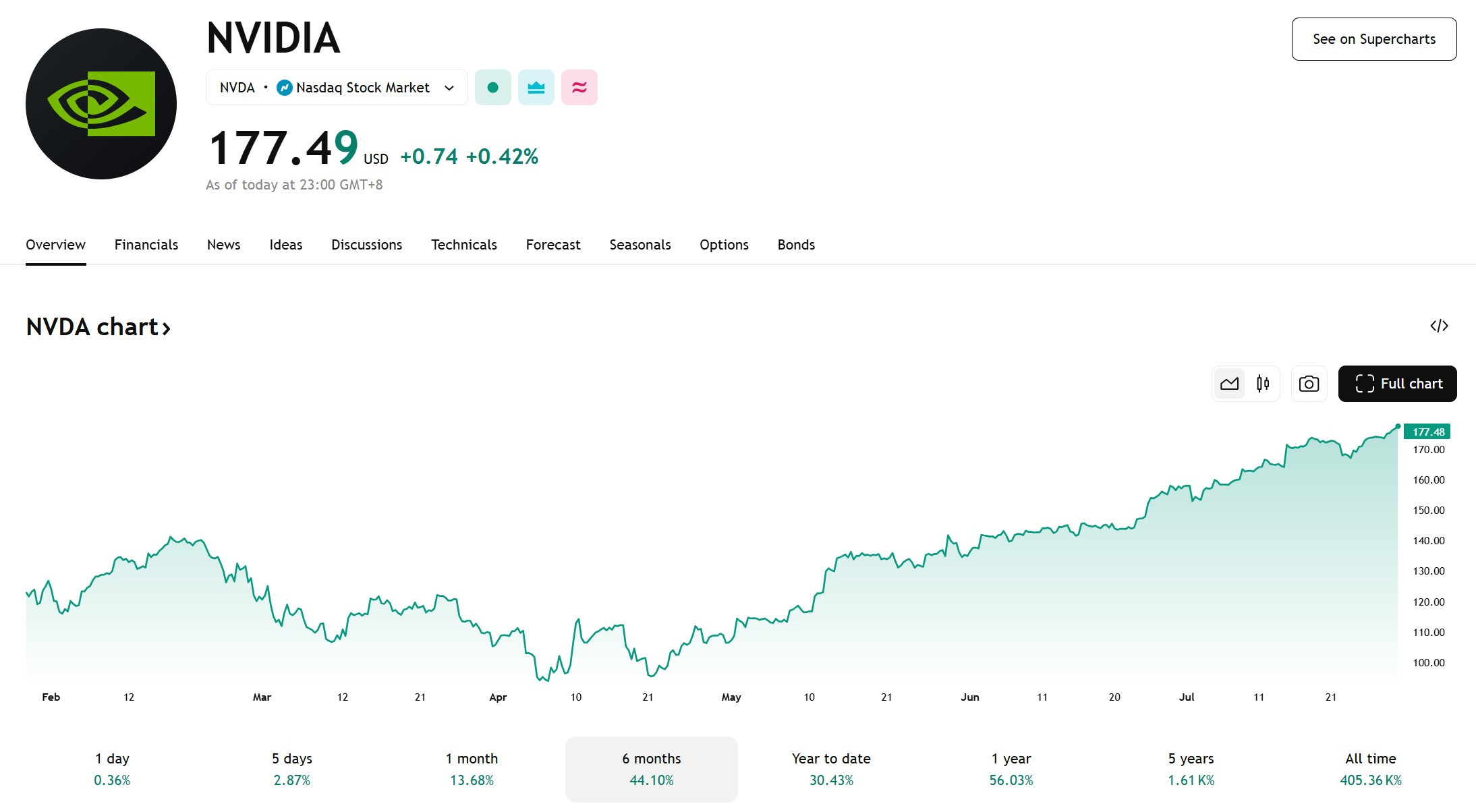
- The EU plans to purchase €40 billion in AI chips from U.S. suppliers in its upcoming trade agreement, lifting $NVDA shares to record highs and pushing rivals $AMD and $AVGO up 2-3%.
- Agriculture and dairy trade irritants remain in U.S.-India talks, but Washington’s 15% tariff on EU goods and looming 20-25% levies on Indian exports highlight the wider geopolitical stakes behind these technology deals.
- Markets are eyeing how power-efficient hardware and large-scale chip buys will shape margins, supply chains and the next wave of AI infrastructure investment.
What Makes 800 V DC a Game-Changer?
Traditional data‑center power distribution relies on 48 V or 380/400 V DC rails, but AI racks now demand 500 kW to 1 MW—10-30× more than before. Upping the bus voltage to 800 V DC reduces current by half, cutting resistive (I²R) losses to roughly 10%, slashing conductor size and heat generation, and simplifying power-conversion stages.
ON Semiconductor’s SiC MOSFETs, solid-state transformers and high-density DC-DC modules form the heart of the new solution, delivering high power density at each conversion step. This shift dramatically improves rack-level efficiency and paves the way for Nvidia’s planned 1 MW “AI Factory” server pods set to enter production in 2027.
Are AI Data Centers Ready for the Power Leap?
Many hyperscale and AI training clusters still use 48 V DC (via OCP Open-Rack) or 380/400 V DC. The jump to 800 V is in pilot phase, slated for demonstration between 2025–2027. Data centers must adapt cooling, busbar design and safety protocols to manage higher voltages.
Liquid‑cooling schemes—especially immersive and cold‑plate designs—pair naturally with 800 V DC’s lower current profile, reducing hotspots and enabling tighter densities. Early adopters expect up to a 5 percentage‑point gain in overall power-supply efficiency, freeing capacity for extra GPUs or auxiliary systems.
EU Chips Deal Boosts U.S. Semiconductor Giants
In Brussels, negotiators confirmed plans to source €40 billion of AI chips from U.S. suppliers as part of a new U.S.‑EU trade agreement. Nvidia shares jumped over 1% to fresh highs, while AMD climbed nearly 3% and Broadcom and Marvell added more than 2%.
The bloc’s commitment stems from an intent “to strengthen energy procurement and investment ties,” according to an EU Commission spokesperson. Beyond chips, the deal includes a 15% tariff on most EU exports to the U.S., part of Trump’s strategy to rebalance trade.
How Will Markets React to the EU Procurement?
Large‑scale procurement will smooth demand visibility for chipmakers, potentially locking in multi-year contracts that underpin capital expenditure plans. Nvidia stands to gain the most, with its dominant data-center GPUs already integrated into training clusters worldwide.
Competitors may scramble to bolster supply or strike offsets—such as technology transfers or localized assembly—to meet EU content criteria. Market watchers will track implied volatility: can chip stocks sustain momentum, or will geopolitical frictions and supply bottlenecks temper gains?
The Road Ahead for AI Infrastructure
These twin developments—power‑architecture innovation and guaranteed chip offtake—form a potent one‑two punch for the AI supply chain. Higher-voltage DC systems unlock denser, more efficient compute pods, while assured EU procurement underwrites massive GPU fabrication.
Cascading effects include increased demand for advanced power semiconductors, accelerated deployment of liquid-cooling solutions, and heightened competition as rivals race to offer alternative high-voltage platforms. Data-center operators, investors and policymakers alike must now recalibrate their strategies to this new electrified frontier.
As AI workloads surge, from ChatGPT to bespoke enterprise models, power and chip availability will define winners and losers. Nvidia’s foray into 800 V DC and the EU’s €40 billion chip order underscore that the next battleground is not just on silicon, but in volts and euros.