
Microsoft Q4 Earnings Preview: Can Azure and AI Spending Push It Past the $4 Trillion Mark?

Shearing sheep
July 30, 2025
GoGPT Summarizes Articles

Microsoft ($MSFT) will report its fiscal Q4 2025 earnings after the bell on July 30, and all eyes are on whether its cloud momentum—and surging AI investment—can keep the rally alive.
Wall Street expects revenue of $73.8 billion, up 14% year-over-year, with EPS forecast at $3.38, also up around 14%.
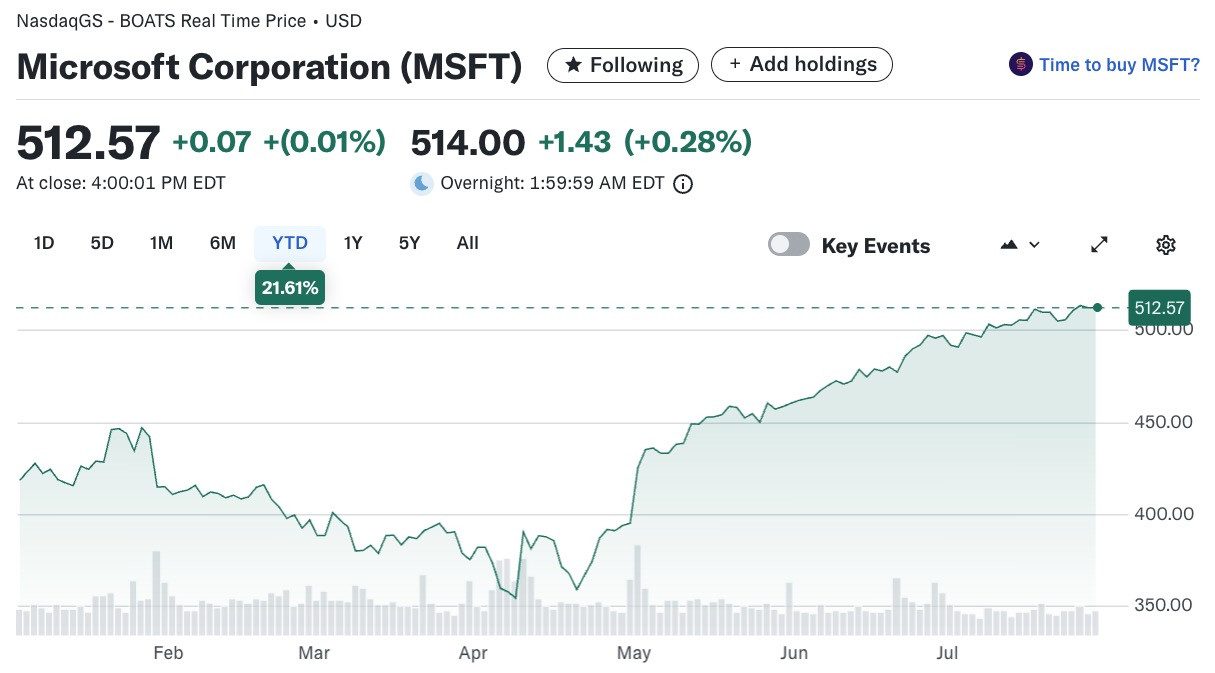
The stock is up more than 21% YTD and recently hit an intraday record high of $518.29, lifting its market cap above $3.8 trillion.
Azure and Cloud: Still the Main Growth Driver
The Intelligent Cloud segment, which includes Azure and server products, is expected to generate $28.75–$29.05 billion in revenue, with fixed currency growth of 20%–22%. Within that, Azure remains the star. Morgan Stanley projects Azure’s Q4 growth at 35%–36%, matching last quarter’s strength and in line with current consensus. The first quarter of fiscal 2026 is expected to show 34%–35% growth.
There are three key drivers behind Azure’s continued strength:
1. Robust customer demand and AI integration: Channel checks show accelerated migration to the cloud and deeper AI integration. In Q1, Azure AI token processing grew 5x YoY to 100 trillion. AI-related annualized revenue may now exceed $15 billion, up from $13 billion last quarter.
2. AI infrastructure scaling up: Microsoft significantly ramped up shipments of its high-end AI server racks (GB200 NVL72), from 1,000 units in Q1 to 6,000 in Q2, easing compute bottlenecks.
3. Enterprise confidence: 52% of CIOs are already deploying workloads on Azure and plan to stay committed over the next three years.
That said, Azure’s growth could cool slightly in the coming quarters. Analysts note a decline in scheduled backlog and lower pricing trends, which could bring YoY growth closer to 30% longer term.
Copilot and M365: Rising Adoption, Unclear ROI
The Productivity and Business Processes segment, home to Microsoft 365 and Copilot, is expected to maintain low double-digit revenue growth. Copilot adoption is rising—Github Copilot has over 15 million users (up 400% YoY), and Copilot Studio is now used by over 230,000 businesses. Office subscription revenue grew 16%, with enterprise adoption up to 17%–18%.
Still, investors are cautious. Many are waiting to see whether Copilot can deliver a meaningful return on investment. Surveys show 72% of CIOs plan to deploy Microsoft 365 Copilot within 12 months, potentially covering 31% of employees. That number could rise to 43% over the next three years—but execution and monetization remain key watchpoints.
Personal Computing: Modest Growth, Big Bets
Personal Computing is expected to grow at a low single-digit pace. Microsoft has embedded large language models like Gemini and ChatGPT into Windows PCs—but whether that translates into commercial upside remains to be seen. The Xbox and Activision Blizzard segments also face questions about future scale and profitability, despite strong franchises and ongoing expansion.
Capex and AI Infra: Spending Hits New High
One big number to watch: capital expenditures. This quarter could see a record $17.7 billion in spending. Looking ahead, Microsoft is expected to guide for $100 billion in total FY2026 capex, with GPUs accounting for 60% of server-related investment. That underscores just how seriously Microsoft is doubling down on AI infrastructure.
At the same time, Microsoft is tightening costs—laying off nearly 4% of its workforce in its second major round of cuts this year.
OpenAI: Collaboration or Constraint?
The company’s relationship with OpenAI will likely come up during the earnings call. Investors want clarity on whether Microsoft is adjusting its exposure, renegotiating contracts, or finding new ways to monetize its massive training investments through revenue sharing.
Final Thoughts
Microsoft’s growth story still rests heavily on Azure and AI. While there's strong momentum going into the quarter, investors will be listening closely for any signs of deceleration—especially in cloud bookings, margins, and guidance.
The path to a $4 trillion valuation is in sight, but sustaining that momentum will require more than just flashy AI demos. Microsoft needs to keep proving that all this capex and Copilot adoption translates into tangible, durable growth.
What’s Your Estimate?
While investors wait to see whether Microsoft’s Q4 numbers will reinforce its AI-driven rally, there's another way to get involved:
Think you know where Microsoft Cloud is headed? Join our bounty challenge and predict Q4 cloud revenue.
#Q2 Earnings Hunter: Share Your Stories#$Microsoft Corp(MSFT)