
Amazon Q2 Preview: AWS and Ads in Focus Amid Tariff Headwind

Shearing sheep
July 31, 2025
GoGPT Summarizes Articles

Amazon ($AMZN) will report its Q2 earnings after the market closes on Thursday, July 31, and while topline growth is expected, the market remains cautious. The company has guided revenue between $159B and $164B, with operating income projected between $13B and $17.5B—wider than usual, highlighting persistent uncertainty.
According to consensus estimates, Amazon is expected to post Q2 revenue of $162.02 billion, up 9.5% YoY, and earnings per share of $1.323, a modest 5% increase. But the headline numbers don’t tell the full story.
AWS and Advertising: The Key Growth Engines
AWS, Amazon’s cloud business, continues to be the core profit driver. Last quarter, AWS posted an operating margin of 39.5%, far above the company’s retail segment. For Q2, analysts expect AWS revenue growth of around 16.5–17.4% YoY—still healthy, but below the growth rates seen at Microsoft Azure (30%+) and Google Cloud (30%+).
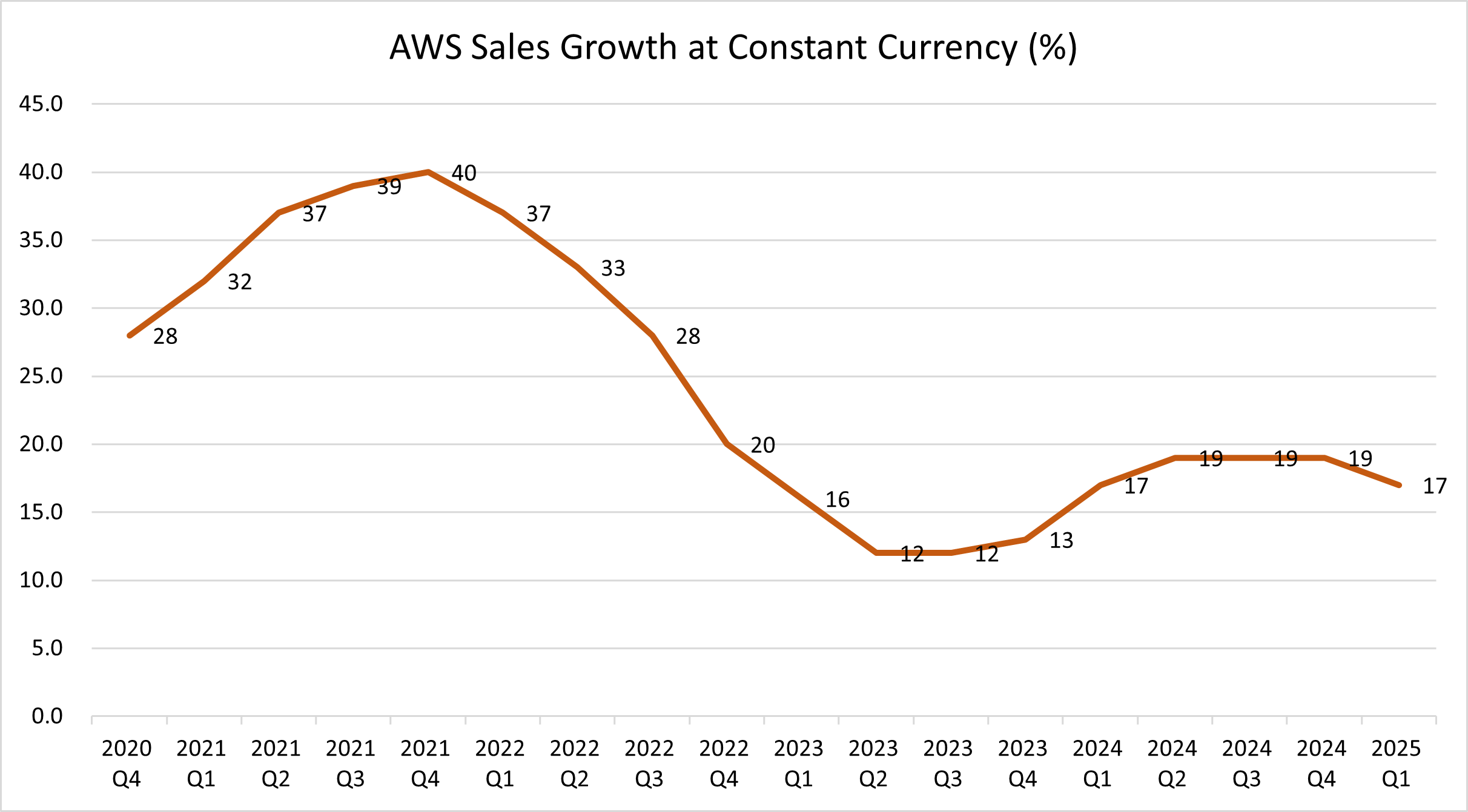
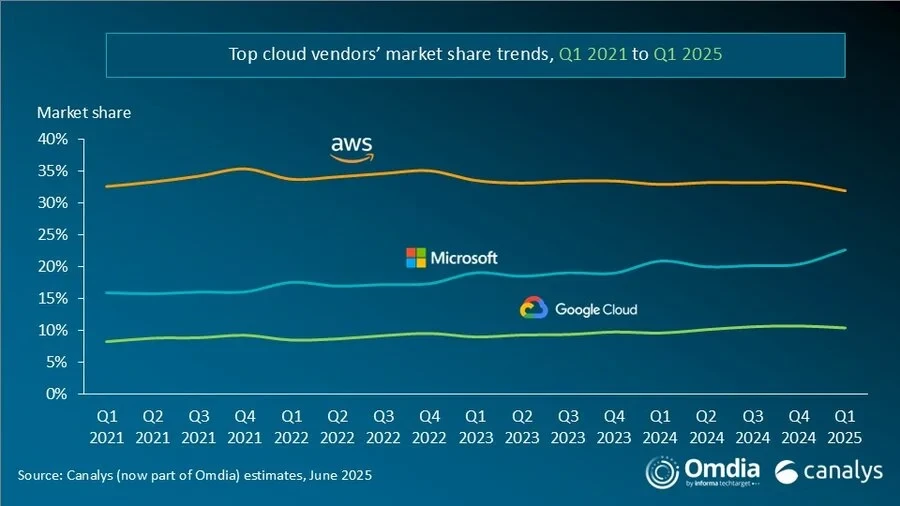
While growth has moderated, AWS still maintains a leading global market share with a 32% share in Q1 2025, ahead of Azure’s 23% and Google’s 10%. However, intensified competition and the evolving AI landscape mean all eyes will be on management’s comments about H2 demand, especially around GenAI workloads and the $4B Anthropic deal.
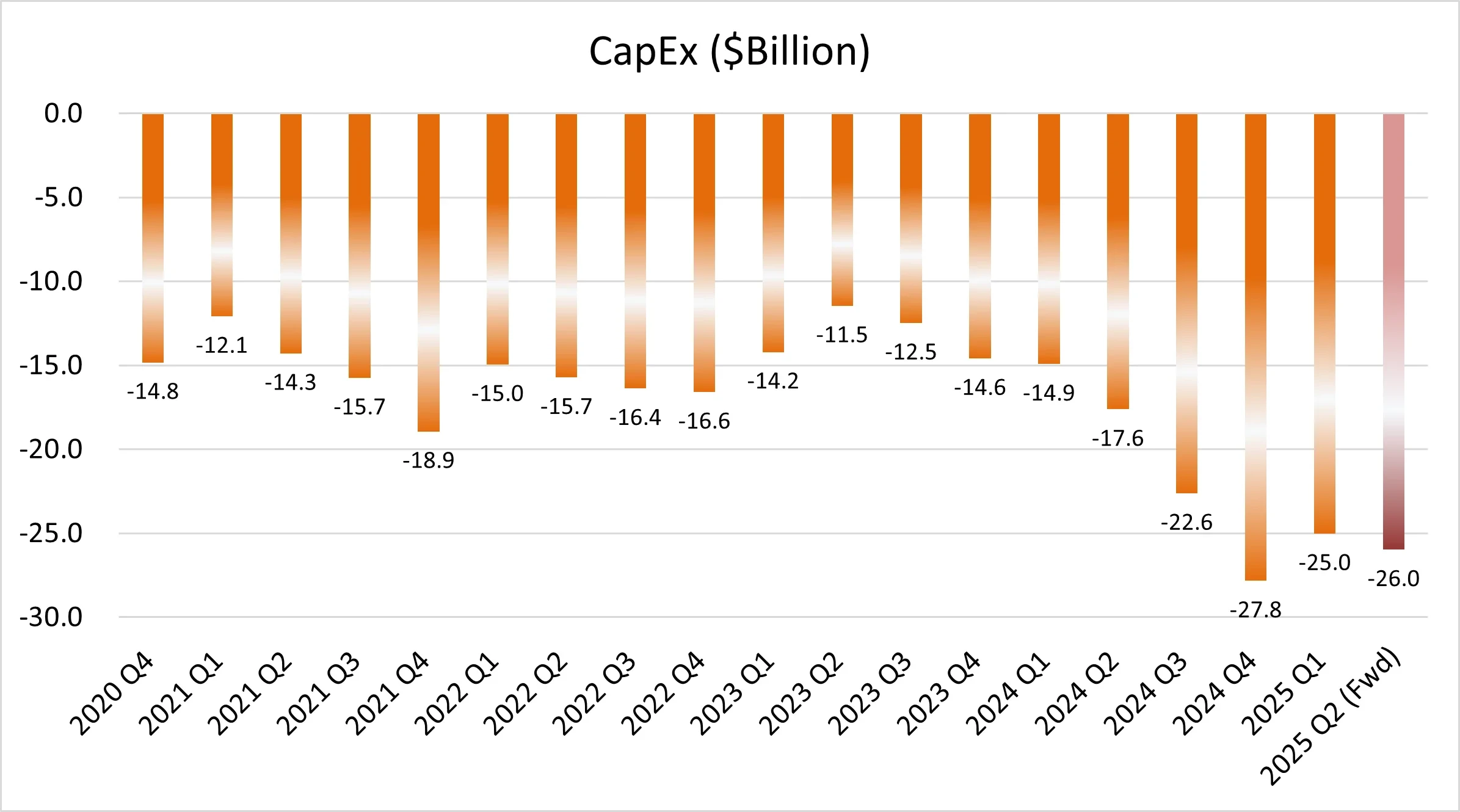
Capital expenditures (CapEx) remains heavy, with Amazon expected to spend $25–26 billion in Q2 alone, mostly to expand AWS infrastructure and build out AI capabilities. Full-year CapEx is on track to exceed $100 billion, reflecting Amazon's long-term commitment to tech infrastructure.
On the advertising front, growth has been even stronger. In Q1, ad revenue jumped 17.7% YoY to $13.9B, surpassing AWS as Amazon’s fastest-growing segment. For Q2, analysts estimate 17.5% YoY growth. Prime Video ads, Sponsored Listings, and DSP offerings are all seeing solid demand, bolstered by partnerships with Roku and Disney that broaden ad distribution channels. Importantly, advertising continues to contribute meaningfully to margin expansion.
E-Commerce and Consumer Sentiment
Amazon’s core online store business is expected to grow at a more muted 6% pace in Q2. To stay competitive against players like Temu, Amazon has leaned into discounting. Its new “Haul” section, which features ultra-low prices and free shipping on qualifying orders, launched late last year and has now expanded to Europe. Though likely loss-making for now, it signals Amazon’s push into value-focused segments.
This year, Amazon extended Prime Day to four days and featured steep Haul discounts across the board—up to 40% off. According to Adobe Analytics, U.S. online spending hit $24.1B during July 8–11, up 30.3% YoY, beating expectations. Amazon was reportedly the biggest driver of this surge, suggesting resilient consumer demand despite macro pressures.
On the Prime membership side, revenues continue to grow steadily. JPMorgan estimates that a potential price hike from $139 to $159/year in the U.S. could add $3B in annual revenue, with minimal impact on subscriber growth.
Tariffs: An Overhang That Won’t Go Away
Trade policy remains a key risk. Amazon’s global sourcing strategy and 60% North American revenue exposure make it especially vulnerable to rising tariffs. Management has repeatedly flagged trade uncertainty as a significant challenge in past earnings calls.
So far, Amazon has absorbed some of the added costs rather than passing them on to consumers—putting pressure on margins. But as tariff-related costs continue to loom, investors are watching closely to see how Amazon will navigate the evolving trade landscape under President Trump’s renewed policy agenda.
Still, some analysts are cautiously optimistic. Deutsche Bank notes that tariff costs have yet to fully materialize and that consumer strength could help offset the downside. Needham even raised its estimates ahead of earnings, suggesting the worst of the tariff-related drag may already be behind us.
What to Watch
Investors should keep an eye on:
-
AWS revenue and profit margin trends, plus GenAI commentary
-
Ad revenue momentum and updates on streaming ad expansion
-
Consumer behavior trends via online store sales and Prime engagement
-
Capital expenditures and infrastructure buildout plans
-
Management’s take on tariffs, inflation, and broader macro headwinds
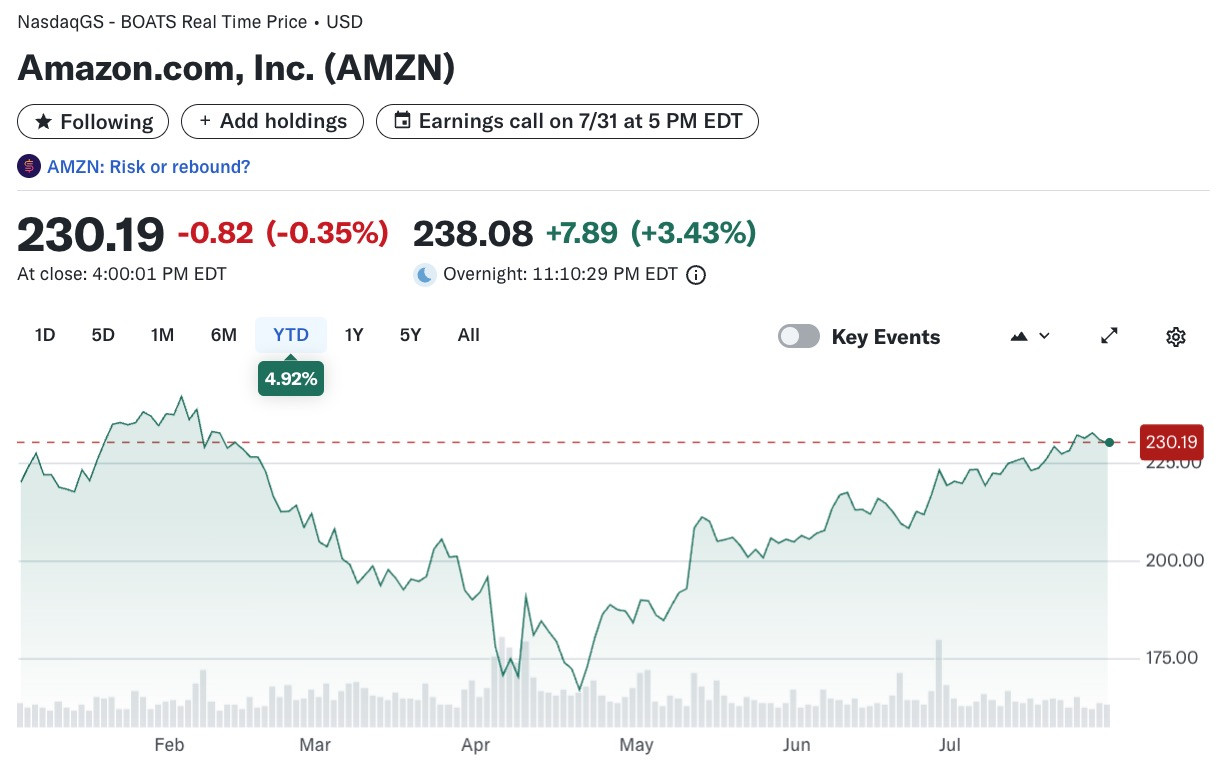
Amazon has underperformed the S&P 500 this year, up only 5% YTD, weighed down by macro worries and tariff fears. But with strong AI infrastructure bets, a growing ad business, and a sticky Prime subscriber base, this quarter may be a turning point, provided earnings meet expectations and management signals confidence in the second half of the year.
#Q2 Earnings Hunter: Share Your Stories#$Amazon.Com Inc(AMZN)