
ExxonMobil Q2 Preview: Cost Cuts vs. Commodity Pressures—Will It Be Enough?

Shearing sheep
August 1, 2025
GoGPT Summarizes Articles
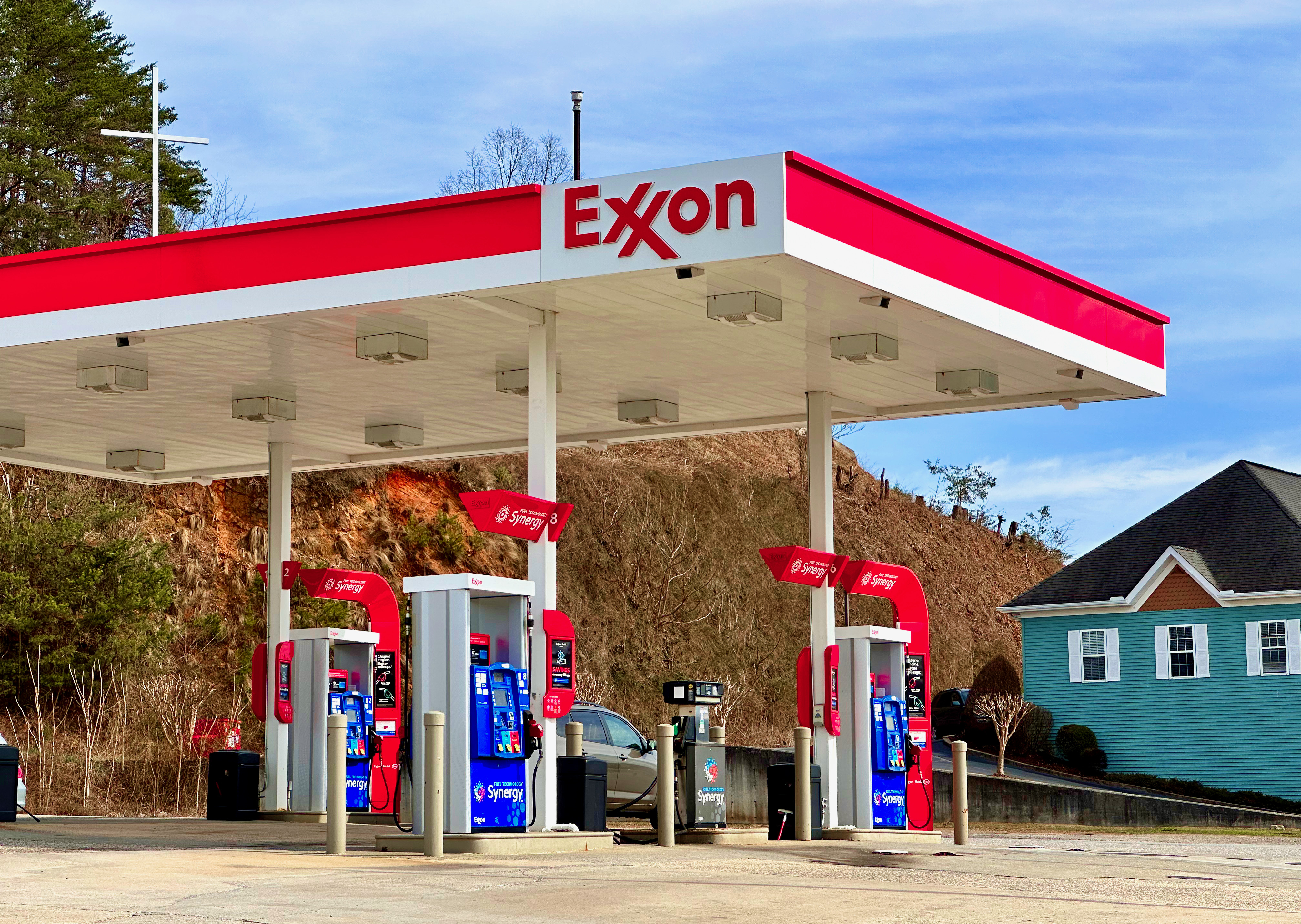
ExxonMobil ($XOM) is set to report its Q2 2025 earnings before the market opens on August 1st, and expectations are mixed as investors weigh falling oil and gas prices against the company’s cost discipline and asset optimization. Wall Street is currently expecting EPS of $1.49—a 30.4% drop year-over-year—and revenue of $82.82 billion, down 11% from the same quarter last year.
That said, not everything is negative. While topline expectations have come down, analysts actually revised their EPS estimates up 10.7% over the past month, suggesting some cautious optimism heading into the print.
Weak Commodity Prices Still Weighing
Let’s start with the obvious headwind: prices. According to the U.S. Energy Information Administration (EIA), WTI crude averaged between $62 and $68 during Q2, well below Q1 levels and down sharply from last year. Natural gas prices followed a similar trend. Exxon itself warned in an 8-K filing that lower oil prices are expected to dent upstream earnings by $800M–$1.2B, and gas prices could shave off another $300M–$700M. In a business where upstream still contributes meaningfully to the bottom line, that’s not trivial.
Segment Expectations: A Closer Look
Analyst estimates for various revenue components give us a clearer picture of where the pain—and potential stability—may be coming from:
-
Sales and Other Operating Revenue: Expected to fall 11.9% YoY to $61.18B.
-
Energy Products Revenue (U.S.): $24.24B, down 8.2%.
-
Energy Products Revenue (Non-U.S.): $36.94B, down 14.1%.
-
Upstream Revenue (U.S.): $6.04B, down 10.3%.
-
Chemical Products (U.S.): $1.97B, down 11.2%.
Production volume is one bright spot: oil-equivalent production per day is expected to hit 4.547 million barrels/day, up from 4.358 million a year ago. But natural gas production in Europe, Africa, and Asia is forecast to decline across the board—another symptom of global pricing and demand challenges.
Cost Cuts, Asset Sales, and Shareholder Returns
Despite the macro pressures, ExxonMobil has done a solid job controlling what it can. Structural cost reductions now total $12.7 billion since 2019, with management showing continued discipline in keeping SG&A under control. The company also completed ~$5 billion in asset divestments, bringing its total non-core asset sales to $24 billion since 2019.
Shareholders have benefited: in Q1 alone, Exxon returned $9.1 billion through dividends and buybacks. That effort also helped ease dilution concerns following the Pioneer acquisition.
Guyana, Brazil, and the Long Game
Looking ahead, the real story could be margin expansion via new production coming online. Two FPSOs in Guyana and Brazil are expected to enter service later this year, potentially pushing break-even levels down to $35/bbl by 2027—and even $30/bbl by 2030, according to management.
Exxon also targets per-barrel profit to increase from $10 in 2024 to $13 by 2030. These long-term goals are ambitious, but if met, they could support stronger margins and justify Exxon’s current valuation premium.
Valuation and Market Performance
XOM’s stock is up 3.78% year-to-date, outperforming the Energy Select Sector SPDR ETF (XLE)’s 1.81% gain but still lagging behind the broader S&P 500’s 7.78% rise. Yet Exxon trades at a trailing EV/EBITDA of 6.9x, well above the sector average of 4.35x. That premium reflects investor confidence in Exxon’s execution, capital discipline, and long-term cash flow visibility.
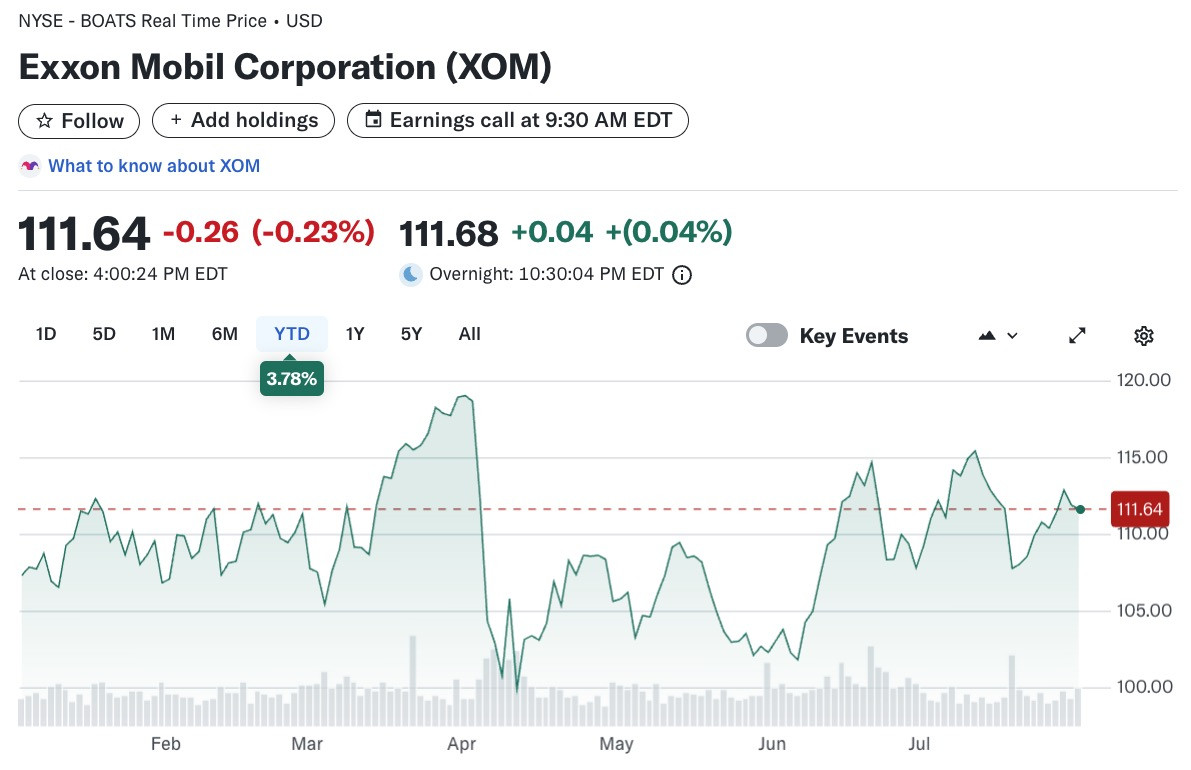
Goldman Sachs currently values the stock at $117, only about 4.8% upside from current levels. But bulls argue that consistent cost savings, resilient balance sheet metrics, and a healthy 3.8% dividend yield make XOM an attractive value hold—especially for income-focused portfolios.
Final Thoughts
With Q2 earnings around the corner, the near-term setup is cautious. Commodity price weakness will likely weigh on the results, but analysts and investors will be watching closely for management's outlook on the Pioneer integration, progress in Guyana and Brazil, and updated cost guidance.
Whether or not Exxon beats on earnings, the bigger question is whether it can maintain its margin story and cash flow resilience. If so, and if the Fed does begin to ease rates later this year, XOM might just see a re-rating.
What’s Your Estimate?
While everyone’s waiting for Exxon’s Q2 results, why not get involved now?
Our app is running a bounty challenge—predict ExxonMobil’s stock move after today’s earnings release.
#Q2 Earnings Hunter: Share Your Stories#$Exxon Mobil Corporation(XOM)