
Buffett’s Berkshire Q2 Shake-Up: Can the Oracle Weather the Trade-Tariff Tempest?

Berkshire Hathaway ’s Q2 results delivered a punch of contrasts: revenues slightly down at $92.5 billion versus $93.7 billion a year ago, operating profits sliding marginally to $11.16 billion, and net income plunging 59% to $12.37 billion.
Cash reserves have dipped for the first time in three years to $344.1 billion, and no share repurchases were executed this quarter.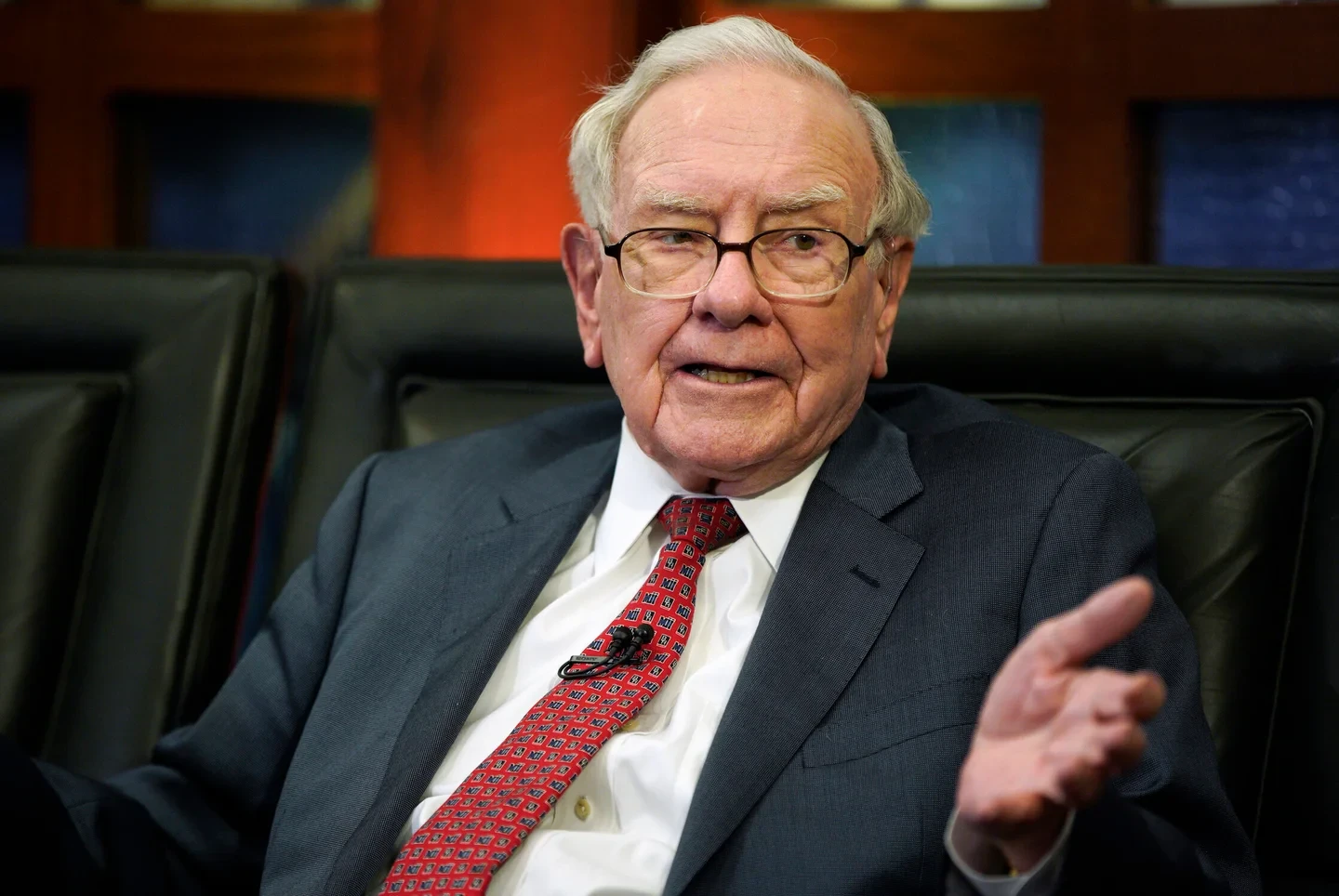
Key Points
- Revenue & Profits: Q2 revenue $92.5 billion (-1.2%); operating profit $11.16 billion (-3.8%); net income $12.37 billion (-59%).
- Investments & Impairments: Investment gains only $497 million versus $1.875 billion last year; a $3.8 billion non-cash write-down on Kraft Heinz.
- Cash & Buybacks: Cash pile down to $344.1 billion from $347.7 billion; zero buybacks for 11 consecutive quarters.
- Tariff Warning: Trade tensions and tariffs threaten virtually all business segments and stock holdings.
- Noteworthy Trade: Sold one-third of VeriSign stake for $1.23 billion to sidestep strict SEC rules.
- Leadership Watch: Buffett plans year-end retirement, recommending Greg Abel as CEO successor.
“What’s Driving That Profit Plunge?” -Revenue vs. Income
Despite a modest 1.2% revenue dip, net income tumbled 59%. That disparity highlights non-operational factors at play. A mere $497 million in investment profits—down from $1.875 billion—reflected market headwinds. Moreover, a $3.8 billion pre-tax impairment on Kraft Heinz stock crushed earnings.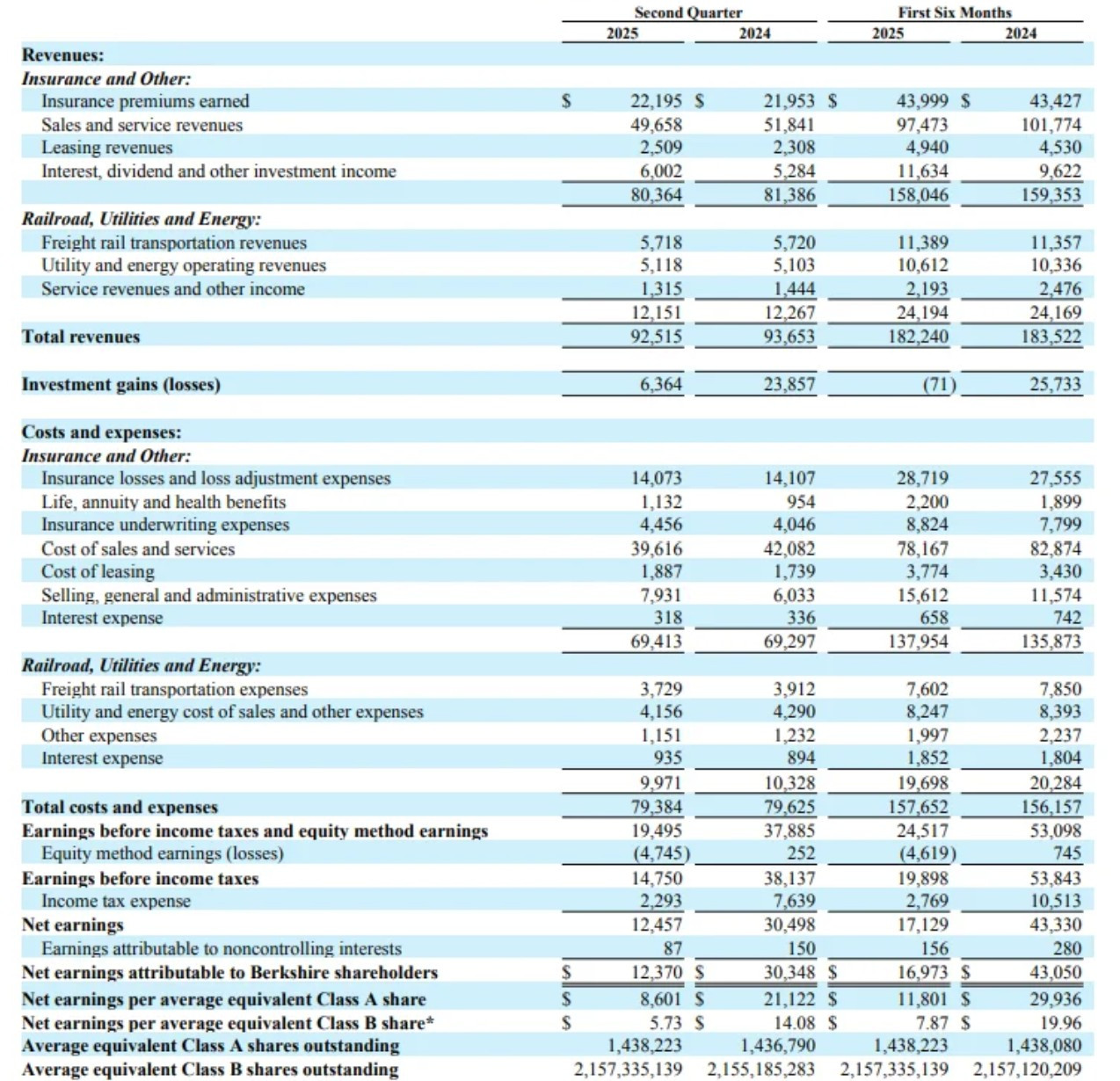
Insurance underwriting profit held at $2.5 billion, though a $1.2 billion wildfire hit at GEICO. BNSF Railway’s efficiency gains lifted after-tax profits by 19.5% to $1.47 billion, offsetting pressure elsewhere.
“Is Berkshire’s Cash Cushion Still a Fortress?”- Liquidity & Allocation
Cash reserves, long the envy of competitors, shrank by $36 billion to $344.1 billion this quarter—the first decline in three years. Yet, this hoard still dwarfs most peers’ war chests. With no share repurchases executed for the eleventh straight quarter, Buffett signals a cautious stance amid valuation concerns and scarce attractive deals.
That said, a $1.23 billion sale of 4.3 million VeriSign shares at $285 each (6.9% discount) reduced Berkshire’s stake from 14.2% to 9.6%. This maneuver deftly sidesteps SEC “large-shareholder” reporting burdens and trading constraints.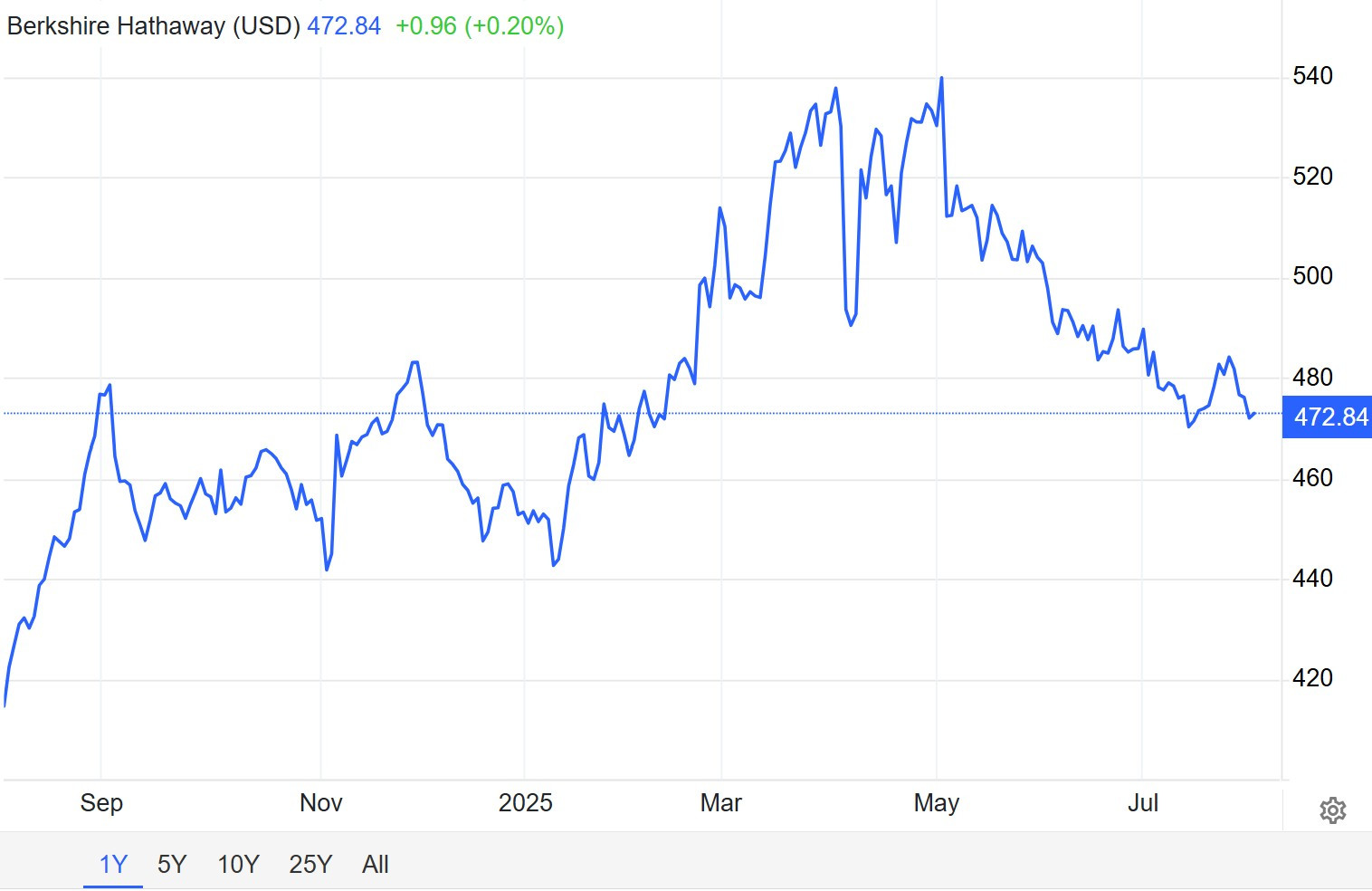
“Where Are the Growth Engines?”-Operating Businesses in Focus
Berkshire’s insurance and reinsurance operations delivered an underwriting profit of $2.5 billion despite being hampered by a $1.2 billion wildfire charge at GEICO, while investment income in the segment rose 1.4% to $3.37 billion.
Over at BNSF Railway, productivity improvements drove after-tax profit up 19.5% to $1.47 billion, even though freight volumes grew only modestly. Berkshire Energy also made strides, with operating profits up 7.2% to $702 million thanks to its expanding renewable portfolio and grid-reliability services.
Across manufacturing, service and retail, operating profit climbed 6.5% to $3.6 billion, but tariff-induced order delays in consumer brands like Fruit of the Loom and Garan tempered overall momentum.
Together, these divisions illustrate how Berkshire’s unparalleled diversification both shields it and exposes it to evolving external pressures.
“How Bad Are Those Trade Tensions?”-Tariff Threats and Consumer Brands
Berkshire’s filings issue a stark warning: “Almost all operating businesses and stock investments are vulnerable to trade policy shocks.” In Q2, international trade tensions accelerated, squeezing supply chains and creating order backlogs for Fruit of the Loom (-11.7% sales) and Garan (-10.1%). Jazwares toy unit saw revenues collapse 38.5%.
With new U.S. tariffs set to hit on August 7, these headwinds may intensify. Buffett cautioned that adverse policies could “significantly impair future results,” making diversification even more vital.
“Is the Portfolio Still in Buffett’s ‘Sweet Spot’?” -Equity Stakes Unpacked
Berkshire’s top five public-equity positions—American Express, Apple, Bank of America, Coca-Cola and Chevron—now represent 67% of the portfolio’s fair value.
American Express shares alone total 151.6 million (21.8% of its float), reflecting Buffett’s longstanding conviction in the company’s cash-generative model. Holdings in Apple and Bank of America anchor his views on durable balance sheets, while Chevron provides energy exposure amid volatile commodity markets.
Despite these convictions, the firm sold roughly $3 billion in equities this quarter, marking the eleventh consecutive quarter of net selling and signaling Buffett’s judgment that many market valuations are overheated relative to intrinsic value.
“What Happened with Kraft Heinz?”-Writing Off a ‘Rare Misstep’
Berkshire recorded a $3.8 billion non-cash impairment on its 27.4% stake in Kraft Heinz after fair-value erosion. Though the headline sounds dire, the real story lies in Buffett’s preferred-shares wrinkle and dividend haul.
- Ordinary Shares: Purchased $9.8 billion overall, now worth $8.8 billion.
- Dividends: Collected $6.3 billion since 2015 on common shares.
- Preferred Shares: Invested $8 billion, redeemed for full principal plus $2 billion dividends.
Combined, these elements yield a roughly 60% total return on the common-stock investment—a masterful outcome cloaked by a steep write-down.
“What’s Next at the Helm?”- Leadership Transition Looms
At age 94, Warren Buffett stunned investors by announcing his plan to retire as CEO by year-end. He has recommended Greg Abel—currently Vice Chairman of non-insurance businesses—to succeed him. Only Buffett’s two children knew of this arrangement until he revealed it at the annual meeting.
Abel, credited with engineering Berkshire’s energy and railroad strides, now faces the mantle of steering a behemoth navigating unfamiliar macro turbulence. Investors will watch closely if the Oracle’s disciple can match his mentor’s clairvoyance.
Looking Ahead: Weathering the Storm
Berkshire’s Q2 performance underscores its strengths—robust railway and energy profits, massive liquidity, and a disciplined investment ethos—yet also highlights vulnerabilities from trade conflicts and portfolio swings.
With a historic leadership handoff imminent and tariffs threatening nearly every unit, the next chapters in the Berkshire saga promise to test the mettle of both new and old guards. Keep an eye on Q3’s tariff impacts, capital allocation moves, and whether Greg Abel steps into Buffett’s oversized shoes as adeptly as the market hopes.