
A Perfect PE Exit: Investment Under 2 Years, Net Profit Exceeds $3 Billion

This year, the largest single transaction in South Korea’s cosmetics supply chain was born.
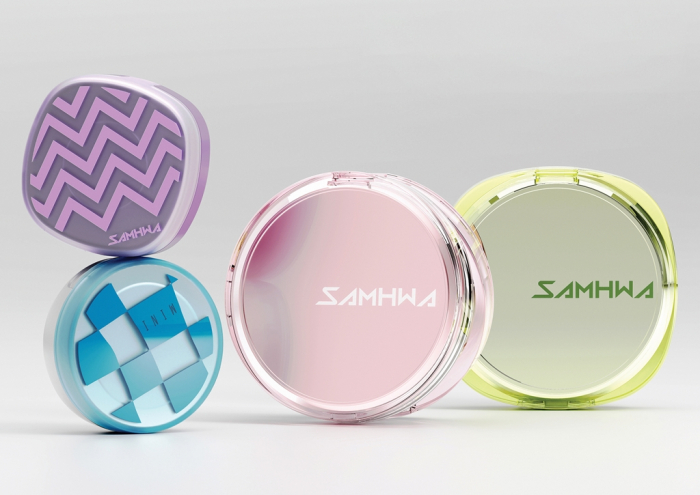
Recently, private equity giant KKR signed an agreement with TPG, acquiring 100% of Samhwa, a leading South Korean cosmetics packaging firm, for 800 billion KRW (approximately 4.136 billion RMB) in cash.
With KKR taking over, TPG’s investment in Samhwa reaches a perfect conclusion—yielding a nearly 3x return on exit.
Looking at TPG’s entire investment and exit process in Samhwa—buying at a valuation trough, boosting profitability through operations, and selling at a peak— it’s a textbook case of PE investment.
Outmaneuvering Blackstone and Carlyle, KKR Shakes Hands with TPG
According to insiders, the bidding process was intensely competitive.
KKR faced dual pressure from fellow PE giants Blackstone and Carlyle.
Both Blackstone and Carlyle advanced to the second round of bidding, appearing determined to win, putting significant pressure on KKR.
Their interest in Samhwa was well-founded—Blackstone owns China’s leading packaging firm Xiayin Packaging, while Carlyle acquired global packaging group HCP in 2022.
Both aimed to bolster their Asian capacity and patent portfolio with Samhwa’s precision pump technology.
However, KKR’s final bid reportedly outpaced competitors by 5%-7% and included a commitment to invest an additional 200 billion KRW over the next three years to expand Samhwa’s automated factories in Vietnam and Mexico. Ultimately, KKR secured the deal.
Structurally, KKR employed its traditional LBO (leveraged buyout) model—55% of the 4.136 billion RMB total consideration comes from senior loans by Korean banking syndicates, 25% from KKR’s Asia Fund III equity, and the remaining 20% from Samhwa’s management rolling over their investment.
The transaction is expected to close in October, with current CEO Park Sung-jae staying on and signing a new 5-year incentive plan with KKR.
‘Pump King’ Sold for 300 Billion KRW, TPG Snags a Bargain
Samhwa’s story began in 1977 as a plastic bottle cap workshop in Seoul’s Gangnam district.
Founder Park Jong-soo (father of current chairman Park Sung-jae) initially supplied aluminum spray heads to local perfume brands until the 1990s Korean cosmetics boom prompted its first expansion into lotion pumps.
The true turning point came in 2007 when Samhwa developed a “micrometer-dose control pump,” capable of limiting single-dose variance to ±0.01ml, earning it the moniker “Pump King” in the market.
This led to a decade-long exclusive global supply contract with the Estée Lauder Group, 30 years after Park Jong-soo founded Samhwa.
Recent operational data shows Estée Lauder, LVMH, L’Oréal, and Shiseido collectively account for 58% of Samhwa’s revenue, while local firms AmorePacific and LG Household & Health Care contribute 22%.

However, in November 2023, Samhwa’s founding family and Korean private equity firm STIC sold 100% of the company to TPG for 300 billion KRW (1.551 billion RMB).
At the time, half of Samhwa’s revenue came from low-margin generic plastic bottles, with an EBITDA margin of just 12%, leaving significant room for improvement. The market widely viewed TPG’s acquisition as a steal.
Textbook PE Play: Holding Under 2 Years, Nearly 3x Return
Capital’s keen sense of timing is no accident. After a smooth takeover, TPG swiftly implemented sweeping reforms across four key areas:
- Cutting Inefficient SKUs: TPG aimed to reduce Samhwa’s generic bottle SKUs from 1,200 to 400 within a year, redirecting capacity to high-margin pump heads.
- Restructuring Global Capacity: Closing two outdated injection lines in Korea, TPG built automated cleanroom facilities in Vietnam and Mexico, cutting per-unit labor costs by 38%.
- Digital Customization Platform: Under TPG’s leadership, Samhwa launched the “PumpLab” online customization system in August 2024, enabling small independent brands to complete pump mold-making and sampling within 72 hours, boosting average order value by 60%.
- Management Overhaul: TPG brought in Lee Sang-min, former LG Household & Health Care packaging division GM, as COO, and Kim Eun-joo, ex-Coty global procurement VP, as CPO, ending the family-run “rule by individuals” decision-making.
These reforms involved concessions and management changes, with some viewing TPG’s approach as overly aggressive. However, with 100% ownership, TPG pushed the changes smoothly.
The results validated TPG’s bold moves, with effects immediate. From the November 2023 acquisition to its July exit—less than two years—TPG transformed Samhwa.
With KKR’s takeover, TPG is set to recoup approximately 900 billion KRW (4.653 billion RMB), including 800 billion KRW from equity sales and 100 billion KRW in special dividends. After subtracting the initial 300 billion KRW investment, TPG nets 600 billion KRW .
TPG’s internal rate of return (IRR) on this investment reaches about 75%, with a cash-on-cash multiple (MOIC) of exactly 3x, making it one of the most successful cosmetics supply chain exits in South Korea’s PE market over the past three years.
It’s no wonder some PE firms thrive across cycles.