
Korea’s Hottest Hotels Bought by Wall Street

Another “alternative investment” deal emerges in Korea.
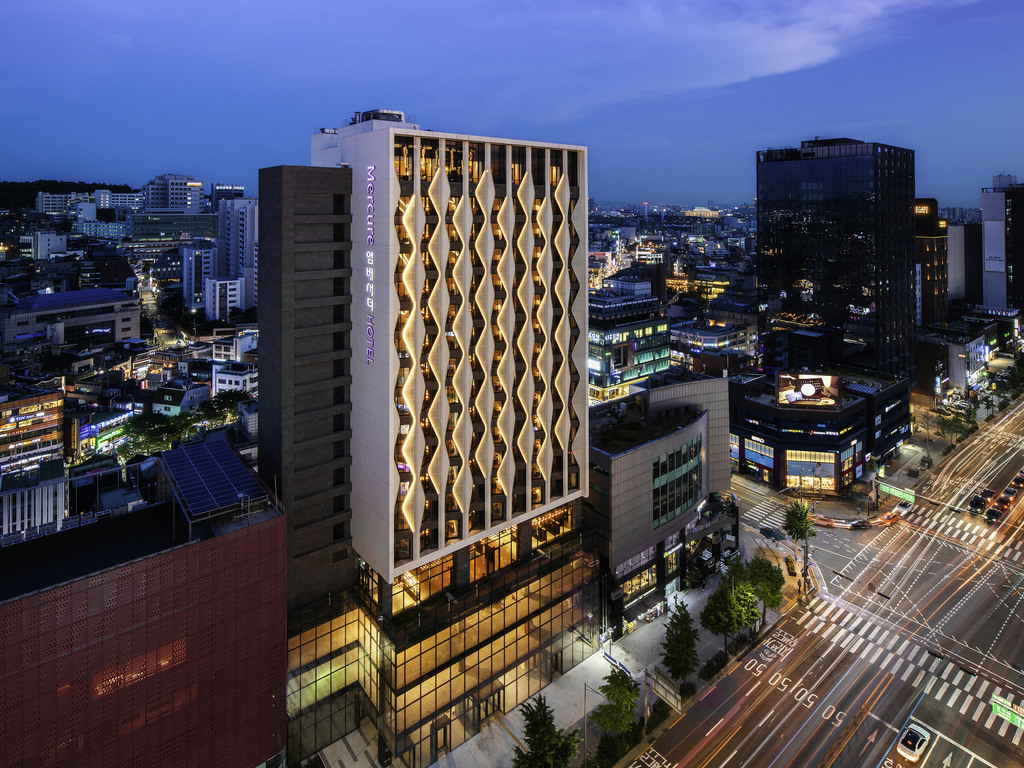
At 1 a.m. in Seoul’s Hongdae, queues for fried chicken still line the streets, while a small “sold” note quietly appears on the “Mercure Ambassador” hotel sign—Goldman Sachs has acquired this four-star property. Less than a week later, Blackstone is set to take over Juno Hair, a Korean salon chain with 180 outlets and 3,000 employees.
Why has Korea suddenly become Wall Street’s darling?
Start with the money. The government’s aggressive “Corporate Value-Up Program” is rapidly erasing the “Korea Discount”—2024 dividends and buybacks from listed companies have exceeded 6 trillion KRW, with record foreign inflows in Q1.
Then there’s the real estate: Cap Rates for hotels and malls in prime areas like Hongdae and Myeongdong remain 100 basis points below 2019 levels, yet occupancy rates have rebounded to 90%, offering Wall Street a rare “restored cash flow at a discount” window.
On one hand, the undervalued “Korea Discount” is being corrected by domestic reforms and Fed rate-cut expectations; on the other, the global appeal of Hallyu culture and consumer recovery continues to grow, tempting Wall Street with not just cash flows but premium investment opportunities.
Buying a Traffic Gateway
Goldman Sachs has acquired a four-star hotel in Seoul.
Recently, Goldman Group bought the Mercure Ambassador, a four-star hotel in Seoul, to bolster its alternative real estate investment business in Korea. The deal includes 270 rooms and a retail property in the northwest Hongdae area.
Insiders reveal Goldman paid 262 billion KRW (about $1.9 billion), though a Goldman representative declined to comment on the price.
Nikhil Reddy, head of Goldman’s alternative investments real estate in Asia-Pacific, said, “Korea is a strategic focus market for our real estate investment platform in the Asia-Pacific region. This property’s high foot traffic offers significant long-term value potential.”
Goldman’s acquisition isn’t just about owning a hotel—it’s a multifunctional key blending strategic positioning and cash flow.
Hongdae, a hub for Seoul’s nightlife, trendsetting culture, and international tourists, provides a scarce, traffic-rich location, perfectly anchoring Goldman’s focus on Korea within its Asia-Pacific platform.
The hotel-plus-retail structure delivers stable rental income and operational cash flow in a high-interest-rate environment, potentially outperforming traditional bonds or stocks. The 270 rooms and attached retail space also offer upgrade potential, brand premium, and future exit options like REITs or private funds, making it highly promising.
In short, Goldman didn’t just buy a hotel—it acquired a Seoul traffic gateway, a long-term rental asset, and a capitalizable financial tool.
Previously, the firm invested in redeveloping the Scarlet Building—a six-story retail-office complex spanning 6,032 square meters (64,928 square feet), now transformed into a high-occupancy retail property.
As a key part of Goldman’s asset management, its alternative investment platform covers private equity, private credit, real estate, infrastructure, hedge funds, and sustainable investments. As of March, Goldman’s global managed assets under regulation reached approximately $3.2 trillion.
Goldman’s intensified focus on Korea in 2025 stems from a “money, land, momentum” triple synergy.
- Money: Fed easing expectations combined with Korea’s reform dividends. Goldman’s latest report raised the KOSPI target from 3,100 to 3,500, citing Korea’s sensitivity to Fed rate cuts, global capital returning to emerging markets, and government governance reforms narrowing the “Korea Discount,” boosting liquidity across stocks and bonds.
- Land: Scarce urban assets are in a discount window. The rumored $1.9 billion acquisition of the Mercure Ambassador hotel and retail property in Hongdae is another strategic play, offering dense foot traffic, stable occupancy, and post-pandemic valuations yet to fully recover—embodying “cash flow + appreciation” dual drivers.
- Momentum: Goldman views Korea as a “strategic hub” for its Asia-Pacific real estate platform, with management openly calling it a market of strategic significance.
In essence, with policy tailwinds, discounted core assets, and Goldman’s expertise in asset securitization exits, Wall Street’s shrewdest capital is betting big here.
Korea Becomes the New Favorite
Just days after news of Goldman’s Mercure Ambassador acquisition, another Korean company caught Wall Street’s eye.
Reports indicate that Blackstone, a global investment firm and U.S. private equity giant, is negotiating to acquire Juno Hair, Korea’s largest premium salon chain, for $590 million (about 42.33 billion KRW).
According to its website, Juno Hair, founded in 1982, offers a portfolio including the bridal beauty flagship Avenue Juno, the Juno Academy training institute, and the proprietary Tria Milia haircare line. It has grown into a dominant force in Korea’s personal care market, with 180 salons and 3,000 employees.
The reports the deal will encompass all of Juno Hair Group’s operations. Valuation-wise, Juno Hair’s price aligns with global salon brands like Vidal Sassoon, acquired at 20x EBITDA for about 72 billion KRW.
Wall Street’s recent “Korea rush” isn’t coincidental—it’s the result of macroeconomic, industry, and asset price synergies.
First, Korea’s domestic reforms are delivering “institutional dividends.”
In February 2024, the government mimicked Japan’s approach with a “Corporate Value-Up Program,” offering tax incentives, easing buyback restrictions, creating a “Korea Value-Up Index,” and launching supporting ETFs to boost dividends and repurchases.
In 2024, KOSPI constituent dividend payouts rose to 4.4 trillion KRW (+12%), with buybacks doubling to 1.87 trillion KRW. Over 160 companies disclosed value-enhancement plans, though voluntary, attracting foreign inflows and adding nearly 10 trillion KRW to market cap in Q1.
Industry-wise, semiconductors (Samsung Electronics, SK Hynix) remain profit pillars, with AI high-bandwidth storage demand adding earnings elasticity. Defense, consumer, and financial sectors offer greater valuation recovery potential.
Second, Korean assets present a rare valuation window: office buildings, hotels, retail, and service chains are trading at Cap Rates below 2019 levels, while consumer demand has returned to or exceeded pre-pandemic levels, creating a “cash flow recovery + valuation repair” gap.
Moreover, Korean entrepreneurs are proactively embracing global capital. From the Mercure Ambassador hotel to Juno Hair, sellers are often first-generation founders seeking equity monetization for family succession while leveraging dollar funds’ brand backing and global networks to export Korean beauty and service standards to more markets.
From the entrepreneurs’ perspective, embracing international capital isn’t sentiment-driven or blind imitation—it’s the optimal solution forced by “lack of money, market, and time.”
With companies seeking capital for expansion and old money eyeing project value, Korea’s status as Wall Street’s “darling” fuels ongoing alternative investment heat.