
Crypto Treasury Premiums: Is the “buy-the-token-through-equity” Play Losing Its Mojo?

The “crypto treasury” model—public companies buying large amounts of tokens to offer investors indirect crypto exposure—has cooled. Stock price premiums to on-balance-sheet crypto values are shrinking, some names now trade below net asset value, and the once-breathless fund-raising spree (over $91 billion announced to buy crypto this year) has begun to show cracks. That reversal raises financing and volatility risks for both shareholders and broader markets.
Key Takeaways
- Many listed “crypto treasury” stocks have seen their valuation premium compress sharply; MicroStrategy’s premium fell from roughly 2.0x in May to about 1.75x today.
- A number of copycats, including Semler Scientific and Upexi, have seen their premiums decline or disappear. Some firms are trading below the value of the tokens they hold.
- Despite cooling sentiment, companies still announced plans this year to raise more than $91 billion to buy crypto—far outpacing the $38 billion raised in U.S. IPOs over the same period.
- Performance is diverging sharply: firms holding major tokens (BTC, ETH, SOL) have outperformed, while those buying niche tokens have often underperformed with negative median returns.
- The core risk: if stock prices drop to discounts, the easy cycle of using equity to fund token purchases reverses, magnifying market linkages and potential negative feedback loops.
What changed so quickly?
After a bullish run in the first half of the year, investor appetite cooled. Lower summer trading volumes and more choices for crypto exposure contributed to waning premiums. Where investors once paid a hefty markup to gain token exposure via equities, that markup is now shrinking as risk appetites shift and alternative products proliferate.
Who’s seen the biggest swing?
MicroStrategy is the poster child: its equity once traded at roughly twice the value of its Bitcoin holdings in May; that premium has fallen to about 1.75x. Other early movers like Semler Scientific and Upexi have also lost relative value. Some companies that concentrated on obscure tokens—rather than mainstream assets—now trade below their reported token-holdings.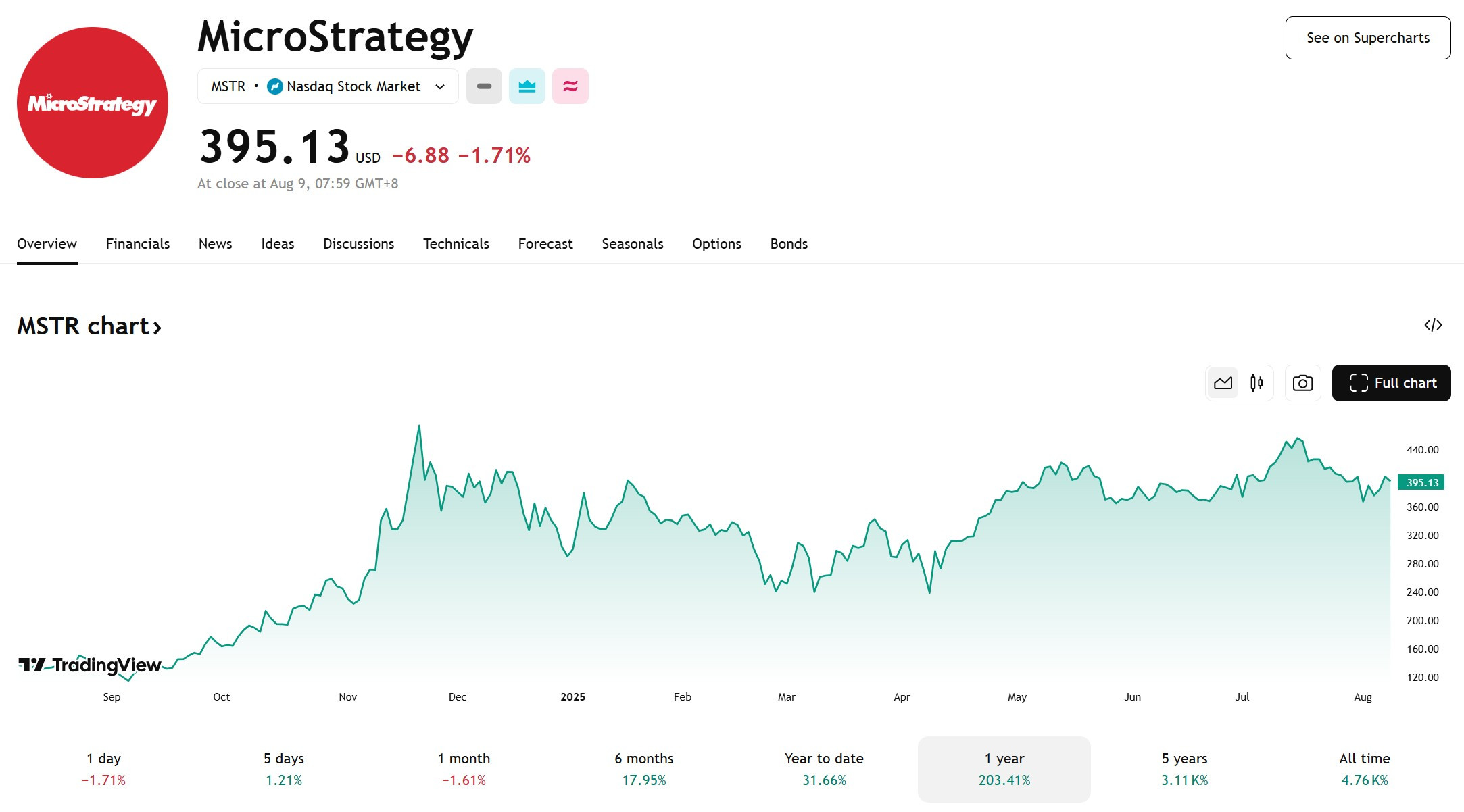
Why structure matters: mainstream tokens vs. niche bets
Companies holding major, liquid tokens (Bitcoin, Ethereum, Solana) have generally delivered strong returns since announcing treasury strategies. Architect Partners reports that the median return for such firms is still high. By contrast, firms buying lesser-known tokens show a median return that’s negative, reflecting severe investor selectivity and higher perceived execution risk.
Where the capital came from—and why it mattered
This year’s crypto-treasury financing binge is striking: U.S. listed companies announced plans to raise over $91 billion to buy crypto, dwarfing the $38 billion raised in U.S. IPOs in the same timeframe. That wave diverted investor attention and liquidity into these hybrid equity-crypto structures, amplifying the sector’s market impact.
Voices from the market
Industry players say these instruments “soaked up the oxygen” of market discussion and capital flows. Some asset managers warn of fatigue and divergence: summer liquidity thinness and more competing products have narrowed premiums, while others predict the craze will sort winners from losers, not vanish entirely.
The mechanics of the risk—why premiums matter
When a treasury stock trades at a premium to its crypto holdings, management can issue shares and efficiently buy more tokens—fueling a positive cycle. If that premium disappears and the stock trades at a discount, the dynamic flips: issuing equity dilutes value, making fundraising costly or impossible. Falling token prices also pressurize equity, which may trigger forced sales or margin stress.
Real-world warning signs already visible
Some firms that loaded up on obscure tokens now show token-holdings worth materially more than their market caps—for example, one company’s token position is nearly $60 million while its market cap is only $30.5 million, and its stock has slid roughly 30% in a month. That gap highlights how quickly investor sentiment can punish perceived governance or liquidity risks.
Broader market implications: more linkage, more volatility
As these treasury plays grow, so does the correlation between token markets and equities. Traditional equity investors—unaccustomed to token-style daily swings—could be exposed to sudden drawdowns. The combination of on-balance-sheet crypto and public equity trading makes for a new conduit of contagion in stressed scenarios.
Who’s staying away—and why it matters
Some institutional investors and venture firms deliberately avoid crypto-treasury equities, citing reputation and structural concerns. That selective participation can accelerate divergence: when only retail or crypto-centric institutions buy into niche treasury stocks, prices become more fragile.
What could break the cycle—upside and downside triggers
Upside: renewed token rallies or improved liquidity in mainstream tokens could restore premiums, making follow-on fundraising feasible again. Downside: token price drops, regulatory setbacks, or a sudden shift in investor risk appetite could push treasury stocks into sustained discounts and squeeze funding channels.
What to watch next
- Premium trends for leaders like MicroStrategy and fast-copycats.
- New fundraising announcements and whether they close at favorable terms.
- Token concentration in company treasuries—mainstream vs. niche tokens.
- Insider and institutional buying or selling patterns.
- Any regulatory guidance that changes reporting, custody, or capital rules for token holdings.
The crypto-treasury story is evolving from a single-note frenzy to a more differentiated market. The model’s attractiveness depends on trading premiums, token selection, and the cost of capital. As premiums fade, the model’s structural risks come into clearer view—raising the possibility that some players will prosper while others face painful repricings.