
Harley-Davidson “Sells Off” a Subsidiary: KKR Goes on a Buying Spree This Year

A major capital event has shaken up the motorcycle industry!

Recently, private equity giant KKR, alongside Pacific Investment Management Company (PIMCO), announced a long-term strategic partnership with Harley-Davidson Financial Services (HDFS), the financial services arm of Harley-Davidson. The deal, valued at a whopping $5 billion, marks a significant move.
A subsidiary sold for $5 billion
This isn’t just a simple asset sale—it’s a cleverly designed “light-capital” transformation plan. The deal involves selling off existing assets, distributing future loans, transferring equity, and restructuring cash flows, all wrapped into a complex package.
Essentially, it’s an asset bundle.
The standout piece is the sale of the existing loan portfolio, which includes premium-priced retail loan receivables and residual interests in securitized loans, valued at nearly $5 billion.
Additionally, the equity portion sees HDFS selling 4.9% stakes to both KKR and PIMCO at 1.75 times the post-transaction book value, while Harley retains control.
Post-deal, HDFS will continue to issue and service loans but will no longer bear the full credit risk, transitioning into a “light-capital, low-risk” loan servicing model.
Harley-Davidson, in turn, will use the cash influx to optimize its balance sheet: reducing $450 million in debt, returning $500 million to shareholders, and reserving about $300 million for reinvestment in its motorcycle business.
The birth of Harley, putting an engine on a bike
Harley’s story began in 1901, 124 years ago.
That year, 21-year-old William S. Harley, along with the Davidson brothers, started tinkering in a wooden shed in Milwaukee, trying to mount a single-cylinder engine onto a bicycle.
Two years later, the first Harley-Davidson motorcycle was born, though it had a modest 400cc displacement and just 3 horsepower.
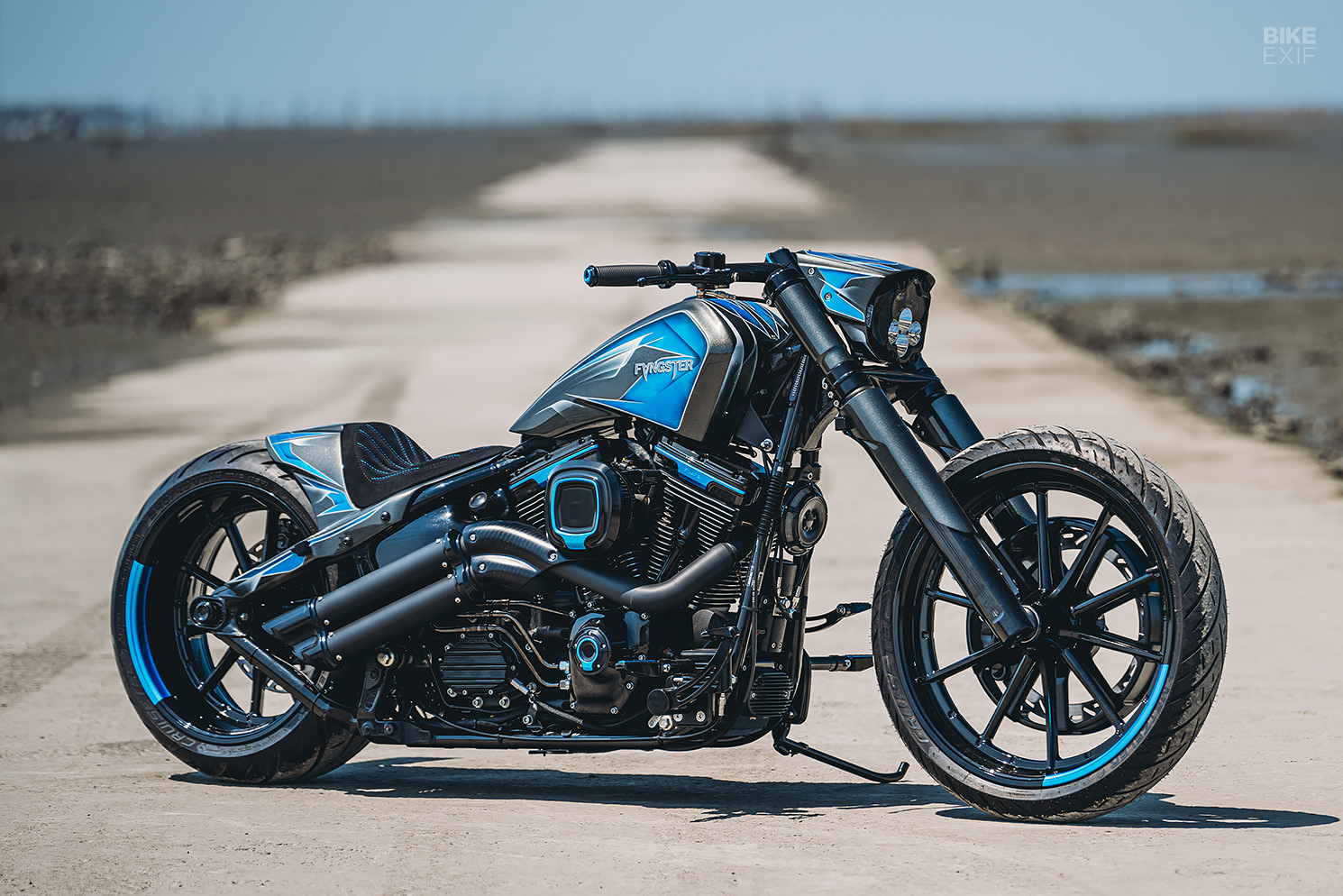
Who could have imagined that, over more than a century, Harley would grow into the world’s most recognizable leisure motorcycle brand? In 2024, it sold about 175,000 units globally, with 63% of those in the U.S.
Riding on the success of its parent company, Harley-Davidson Financial Services (HDFS) was established in 1988. Initially, it served as a financing arm for dealers and riders, boosting sales conversions.
By the end of 2024, HDFS generated $1.13 billion in revenue and $204 million in net profit, accounting for about 27% of Harley’s total profits. Far from just a financing tool, HDFS has become a key moat, fostering customer loyalty and locking in repurchase cycles.
After selling off most of HDFS’s loan assets, Harley-Davidson gains some valuable “strategic breathing room”—a cash cushion, eased debt pressure, and enhanced shareholder returns.
However, in Q2 this year, global motorcycle sales dropped 12% year-on-year, with North America down 15% and Europe down 9%. Looking ahead, Harley still faces challenges in its core business.
2025: KKR’s Global Buying Spree
Have you noticed?
While multinational venture capital firms seem to be lying low, cross-border private equity players like KKR are buzzing with activity. Especially in 2025, KKR has been making big moves in “hard cash flow” sectors like consumer finance and franchising.
In June, KKR was reported to be leading the $1.7 billion bid for the UK credit card company NewDay.
In July, KKR completed a controlling stake acquisition of Yuanjing International, linked to the Chinese soda brand “Dayao,” though the deal amount wasn’t disclosed.
Also in July, media reported KKR is in “advanced talks” to acquire ST Telemedia Global Data Centres (STT GDC), Asia’s largest data center operator, potentially valued at over $5 billion.
…
Three deals in two months—and that’s just the incomplete tally.
Moreover, in July, KKR announced it had raised $5.6 billion for its second asset-backed financing fund (ABF II), bringing its total independent account assets to nearly $7 billion.
On one hand, KKR is aggressively snapping up assets globally; on the other, it’s actively reloading its ammo… 2025 might just be KKR’s year of “big swings and big gains.”