
How to View the U.S. Imposing Tariffs on Gold Imports from Switzerland?

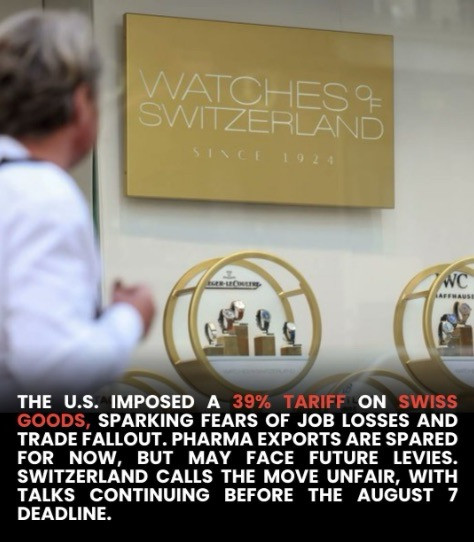
Previously, the U.S. imposed a 39% tariff on 1 kg and 100 oz gold bars imported from Switzerland, immediately causing market turbulence.
On July 31, U.S. Customs ruled to reclassify these gold bars—precisely the delivery specifications accepted by the COMEX exchange—into a taxable category. This move has significant impact because Switzerland is the world's largest gold refining center, and a considerable proportion of the physical gold underlying COMEX futures contracts comes from Switzerland. Within hours of the announcement, New York gold futures premiums jumped above spot prices, indicating a sudden tightening of deliverable supply in the U.S. market. Swiss refiners have slowed or stopped shipments, further exacerbating supply tensions.
To recast 400 oz London gold bars into 100 oz or 1 kg gold bars that meet COMEX delivery standards requires certified refineries, strict regulatory chains, compliant assays, stamping processes, and sufficient capacity. This capacity is not in unlimited supply, and if the gold originates from Switzerland, the tariff still applies unless recast outside the U.S. (which would lose the Swiss brand premium and still require COMEX approval).
By effectively limiting the import of these specification gold bars, the U.S. move increases the risk for COMEX short positions, making it more complicated for them to obtain gold bars for delivery. Other routes, such as transporting 400 oz gold bars to London for recasting in the U.S., or routing through non-Swiss refineries, all take time and will limit circulation in the short term.
Switzerland also cannot simply absorb the tariff impact. Swiss refiners operate on thin margins, and a 39% tariff on COMEX delivery specification gold bars will force them to either reduce shipments or change shipping routes, both of which will slow gold flows. This gives U.S. refiners a price and quantity advantage. It may mean that the U.S. is pressuring Switzerland, and even if global spot prices remain stable, this could lock in higher premiums for New York futures.
In a year when macroeconomic concerns have already pushed up gold prices, such political manipulation actually means that the U.S. is attempting more "financial market weaponization"—using non-market means to create artificial bottlenecks and trying to manipulate prices within the market.
This is a dangerous move by the Trump team to manipulate pricing mechanisms, and it's also a re-anchoring and grabbing of pricing locations. Of course, another possible outcome is that only U.S. miners supply to the U.S., while the rest of the world continues to use and obtain kilogram bars and 100 oz bars.
Theoretically, prices can be set by the exchange with the largest trading volume, so what if the asymmetric flow dynamics of the global market are much more flexible than the Trump team currently believes?
Price discovery mechanisms are unlikely to be affected. Rising U.S. gold prices will stimulate out-of-market behavior, but due to highly efficient markets, this will ultimately only reflect as normal premiums including tariffs. True price discovery depends on free circulation, and exchanges in tariff-free environments will have an advantage in price discovery.
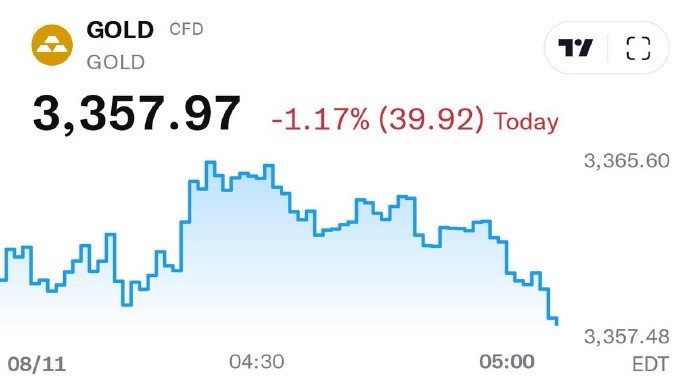
Therefore, we can also consider that although the U.S. can control the COMEX delivery mechanism, it cannot control fundamental demand. This policy squeeze and off-market tactics may accelerate the shift towards bilateral trading and non-dollar gold markets. In the end, such heavy-handed measures may also backfire.