
The Fed Is Getting Ready to Cut Rates and History Suggests Tech Could Shine Again

The latest U.S. inflation data for July came in almost exactly as expected, and that was all the market needed to ramp up bets that the Federal Reserve will start cutting interest rates as soon as September.
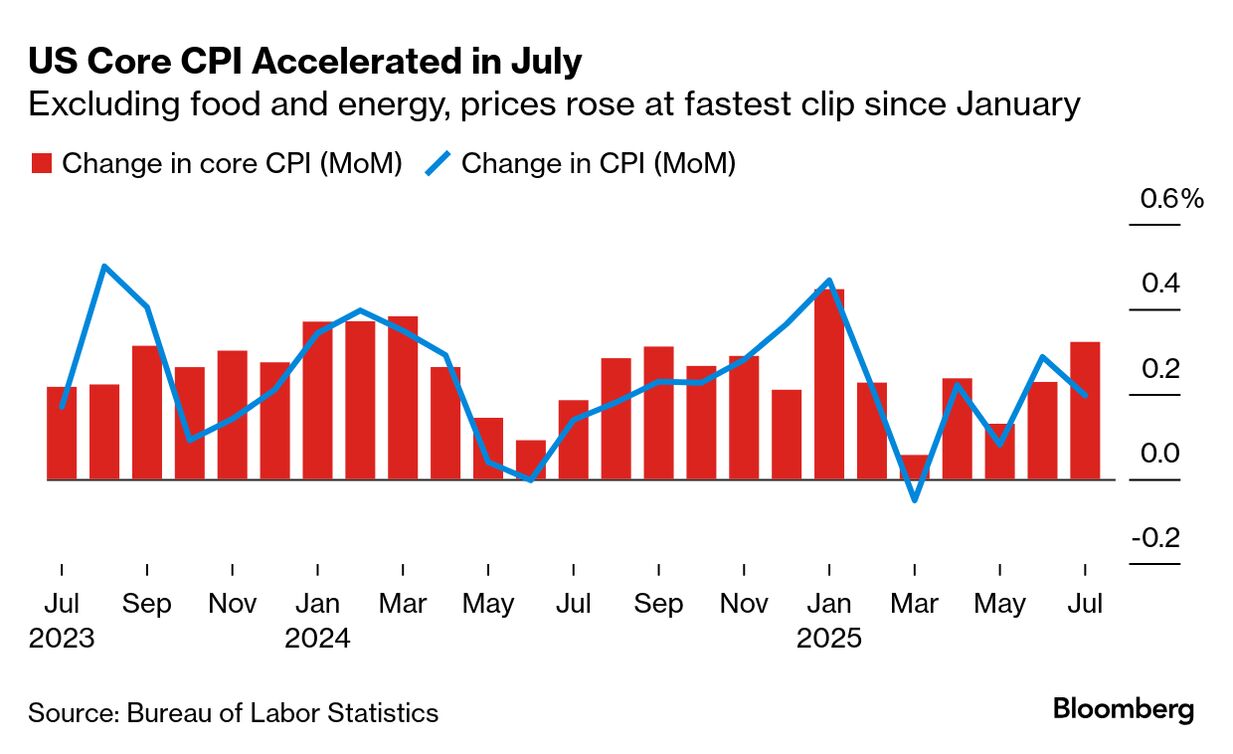
A rate cut might look like just a small tweak to a number, but in reality it changes the flow of money, how investors value companies, and which sectors get the spotlight. The question is not just if the Fed cuts, but what history tells us could happen next.
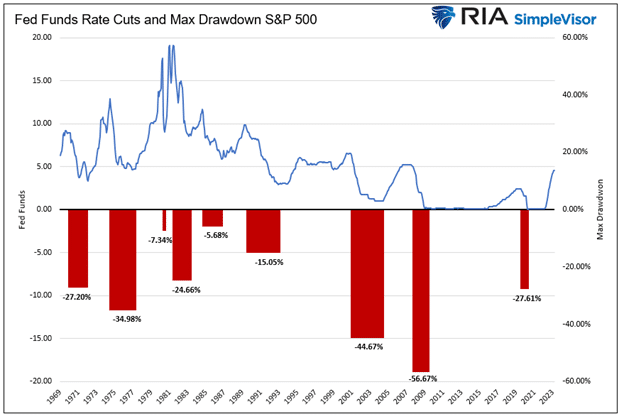
To get a better sense, we looked back at every Fed rate-cutting cycle since 2001 and how the S&P 500 and its key sectors performed in the year that followed.
What Past Rate Cuts Tell Us
2001 The Dot-Com Bust
Tech valuations were sky-high, earnings forecasts kept getting slashed, and confidence was fading fast. The Fed started cutting rates in January 2001, but the market wasn’t ready to recover. A year later, the S&P 500 was down 17%, with Technology the hardest hit. Defensive sectors like Health Care, Energy, and Financials managed small gains.
Lesson: When valuations are in bubble territory, rate cuts can’t fix everything.
2007–2008 The Great Recession
The subprime mortgage crisis snowballed into a full-blown global meltdown. The Fed slashed rates starting in September 2007, but the economy kept sliding. A year later, the S&P 500 had plunged 42% and every sector was deep in the red.
Lesson: In a systemic crisis, rate cuts are more about damage control than sparking growth.
2019 The Mid-Cycle Adjustment
Growth was slowing but the economy wasn’t in recession. Trade tensions were rising, and the Fed decided to make preemptive cuts in August 2019. The S&P 500 gained 8% over the next year, with Technology soaring 25% and Consumer Discretionary, Financials, and Health Care all delivering solid returns.
Lesson: In calmer environments, rate cuts can give growth stocks a real boost.
2020 The COVID Shock
The pandemic sent economic activity into free fall. The Fed responded with emergency rate cuts and massive fiscal stimulus. Over the next year, the S&P 500 climbed 16%, led by Technology up 50% and Consumer Discretionary up 40%.
Lesson: When liquidity floods the system, high-growth sectors can go into overdrive.
2024 Aiming for a Soft Landing
With inflation cooling and growth slowing just slightly, the Fed began cutting rates in September 2024 to guide the economy to a “soft landing.” Nearly a year in, the S&P 500 is up 14%, Technology is ahead by 23%, and Consumer Discretionary and Financials are also strong. Health Care has lagged badly, and Energy has been flat.
Lesson: In moderate conditions, Tech and Consumer names tend to lead.
What This Could Mean for 2025
The big takeaway from two decades of data is this: when rate cuts happen outside of a crisis, the market often rallies, and Technology tends to be the standout winner.
Two reasons explain it. First, lower rates make future earnings more valuable in today’s terms, which boosts valuations for growth companies. Second, borrowing becomes cheaper, making it easier for companies—especially in tech—to fund innovation and expansion.
Financial stocks can be more complicated. In the early stages of a rate-cut cycle, bank profits may get squeezed, but as the economy benefits from easier policy, the rebound can be strong. Consumer stocks often get a steady lift from stronger spending, which is exactly what the Fed is trying to encourage. Energy, meanwhile, dances to its own beat, driven more by global supply and geopolitical factors than Fed policy.
The Semiconductor Story Right Now
$SOXQ jumped nearly 3% in a single day after the latest CPI release, marking their biggest daily gain in two months.

What’s interesting is that many of the day’s top gainers weren’t the year’s big winners but rather stocks that have lagged badly or been beaten down. That raises the possibility that investors are starting to rotate into these underperformers, betting on a rebound as rate cuts approach.
My Take
This feels less like 2001 or 2008 and more like 2019—a mid-cycle adjustment rather than a rescue mission. The U.S. economy isn’t in free fall, and some parts of the tech sector, especially semiconductors, might actually be sitting on the edge of a turnaround.
If the Fed does pull the trigger in September, we could see a wave of buying in high-quality growth names, with chip stocks leading the charge. But a rate cut alone doesn’t guarantee lasting gains—earnings and industry trends still have to do the heavy lifting.
For investors, this might be a good moment to start building positions in strong growth companies, especially those the market has overlooked this year. Just don’t rush all in at once. Let the story unfold and use the inevitable volatility to your advantage.