
SEC Chairman Paul Atkins Hints at Private Equity Investment Opportunities for Retail Investors

Atkins stated that the U.S. Securities and Exchange Commission (SEC) will work to expand investment channels typically reserved for accredited investors.
SEC Chairman Paul Atkins indicated that the regulatory body will collaborate with the administration of U.S. President Donald Trump to provide retail investors with equal opportunities to invest in private equity.

Atkins cited a recent executive order signed by Trump, allowing cryptocurrencies and alternative assets into 401K retirement accounts—tax-advantaged plans co-funded by individuals and employers—as a catalyst for this effort. In a Saturday interview with Fox Business, he said:
“Large endowment funds and pension funds (like state pension funds) can diversify across public and private markets, while 401Ks cannot—this situation isn’t ideal. I believe one of the goals of this executive order is to direct the Department of Labor and the SEC to work together to help achieve this.”
However, Atkins urged caution and the establishment of “appropriate guardrails” around alternative investments. He added: “We can’t just fling open the gates and let investors rush into areas requiring prudence.”
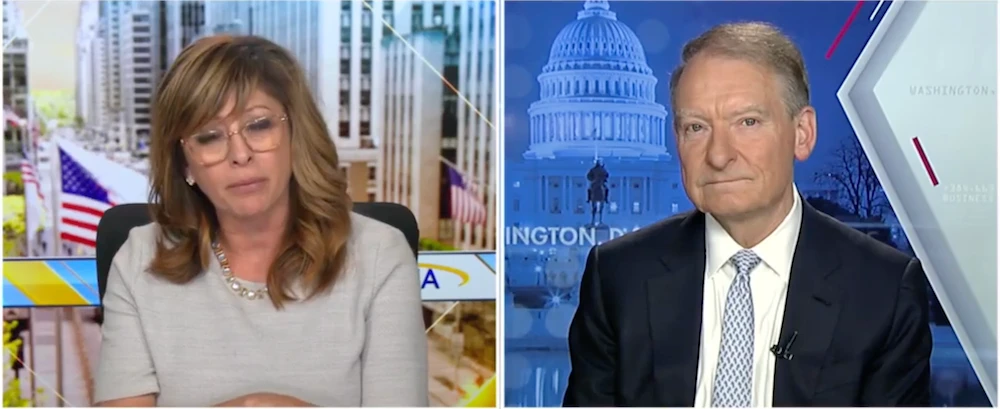
Paul Atkins spoke with Fox Business host Maria Bartiromo. (Source: Fox Business)
Atkins recently noted that the agency has prioritized regulating cryptocurrencies to position the U.S. as a global leader in digital assets.
Expanding access to private equity channels would allow retail investors to participate in early-stage crypto projects and private token sales typically reserved for accredited or institutional investors.
Cointelegraph reached out to the SEC regarding potential comprehensive reforms to accredited investor rules, but the agency declined to comment.
Crypto Investors Welcome Change, But Risks Remain
The SEC revised accredited investor rules in 2020, emphasizing financial knowledge and skills over net worth, thereby expanding the pool of individuals eligible for accredited investor status in the U.S.
Nevertheless, according to Christopher Perkins, President of investment firm CoinFund, current regulations remain restrictive, excluding retail investors from certain investment products.
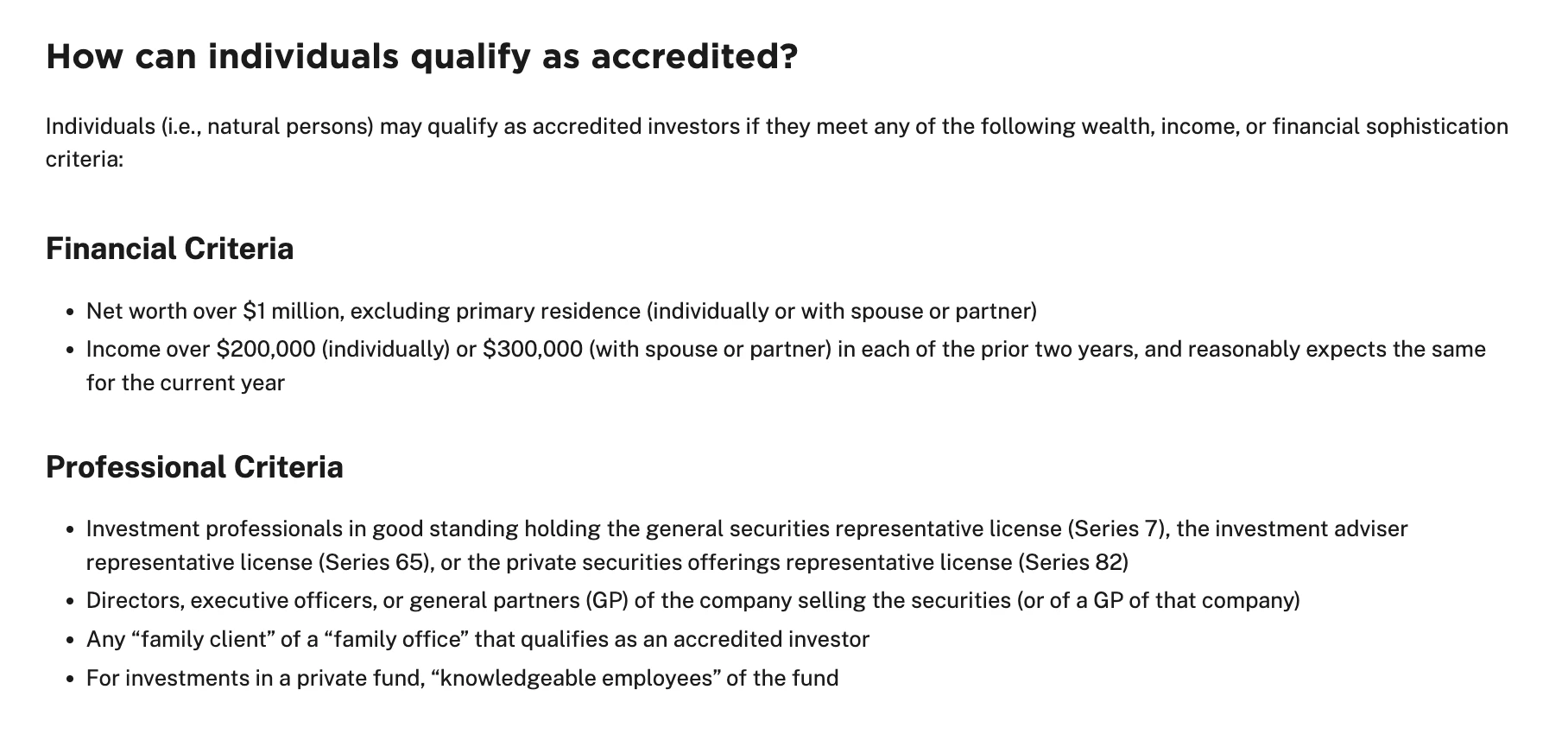
Current U.S. accreditation requirements. (Source: SEC)
According to the SEC, these accreditation rules serve as a form of consumer protection, designed to shield investors from excessive financial risks.
These risks are more complex in private companies, which are not subject to the same disclosure requirements as public companies, potentially requiring greater financial literacy to fully comprehend.
Private investments also lack liquidity, and during financial crises, contagion effects could spread through excessive leverage or misjudged investments, impacting other asset classes and markets.