
Nuclear’s Second Act: Is America’s Power Pivot Actually Here?

Morgan Stanley says the U.S. nuclear comeback is no longer wishful thinking: policy support, corporate demand and faster-to-build small modular reactors (SMRs) could lift U.S. nuclear capacity materially — perhaps toward 150 GW over the long run. But big conventional projects still face long timelines and cost risks, and the path to scale remains uneven.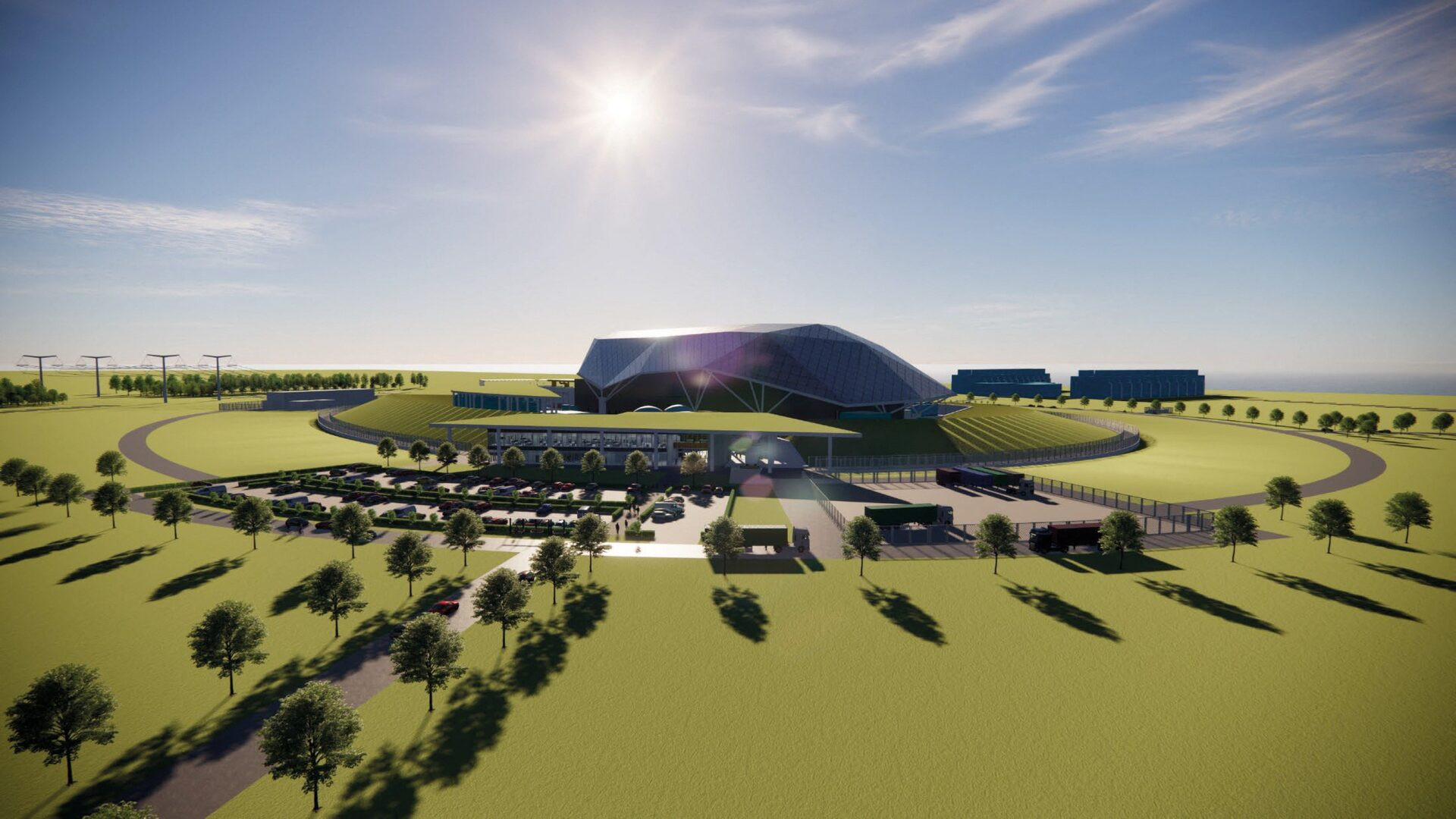
Key takeaways
- Morgan Stanley finds a clearer “nuclear revival” signal driven by policy and market demand.
- Large new reactors still wrestle with decade-plus build times and cost overruns.
- SMRs offer shorter construction cycles and lower upfront costs, making them a practical growth lever.
- Under a revival scenario, U.S. nuclear capacity could rise toward 150 GW.
- Big tech is already locking in nuclear deals: Google signed for SMR power with Kairos Power; TVA will buy SMR output.
- Kairos is boosting Hermes 2 from 28 MW to 50 MW, targeting operations in 2030.
- Comparatively, gas plants build faster and cheaper up front but have high, volatile fuel costs; nuclear’s marginal cost is low once built.
Why now? Policy and market are finally in sync
Federal and state incentives, permit reforms and subsidies are giving projects certainty they lacked. That top-down push addresses past “promises without delivery” and makes nuclear an investible option again.
At the same time, a real market signal has emerged: data centers and other large power users are signing deals to secure dependable, low-carbon baseload power.
Who’s buying nuclear — and why it matters
Tech giants need round-the-clock, low-carbon electricity for AI and cloud computing. Nuclear fits that bill: stable, 24/7 power with near-zero operational emissions.
Barron’s and market reports note a flurry of contracts — Google’s deal with Kairos Power is the latest example of corporate buyers turning to SMRs to fuel massive data-center demand.
The Google deal: a real-world beachhead for SMRs
Google and Kairos Power agreed to supply power from Kairos’s Hermes 2 plant to Google data centers in Tennessee and Alabama.
Kairos will increase Hermes 2 output from 28 MW to 50 MW, and the Tennessee Valley Authority — a federal utility — will be the first U.S. utility to buy electricity from this SMR design. Hermes 2 aims to start operations in 2030.
SMRs vs. large reactors: what changes politically and economically?
Large reactors still face the old problems: 10+ year construction cycles and persistent cost control issues. Those realities capped past expansion.
SMRs change the math: modular designs shorten construction times and reduce upfront capital needs. That makes deployment faster and fits a more distributed grid and industrial demand profile.
Life-extension and restarts: a near-term boost
Not all nuclear upside depends on new builds. Extending the life of existing reactors and restarting halted units is proceeding quickly and provides immediate capacity gains.
Those moves can buy time while SMRs scale, contributing to the capacity gains Morgan Stanley models for a “revival” scenario.
Tech, data centers and the new steady customer
Data centers’ thirst for reliable, low-emission electricity is a new market force. AI and cloud workloads require continuous power, making intermittent sources less attractive for critical operations.
This demand is prompting corporate procurement of firm, clean power — making SMRs and upgraded nuclear plants commercially relevant beyond traditional utility planning.
Costs and competitiveness: nuclear’s lifecycle advantage
Natural gas plants are cheap and fast to build — sometimes in under three years with capital costs roughly $560–$1,000 per kW. But fuel costs dominate their operating budget (about 90%), leaving them exposed to commodity swings.
By contrast, nuclear bears high initial capital outlays but very low marginal costs once running. Over a plant’s lifecycle, stable fuel and low-carbon output can deliver compelling economics for constant, high-value loads.
Where technology still matters: SMRs, Gen-IV and fusion bets
SMRs are commercially near-term and modular learning can drive costs down as projects scale. Developers like Kairos, NuScale, Oklo and BWX are competing to commercialize different SMR designs.
Beyond SMRs, advanced reactors and fusion remain R&D frontiers. Corporate interest (including big-tech investments) signals patient capital and long-term upside — but those technologies are not yet a baseline for 2030 capacity.
Investment and industrial-chain implications
A scaled nuclear revival would ripple across the supply chain: construction firms, fuel-cycle services, reactor component manufacturers, and new SMR vendors.
Policy certainty and repeatable SMR projects could unlock manufacturing and standardization benefits that make the industry investible in ways it hasn’t been for decades.
What could slow or stop the comeback? Watch these risks
- Cost and schedule overruns on large projects remain a perennial risk.
- Regulatory and permitting delays could still stall timelines despite reforms.
- Persistent generics or alternative low-cost supplies could blunt some corporate appetite.
- Public acceptance and political shifts at state or local levels may alter project feasibility.
Short checklist — what investors and stakeholders should watch next
- Progress and timelines for Hermes 2 and other announced SMRs (e.g., test dates, regulatory milestones).
- Federal and state policy moves: tax credits, permitting changes and funding for SMR manufacturing.
- Corporate power purchase agreements from data-center operators and other large buyers.
- Signs that life-extension and restarts are being approved and executed on schedule.
- Cost trends: Are SMR unit-build costs falling with repeat designs and factory fabrication?
Bottom line: rapid change, but not a foreclosure
The U.S. nuclear picture has turned from theory to plausible path. Policy tailwinds and corporate demand have created real momentum; SMRs offer a practical route to deployment. Yet major obstacles — long lead times for big plants, cost risk and permitting complexity — mean revival is a process, not an instant transformation. If SMRs deliver repeatable projects and data centers keep signing, the industry’s second act could be genuinely transformational for energy markets and related stocks.