
HODLing Crypto No Longer Lifts Stock Value! Frequent Issuances Spark Investor Panic


For small-cap companies hungry for aggressive growth, there has been a “shortcut” in recent years: announce the accumulation of cryptocurrencies, then wait for retail and institutional investors to pile in, driving up the company’s market cap.
The strategy is strikingly simple: First, the company announces it will use its own funds to buy crypto, then waits for the stock price to soar, followed by issuing new shares to raise capital and buy more crypto, repeating the cycle.
As a pioneer of this approach, Strategy leveraged it to push its market cap into the hundreds of billions, earning a spot in the Nasdaq 100 Index. As more companies replicated this tactic, it even spawned a “crypto treasury stock” sector.
However, recent market trends suggest this “one-foot-over-the-other” financing flywheel may be losing steam—while cryptocurrencies remain popular, some investors are “voting with their feet” against frequent issuances.
On Thursday, ETHZilla (formerly 180 Life Sciences), which focuses on hoarding Ethereum, announced a sale of up to $500 million in stock, causing its share price to crash 28.88%. Just two days earlier, after first disclosing its Ethereum holdings, the stock had surged 206% in a single day.
Similar patterns have emerged with other notable treasury stocks like BitMine Immersion and SharpLink Gaming.
Investors’ concerns aren’t unfounded: these crypto treasury stocks often carry valuations several times their crypto holdings, with shareholders worried about equity dilution and sell-offs of newly issued shares dragging prices down. For companies looking to mimic Strategy’s HODLing strategy, this has become a challenge they must confront.
However, ETHZilla Chairman McAndrew Rudisill responded, attributing last week’s drop to a post-hype correction, calling it a normal valuation reset.
Rudisill said: “The company is now in the sweet spot of two to three times its net asset value, so the price action makes sense.”
In an August 18 announcement, ETHZilla disclosed holding 94,675 Ethereum, valued at approximately $400 million based on current prices. As of Monday’s close, ETHZilla’s market cap stood at $1.141 billion.

Not all treasury companies command such premiums, though. SharpLink Gaming closed Monday with a market cap of $3.398 billion, its Ethereum holdings valued at nearly $3.08 billion.
BitMine Immersion revealed yesterday it holds 1,523,373 Ethereum and 192 Bitcoin, with a current value exceeding $6.4 billion, while its market cap closed at $9.5 billion on Monday.
Notably, as “latecomers” face scrutiny, industry pioneer Strategy is also encountering challenges. In late July, the company pledged to halt new share issuances when its stock price fell below 2.5 times the value of its Bitcoin holdings, opting instead for a financing tool called perpetual preferred stock.
Yet on Monday, Strategy retracted that pledge, stating it would allow issuances below that threshold “under other circumstances deemed beneficial to the company.”
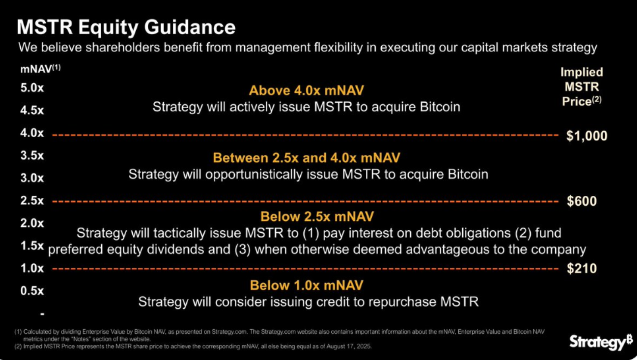
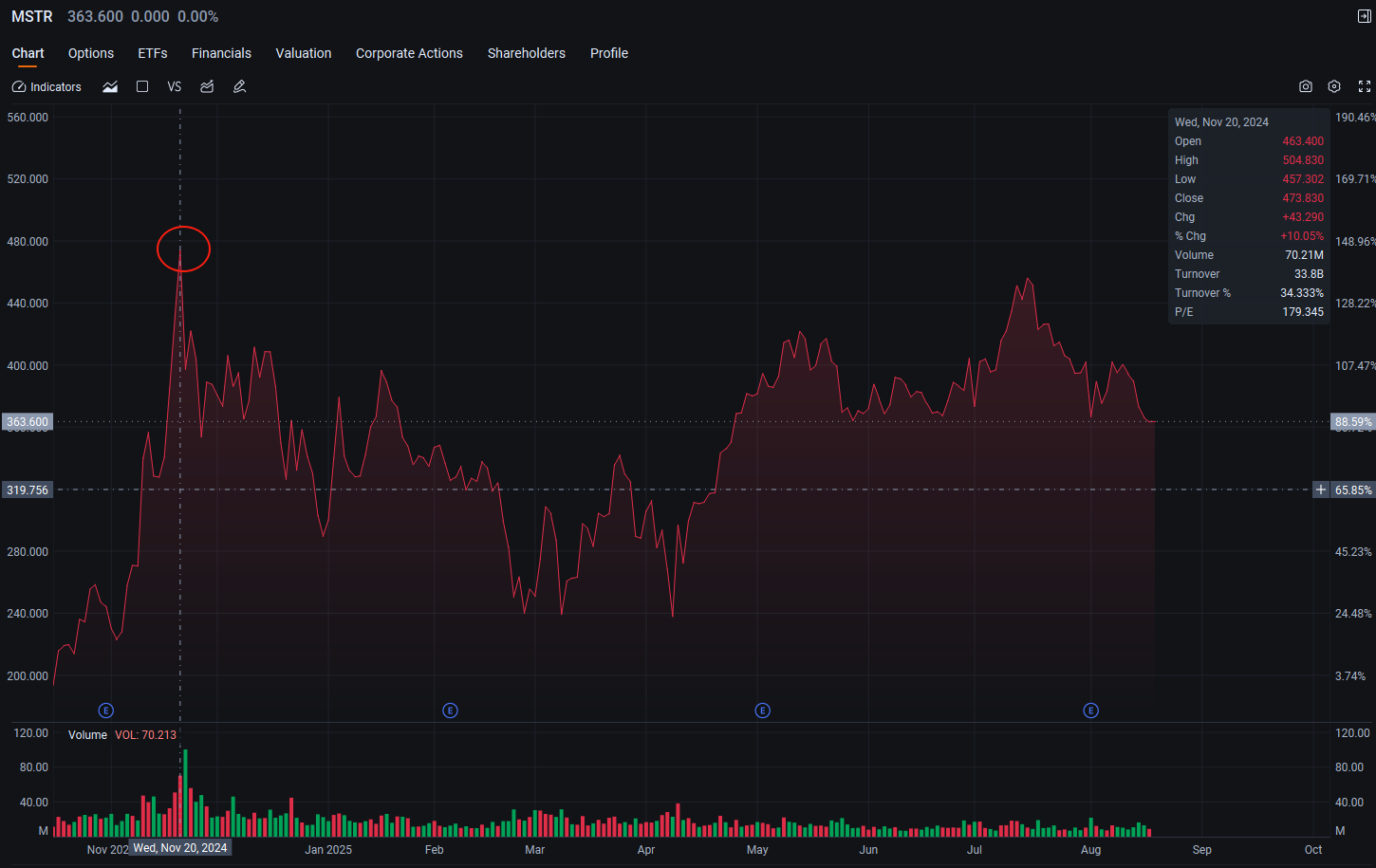
Strategy’s all-time high closing price was on November 20 last year, down 23% since, while Bitcoin has risen about 23% in the same period. Per Strategy’s pledge, a 2.5x Bitcoin holding value would imply a stock price of around $600, a 65% increase from current levels.
According to Gregory Sichenzia, founding partner at securities law firm Sichenzia Ross & Friedman, investor sell-offs are unsurprising as competition in the crypto treasury sector intensifies.
He noted: “90% of these companies won’t survive. The bubble will burst, stocks will crash, their funding will dry up, and only a few that truly execute their strategies will remain.”