
Tariff Slow-Burn: Are U.S. Prices Set to Heat Up This Fall?

Citigroup says tariffs haven’t detonated an immediate inflationary shock — they’ve lit a slow fuse. That’s good news for headline prints today but bad news for corporate margins and for the possibility of a drawn-out rise in consumer prices. The next few months (August–October) are the real test: watch clothing, autos and electronics for early flames.
The quick read
Citi finds tariff pass-through into consumer prices is happening more slowly and more persistently than markets feared. Rather than a one-time spike, the shock has been spread out: firms absorbed costs first, hurting profits; now import prices and seasonal forces could push more of that cost onto shoppers.
Citi’s model points to core personal consumption expenditures heading toward roughly 3.1–3.2% by year-end, with July’s core PCE monthly gain estimated near 0.27%.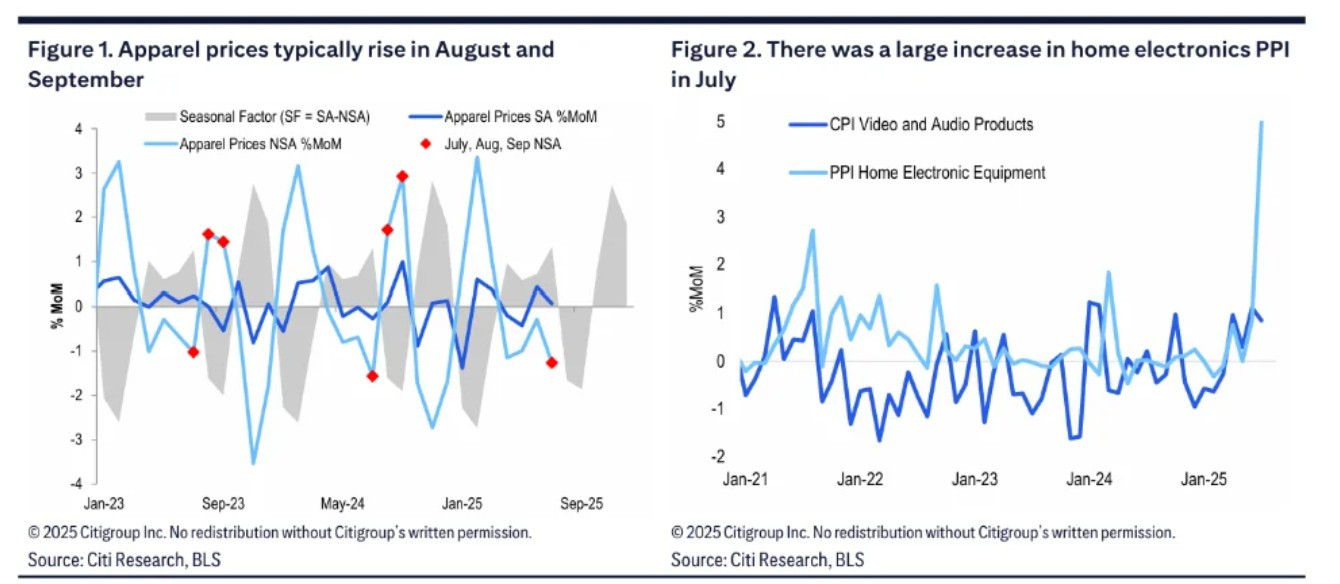
Why “slow” is worse than it sounds
A sudden inflation burst forces quick policy responses. A slow, grinding rise is sneakier: margins erode, companies inch up prices over time, and what starts in goods can seep into services and wages.
Citi argues the early months of tariff increases were marked by exporters and retailers absorbing extra charges to avoid losing customers. That shield appears to be eroding now. Import prices for clothing and some household goods, which initially fell as exporters swallowed costs, have steadied — and clothing prices have begun to climb again.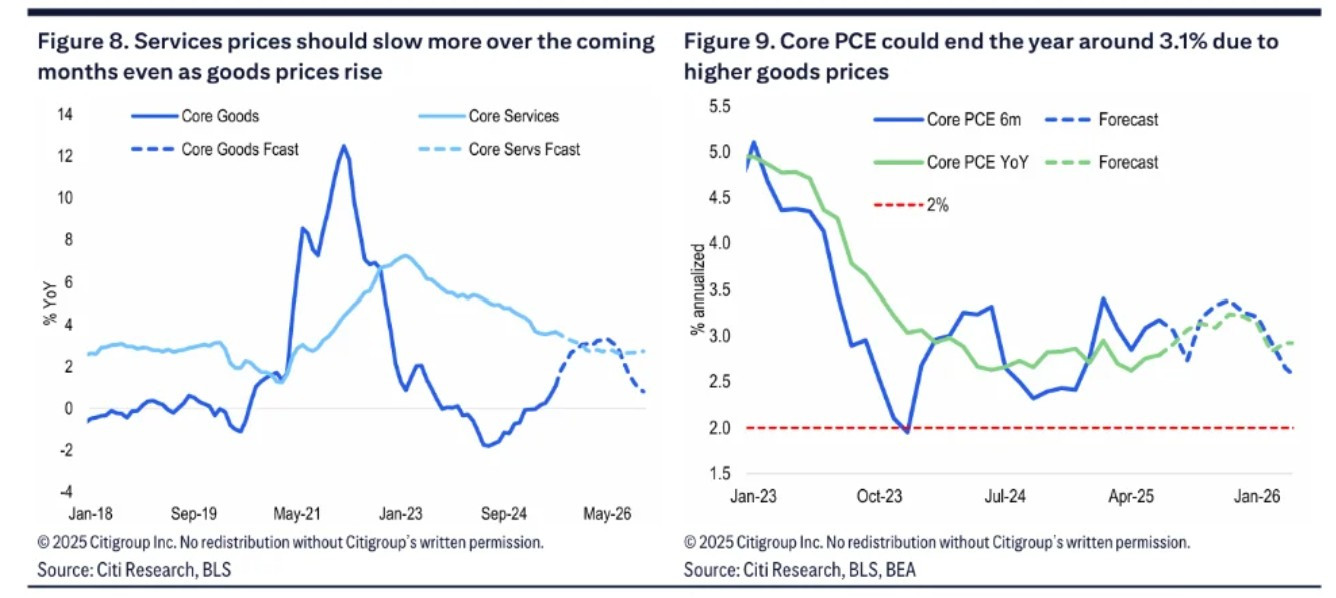
Which prices will signal trouble first
Not all categories matter equally. Apparel tends to get repriced in August–September as retailers rotate inventory and set new season pricing. Autos — both new and used — are shifting seasonally from being a drag to offering price support.
And producer-price data show notable recent jumps in consumer electronics inputs, suggesting televisions, speakers and similar items could feel cost pressure. If these categories begin to move in unison, the slow burn could become a broader goods-price reacceleration.
Services: headline noise or real trend?
July’s stronger services readings look spooky at first glance, but Citi cautions they’re concentrated in a few volatile items. Dental services spiked 2.6% and airfares rebounded seasonally; PPI core services rose sharply in part because investment-management fees, which track asset prices, jumped 5.8%. In short: some service price rises are one-offs or linked to asset swings, not a broad reawakening of services inflation — but that doesn’t mean officials can ignore them.
The consumer is spending — but who’s doing the heavy lifting?
Retail sales and private card data paint a resilient picture. Bank of America’s card flows showed nearly 2% growth in July, the fastest pace since January. Yet payroll data tell a different story: nonfarm payrolls rose only about 73,000 in July, a nine-month low, with prior months revised down by roughly 258,000.
That split raises a crucial question: is consumption being kept aloft by a handful of wealthy households and solid balance sheets, or is the labor market softening in ways that will eventually drag spending down? The answer will shape whether price pressures persist or fade.
Four ways to reconcile the divergence
One possible reconciliation is supply-side: fewer workers are available, not weaker demand, which leaves spending intact. Another is distribution: spending growth concentrated among high earners can mask weakness for most households.
A third is resilience: strong household balance sheets and easier credit allow spending to continue despite softer hiring. The fourth, and perhaps most worrying, is lagged adjustment: consumption may simply follow jobs lower with a delay, especially once tariffs push prices up enough to bite real incomes.
What Citi thinks policymakers should watch
For Citigroup, the Autumn window is decisive. If import and goods prices reaccelerate in August–October alongside seasonal apparel and auto repricing, the persistence of inflation becomes a live policy risk.
A slow but sustained rise in core PCE toward the low-3% range by year-end would complicate the Federal Reserve’s path: gradual, drawn-out inflation is trickier to extinguish than a sharp spike, and it risks becoming embedded through expectations and margin pass-through.
Market psychology and expectations
Surveys show inflation expectations nudging higher — the University of Michigan’s early August read put one-year expectations near 4.9% and the five-to-ten-year outlook around 3.9%.
Citi treats those figures cautiously (noting methodological changes), but it flags an important behavioral point: more consumers now say high prices are a factor in delaying big purchases. That subtle shift is consistent with the idea that households are beginning to feel higher prices, even if it hasn’t yet triggered a broad rush to buy ahead of inflation.
Watch list for the next reports
Keep an eye on three moving parts. Month-to-month readings for apparel, autos and electronics. Import price data that show who is bearing tariff pain: exporters, importers, or consumers. The composition of retail spending — is growth still driven by top earners or by broad-based demand? If those signs point to broad pass-through, the story moves from margin squeeze to consumer price pressure.
What this means for investors and households
For firms, expect a delicate balancing act: absorb too long and profits suffer; raise prices too fast and risk losing customers.
For investors, the evolving mix of sticky goods inflation and concentrated service spikes suggests volatility in sectors tied to discretionary spending and margins.
For households, rising goods prices will bite real incomes, especially for middle- and lower-income families who spend a larger share on affected categories.
Final thought
Tariffs haven’t triggered the dramatic inflation episode many feared, but that may be because the shock has been stretched over time. A slow fuse doesn’t guarantee disaster — but it does require vigilance.
The coming months will test whether this is a temporary squeezing of profits or the start of a more persistent repricing that consumers will feel at checkout lines and fueling decisions at the Fed. Watch the clothes racks, the auto lots and the electronics aisles: they’re where the next chapter is likely to begin.