
Fed at a Crossroads: Has the Dovish Camp Quietly Grown Stronger?

Key Points
- Two Fed officials (Bowman, Waller) dissented in July, urging a rate cut to protect a weakening labor market.
- Employment data were later revised down by ~250,000 jobs, strengthening the dovish argument.
- Core CPI and producer prices then surprised on the upside, bolstering hawkish caution.
- Markets price a high chance of a September cut, but Powell’s Jackson Hole speech and a framework review create real uncertainty.
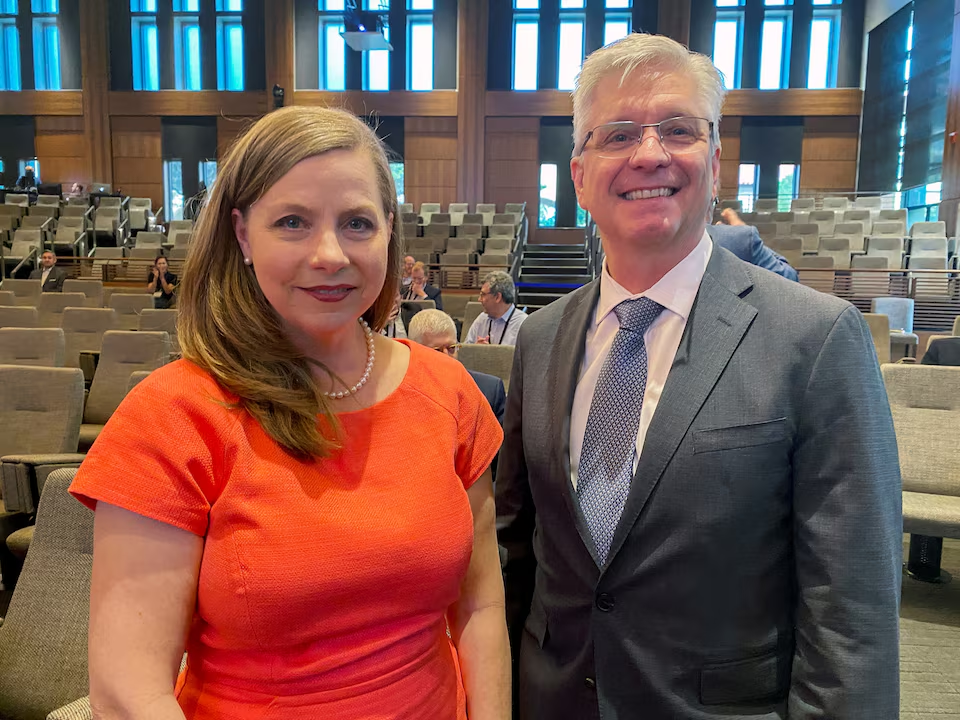
The July FOMC minutes, arriving just before Chair Jerome Powell’s final Jackson Hole address, revealed a Federal Reserve split that could tilt policy. Two senior officials—Vice Chair Michelle Bowman and Governor Christopher Waller—dissented, urging a preemptive cut to shield a faltering labor market.
Markets responded by raising expectations for a September easing, yet fresh inflation surprises and political tensions complicate the path forward. Powell’s remarks and an imminent framework review may have implications that last far beyond his tenure.
What the minutes reveal
The July 29–30 meeting produced an uncommon public cleavage: the committee voted to hold, but Bowman and Waller opposed that decision.
Their dissent centered on labor-market concerns—concerns later amplified when employment figures were revised sharply lower.
At the same time, many policymakers voiced worry about renewed inflation pressures and preferred patience over premature easing.
Why markets expect a cut
CME’s Fed-watch tool showed roughly an 85% chance of a 25bp September cut.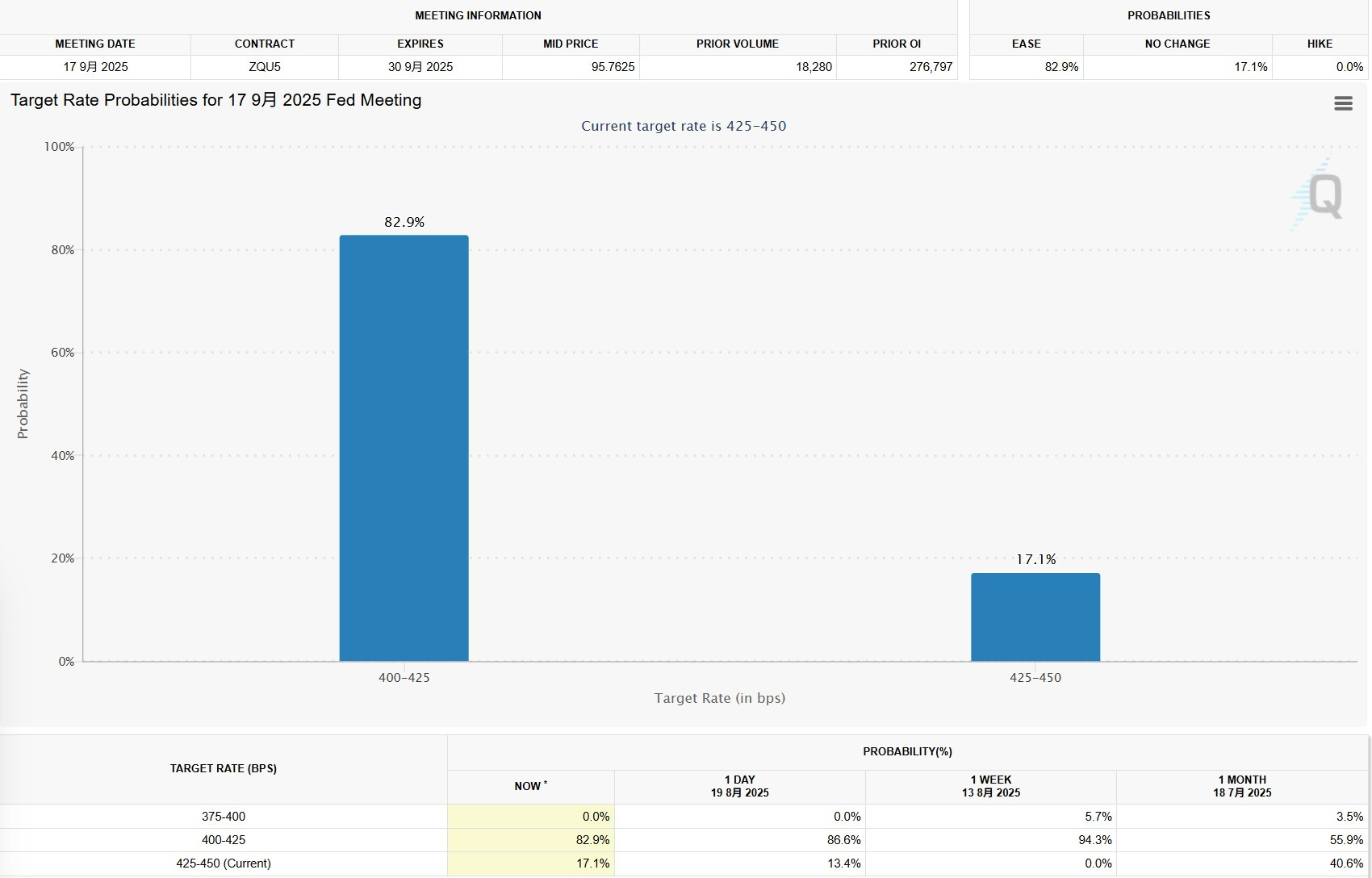
That market view reflects the employment downdraft and the visible internal debate.
But remember: the minutes predate some critical revisions and come just days before Powell’s Jackson Hole address, leaving room for rapid reassessment.
Political pressure and a governor in the spotlight
Political winds are buffeting the Fed. President Trump publicly demanded Governor Cook’s immediate resignation.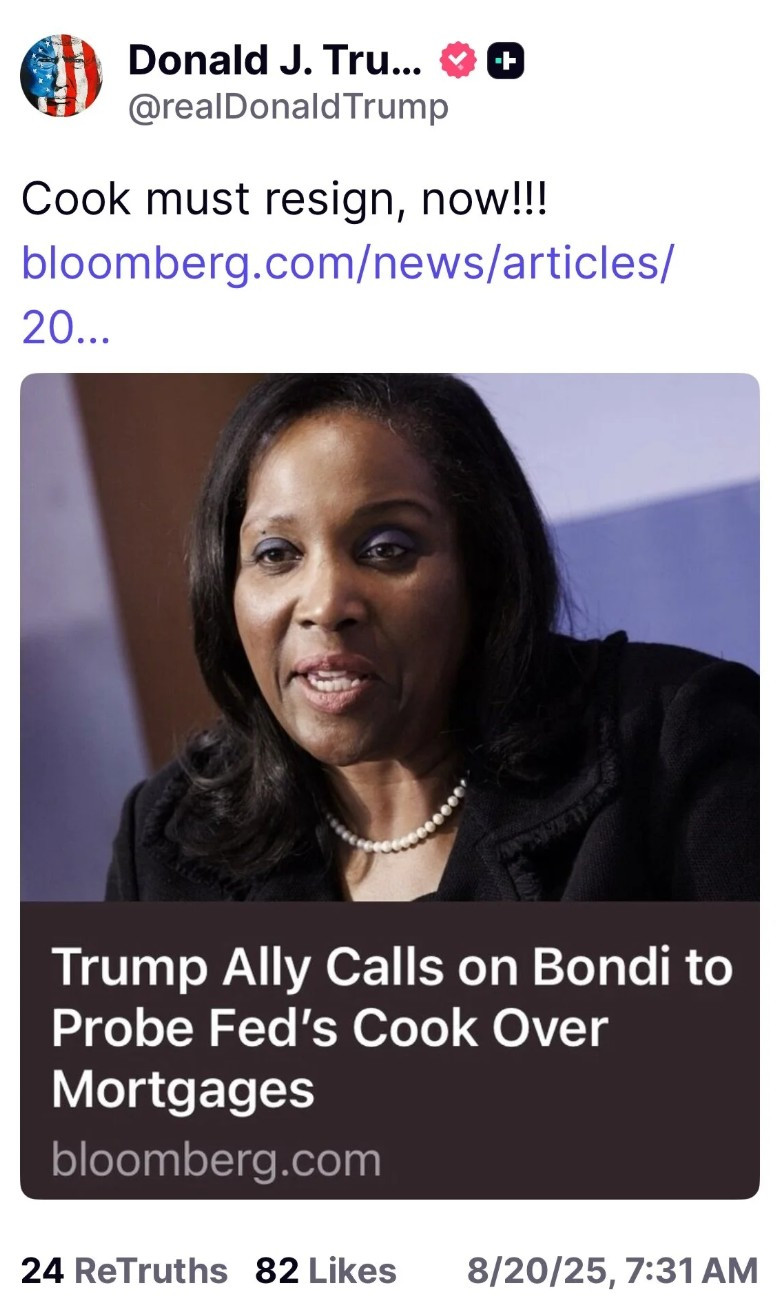
Those demands followed an FHFA director’s referral to the Justice Department over two mortgage transactions by Cook; the allegation is possible mortgage fraud.
No formal charges have been filed. Separately, an unexpected board resignation created a vacancy the White House now seeks to fill.
Powell’s speech and the five-year framework review: more than tone
Powell’s Jackson Hole address—tied to “economic outlook and framework review”—is likely to do more than preview a near-term move.
The Fed’s quinquennial framework review could signal a rollback of the flexible average inflation target adopted in 2020.
If rolled back, that shift would re-center the Fed on a stricter 2% objective and reshape policy choices for years.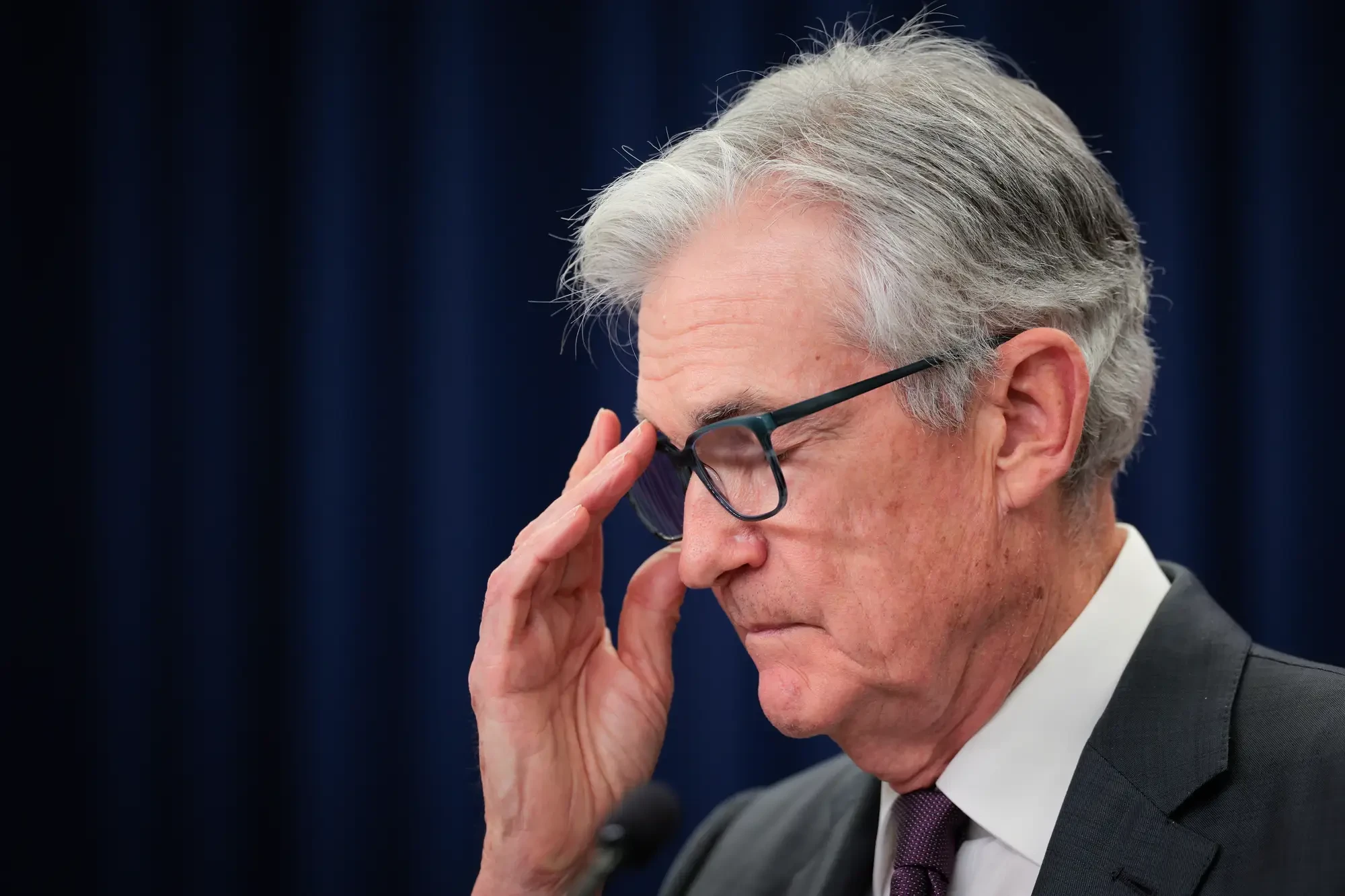
Why the framework debate matters
The 2020 framework allowed temporary overshoots of inflation to compensate for past shortfalls. Critics say that approach contributed to delayed tightening after the pandemic shock.
Returning to a clearer 2% focus would emphasize inflation discipline and reduce tolerance for overshoots—changing the Fed’s reaction function to future shocks.
That change would influence not only near-term decisions but the institution’s long-run policy posture.
Voices inside and outside the Fed
Some economists defend the 2020 adjustments as reasonable during a slow recovery. Others call them a mistake given later inflation dynamics.
Matt Luzzetti of Deutsche Bank urges balance but expects a tilt back toward 2% discipline. Hedge-fund managers are more strident, demanding formal abandonment of flexible averaging.
These arguments map directly onto policy trade-offs: prioritize employment at the risk of higher inflation, or prioritize price stability at the risk of softer labor markets.
The employment revision that changed calculations
Shortly after the July meeting, the BLS revised down prior months by more than 250,000 jobs.
That sizable revision undermined the notion that labor-market strength justified delay and bolstered the position of dovish policymakers.
Yet in the weeks after, core CPI and producer-price rises gave hawkish members fresh ammunition to be cautious.
Tariffs, supply shocks and an added layer of uncertainty
A camp within the Fed worries that tariff policy could re-ignite inflation by raising input costs.
Tariff-driven price pressure can materialize quickly in producer and consumer prices, confounding the Fed’s assessment of whether inflation is transitory.
Officials concerned about that risk prefer patience, adding a counterweight to calls for an early cut.
Nomination timing and institutional stakes
President Trump nominated Stephen Miran to fill a recent vacancy; his term would run only to next January.
Senate timing is uncertain—confirmation before the September meeting is not guaranteed.
Still, the nomination signals an intent to shape the Board and suggests political influence will remain an active factor.
Scenarios for September and beyond
Scenario A — Dovish pivot: Powell signals sympathy with labor concerns, the Fed cuts 25bp in September, markets rally, and short-term yields fall.
Scenario B — Cautious hold: Powell stresses inflation risks, the Fed holds, and markets trim cut expectations until more data arrive.
Scenario C — Framework reset: The Fed signals a rollback of flexible averaging—tightening the inflation mandate and reducing near-term cut odds.
What it means for markets and households
For investors, the difference between immediate easing and continued restraint shifts asset prices across equities, bonds, and credit.
For ordinary Americans, the trade-off is concrete: earlier easing can cushion job losses but risks higher inflation; restraint preserves price stability but increases labor-market risks.
Who bears the costs and who gains will shape political debate and economic outcomes.
Final thought: a hinge moment, not a single event
The July minutes exposed an institutional fault line; the employment revisions made it visible. Powell’s Jackson Hole speech and the framework review are likely to do more than signal short-run intent—they could recast the Fed’s strategy for years.
Markets may be betting on a prompt cut, but political pressures, fresh price data, and a potential doctrinal shift mean that certainty is premature. The Fed’s coming steps will reflect an uneasy balance of data, doctrine, and politics.