
Will Tariffs Ease Tomorrow?: How a New U.S.–EU Framework Could Rewire Transatlantic Trade

The United States and the European Union have formalized a framework that pins most EU exports to a 15% U.S. tariff ceiling while offering a conditional path to lower automobile tariffs — potentially within weeks if the EU moves. The pact pairs tariff rules with massive energy purchases, AI-chip procurement and investment commitments, but it is a framework, not a finished treaty.
Quick facts first
- The framework sets a 15% reciprocal tariff baseline on most EU-origin goods exported to the U.S.
- The U.S. will reduce its higher auto and parts tariffs to 15% once the EU formally introduces implementing legislation.
- The tariff reduction could take effect retroactively to the month the EU introduces that legislation.
- The EU pledged to buy large volumes of U.S. energy products and U.S.-made AI chips, and to lift tariffs on U.S. industrial goods.
- Implementation details — exceptions, origin rules and quotas — remain to be negotiated.
What does the joint statement actually say?
The joint statement creates a new tariff architecture: a uniform 15% levy on most EU imports unless carved out. It lists exceptions for sensitive items such as certain aircraft parts, non-patent pharmaceuticals and scarce raw materials.
The auto clause is conditional: U.S. relief depends on the EU initiating the domestic legislative steps required to remove its own tariffs on U.S. industrial goods.
Why the auto clause matters now
European automakers have been hit by punitive U.S. tariffs as high as 27.5% on some cars and parts. The framework gives manufacturers a clear conditional path out of that tariff pain and even offers prospective retroactive relief. But timing hinges on Brussels’ politics: relief arrives only once the EU formally introduces its enabling bills, and that procedural move — not necessarily full passage — is the trigger.
Energy and AI as strategic sweeteners
To balance tariffs, the EU committed to large procurement of U.S. energy products — including LNG, oil and nuclear materials — and to buy U.S.-made AI chips. Those purchases are meant to cement demand, reassure U.S. industries and deepen strategic ties while offsetting trade concessions. European private investment pledges in U.S. strategic sectors augment the political sell for both capitals.
What the new tariff map looks like in practice
Beyond autos, the 15% baseline would apply to many categories: semiconductors, timber and broad industrial lines, with a menu of exclusions and special treatments. The arrangement also contemplates tariff quotas and protections for steel and aluminum, and it ties benefits to clear origin rules so that advantages primarily accrue to U.S. and EU producers.
Who gave up what — and why
Washington framed the 15% floor as reciprocal fairness and leverage to pry open EU markets. Brussels agreed to eliminate tariffs on U.S. industrial goods and to guarantee preferential market access for selected American seafood and agricultural items. Both sides traded access and procurement pledges for political cover at home and strengthened strategic alignment.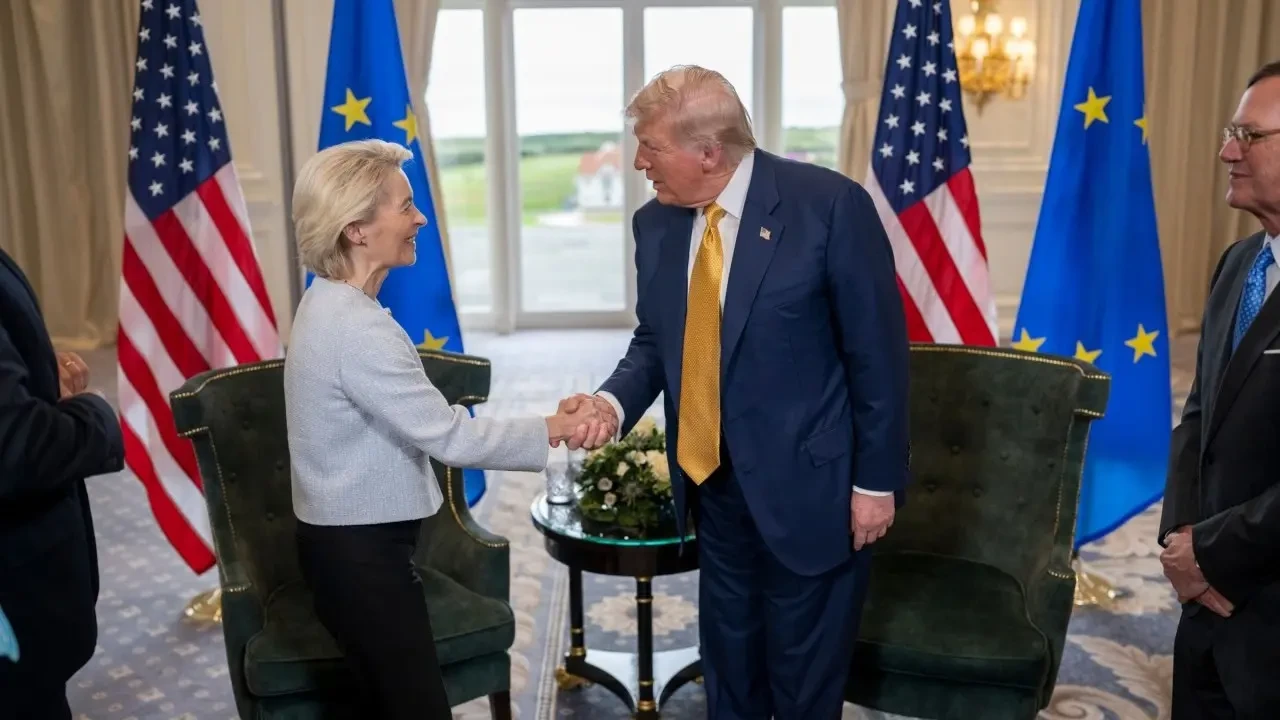
How businesses and markets reacted
Automakers welcomed a conditional exit from punitive tariffs, but they remain cautious about implementation and timing. Industry groups flagged gaps on origin rules and exemptions that could create legal and administrative headaches.
If Brussels delays or weakens its legislative move, exporters may face the new tariff structure longer than hoped. A rapid EU procedural step would likely trigger immediate market relief and possible retroactive adjustments.
Why retroactivity and procedure matter
The U.S. agreed to make auto tariff relief effective from the first day of the month in which the EU introduces the necessary legislation. That creates a strong incentive for quick EU action and offers importers the prospect of backdated tariff reductions.
But “introducing” a bill is not the same as passing it; the U.S. tied relief to a procedural milestone that Brussels must sell domestically.
The legal and technical fault lines ahead
Negotiations will turn to the fine print: origin criteria, the scope of exemptions, quota designs for sensitive sectors and procurement contracts for energy and chips. Those technical rules will determine which companies truly benefit and which remain exposed. Disputes are likely, and both sides will have to build dispute-settlement paths to prevent recurring trade skirmishes.
The bottom line: a framework, not a finished treaty
The joint statement marks a major policy shift but leaves critical operational choices unresolved. Headlines about auto tariffs falling within weeks are plausible only if Brussels moves swiftly. Otherwise, the framework risks becoming a long, conditional roadmap that reduces uncertainty only gradually — and unevenly.
Three questions to watch next
- Will the European Commission formally introduce the implementing bills that trigger U.S. auto relief?
- How narrow or broad will origin rules and exemptions be, and who will be left out?
- What are the timelines and contract terms for the pledged energy and AI-chip purchases?
Why this matters beyond a tariff number
The agreement reshapes commercial incentives, strategic supply chains and political narratives on both sides of the Atlantic. A quick, clean implementation would lower costs for automakers and ease transatlantic friction. A slow or muddled process could prolong uncertainty, spur litigation, and redistribute manufacturing decisions rather than restore them.
Final take: conditional relief with high stakes
The framework offers conditional hope for European exporters and a new baseline for U.S.–EU trade. Its impact will depend on how fast and precisely Brussels and Washington turn broad commitments into laws, rules and contracts. If both sides move swiftly and clearly, the deal could stabilize a fraught relationship. If they do not, the pact risks becoming a headline without full delivery.