
¥90 billion, KKR leads building purchase

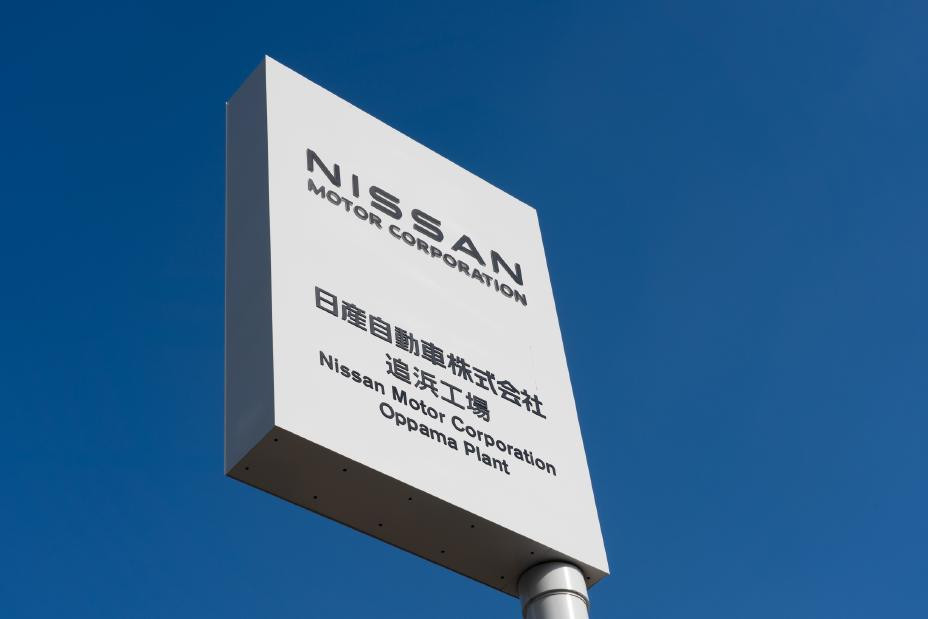
Recently, multiple media outlets including Bloomberg and Reuters, citing sources close to the deal, reported that private equity giant KKR has emerged as the “preferred bidder” for Nissan Motor’s Yokohama global headquarters building through its Japanese subsidiary KJR Management.

KKR submitted the highest bid of approximately ¥90 billion (equivalent to $6.1 billion at the current exchange rate) and is expected to sign a final agreement within the next 4-6 weeks.
According to Nissan’s fiscal year 2025 report (ending March 2025), the property’s net book value is ¥107.5 billion. The latest valuation range from third-party appraiser Sumitomo Realty is ¥95-105 billion. Taking the midpoint, the valuation is roughly ¥100 billion .
It is understood that both parties have reached a preliminary consensus on major commercial terms (term sheet), with the proposal expected to be submitted for review by Nissan’s board and union in mid-September. If all goes smoothly, the transfer is set to be completed before the end of the 2025 fiscal year (March 31, 2026).
The deal’s finalization still hinges on approval from Nissan’s union, regulatory reviews in Japan and abroad, and the final sign-off from KKR’s fund limited partners (LPs).
As of the close on August 20, Nissan’s stock price was ¥380, with a market capitalization of ¥1.49 trillion (approximately $10 billion).
Nissan’s fiscal year 2024 (ending March 2025) also revealed a net loss of ¥670.9 billion, with global sales of 3.346 million vehicles. In China, sales were 690,000 units, down to 61% of the 1.13 million units sold in 2020.
According to incomplete statistics, KKR has completed over $15 billion in investments in Japan over the past decade, spanning auto parts, industrial equipment, commercial real estate, and infrastructure.
This includes the 2017 acquisition of Nissan’s parts giant Calsonic Kansei for $4.5 billion, which KKR later merged with Marelli to form the world’s seventh-largest independent auto parts group.
Additionally, in 2019, KKR led a ¥1.13 trillion debt restructuring for Marelli, converting debt to equity and securing a 65% stake.
Amid the global wave of automotive electrification, Nissan is grappling with the pains of transitioning from a “technology leader” to a “chaser.” Selling its headquarters building for a one-time ¥90 billion cash injection is a desperate measure.
For KKR, this $6.1 billion deal is not just a typical “sale-and-leaseback plus asset transformation” real estate investment but also its latest move to deepen ties with Japan’s automotive ecosystem.
Yet it cannot be denied that KKR has once again proven with capital that in times of liquidity crunch, asset values are often redefined, and Wall Street PE giants like KKR can always find gold in the ruins.