
Bank of America: Powell’s Last Jackson Hole May Spark Big Swings in Small-Caps

Shearing sheep
August 22, 2025
GoGPT Summarizes Articles
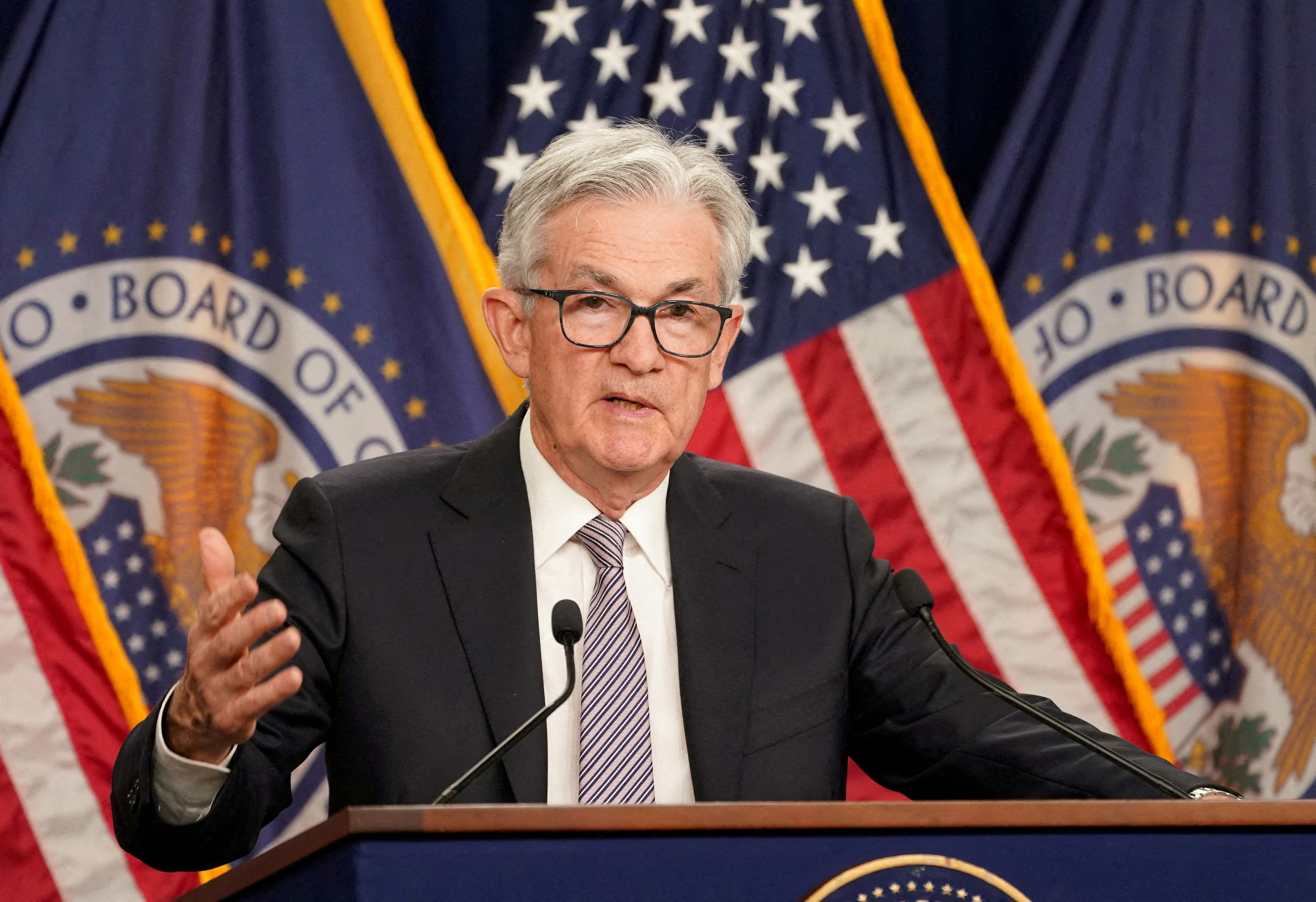
Markets are once again turning their eyes toward Jackson Hole, Wyoming, where Federal Reserve Chair Jerome Powell is set to deliver what’s likely his final speech at the annual central bank symposium.
Normally, this conference is a gathering of policymakers and economists that feels somewhat academic. But over the years, it has become a stage where subtle hints can rattle Wall Street, and Powell’s words have historically carried enough weight to send both stocks and bonds into sharp swings.
The event is not just a U.S. affair—it attracts global attention, as investors and central banks alike watch for cues on monetary policy direction.
The symposium officially kicked off on Thursday, with the focus now squarely on Powell’s Friday morning address at 10 a.m. local time, which will set the tone for the rest of the year.
This year, the stakes may be even higher. Growth stocks have already been under pressure in the run-up to the event, showing that investors are nervous. Bank of America’s Jill Carey Hall has drawn particular attention to small-cap stocks, noting that the Russell 2000 index could be especially sensitive.
Her view is straightforward: if Powell sounds dovish—signaling confidence in cutting rates later this year—small-caps might rebound sharply. If instead he leans hawkish, warning that inflation remains sticky and rate cuts are not a done deal, these stocks could tumble.
Why small-caps? Historically, they tend to outperform during recession-linked easing cycles because cheaper borrowing costs help debt-heavy smaller firms more than large corporations.
But in periods where the economy avoids outright recession, their performance is far less predictable. With today’s backdrop of mixed signals—sluggish labor data on one side, resilient consumer spending and sticky inflation on the other—the market isn’t sure which way to lean. That uncertainty makes Powell’s speech feel like a genuine catalyst.
Recent data has only added to the unease. At the start of August, traders were nearly certain the Fed would cut rates in September. Fast forward to this week, and those odds have dropped to roughly 73%.
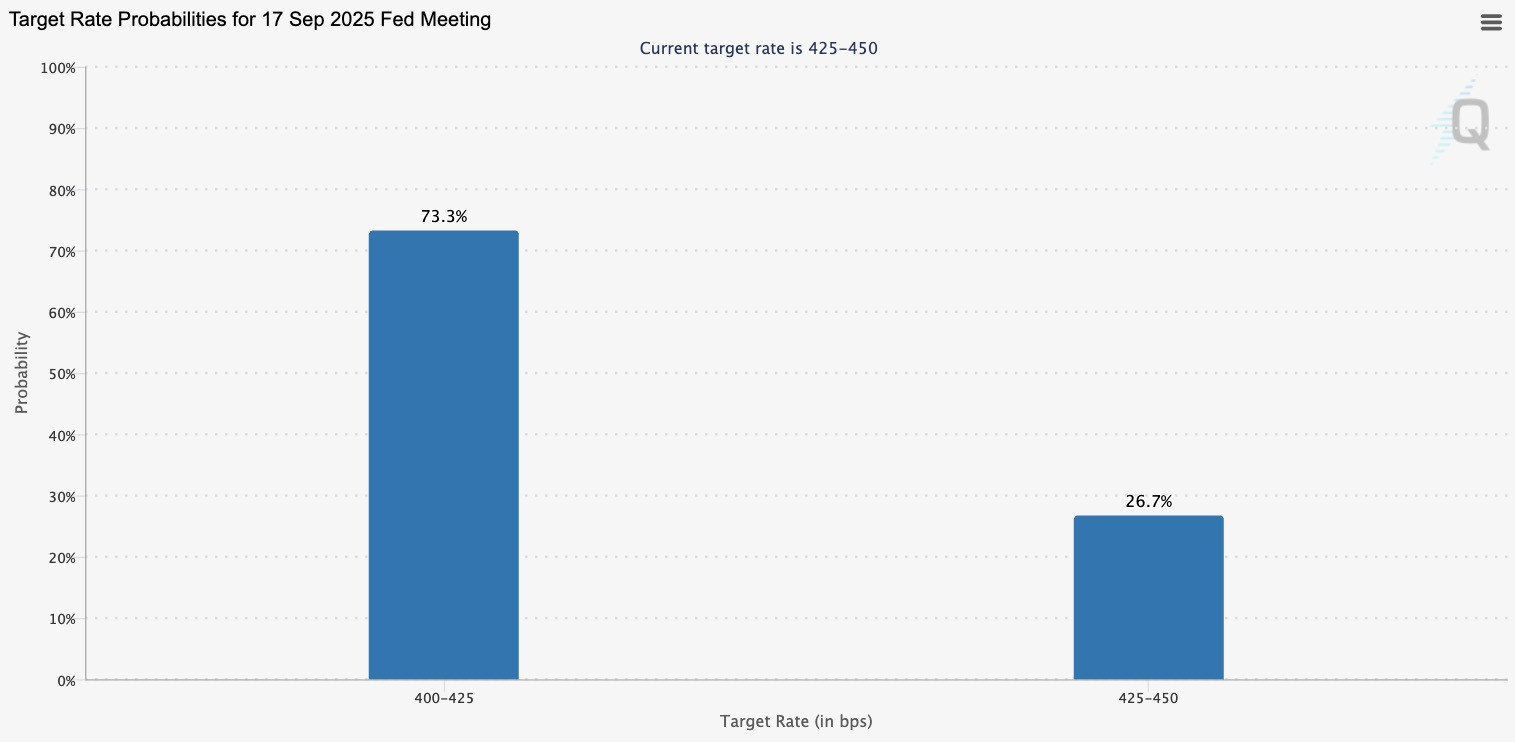
Stronger-than-expected manufacturing activity and persistent core inflation have forced investors to reconsider their timelines. For Powell, that sets up a difficult balancing act: acknowledge the recent cooling in jobs and housing without appearing complacent about inflation that is still running above target.
History doesn’t exactly calm nerves either. Powell’s Jackson Hole speeches have often produced negative initial reactions.
In 2022, his blunt warning about keeping rates “higher for longer” sparked a selloff that erased months of gains in the S&P 500.
Analysts at Evercore ISI warn that if Powell strikes a similarly cautious tone this year, the market could retrace as much as 7% to 15% into the fall. Implied volatility heading into the event has already doubled compared to its recent average, which tells you just how jittery traders are.
From a sector perspective, the split is clear.
A dovish Powell could unleash a rally in tech, AI plays, and small-cap names that have lagged in recent months. Lower yields would also lift interest-rate sensitive areas like REITs and utilities.
But a hawkish Powell—especially one that pushes back against imminent rate cuts—could shift leadership toward banks, energy, and defensive sectors better suited to a “higher-for-longer” environment. For investors who follow money rotation closely, this may be the most revealing signal to watch after the speech.
Investors will also be watching the broader discussion at Jackson Hole, where global central bankers often exchange views on policy coordination and economic outlook, which can amplify market reactions.
The broader question is whether the U.S. economy is actually slipping toward recession or just slowing into a softer patch.
Analysts remain divided. S&P Global’s Ben Herzon recently argued the U.S. is likely to avoid recession in 2025 despite softer jobs data, while Moody’s Mark Zandi warns the risk is still substantial.
That ambiguity means markets could overreact to even small shifts in Powell’s language. If he hints that cuts are “conditional” rather than guaranteed, small-caps may take it harder than large, cash-rich companies.
My sense is that volatility is inevitable, but the narrative may not settle in just one trading session.
Powell’s speech could trigger an immediate move, but follow-through will depend on whether incoming data—especially inflation and labor—confirm his tone in the weeks ahead.
If the economy holds up and inflation continues to ease, small-caps might finally find the sustained rally they’ve been lacking. If instead data stays hot and Powell sounds cautious, they could be the first to roll over again.
For long-term investors, the lesson here is less about predicting Friday’s headline reaction and more about positioning for an uncertain policy path.
Either way, buckle up—this could be one of those weeks where small-caps remind us why they’re often called the “canary in the coal mine” for U.S. equities, and Jackson Hole may once again prove why it’s one of the most closely watched gatherings in global finance.
#Global Macro Policy: Central Banks & Governments in Action