
Powell’s Full Speech: Risk Balance is Shifting, Prioritizing Employment Risks

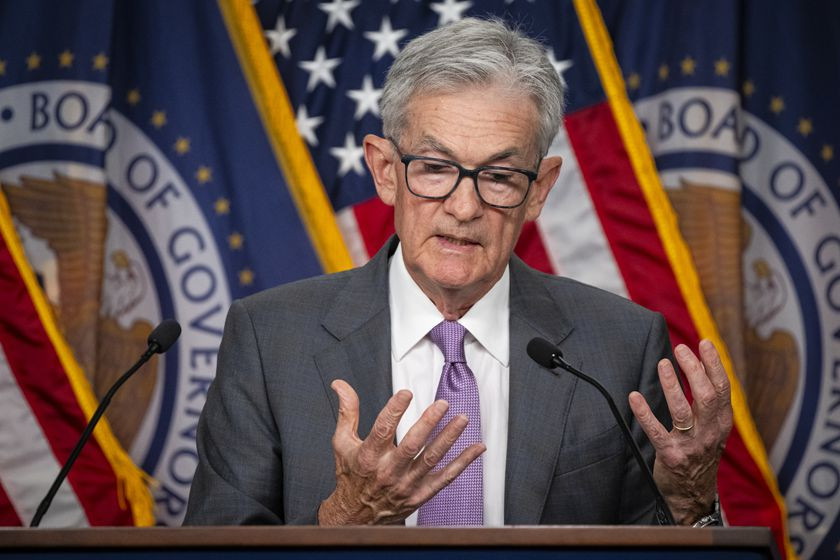
Below is the full text of Federal Reserve Chair Jerome Powell’s speech titled "Monetary Policy and the Fed’s Framework Review," delivered at Jackson Hole:
Opening Remarks
Since the beginning of this year, the U.S. economy has demonstrated resilience amid significant policy changes.
With respect to the Fed’s dual mandate, the labor market remains close to maximum employment, while inflation, though still elevated, has declined substantially from its post-pandemic peak. At the same time, the balance of risks appears to be shifting.
In today’s address, I will first discuss the current economic situation and the near-term outlook for monetary policy. Then, I will address the results of our second public review of the monetary policy framework, which are reflected in the revised version of our "Statement on Longer-Run Goals and Monetary Policy Strategy" released today.
Current Economic Conditions and Near-Term Outlook
A year ago, when I spoke here, the U.S. economy was at a turning point. Our policy rate had been held in the 5.25%–5.5% range for over a year. This restrictive stance helped reduce inflation and supported a sustainable balance between aggregate demand and supply.
At that time, inflation was nearing our target, and the labor market had cooled from its overheated state. The upside risks to inflation had diminished, but the unemployment rate had risen by nearly 1 percentage point—a level typically seen only during recessions.
Subsequently, across three consecutive Federal Open Market Committee (FOMC) meetings, we recalibrated our policy stance, allowing the labor market to maintain balance near maximum employment over the past year.
This year, the economy faces new challenges. Higher tariffs are reshaping the global trade landscape, and stricter immigration policies have led to a sharp slowdown in labor supply growth. Over the long term, changes in tax, fiscal spending, and regulatory policies could also significantly impact economic growth and productivity.
There remains substantial uncertainty: what the final state of these policies will be and their lasting effects on the economy.
Changes in trade and immigration policies simultaneously affect both demand and supply. In this environment, distinguishing between cyclical and structural shifts becomes extremely difficult. Yet, this distinction is critical, as monetary policy can stabilize cyclical fluctuations but has little power to alter structural trends.
The labor market is a case in point. The July employment report showed an average monthly nonfarm payroll gain of just 35,000 over the past three months, far below the 168,000 monthly average in 2024. Moreover, May and June employment figures were significantly revised downward.
Although the pace of growth has slowed markedly, this has not led to excessive slack in the labor market, a scenario we aim to avoid. The unemployment rate rose slightly in July but remains at a historically low 4.2%, having been relatively stable over the past year.
Other indicators—such as resignation rates, layoffs, the job openings-to-unemployment ratio, and nominal wage growth—have shown little change or only modest declines. The sharp reduction in immigration has lowered labor supply, significantly reducing the “equilibrium employment growth rate” needed to keep the unemployment rate stable.
Overall, the labor market is experiencing a synchronized cooling of supply and demand, presenting an “unusual balance.”
However, this also means that downside risks to employment are increasing, and if these risks materialize, they could quickly manifest as rising layoffs and an uptick in unemployment.
Meanwhile, GDP growth slowed to 1.2% in the first half of this year, half of 2024’s 2.5%. The slowdown primarily reflects a drop in consumer spending. As with the labor market, part of this GDP slowdown may reflect a deceleration in potential output.
On inflation: Higher tariffs have begun to push up prices for some goods. Data show that the overall PCE price index rose 2.6% over the 12 months ending in July; excluding food and energy, core PCE rose 2.9%, above last year’s level.
Among core components, goods prices increased 1.1% year-over-year, contrasting with a mild decline in 2024. Housing services inflation continues to trend downward, but non-housing services inflation remains above historical levels consistent with the 2% target.
The impact of tariffs on consumer goods prices is already evident. This effect is expected to accumulate over the coming months, though its timing and magnitude remain highly uncertain. The key question is: Will these price increases significantly heighten the risk of persistent inflation?
A reasonable baseline assumption is that the tariff effect will be relatively short-lived, resulting in a “one-time” rise in price levels.
Of course, “one-time” does not mean “immediate.” The pass-through of tariffs takes time, and tariff levels are still being adjusted, potentially prolonging the process.
However, we cannot rule out an alternative scenario: that the price increases triggered by tariffs could ignite more persistent inflationary dynamics. This requires assessment and response. One possibility is that workers, facing reduced real income due to higher prices, demand and secure higher wages, sparking a wage-price spiral. But given the lack of tightness in the labor market and rising downside risks, this seems unlikely.
Another possibility is that inflation expectations could rise, driving actual inflation higher. However, current market and survey data indicate that long-term inflation expectations remain anchored near the 2% target.
Of course, we cannot assume inflation expectations will remain stable indefinitely. Regardless of the situation, we will not allow a one-time price level increase to evolve into a persistent inflation problem.
In summary, what does this mean for monetary policy? Currently, upside risks to inflation are present, while downside risks to employment are growing—a challenging scenario. When our objectives conflict, our framework requires us to strike a balance between the dual mandate.
Our current rate level is about 100 basis points closer to the neutral rate than it was a year ago, and the stability of the unemployment rate and other employment indicators allow us to carefully assess and adjust our policy stance. Nevertheless, with policy still in a restrictive range, changes in the baseline outlook and risk balance may justify a policy adjustment.
Monetary policy is not on a preset path. FOMC members will decide based on data and its implications for the outlook and risk balance. We will never deviate from this approach.
Evolution of the Monetary Policy Framework
Next, I turn to the second theme: Our monetary policy framework is built on the statutory mandate from Congress to promote maximum employment and price stability. We are fully committed to fulfilling this mandate, and the framework’s revision will help us achieve this goal under a broader range of economic conditions.
The revised "Statement on Longer-Run Goals and Monetary Policy Strategy" (which we call the "Consensus Statement") describes how we pursue the dual mandate. This document aims to help the public understand our approach to monetary policy, enhancing transparency, accountability, and effectiveness.
This revision is a natural evolution, building on our deepening understanding of the economy. It builds on the initial statement from the Bernanke era in 2012. The version released this year is the outcome of the second public review.
This review occurs every five years and included three components this year: "Listening to America" events hosted by regional Fed banks, a core research conference, and policy discussions with FOMC meetings and staff analyses.
In this year’s review, our goal was to ensure the framework applies across various economic conditions while evolving with changes in economic structure and understanding. The Great Depression, the Great Inflation, the period of moderate prosperity, and today’s challenges each differ.
Background of the 2020 Review: At that time, the U.S. economy was in a “new normal”: low growth, low inflation, an extremely flat Phillips curve, and interest rates long near the effective lower bound (ELB). Since the 2008 financial crisis, the policy rate had lingered at the ELB for seven years.
It was widely believed that, in the event of another recession, rates would again approach zero and remain constrained for an extended period. In this scenario, real interest rates could rise due to nominal rate limits, further suppressing employment and inflation in a vicious cycle.
Thus, in 2020, we introduced a “flexible average inflation targeting” framework to ensure inflation expectations remained anchored at 2% despite rate constraints. Specifically, we emphasized that after a prolonged period of inflation below 2%, policy might allow inflation to “moderately exceed 2%” for a time.
But the post-pandemic situation was entirely different. The economic reopening brought the highest inflation in 40 years. Like most central banks and analysts, we initially judged that inflation would subside quickly without significant tightening.
That proved incorrect, so we decisively raised rates by 525 basis points over 16 months, combined with supply chain recovery, to bring inflation back toward the target without the sharp unemployment spikes seen historically.
Key Points of the Revised Consensus Statement
This year’s review considered the evolution of economic conditions over the past five years. During this period, we observed that inflation dynamics can shift rapidly under significant shocks. Additionally, current interest rates are far higher than during the period between the global financial crisis and the pandemic.
With inflation above the target, our policy rate is restrictive—in my view, to a limited extent. We cannot determine where rates will settle in the long term, but the current neutral level may be higher than in the 2010s.
During the review, we recognized that the 2020 statement’s heavy emphasis on the ELB created communication challenges when addressing high inflation. Thus, we made several key revisions:
Removed the phrase “ELB as a defining feature.” Replaced with: Our monetary policy aims to promote maximum employment and price stability under various economic conditions. The ELB remains a potential challenge but is no longer central.
Reverted to flexible inflation targeting, abandoning the “compensatory overshoot” strategy. The “moderate overshoot” proved entirely inapplicable. Post-pandemic inflation was neither moderate nor intentional.
Stable inflation expectations were crucial to successfully lowering inflation while avoiding a significant unemployment spike. They allowed inflation to return to target after shocks while avoiding deflation risks.
The revised statement emphasizes the Fed’s firm commitment to ensuring long-term inflation expectations remain stable, noting that “price stability is essential to economic resilience and the well-being of all Americans.”
On employment: In 2020, we replaced “deviations” with “shortfalls” to indicate we would not tighten prematurely based on uncertain natural rate estimates. However, this was misunderstood in practice, as if we would never act preventively.
The revised version removes “shortfalls,” using a more precise phrasing: Employment may sometimes exceed real-time estimates of maximum employment without necessarily posing inflation risks. But if an overheated labor market threatens price stability, preventive action is still needed.
Balance in case of dual mandate conflicts: The revised version aligns more closely with the 2012 statement, adopting a balanced approach when weighing the degree of target deviations and the time required to return to them.
Continuity in other aspects: We continue to believe setting numerical employment targets is inappropriate due to their unobservable nature and variability over time; we maintain the 2% long-term inflation target; we continue to view monetary policy as forward-looking and consider lagged effects; and we will continue public reviews every five years.
Conclusion
Finally, I want to thank Schmid (President of the Kansas City Fed) and his team for meticulously organizing this annual event, including virtual participation during the pandemic. This is my eighth time speaking here.
The Jackson Hole conference allows Fed leaders to hear top economic ideas and focus on current challenges. Over 40 years ago, the Kansas City Fed successfully invited Volcker to this national park, and I am proud to carry on that tradition.