
How Donald Trump's Eldest Son Eric Trump Became a Crypto Evangelist

You might be surprised to learn that Eric Trump, the eldest son of former President Donald Trump, went from managing hotels and real estate projects to becoming one of the most enthusiastic voices in the cryptocurrency world. His journey didn’t start with passion for digital assets—it started with frustration at traditional banks.

Banks Pushed Him Toward Crypto
In early 2021, shortly after the Capitol riot, several banks abruptly closed hundreds of accounts belonging to the Trump family businesses, without giving a clear reason. Eric recalls, “That’s when I realized how fragile the financial system really is, and how easily it could be weaponized against you.”
In conservative circles, this experience is often called “debanking,” which is when banks refuse service for political or religious reasons. Eric felt this was a warning sign: if banks can cut you off at any moment, you need an alternative financial system—one that doesn’t rely on traditional institutions.
Cryptocurrency, with its decentralized structure, offered that alternative. Unlike banks, crypto platforms can’t arbitrarily shut down accounts, giving users more control over their money.
A Family Diving Into Digital Assets
After that wake-up call, the Trump family dove into crypto during President Trump’s second term. Eric, as executive vice president of the Trump Organization, led the charge on Bitcoin mining, token acquisitions, and other crypto ventures. One of their firms, World Liberty Financial, was valued at $4.5 billion, and it issued both its own token (WLFI) and a stablecoin pegged to the dollar.
Of course, this sparked controversy. Critics worry that the president relaxing crypto regulations while his family invests heavily in the sector creates potential conflicts of interest. Eric insists, “I literally have nothing to do with Washington. D.C. I’m just running my company.”
From Real Estate to Digital Assets
Ten years ago, Eric never imagined he’d work in crypto. He describes himself as a “bricks-and-mortar guy,” obsessed with real estate. He started working in the family business at 11, pouring concrete and laying tile. Today, he wakes up at 4:30 a.m., goes to bed at 10 p.m., manages dozens of projects, and oversees thousands of employees. Real estate, he says, is his baby.
But during his father’s 2024 criminal trial, he had time to rethink the financial world. Traditional banking seemed too fragile, while crypto offered freedom, flexibility, and security—portable and resilient against political risks, fire, or flood.
Key Projects and Investments
Among the Trump family’s crypto ventures, World Liberty Financial and the $TRUMP memecoin have drawn the most attention. World Liberty launched its own token WLFI and a stablecoin, while $TRUMP, a meme-based token, peaked near $15 billion in market value before dropping to around $1.7 billion.
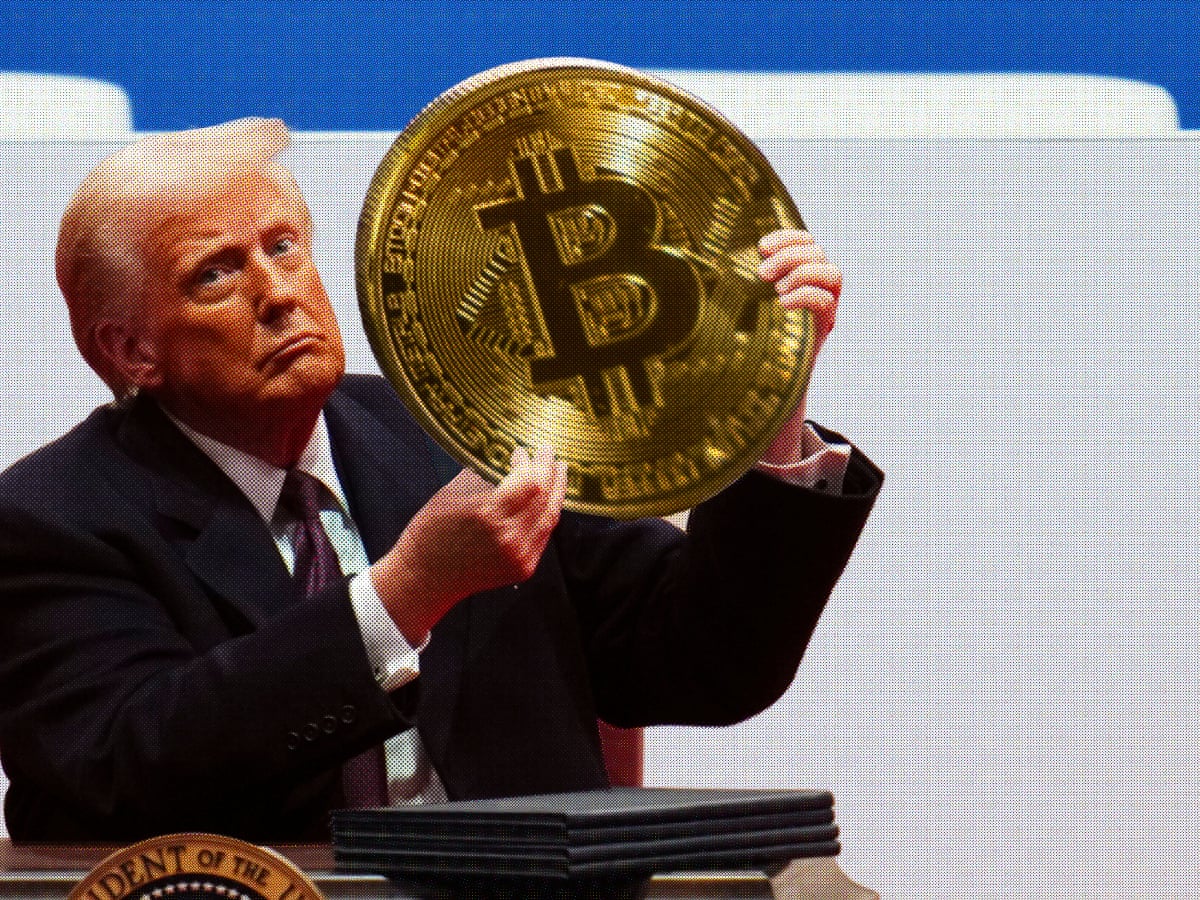
Eric sees memecoins as more than hype. They serve as an entry point for new investors: “If someone buys $TRUMP, they also get exposure to Bitcoin, Ethereum, and stablecoins. That’s their first step toward financial freedom.”
He has even imagined tokenizing real-world assets, like Trump Tower, so global investors can buy fractional shares. This would let ordinary people invest in high-value properties that were previously accessible only to the ultra-wealthy.
Building Connections in the Crypto World
Eric has also leveraged relationships in the crypto industry. He connected with executives at Hut 8, a public Bitcoin mining company, and partnered with them to launch American Bitcoin, focused on mining operations. Eric owns a 9.3% stake and serves as co-founder and chief strategy officer.
The family has invested in other firms too, including ALT5 Sigma, which acquired WLFI tokens and appointed Eric to its board. These moves quickly established the Trumps as players in the crypto market, but they’ve also drawn criticism over ethics and potential conflicts of interest.
Risks and Controversies
Critics argue the Trumps’ crypto investments blur the line between presidential influence and personal profit. Norm Eisen, former White House ethics czar, called it “the essence of corruption.” The White House responded that media claims about conflicts of interest are “irresponsible” and that the family has never engaged in them.
Memecoins like $TRUMP are volatile and risky. Even seasoned crypto investors approach them cautiously. For everyday investors, they can be fun and educational, but they require careful understanding before jumping in.
Why This Matters
Eric Trump’s journey isn’t just a personal pivot—it reflects a broader lesson. When traditional banks seem unreliable or politically biased, decentralized finance becomes more appealing. Crypto offers both financial independence and a hedge against the unpredictable nature of the traditional system.
His story shows that the world of finance isn’t just skyscrapers and bank accounts—it’s about freedom and control. But for regular investors, understanding the risks and technology is more important than chasing celebrity-backed projects.
In short: Eric Trump’s move from real estate to crypto is more than a hobby—it’s a search for financial freedom in a new kind of world.