
$10 Billion: “Southeast Asia’s Bubble Mart” Is Born

TOP TOY, the trendy toy brand under Miniso, has announced a lead investment from Temasek, pushing its post-money valuation to HK$10 billion.
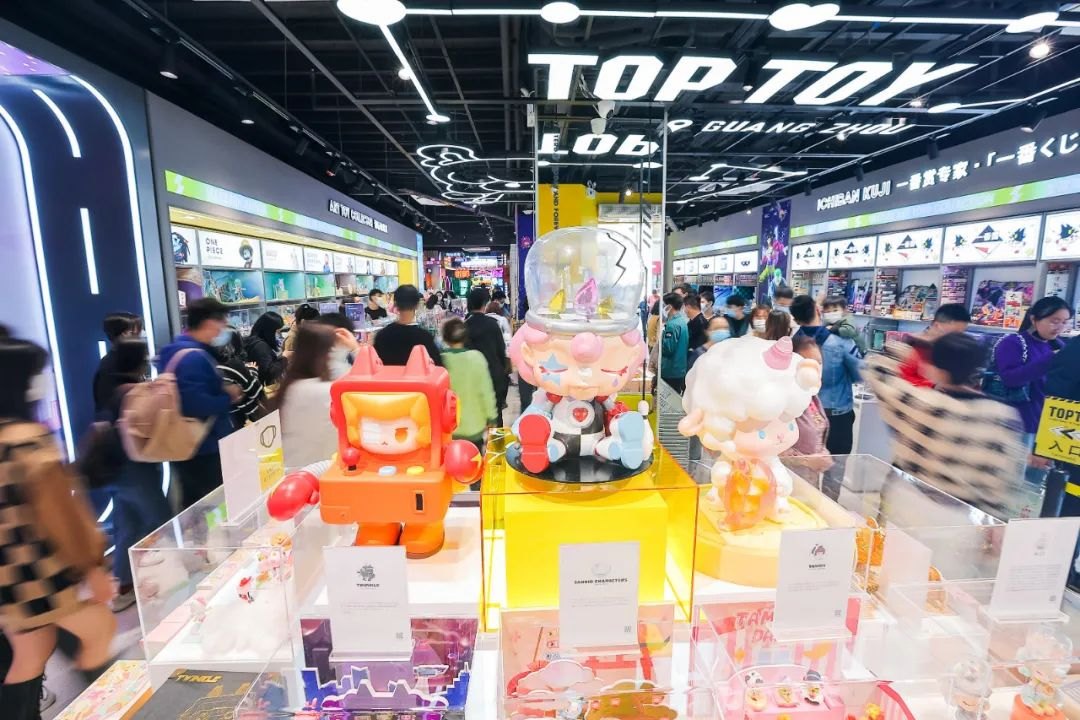
Five years ago, TOP TOY was testing the “global trendy toy aggregation platform” concept with a single store. Now, with 280 stores, it has turned “Tammy’s Mischievous Grin” and “Curly Sheep’s Tears” into viral hits.
Temasek’s bet isn’t just on the profit from a single figurine but on an entire industry chain that encapsulates Gen Z emotions—loneliness, healing, rebellion—into tradable assets.
This HK$10 billion valuation serves as both a springboard for TOP TOY’s potential IPO spin-off and another chip for Temasek to lock in the “Asian Gen Z consumption” megatrend with sovereign wealth funds’ long-term capital.
Raise Another $10 Billion
TOP TOY recently received a significant infusion of cash.
The trendy toy brand under Miniso Group has secured its latest funding round, led by global investment firm Temasek, achieving a post-money valuation of approximately HK$10 billion.
TOP TOY can be considered Miniso’s own “Bubble Mart.”
In 2020, its first store opened at Zhengjia Plaza in Guangzhou, marking TOP TOY’s debut as an independently operated subsidiary of Miniso, positioned as a “global trendy toy aggregation platform” aiming to make “trendy toys = TOP TOY.”
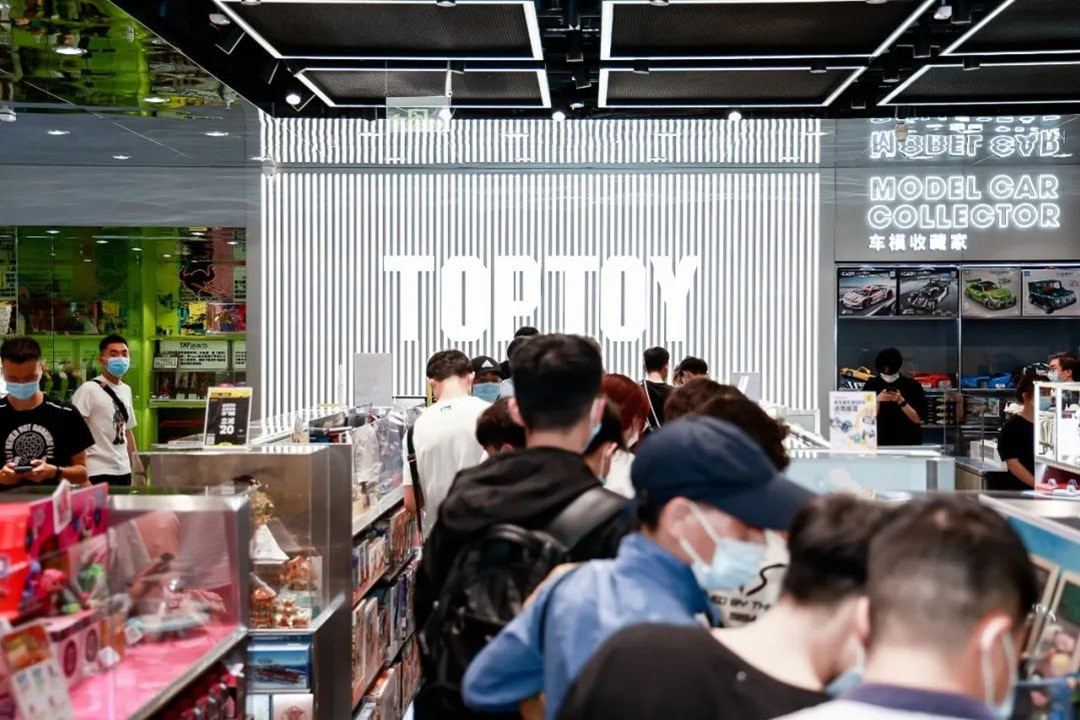
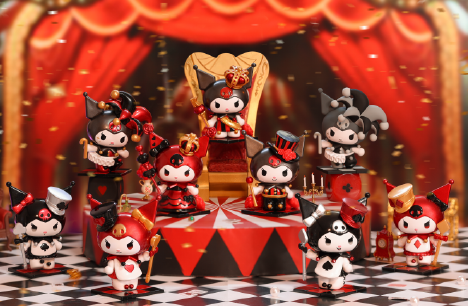
The stores are designed as immersive cultural exhibition spaces, blending shopping with play. Offering a full range—blind boxes, building blocks, figurines, statues, Gundam kits, BJD dolls—catering to 10- to 40-year-olds with prices ranging from tens to thousands of yuan, TOP TOY features its own characters like Tammy, Curly Sheep, Twinkle, Yoyo, and Hidden Sprite VERA alongside over 200 international IPs such as Disney, Marvel, and Naruto.
Leveraging Miniso’s supply chain, the brand expanded from one store to over 200 by the end of 2024, spanning more than 80 cities in China.
Subsequently, TOP TOY planted its flag in Kuala Lumpur, Malaysia, and Bangkok, Thailand, initiating overseas expansion with a goal to make overseas sales exceed 50% within five years, opening stores in 40 countries and selling products to 150 nations.
For young people, TOP TOY is more than a “warm trendy toy company”—it’s a go-to trendy amusement park, sharing China’s original trendy toy stories with the world.
This investment from Temasek and the subsequent revaluation have led some to speculate whether it’s a step toward TOP TOY’s standalone listing.
A few months ago, reports suggested Miniso had engaged JPMorgan Chase and UBS to advise on a potential Hong Kong IPO for TOP TOY, with Miniso also seeking new investors, such as sovereign wealth funds, before selling shares. This marks the second time since March that TOP TOY has been rumored to list in Hong Kong.
Addressing spin-off listing rumors, Miniso responded by acknowledging media reports about potentially spinning off specific business units for a standalone listing. The company stated it is conducting a preliminary assessment of the possibility of listing its “TOP TOY” branded trendy toy business to optimize shareholder value.
Miniso emphasized that this plan is in an early stage, with progression dependent on factors including market conditions, and no guarantees can be made regarding timing, listing location, or other details.
TOP TOY’s potential spin-off may stem from the mismatch between the high-margin nature of trendy toys and Miniso’s “value-for-money” identity.
Miniso rose as a “ten-yuan store,” where gross margins and single-store turnover aren’t its strengths, typical of such models. In contrast, TOP TOY thrives on IP premiums, with high self-owned and exclusive SKU ratios, boasting stronger margins akin to a content consumption company, attracting higher price-to-earnings (PE) ratios from capital for “content + platform” models.
Spinning off TOP TOY could serve several purposes: first, to unlock the business’s valuation in one go, reinvesting the proceeds into Miniso’s channel and supply chain; second, to allow TOP TOY to secure independent funding for “money-burning” projects like overseas expansion, IP incubation, and digital platforms without dragging down Miniso’s profit statement; third, to facilitate equity incentives, directly tying designers, IP partners, and store operations to TOP TOY’s stock price, avoiding conflicts with Miniso’s existing compensation system.
In short, a spin-off listing lets the “miscellaneous goods seller” continue generating stable cash flow while the “dream seller” takes its bigger story to the capital market, meeting both sides’ needs.
Temasek’s Bet on “Southeast Asia’s Bubble Mart”
On June 8 this year, according to the Forbes Real-Time Billionaires List, Bubble Mart founder Wang Ning’s net worth reached $20.3 billion making him Henan’s new richest person.
Wang Ning’s ascent to Henan’s richest person underscored to capital and markets just how valuable emotional worth has become.
Temasek’s investment further signals capital’s optimism about the trendy toy category. Moreover, TOP TOY’s rare combination of “local supply chain + global IP operations” aligns perfectly with three long-term trends Temasek has bet on—youth consumption, cultural exports, and the globalization of Chinese brands.
Temasek has designated “Asian Gen Z consumption” as a core theme, with trendy toy markets in Thailand, Indonesia, and Vietnam boasting compound annual growth rates exceeding 40%. With over 200 international IP licenses and Miniso’s supply chain covering 90 countries, TOP TOY essentially hands Temasek two tickets: “regional channels + content amplifier.”
TOP TOY’s overseas store model has proven more successful than expected: reports indicate stores in Malaysia, Indonesia, and Thailand turned profitable within the first month, recovering costs in three to four months, with monthly revenues around $1 million. Notably, the second store in Malaysia hit $1.5 million in its opening month, providing Temasek with validation data for “replicable overseas expansion.”
Furthermore, Temasek favors businesses with clear cash flows and controllable capital efficiency—TOP TOY’s rapid single-store payback and superior inventory turnover compared to traditional toy retail align with its “light-asset, high-turnover” preference.
Entering as an anchor investor, Temasek can boost TOP TOY’s IPO valuation while bundling Southeast Asian channel resources, government relations, and ESG frameworks for strategic synergy. In essence, Temasek is buying the “Beta” of “Chinese trendy brand globalization,” with TOP TOY delivering the “Alpha.”
Investing in TOP TOY fits Temasek’s style of using sovereign fund “long money” to capture structural megatrends, turning them into predictable cash flows through “long-term holding + ecosystem empowerment.”
From an investment methodology perspective, Temasek’s strategy revolves around four main pillars:
- Trend Positioning: Betting on megatrends lockable for over a decade by demographics, technological leaps, or policy dividends, such as digitization, sustainable living, future consumption, and the rise of the new middle class under “common prosperity.” TOP TOY’s “Asian Gen Z cultural consumption” is the fastest-growing, least-penetrated segment within “future consumption.”
- Regional Focus: Using Southeast Asia and China as “dual engines,” leveraging Singapore’s unique geopolitical and capital bridge role to replicate China’s supply chain efficiency in Southeast Asia’s young population market, then feeding that growth back into Chinese brand globalization.
- Stage Preference: Avoiding early high volatility, favoring Pre-IPO or growth-stage projects with measurable valuations, proven business models, and a need for capital and resources to scale. Temasek seeks anchor investor stakes for board seats and strategic alignment.
- Value Enhancement: Beyond capital, providing “soft resources.” Temasek integrates portfolio companies into its ecosystem, connecting them to Southeast Asian government ties, ESG frameworks, supply chain finance, and potential channel or tech collaborations with other investments, transforming one-time financial input into ongoing operational leverage for higher exit multiples.
Temasek’s strategy integrates “trend + region + stage + resources”: locking in trends with a long-term view, grounding it in regional depth and stage controllability, then elevating valuations with ecosystem resources for low-risk, high-certainty compound returns.
How Much Is Emotional Value Worth?
In a previous interview, Bubble Mart’s Wang Ning proposed the “uselessness with purpose” theory, countering critics who call Bubble Mart a bubble by arguing its products’ lack of utility is why consumers keep buying.
A similar perspective applies to the recently trending AI companion robots. After studying Japan’s LOVOT, an AI companion robot entrepreneur noted, “LOVOT could add a camera for baby monitoring but deliberately avoids it, weakening functionality to enhance the emotional value it provides.”
From Bubble Mart’s explosive growth to AI companion robots’ launch and TOP TOY’s latest funding, we increasingly see “emotion” becoming a business as Gen Z becomes the dominant consumer force.
Digging deeper, with grand narratives fading, Gen Z outsources emotions to small, portable, controllable objects: a Labubu’s mischievous grin or a Crybaby’s tear can express “who I am” from a desk or rental room corner.
Thus, trendy toy companies become “emotion factories,” molding abstract needs like loneliness, healing, rebellion, and nostalgia into standardized SKUs, refining emotional intensity through IP collaborations, cross-disciplinary art, and digital collectibles until they become listable, hedgeable assets.
Young people no longer believe in “changing the world” slogans, caring only if “I can be healed after work today.” Trendy toy companies break “healing” into a replicable production line: designers turn “loneliness” into a melancholic cute figurine, blind box odds upgrade it to “social currency,” and limited numbering turns it into “emotional futures.”
You’re not just buying a plastic figure but outsourcing unspeakable emotions to a standardized desk-top solution, which companies then list in bulk, letting capital go long or short on “loneliness.”
Trendy toy companies reframe “buying toys” as “buying emotional scripts.”
Placing blind box machines at subway gates, convenience store counters, and office elevators triggers “micro-impulses” in fragmented settings.
Seeing a trendy toy during the 30-second peak of commuting anxiety projects emotional needs onto the product; designed hidden-item odds align with behavioral psychology’s “variable-ratio reward” zone, mirroring the dopamine spike 0.8 seconds before opening a box with a slot machine’s pull, but it’s legal and socially shareable.
“Unboxing” videos on Xiaohongshu and Douyin ritualize the process, with views equating to social currency. Owning a rare item grants “circle influence,” while missing out fuels “fear of missing out” (FOMO), pre-writing the next purchase motive.
Trendy toy IP personas—like melancholic, cute, or dark—become unspoken self-labels for youth. A Crybaby’s tear says “I’m vulnerable,” a Skullpanda’s smirk says “I don’t fit in,” turning consumption into “buying a proxy.”
Limited numbering, artist signatures, and secondary market premium curves give toys “appreciating” financial traits. Youth self-mock “plastic Maotai” while proving thrift with Xianyu transaction screenshots, packaging emotional spending as rational investment.
The end result? Trendy toy companies compress self-narratives of loneliness, healing, and rebellion—once requiring lengthy essays—into ¥59 instant gratification in a 10cm square, completing a “purchase-post-trade-repurchase” cycle within 24 hours.
Youth no longer “own” emotions but “subscribe” to them, renewing monthly with ever-changing editions.
Mastering this emotional business isn’t easy. In design, “emotions” are turned into tap water: using crawlers and skin conductance sensors to map “loneliness/healing” heat, then compressing it into replicable symbols with color, shape, and micro-expressions—10cm size, 1/96 hidden probability, 40-word story card, triple packaging for 90% emotional density.
Three touchpoints amplify FOMO: 30-second subway blind box machines, flagship store check-ins, digital collectibles.
Monthly official buybacks + NFT floor funds turn toys into a stable “plastic Maotai.” After 18 months, trade-in events with live shredding broadcasts crowdfund the next season’s direction, upgrading old emotions into new pre-sales.
Data mining, IP refining, probability and financial amplification of veins, plus a recycling system to prevent depletion, create a never-ending emotional business looping through desks, rentals, and social circles.
TOP TOY’s funding reaffirms that emotions are a lucrative business.