
A Storm Is Brewing in Semiconductors Under Trump Tariffs

When Donald Trump talks about semiconductors these days, Wall Street listens closely. Recently he hinted that tariffs on imported chips could soar to levels as high as 200 or even 300 percent. The news alone was enough to send a chill across the sector. But a week has gone by and the exact details are still missing, leaving the entire industry hanging in suspense.
Investors are now asking the same question Who will get hurt, who could benefit, and what does this mean for the future of the chip world
Two Different Playbooks for the Same Goal
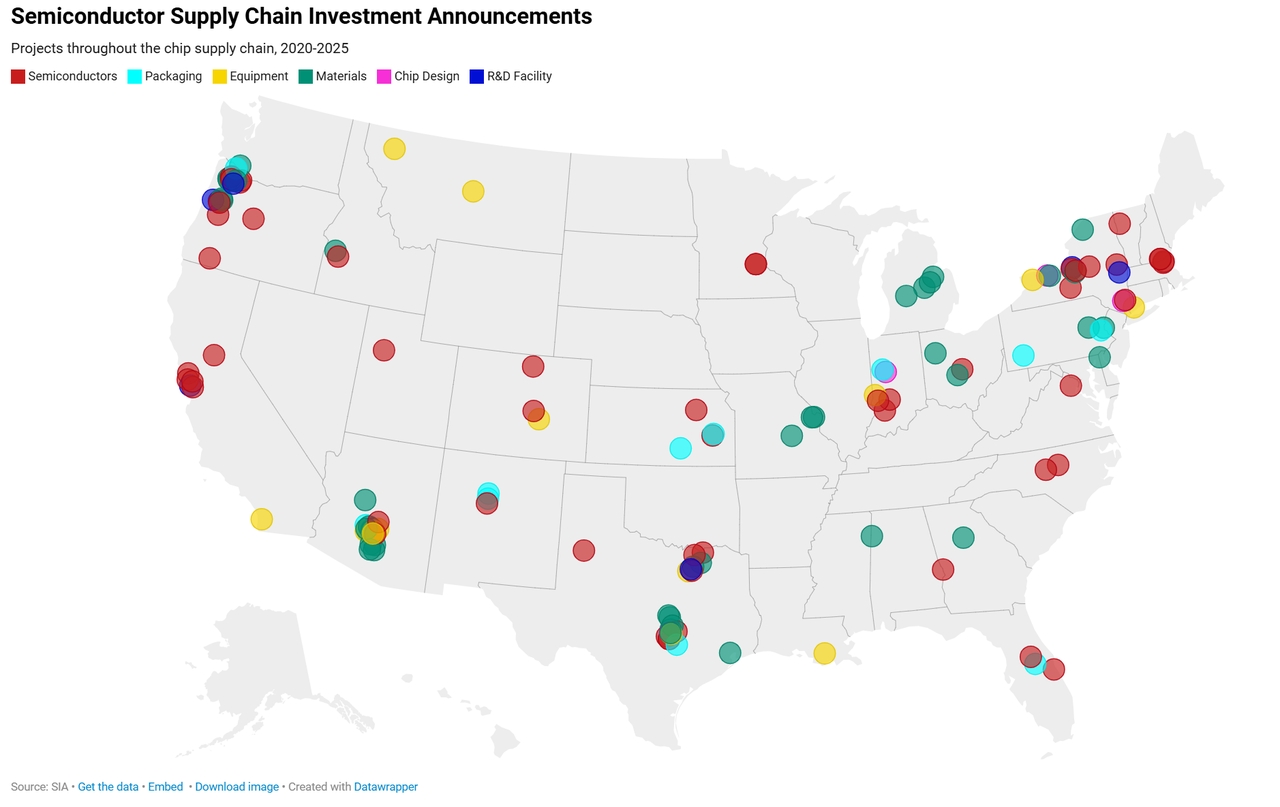
The contrast with President Biden is striking. Biden’s plan was to hand out subsidies through the CHIPS Act, essentially paying companies to bring factories home and boost “Made in America” production.
Trump’s approach is the opposite. Instead of giving candy, he prefers using a stick. By slapping heavy tariffs on chips made overseas, he wants to make it painful for companies to keep production abroad. The end goal is the same strengthen America’s ability to actually make the chips that power everything from iPhones to fighter jets.
In simple terms
-
Biden says Come back and we will help you.
-
Trump says Come back or pay the price.
How Tariffs Really Work
Now the tricky part Who actually pays for these tariffs
The U.S. government usually taxes goods based on where they were made, not on the nationality of the company. For example Intel may be an American company, but if its chips roll out of a factory in Ireland, those imports could still face tariffs.
In chips, the “country of origin” usually gets decided by where the wafer the base of the chip was manufactured. Later steps like packaging and testing often do not change that label. So if a chip is built at TSMC’s fab in Taiwan and then packaged in Arizona, it is still considered made in Taiwan and would likely face a tariff.
There is also a technical rule known as 9802. If a U.S. made wafer is sent overseas for some extra processing and then comes back, sometimes the tax only applies to the added value from the foreign work. But no one knows yet if Trump’s team will allow this carve out.
So the real burden will depend heavily on the fine print of the tariff policy.
The Companies at Risk and the Ones That Could Gain
If the rules are tough, the biggest losers could be the foreign chipmakers that depend heavily on U.S. customers. Think of Taiwan’s TSMC or UMC or packaging giants in Asia. Their factories may be abroad, but much of their revenue comes from American tech firms.
On the flip side, the clear winners would be the companies already building or expanding fabs on U.S. soil. TSMC has its Arizona project, Samsung is building in Texas, and Intel still has its domestic plants. Even packaging companies that are opening facilities in the U.S. could get a boost since their output would be naturally exempt.
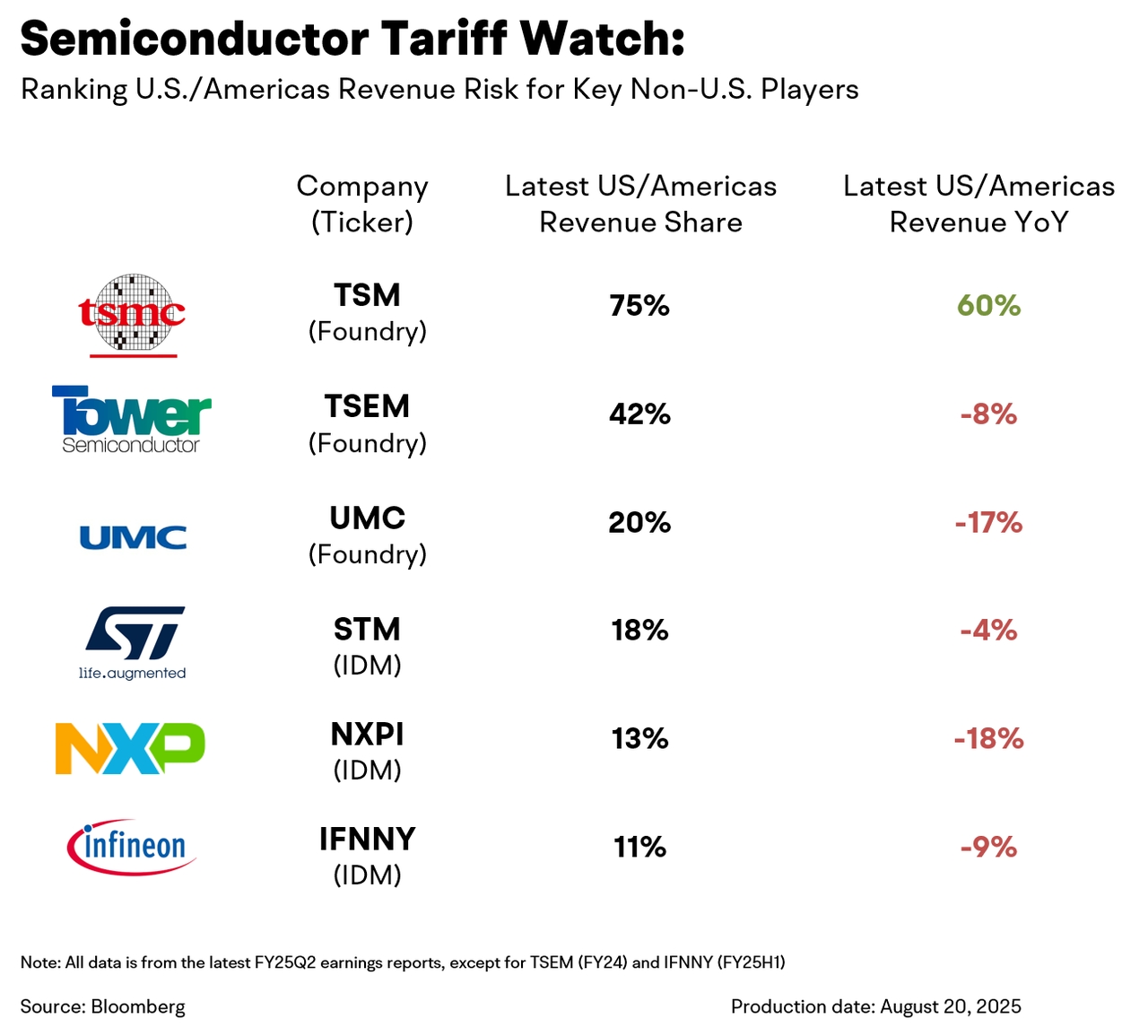
One sign of change TSMC’s Arizona unit quietly reported its first profits this year, a signal that production lines there are finally starting to hum. If tariffs hit, that milestone could suddenly look like a major advantage.
The Bigger Picture Beyond Short Term Price Hikes
The impact of tariffs will not be limited to short term cost increases. Over time they could reshape the entire global semiconductor map.
First supply chains will split. The world could move toward a “US for US China for China” model, where American firms produce at home for the domestic market and Chinese firms do the same. Cross border integration would get harder.
Second U.S. capacity will grow. Even if costs are higher, Washington clearly wants to pull critical manufacturing back home and will push firms to build front end fabs and advanced packaging locally.
Third demand could get shaky. In the short run, customers may rush to stockpile chips before prices rise. But in the medium term, higher costs for semiconductors will likely push up the prices of electronics and cloud services, eventually hitting consumers and slowing demand.
What Investors Should Keep in Mind
For investors, the situation is a mix of risk and opportunity.
-
The real winners may not be the loudest names in the headlines but the firms that secure tariff free production fastest.
-
Short term volatility is almost guaranteed until the rules are published. Semiconductor stocks could swing wildly on every new rumor.
-
The long term direction is clearer America is determined to strengthen its domestic chipmaking. That creates an advantage for Intel, Samsung Texas, and TSMC Arizona among others.
The Key Questions Still Hanging
-
Will exemptions be granted by company or strictly by product origin
-
Will Washington demand that both wafer fabrication and packaging must take place in the U.S. for chips to qualify as “Made in America”
-
How quickly will big customers like Apple or Nvidia shift orders once the tariffs take effect.
The Bottom Line
Trump’s tariff plan is still a work in progress but it has already unsettled the entire semiconductor world. The stakes are enormous. For some companies, this could be a painful new tax on their most important market. For others, it is a once in a generation chance to grab market share.

Until the fine print is revealed, the market will stay on edge. Until the final rules are clear, investors should think of tariff risk as tied mainly to where the chips are made and how they enter the U.S. The real winners will be the companies that can lock in tariff-free production the quickest, not necessarily the ones making the biggest headlines.