
NVIDIA Q2 on the Line: Can One Earnings Report Decide the AI Boom’s Fate?

$NVDA ’s Q2 report, due after the U.S. market close on August 27 (U.S. Eastern Time), is being read by investors as more than a single-company update.
If revenue and guidance meet elevated expectations — roughly $460 billion (FactSet) / $459.70 billion (consensus model) and ~53% year-over-year growth — the AI buying spree likely keeps rolling. A meaningful miss, however, could puncture the broader tech euphoria and force a re-rate across high-multiple names.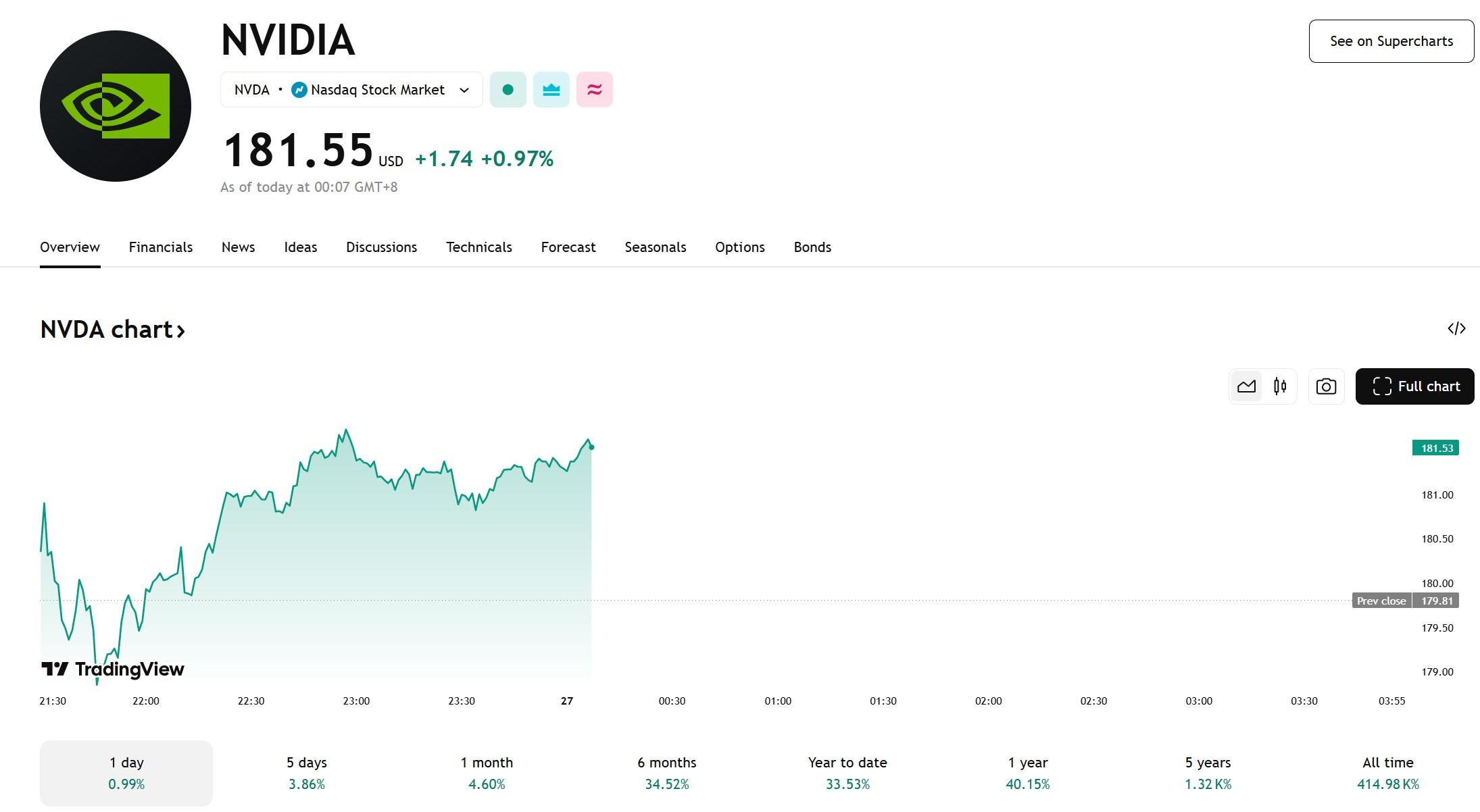
Key Points
- Wall Street expects Q2 revenue near $460 billion, about +53% YoY; consensus EPS ~$0.935.
- $NVDA is now seen as a barometer of the AI economy; some call its print akin to major macro data.
- Watch three headline items closely: H20 developments, gross margin trajectory (can non-GAAP margin approach 75%?), and Blackwell → Rubin product cycle / capacity ramp.
- Supply-chain reads from $TSM , final-test partners (e.g., King Yuan/Esonic), and Foxconn imply robust demand for NVIDIA-driven servers and AI systems.
- Options flow shows softer activity and a slight rise in put/call skew; historical post-earnings move is about ±6.32%.
Why everyone treats this as “the” report: Are expectations irrational?
$NVDA ’s market cap surge and year-to-date price gains have pushed it into a role few firms occupy: a single stock interpreted as a proxy for AI investment momentum. Some portfolio managers now read $NVDA ’s numbers for signals about capital spending, server buildouts, and software monetization across the AI stack.
That concentration of market sentiment means a strong print could reinforce the rally; a clear miss could trigger broad risk repricing.
Analysts differ on sensitivity. Some insist the company’s sheer scale and product leadership make a top-line dip containable; others warn that lofty multiples give the market little room for disappointment. Given the Nasdaq-100’s elevated P/E relative to its 25-year mean, a swing in perceived growth could have outsized index effects.
The three must-watch items — quick, precise, and tied to real dollars
1) H20 & China exposures — how big a variable is this?
NVIDIA disclosed H20 sales of roughly $4.6 billion in the fiscal first quarter, yet around $2.5 billion of that faced shipment constraints after export restrictions. The U.S. decision in July to ease some limits reopened opportunities, but regulatory scrutiny in China (notably an August 31 meeting) creates uncertainty about volumes, pricing and in-market share.
2) Gross margin — can it get back toward 75%?
Investors will parse product mix and cost leverage. Reaching for a mid-70s non-GAAP gross margin would signal strong pricing power and favorable mix toward higher-end data-center SKUs. Any meaningful compression would raise questions about ASPs, inventory or mix shifts.
3) Blackwell → Rubin and capacity ramp dynamics
Blackwell-class chips remain early in their cycle, with tangible adoption momentum; Blackwell Ultra capacity and the transition to Rubin products are central to near-term growth sustainability. How quickly high-end SKUs ramp — and whether supply can keep pace without creating channel stock — matters for future quarters.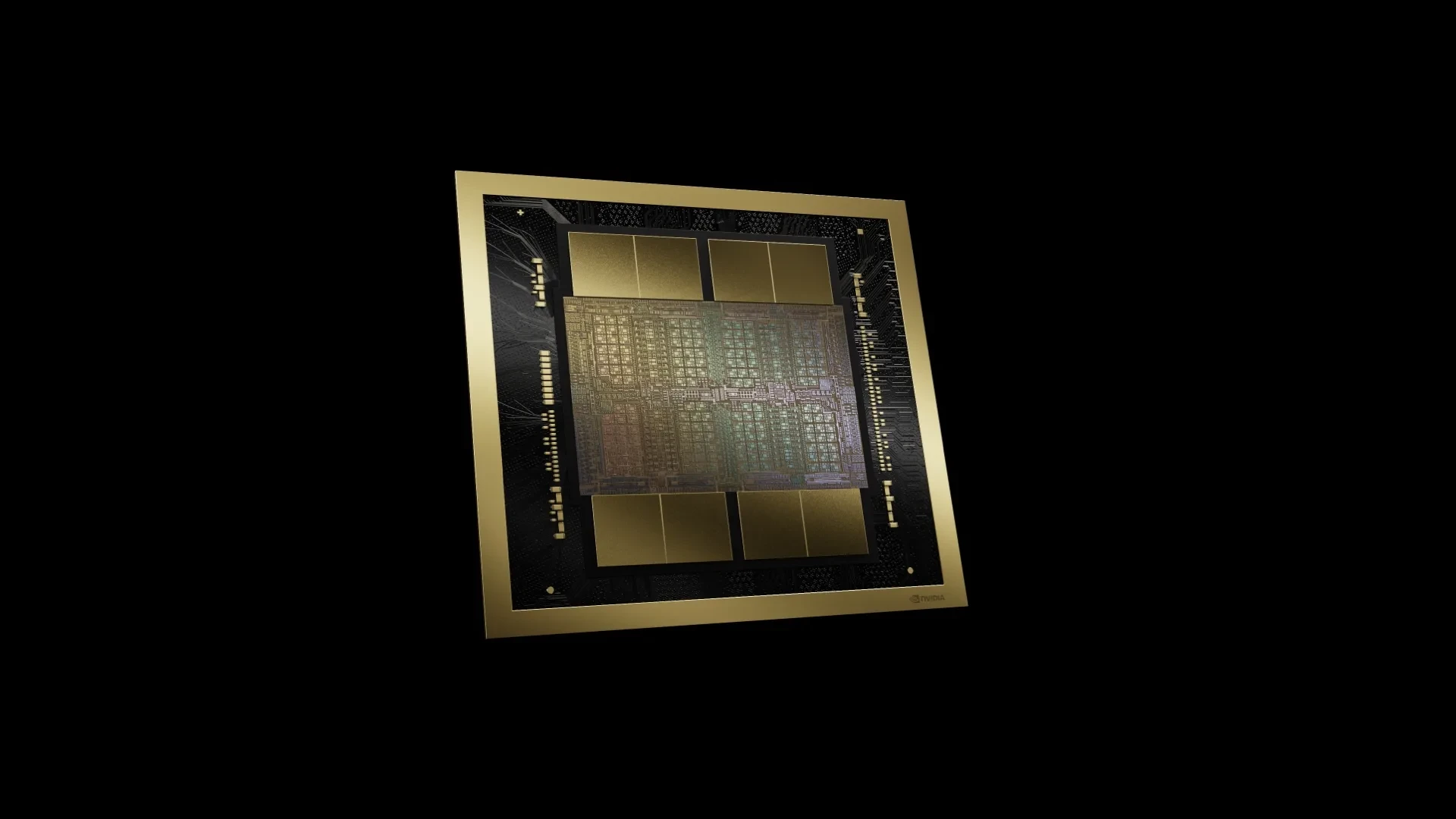
Supply-chain intelligence: real signals, not guesses
You don’t need NVIDIA’s slide deck to sense demand — suppliers’ results already tell a story. TSMC reported revenue consistent with robust HPC orders, with its HPC segment up substantially year-over-year and CoWoS packaging capacity expanding toward higher monthly output by year-end.
Final-test vendors showed large percentage gains in test revenue, implying healthy server/accelerator volumes. Foxconn’s AI server sales also rose, indicating downstream deployments beyond hyperscalers.
Together, these reads corroborate strong NVIDIA component demand. They’re not proof of NVDA’s top line, but they considerably lower the chance of a catastrophic miss — while leaving room for guidance-based disappointment if the company signals future deceleration.
Blackwell adoption: the numbers and the nuance
Steam-platform telemetry indicates the RTX50 Blackwell family climbed from 5.1% to 6.2% of installed base month-to-month — faster initial take-up than several prior NVIDIA cycles. That’s encouraging for broad ecosystem adoption, but channel inventory signals are mixed: certain mid-range GPUs (e.g., 5070 series) have shown rising inventory, suggesting uneven sell-through across product tiers.
In short, early Blackwell traction is real — but it’s too soon to assume uniform demand across every SKU and geography. The company’s commentary on product mix and channel fills will matter more than raw install figures.
H20 in China: the three-word risk summary — regulation, qualification, pricing
H20’s path back to full commercialization in China depends on technical qualifications and local regulatory comfort. Even after export relaxations, market access negotiation could delay meaningful revenue recovery. If H20 shipments restart at scale, the upside is obvious; if approvals are slow or conditional, near-term upside will be constrained and guidance may reflect that caution.
Voices from the street: what analysts are saying
Some sell-side pros treat NVIDIA as the engine of the AI freight train; others caution that expectations are baked in. FactSet and various research houses put Q2 revenue near $460 billion (+53% YoY), with prior quarters showing even larger jumps.
Bernstein and Morgan Stanley voices stress that comparison with peers and the broader chip cycle matters — it’s not just NVDA’s print but how the competitive landscape and capacity ramps evolve.
Options and volatility: what the market is telling us
Options volume around NVIDIA has cooled recently and put/call ratios have edged up — a sign some longs trimmed exposure. Historically, the stock has moved roughly ±6.32% post-earnings; traders will hedge accordingly. Expect elevated implied volatility into the print — a familiar stage for a stock whose single report now carries market-wide implications.
What to watch in the press release and call — the checklist
- Exact Q2 revenue and EPS versus the ~$460B / $0.935 consensus.
- Revenue split: data center vs. gaming vs. professional visualization and automotive.
- H20 commentary: shipment volumes, regulatory status in China, and any pricing notes.
- Non-GAAP gross margin and commentary on mix/cost trajectory.
- Capex and supply guidance: Blackwell Ultra, Rubin ramp timelines, CoWoS/TSMC capacity assumptions.
- Channel inventory language — whether distributors are filling or digesting stock.
- Management tone on software & services monetization versus pure hardware dependency.
Risk map: how the market could react
Best case: EPS and guidance beat, H20 shows a clear path to China scale, margins hold or expand — the AI narrative stays intact and the rally continues.
Base case: In-line results with cautious guidance — a temporary wobble but no systemic breakdown.
Worst case: Top-line miss or weak forward guidance (driven by H20 uncertainty or margin pressure) — rapid de-risking across AI-exposed names and index drag.
Final read: why this quarter matters more than most
This quarter is a rare convergence: NVIDIA is both the principal beneficiary of AI infrastructure demand and a market-cap leviathan whose guidance shapes expectations across sectors. Investors will weigh a mixture of hard numbers and management tone — not merely whether sales were strong, but whether the future path of demand and supply looks smooth. In a market already priced for perfection, the margin for error is slim.
For now, the clearest play is to watch the three big levers — H20 in China, gross margins, and Blackwell/Rubin ramp — closely, then judge whether the company’s narrative sustains the outsized expectations the market has built around a single name.