
Can AMD Crack NVIDIA’s AI Citadel?: Is the Moment for an AI Power Shift Real?

Truist Securities’ upgrade of AMD to Buy, and its jump in the 12-month target from $173 to $213, puts a blunt thesis up front: AMD may be moving from peripheral contender to a genuine challenger in AI data centers.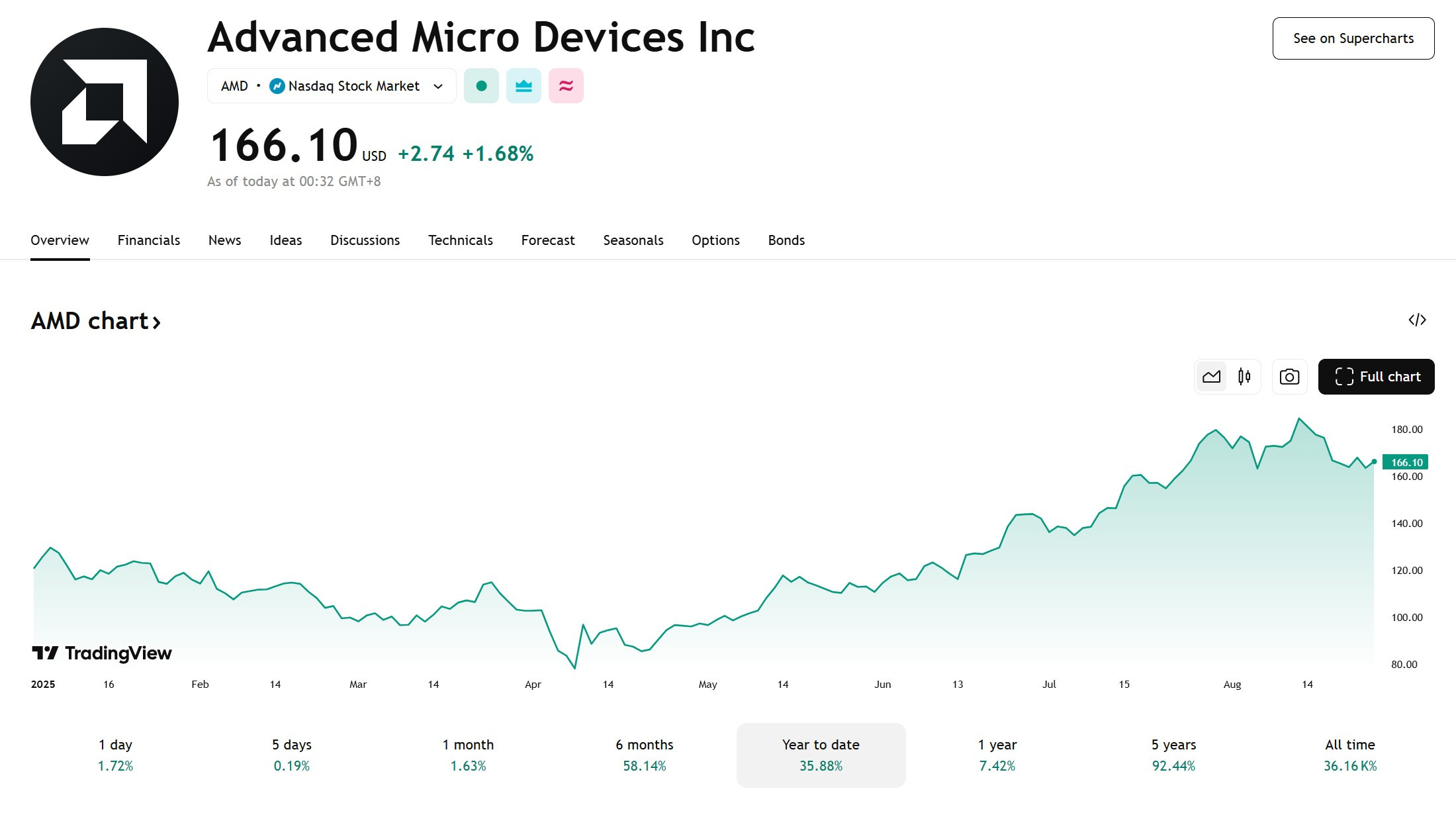
The call rests on stronger-than-expected demand for AMD data-center CPUs and the new MI350 family of AI GPUs, plus signals that hyperscale customers are taking AMD seriously as a long-term partner rather than a short-term, low-cost adjunct.
The market reacted: AMD shares gained more than 3% in early U.S. trading after the Truist note and related reports about an IBM collaboration and progress on China export approvals. If hyperscalers scale AMD deployments, the implication is clear — NVIDIA’s ~90% share in AI servers could face erosion over time.
Quick read: the essentials
Truist upgraded AMD to Buy and raised its target to $213, citing robust demand for data-center CPUs and AI accelerators. Industry contacts tell Truist that hyperscale buyers have shifted from experimenting with AMD as a cheap supplement to discussing long-term, scaled deployments.
AMD also unveiled the MI350 series (MI350X and MI355X) at Advancing AI 2025 on June 12; analysts point to MI355 as a near-term revenue driver. Reports of an IBM–AMD “quantum-centric supercomputing” effort and optimistic comments from AMD’s CEO on China export licenses added fuel to the narrative.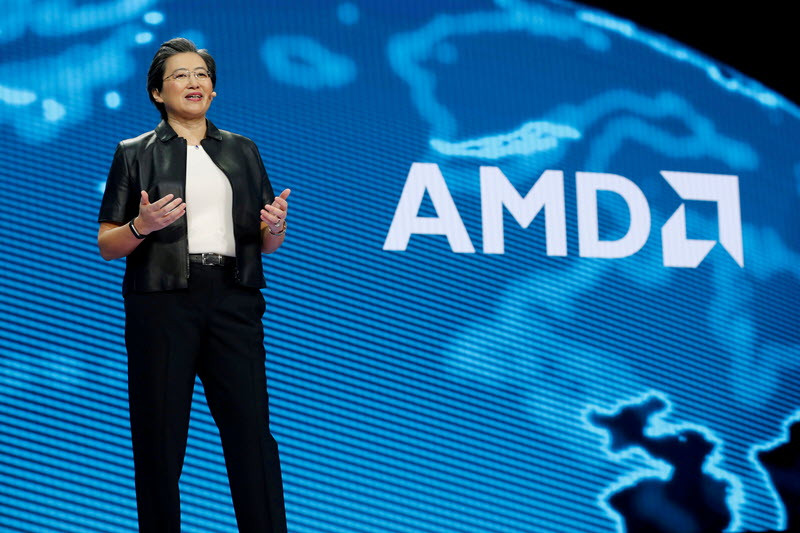
Why Wall Street’s tone is changing: are hyperscalers really switching?
Truist’s analysts — citing industry buyers and sellers — describe a material change over the past month: hyperscalers are moving from trial deployments to strategic conversations about AMD at scale. That matters because a handful of large customers dictate procurement at scale; their long-term choices can shift market share materially.
This shift, if sustained, strengthens the investment case: stronger demand, larger contract sizes, and the potential to capture higher-margin data-center revenue. Yet conversion risk remains — trials don’t always turn into multi-year contracts — and NVIDIA’s ecosystem advantages and incumbent relationships are powerful counterweights.
The technical argument: is AMD truly competitive?
AMD’s MI350 family is central to the story. Company benchmarks and posted specifications claim MI350X/MI355X deliver roughly 3× the performance of MI300X. Truist highlights MI355X metrics: HBM3E capacity 1.5× that of NVIDIA’s GB200/B200, about 2× peak FP64/FP32 performance, and a ~30% Token/s per dollar edge on Llama-3 405B inference versus Blackwell B200 (with parity versus GB200 in some measures). AMD also reports up to 1.13× advantage on specific high-parameter training workloads.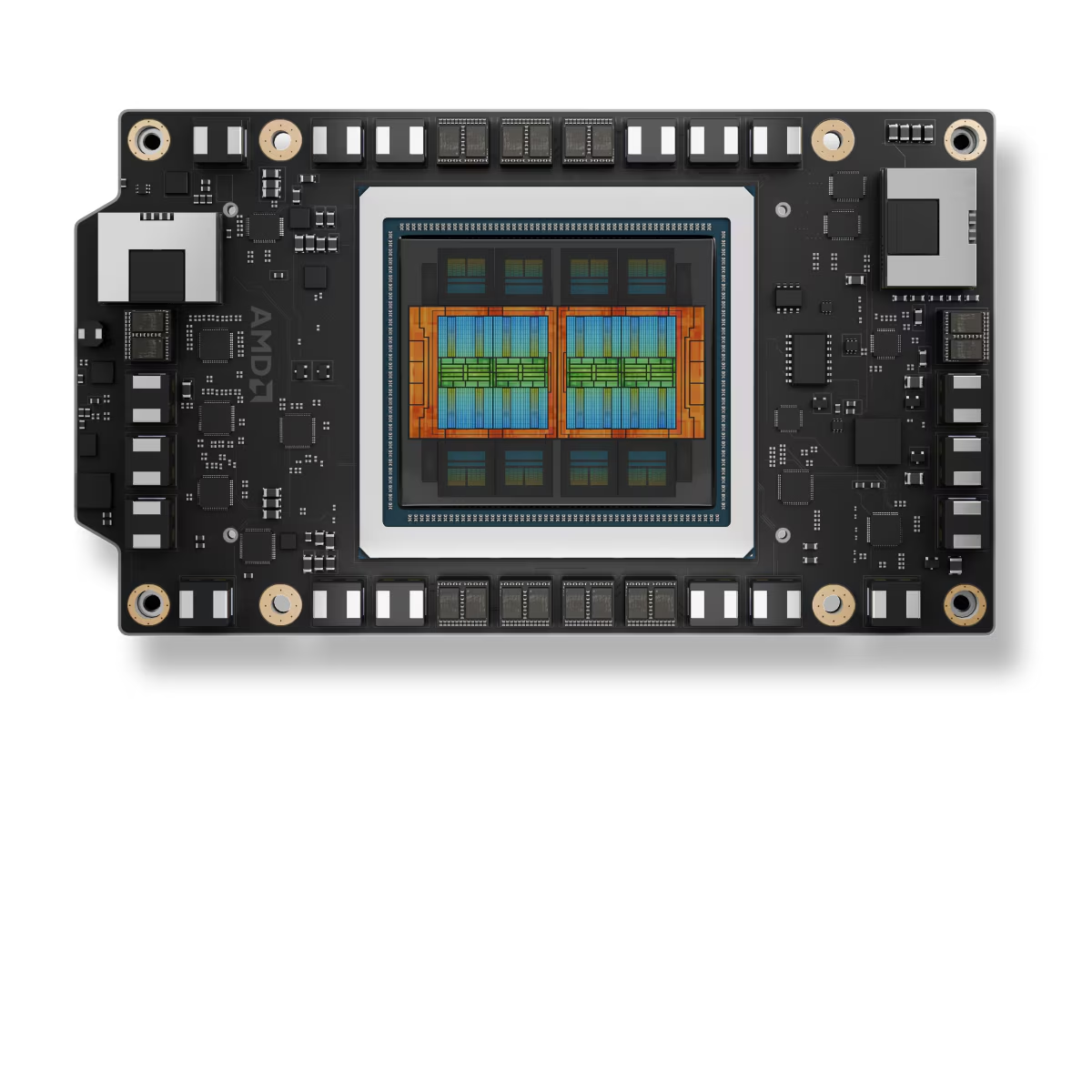
Those metrics speak to throughput and cost efficiency — key purchase drivers for hyperscale AI clusters. But caution is warranted: vendor benchmarks don’t always map to customer workloads. Independent, wide-scale validation across real hyperscaler stacks will be the decisive test. If independent tests and early customer deployments confirm the vendor numbers, the cost/performance argument becomes materially more persuasive.
Market access and China: how big a deal is reentry?
Some Wall Street analysts note a framework under which NVIDIA and AMD might ship select chips to China in exchange for a roughly 15% revenue concession to U.S. authorities.
Several banks — including Bank of America and Bernstein — continue to rate both NVIDIA and AMD as Buy, citing that limited China access (85% of prior revenue instead of zero) is meaningfully better than full exclusion.
Restoring China sales would matter for top-line growth and could help offset margin pressure from the 15% concession, if pricing power and inventory strategies permit.
The IBM angle: how strategic is the partnership?
Reports that AMD is collaborating with IBM on a “quantum-centric supercomputing” architecture add a high-profile partnership to AMD’s narrative. If real and commercialized, the effort could open differentiated workload opportunities at the intersection of quantum and high-performance computing.
For investors, the IBM link signals enterprise and research credibility; for customers, it hints at bespoke architectures that combine HPC and AI workloads.
That said, partnerships take time to translate into material revenue. The market will look for concrete product plans, joint go-to-market moves, and early pilot wins before assigning valuation credit.
What would prove this thesis true — and what could derail it?
Key catalysts that would move the needle: announced hyperscaler contracts deploying MI350-class GPUs at scale; independent third-party benchmarks showing consistent TCO advantages; clear China export license approvals that enable meaningful shipments; and visible commercial outcomes from IBM collaborations.
Conversely, risks are tangible. Hyperscalers could revert to NVIDIA due to software stack inertia, ecosystem compatibility, or superior total cost in specific workloads. Vendor benchmarks might not generalize across production workloads.
Geopolitical or regulatory setbacks could delay China access. And NVIDIA can respond with new products or pricing strategies that blunt AMD’s appeal.
Bottom line: momentum or mirage?
Truist’s move and the market’s immediate reaction make it clear that AMD now has momentum — a shift from being a convenient substitute to being a considered alternative.
The technical claims and reported customer interest are meaningful, but the ultimate test is scale: can AMD convert trials into sustained, hyperscale deployments that dent NVIDIA’s dominance?
For now, AMD’s story is an attractive conditional opportunity: significant upside if execution, validation, and market access line up; notable downside if ecosystem effects, competitive responses, or regulatory obstacles slow adoption.
Investors should treat the upgrade as a strong signal to watch the upcoming string of catalysts closely rather than as definitive proof of an industry-wide realignment.