
Dell Q2 Earnings Preview: Riding the AI Wave, but Can Margins Keep Up?

Shearing sheep
August 27, 2025
GoGPT Summarizes Articles
Dell Technologies ($DELL) is set to report its fiscal second-quarter 2026 earnings after the market closes on Thursday, August 28. The numbers are shaping up to be one of the most closely watched reports this earnings season—not just for Dell shareholders, but for anyone following the buildout of AI infrastructure.
Expectations Heading Into the Report
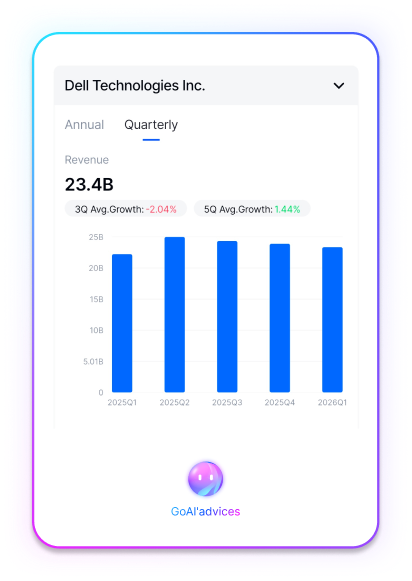
Management has guided revenue between $28.5 and $29.5 billion and EPS of around $2.25. Wall Street consensus is leaning toward the upper end, with forecasts of about $29.1 billion in revenue and $2.28 EPS. That implies 16–17% year-over-year revenue growth and around 20% earnings growth—a big step up from Q1, when revenue grew just 5% to $23.4 billion and EPS came in at $1.55.
One reason investors are paying close attention: Dell has beaten earnings estimates in three of the last four quarters. But last quarter, despite the revenue beat, EPS came in light. Management offset that disappointment by raising full-year EPS guidance to $9.40 and pointing to an unprecedented AI server order book.
AI Servers: The New Growth Engine
The story now revolves around Dell’s Infrastructure Solutions Group (ISG), which includes servers, storage, and networking. In Q1, Dell reported $12.1 billion in AI server orders, surpassing its total AI orders for all of last year in a single quarter. On top of that, the company disclosed a $14.4 billion backlog—a rare level of visibility in the hardware business.
As one of Nvidia’s top system partners, Dell is in the middle of a gold rush. Enterprises, universities, and cloud providers are racing to build AI capacity, and Dell has become a go-to supplier. Analysts expect Dell to generate close to $20 billion in AI server revenue this fiscal year.
The company is also expanding partnerships that could help margins in the long run. A recent deal with Elastic to launch an AI Data Platform powered by Dell hardware and Nvidia acceleration shows Dell isn’t just shipping boxes—it’s trying to build software-like, recurring revenue streams on top of its hardware business.
Profitability: The Big Question Mark
The flip side is that AI servers are not easy money. They’re expensive and complex to deliver, requiring tight coordination across chips, networking, cooling, and software stacks. Skeptics question whether Dell’s role as an integrator will translate into the kind of margins Wall Street is hoping for.
That’s why this quarter’s results may matter more for profitability than for raw order numbers. Investors already believe in the demand story. Now they want proof Dell can convert backlog into revenue without margin erosion.
PCs and Enterprise IT: A Supporting Role
While the AI segment is the clear star, Dell’s Client Solutions Group (CSG)—its PC and laptop division—still matters. The consumer market is soft, but Dell has leaned into commercial PCs, where demand is steadier and margins are healthier.
Meanwhile, enterprises continue to spend on storage upgrades, networking, and hybrid cloud infrastructure. As more industries—from finance to healthcare—pursue digital transformation, Dell’s end-to-end IT solutions keep it relevant. This provides a stabilizing factor if AI-related growth proves lumpy from quarter to quarter.
Shareholder Returns and Balance Sheet Strength
Dell has also been aggressive in rewarding shareholders. In Q1 alone, the company returned $2.4 billion through buybacks and dividends. The dividend yield sits around 1.6%, modest but supported by strong cash flow. Management’s willingness to return capital is a vote of confidence in the sustainability of the business model, but it also raises the bar for execution.
Valuation: An AI Story Without the Bubble Tag
One thing that sets Dell apart from some AI-linked peers is valuation. At roughly $130 per share, Dell trades at:
-
About 20x trailing earnings, compared with a sector median near 28x.
-
Just 1x sales, versus an industry median closer to 3x.
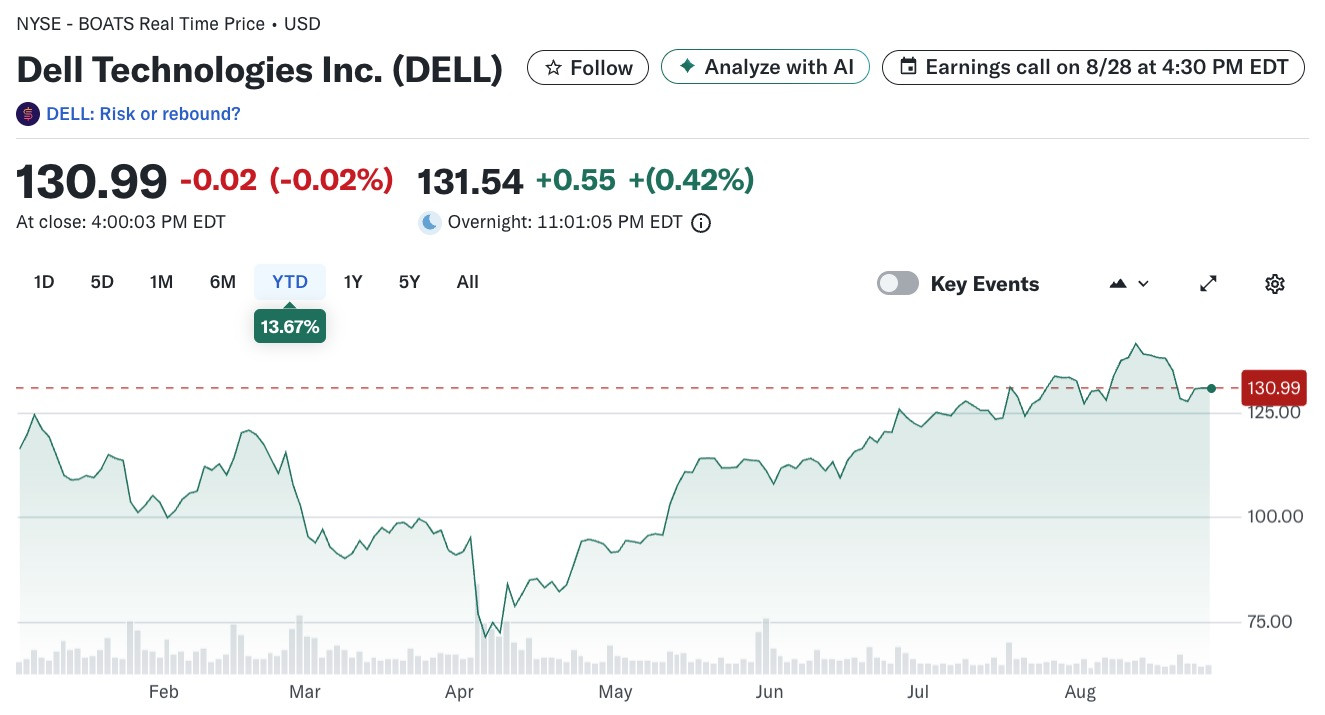
That’s a striking discount for a company growing AI server revenue at this pace. Analysts seem to agree: of the 27 covering Dell, 22 rate it a Buy or Overweight, with a consensus target of $145 and some bullish calls as high as $180.
In other words, Dell has already been re-rated from “deep value” to growth-at-a-reasonable-price (GARP), but if it can keep margins intact, there’s still room for multiple expansion.
The Setup Going Into Earnings
Here’s how I see it:
-
Bull case: Dell converts backlog smoothly, margins hold up, and management reinforces full-year guidance. That could narrow the valuation gap with peers and push the stock higher.
-
Bear case: Margins disappoint, or backlog conversion proves slower than expected. The AI story is still intact, but sentiment could cool, leaving the stock stuck in value territory.
-
Base case: AI demand remains strong, PCs stabilize, and Dell shows enough on profitability to keep the “AI + value” narrative alive.
Final Thoughts
Dell is heading into this earnings release with a rare mix of strong demand visibility, healthy shareholder returns, and attractive valuation. The market already knows AI servers are booming—the real test is whether Dell can show it’s making money while scaling that business.
For long-term investors, the bigger question is whether Dell deserves to trade closer to peers that already carry AI premiums. If Q2 shows healthy margins alongside the growth, the case for Dell’s multiple to expand strengthens. If not, the stock might continue to trade at a discount, even as the AI order book grows.
#Q2 Earnings Hunter: Share Your Stories#$Dell Technologies Inc.(DELL)