
Nvidia Earnings Preview: Stock Likely to Rise Post-Report

Nvidia will release its earnings after the market closes tonight. Let’s cut to the chase: this Nvidia earnings report is expected to exceed expectations on both performance and guidance.
A key highlight of this earnings report will be Nvidia’s gross margin improving once again. Based on this, I anticipate a significant post-earnings rally.
Last year’s Q4 results were strong, but the drop in gross margin drew criticism, with some viewing it as a precursor to slowing growth for Nvidia.
This quarter, thanks to the explosive rollout of new products, Nvidia’s profit margin is set to rise again.
This is driven by the fact that the demand for data center inference this year is even hotter than the market initially anticipated.
In reality, the market misjudged this from the start—inference will only generate greater demand. Early this year, however, many analysts were skeptical, even suggesting during Broadcom’s earnings that training demand had peaked and that inference demand was no longer Nvidia’s exclusive domain.
There’s a fitting analogy to describe Nvidia’s edge in inference demand compared to other chipmakers: you can say something mediocre works, but you can’t argue that because the mediocre works, the best is unwanted. If that were true, everyone would still be using Nokia phones, and Apple would have gone bankrupt long ago.
So, what specific points should we watch for in this earnings report?
Gross Margin: Can It Return to 75%?
From late 2023 to early 2024, Nvidia’s non-GAAP gross margin fluctuated between 76%-79% (76.7% in Q4 FY24, 78.9% in Q1 FY25). However, since the second half of 2024, with shifts in product mix, the margin has declined: approximately 75.7% in Q2 FY25, 75.0% in Q3 FY25, and 73.5% in Q4 FY25.
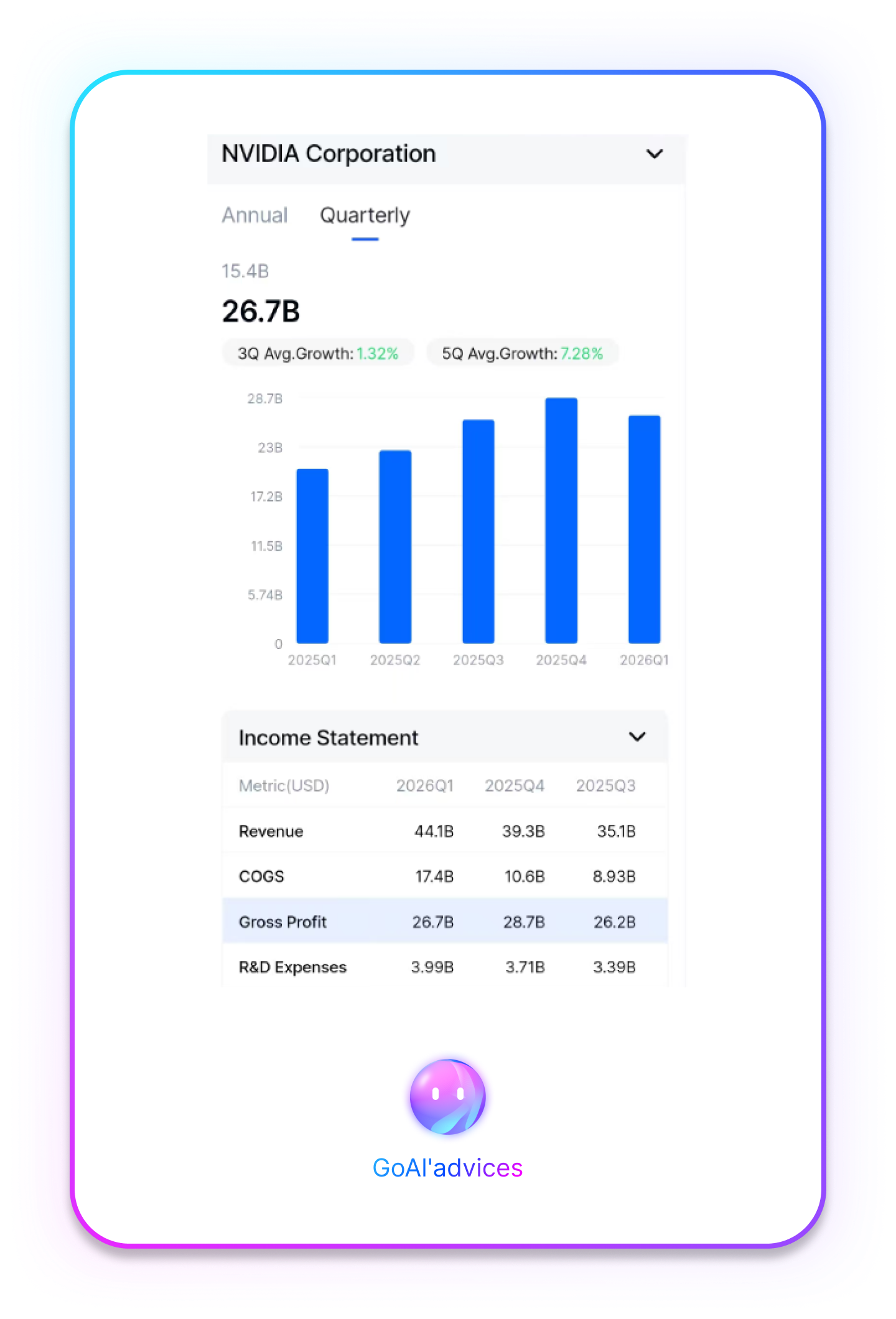
In the first quarter of this year (Q1 FY26), due to H20 inventory shocks in China, the non-GAAP gross margin plummeted to 61.0%.
In fact, the company’s earnings report notes that, excluding the H20 inventory write-down, the non-GAAP gross margin for that quarter would have been around 71.3%.
Market expectations are for some margin recovery this quarter. Based on earnings guidance, Nvidia projects a non-GAAP gross margin of about 72.0% for Q2 (with a GAAP margin of 71.8%). Management has expressed ongoing efforts to push the margin back to a mid-to-high level of around 75% within the year.
From the data, if this quarter meets expectations, the margin curve could show a V-shaped recovery, though reaching 75% will depend on high-end GPU supply and cost control progress.
Thus, the market will closely monitor explanations in the report regarding product mix, inventory, and cost items, as well as the full-year margin guidance.
Product Line: Blackwell Ultra Accelerates, Rubin Gears Up
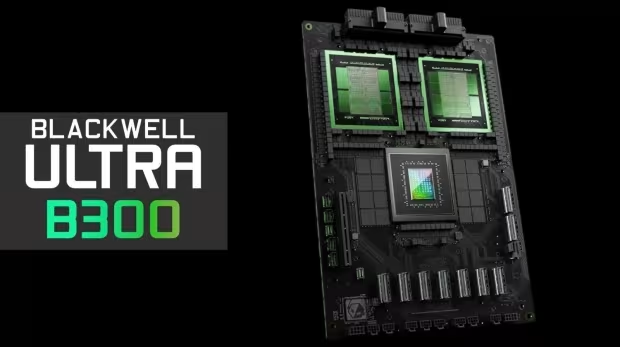
Nvidia CEO Jensen Huang has confirmed that Blackwell Ultra (codename B300 series) is steadily ramping up production. Industry reports suggest Blackwell supercomputing accelerator cards will launch in the second half of this year, offering significant performance improvements over current products.
He also noted that the “next generation (GPU), called Rubin,” is already in preparation by partners. In other words, data center GPUs will undergo a generational shift from Blackwell to Vera Rubin over the next two years.
For investors, post-earnings focus will be on the production capacity of the B300 series and any mentions of Rubin GPU development progress. The roadmap indicates the Rubin platform will launch an 8-stack HBM4 memory version in 2026, expanding to a 12-stack version in 2027.
Any mention of Rubin milestones or pilot production would be seen as a forward-looking signal by the market. Overall, accelerated Blackwell Ultra supply and a clear Rubin outlook will further solidify Nvidia’s leadership in the AI hardware race.
China Market: H20 Production Halted, New Special Edition in Play
The China market has long been a source of uncertainty. In April this year, the U.S. introduced new regulations, halting exports of Nvidia’s latest high-end GPUs to China, leading to a temporary suspension of the H20 version designed for that market. Reports on August 22 indicated Nvidia notified suppliers to pause H20 production.
Nvidia later clarified this as a routine supply chain adjustment, reaffirming that H20 is not a military product and that China has sufficient domestic chips to meet demand.
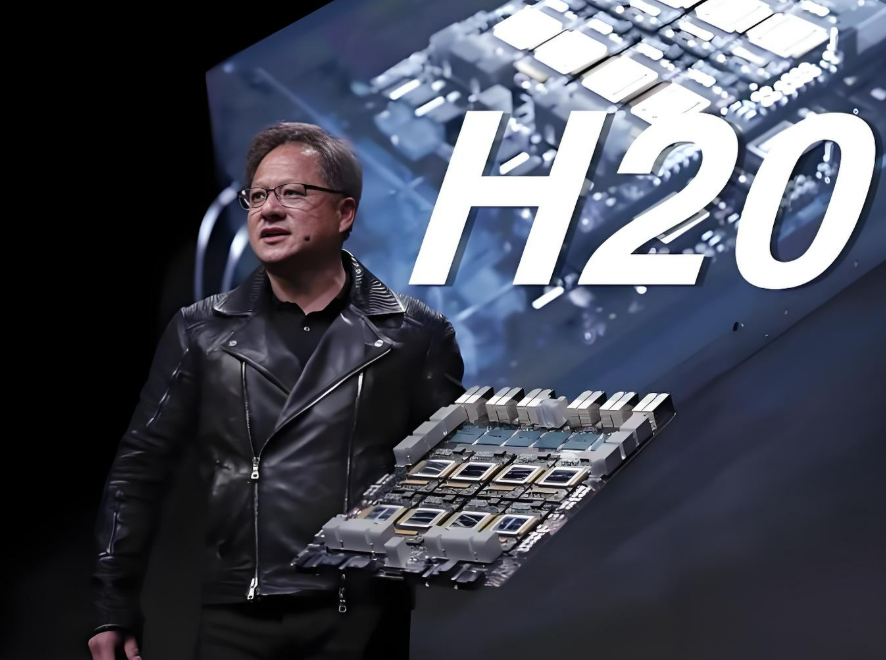
The H20 chip, tailored for China, saw significant shipments in 2024. Early versions featured 96GB HBM3 memory with 4.0TB/s bandwidth; later upgrades included 141GB memory and 900GB/s NVLink bandwidth, with FP16 compute power reaching 148TFLOPS.
However, after the April ban, H20 deliveries were interrupted. Following Jensen Huang’s visit to China in July, the U.S. reapproved H20 export licenses, with production and shipments expected to resume. Still, this approval requires reporting user lists to the U.S., raising client concerns.
Industry rumors suggest Nvidia is planning a new “special edition” chip for China, possibly codenamed B30A, with compute power about half that of the main Blackwell line. If true, this indicates Nvidia’s attempt to meet China’s needs with a performance-compromised solution while navigating export restrictions.
The market will closely watch the earnings report for details on China shipment volumes, product mix, and any related announcements. Overall, uncertainty in China may lead Nvidia to adopt a more cautious outlook for that market, a key risk to monitor in this earnings report.
Guidance Outlook: Strong or Conservative?
For a growth stock like Nvidia, one of the most critical signals is future guidance: the company’s estimates for the next quarter and the full year. Over the past year, amid extreme market optimism about AI, Nvidia has repeatedly used “expectation management” tactics, issuing relatively conservative guidance to temper market expectations—a trend seen in every earnings report since Q2 2024.
The guidance following tonight’s earnings will be particularly crucial. On one hand, robust guidance for Q3 and full-year revenue and gross margins would signal sustained AI demand, boosting market confidence.
On the other hand, conservative guidance could pressure the stock short-term. Especially with China market constraints, Nvidia may take a cautious stance on near-term performance during the earnings call. Investors will listen closely to management’s outlook on second-half demand, inventory clearance, and R&D spending.
A reference point is the Q1 earnings guidance for Q2: revenue is expected to be around $4.5 billion (excluding an $8 billion H20 loss), with a non-GAAP gross margin of about 72%. Whether future quarters can approach the previously anticipated “75% margin” and double-digit revenue growth will be a market focal point.
If guidance is steady or exceeds expectations, it could signal a continuation of the AI trend; if it falls short, short-term volatility may arise.
Some Takes
Nvidia’s strong performance is largely undisputed.
However, many analysts will likely say the usual: good earnings, but the stock’s upside has already been priced in—suggesting investors buy on dips, which is often unhelpful advice.
Granted, valuations may seem reasonably priced now, but in an era where AI data center demand is this explosive, is it unreasonable for the global industry leader, amid such positive market sentiment, to show no expectation overhang?
From a trading perspective, if there’s one company worth betting on for an earnings beat in this world, isn’t Nvidia the most certain candidate? Nvidia has consistently crushed volatility in recent earnings, and this time could be an exception for two reasons:
First, the massive U.S. stock market volatility in the first half of the year led many hedge funds to lose positions. Multiple reports show retail investors were the big winners in this year’s U.S. stock reversal, with many institutions missing the tech stock turnaround.
This results in a dynamic where major U.S. institutions must chase performance. We’ve seen Meta and Microsoft surge post-earnings this year because, after definitive results, they had to reallocate positions.
The second reason is a paradigm shift in Nvidia’s fundamentals.
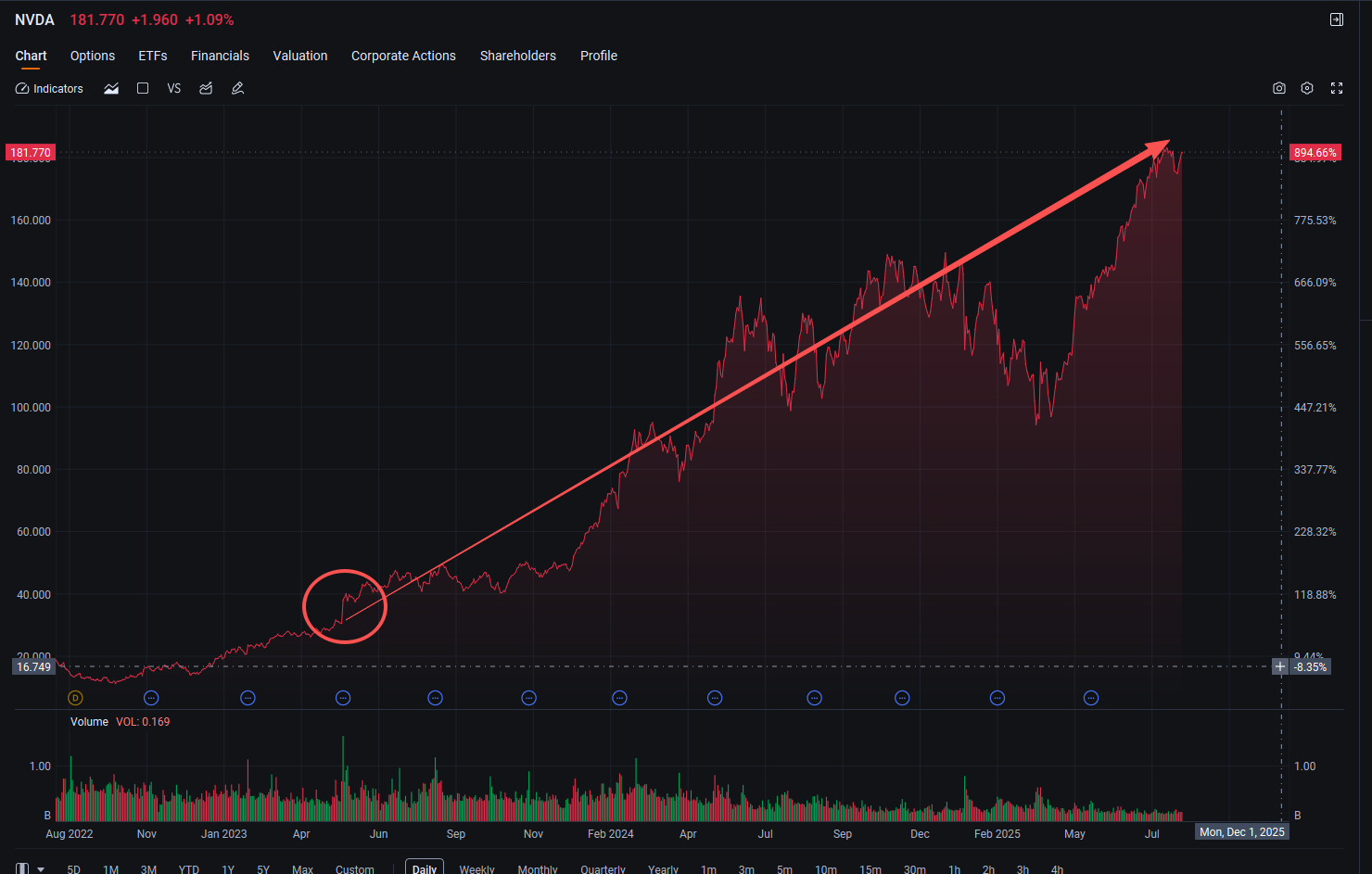
If the May 2023 earnings marked Nvidia’s first transformation into the AI era’s trailblazer, this earnings report—potentially showing a rebound in gross margins—could herald the next explosive growth phase of the AI era.
The May 2023 earnings were dubbed the “Big Bang” by Americans, symbolizing the universe’s beginning. I’d liken this report to an era of “life’s big explosion,” signaling the start of an explosive growth phase for AI-driven intelligence.