
Alibaba Q1 Earnings Preview: Can AI and Cloud Drive the Next Chapter?

Shearing sheep
August 28, 2025
GoGPT Summarizes Articles

Alibaba ($BABA) is back in the spotlight this week as it prepares to release fiscal Q1 2026 earnings before the U.S. market opens on August 29. For investors, this is not just another quarterly report. The stock has already corrected more than 20% from its March highs, and while shares now hover near the 52-week moving average, sentiment feels like it’s waiting for a clear catalyst. Whether earnings provide that spark may come down to how convincingly Alibaba can prove that its AI and cloud bets are starting to pay off.
Street Expectations
Wall Street isn’t expecting fireworks in the headline numbers. Analysts forecast earnings of around $2.13 per ADS (≈ ¥15.5 per ADS), representing a year-on-year decline of roughly 6%. Revenue is projected to reach $35.3 billion (≈ ¥252.0 billion), up 5% YoY. That’s slightly softer than the 6% growth recorded in the March quarter, but given ongoing headwinds in China’s economy, even modest growth is being viewed as respectable.
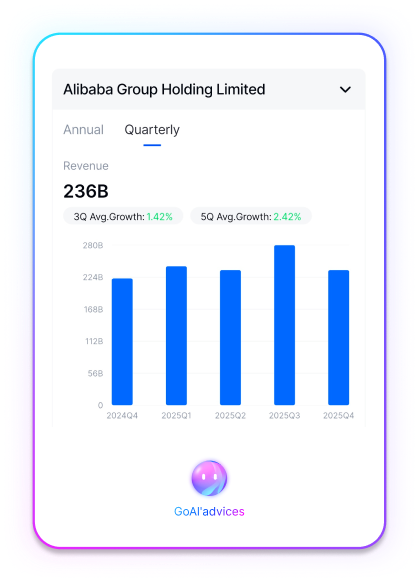
Still, these topline numbers only tell part of the story. Investors are less concerned about a few tenths of a percentage point in revenue growth, and more focused on whether Alibaba’s restructuring and investment in new growth drivers are starting to shift the trajectory.
Cloud and AI at the Center
The clearest area of focus is Alibaba’s Cloud Intelligence Group. Last quarter, the business grew 18%, while AI-related products surged at a triple-digit pace. Management has been vocal about its strategy: commit more than $50 billion over the next three years toward cloud and AI infrastructure, with the goal of cementing Alibaba’s position as China’s leading AI and cloud provider.
The company has already launched new iterations of its Qwen large language models and AI services, aiming to capture demand not only from Chinese enterprises but also from developers and global partners. This is important because cloud carries much higher margin potential than traditional e-commerce. If Alibaba can demonstrate sustained momentum here, investors will have more confidence that the pivot is real and scalable.
The Core E-Commerce Business
That said, Alibaba’s bread and butter remains its domestic e-commerce platforms, Taobao and Tmall. The backdrop is mixed: on one hand, Chinese authorities have introduced new stimulus measures, including subsidized consumer loans, designed to shore up household spending. This could give a lift to Alibaba’s consumer-facing businesses.
On the other hand, competition remains fierce. Rival JD.com has been doubling down in local commerce and food delivery, an area that has pressured margins across the sector. JD’s own earnings last week highlighted this challenge — despite strong revenue growth, profitability took a hit. For Alibaba, investors will be watching closely whether revenue growth at Taobao and Tmall can accelerate beyond the 9% pace recorded last quarter, a sign that stimulus measures and product upgrades are working.
International Digital Commerce: AIDC’s Profitability Push
Another area to watch is Alibaba’s international business, Alibaba International Digital Commerce (AIDC). For years, AIDC has been a source of heavy losses as the company expanded overseas. Now, management says it is closing in on profitability. If Q1 shows real progress toward the black, it could reduce pressure on group earnings and help margins stabilize.
With global platforms like Lazada and Trendyol under its umbrella, AIDC also benefits from the temporary U.S.-China trade truce, which reduced tariffs on both sides earlier this year. The truce only lasts until mid-August, but this quarter’s results should give a clearer picture of whether it has translated into tangible gains for Alibaba’s international arm.
Valuation and Market Perception
From a valuation perspective, Alibaba looks inexpensive. The stock trades at just 11.3x projected FY2027 earnings, with a PEG ratio of 0.55. By comparison, U.S. peers like Amazon and even eBay trade at far higher multiples. Based on estimates from 37 analysts, the average price target for Alibaba sits at $151.33, implying 24% upside from the current price of around $122.
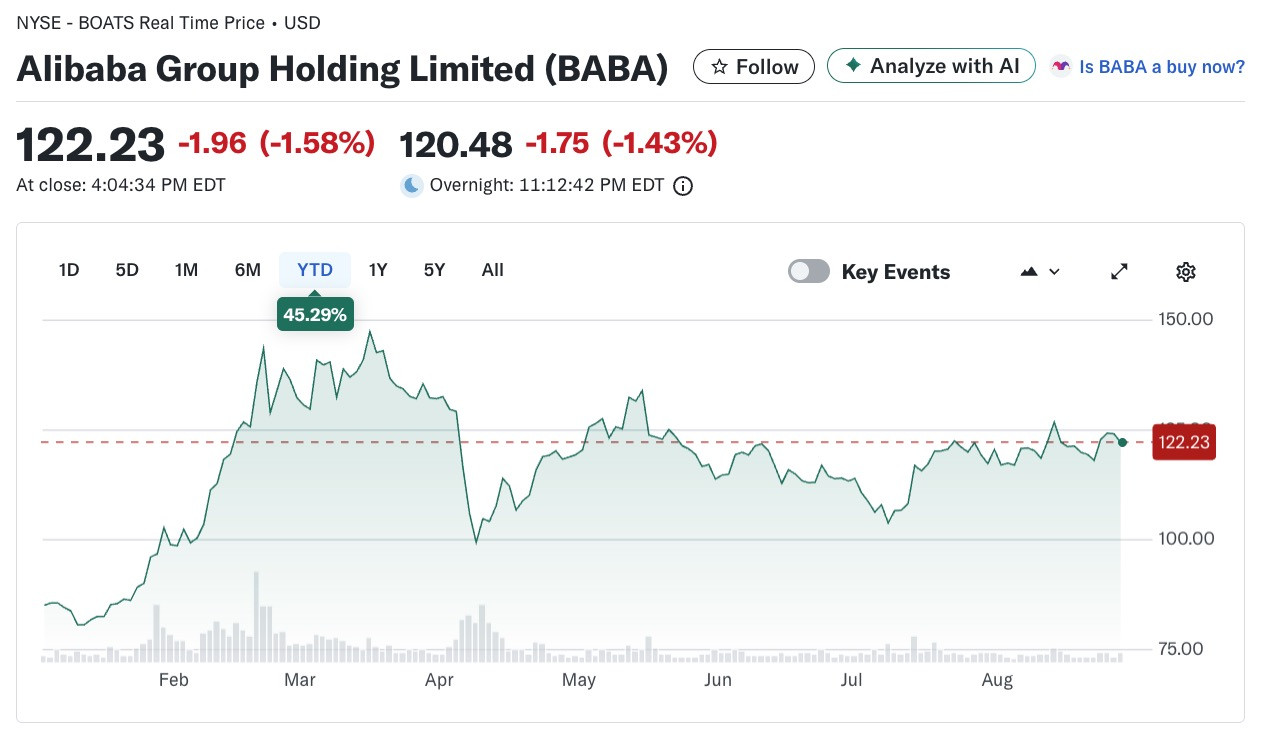
But valuation alone has not been enough to pull investors back into Chinese equities. Persistent regulatory risks and geopolitical tensions continue to weigh on sentiment. Many funds have scaled back exposure to Chinese tech stocks despite their discounted multiples.
The Ant Group Shadow
Adding to that overhang is Alibaba’s connection to Ant Group, the fintech affiliate whose IPO collapse in late 2020 marked the beginning of China’s regulatory crackdown on internet companies. Earlier this month, Alibaba agreed to a $433.5 million settlement with investors who alleged the company misled them about regulatory risks tied to Ant’s business model. While the settlement helps close one legal chapter, it is also a reminder that regulatory uncertainty remains part of the Alibaba story.
What Investors Should Watch
Going into the print, here are the key themes to monitor:
-
Cloud & AI growth – Does momentum continue, especially in AI-driven products?
-
Core e-commerce health – Are Taobao and Tmall benefiting from stimulus, or is competition still capping growth?
-
AIDC progress – Is the international business finally close to profitability?
-
Margins – Can Alibaba balance heavy cloud investments with profitability in commerce?
-
Management guidance – Does leadership give clearer signals on free cash flow, which fell 76% last quarter due to cloud spending?
My Take
Alibaba feels like it’s standing at a crossroads. On one side, the company is pressing hard into AI and cloud, which could provide a scalable, high-margin growth engine over the long term. On the other, its traditional e-commerce business faces stiff competition, and the regulatory environment remains a wild card.
For investors, the valuation case is compelling, and the AI narrative is strong. But in the near term, the stock still carries the “show me” label. If this quarter can demonstrate traction across multiple fronts — cloud growth, stable commerce, and progress in international profitability — then Alibaba might finally have the catalyst it needs. If not, the discount to U.S. peers may linger a while longer.
Either way, this week’s earnings could mark a pivotal moment for the company’s next chapter.
What’s Your Estimate?
With AI and cloud expansion, international e-commerce turning profitable, and Chinese consumer demand in focus, Alibaba’s Q2 earnings could move the stock.
Join our prediction challenge and forecast Alibaba’s Q2 total revenue to win rewards.
#Q2 Earnings Hunter: Share Your Stories#$Alibaba Group Holding Limited American Depositary Shares each represents eight Ordinary Shares(BABA)