
Are Small Caps Poised to Run Again: Can the Russell 2000 Turn Momentum into a Long-Term Bull Market?

Short answer: the setup looks favorable — but far from guaranteed. The Russell 2000 has led U.S. equities in August, and rising odds of Federal Reserve easing are supplying a clear macro tailwind for smaller, rate-sensitive firms. Whether this becomes a sustained rotation depends on macro data, mega-cap tech behavior, and investor risk appetite.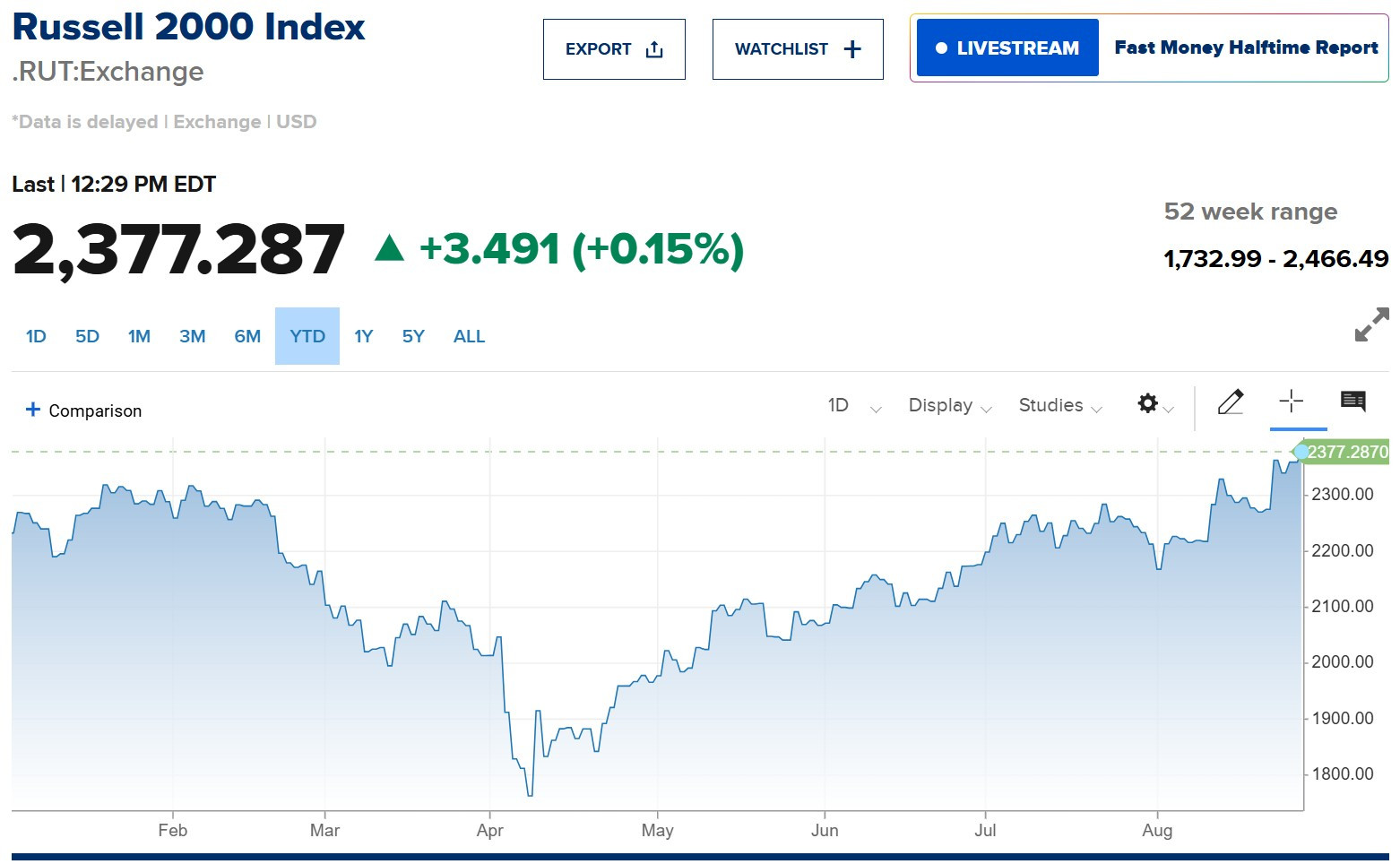
Key Points
- Russell 2000 is up about 7.3% so far in August.
- The Russell 2000 last hit an all-time high on November 8, 2021; it is roughly 3% below that peak.
- $SPX has set 19 all-time highs so far in 2025.
- Bank of America links Powell’s Jackson Hole comments to improved small-cap sentiment.
- BofA notes markets price two Fed cuts beginning in September and sees an opportunity in small/micro caps, while stressing quality focus.
- RBC is constructive under an easing scenario but stresses that macro fundamentals must cooperate.
- Options markets show a cautious stance, with many traders still holding defensive positions.
- Susquehanna, Piper Sandler and RBC suggest IWM call spreads as a tactical way to express upside with limited capital.
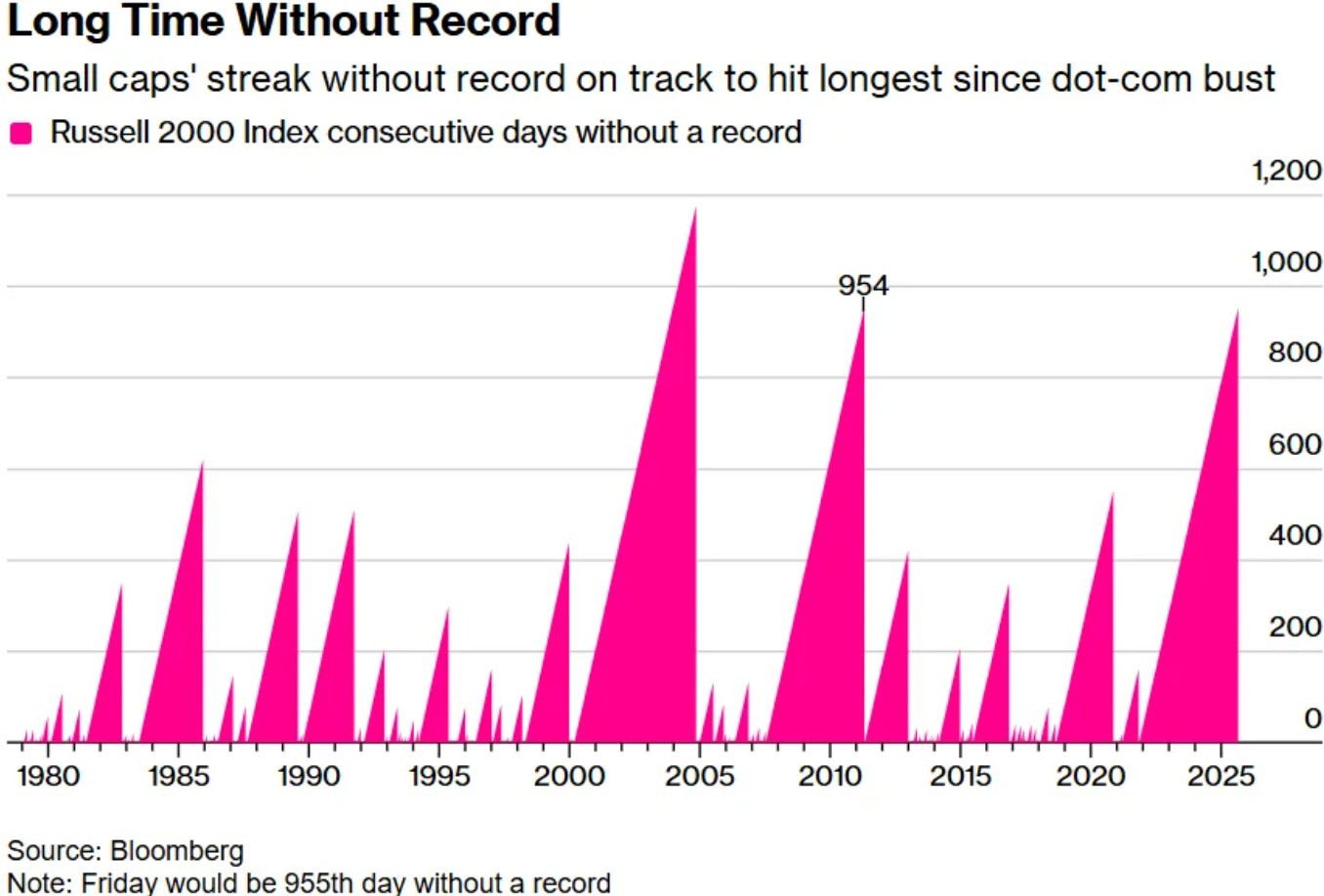
Why this rally matters: macro + momentum + valuation
Small caps are more exposed to borrowing costs and margin pressure; Fed easing reduces that strain. Powell’s Jackson Hole rhetoric was widely read as accelerating cuts, giving market participants a reason to rotate from mega-cap concentration into higher-beta stocks.
Momentum itself can attract flows: as IWM clears a key technical level above $230, tracking funds and rebalancers may amplify gains.
Valuation dispersion makes the case more compelling. A handful of mega caps have dominated gains since 2023 and trade at elevated multiples, while many smaller names remain unloved and comparatively cheap. That contrast creates the mechanical and psychological conditions for a rotation if investors shift risk appetite.
How professionals are positioning and what that signals
Rather than buying outright, many sell-side desks recommend IWM call spreads to rent upside without deploying full equity capital. This approach limits capital at risk while allowing participation in a breakout, a favored tactic from Susquehanna, Piper Sandler and RBC.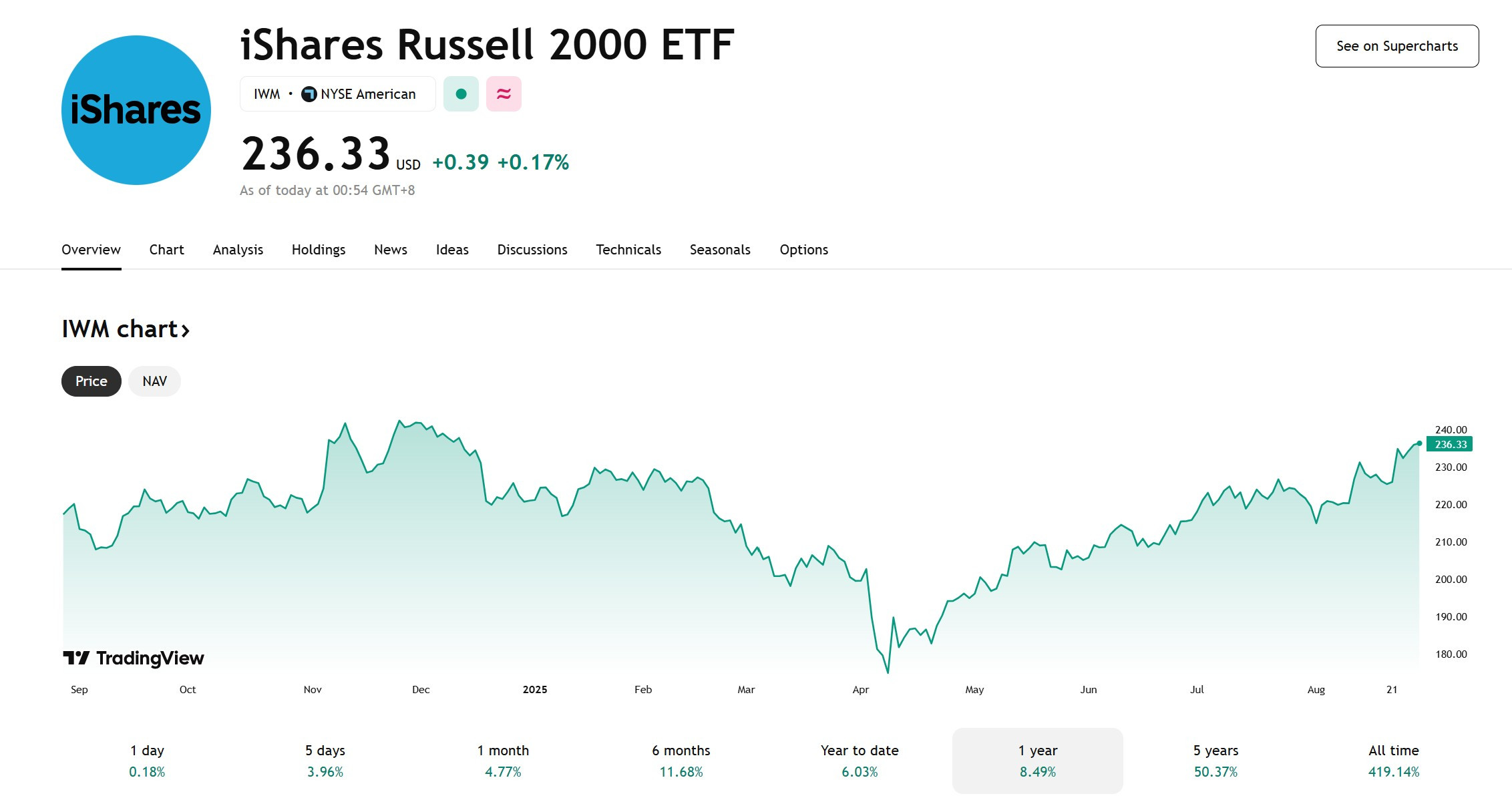
Market commentators are upbeat but cautious. Matt Maley highlights real momentum, BofA points to resilient data and a soft-landing narrative, and RBC’s analysts stress macro must back the move. Option desks note that broad positioning still skews defensive, which can both cap and amplify future moves.
Risks and the watchlist: what would derail the advance
Three variables will matter most: (1) the Fed’s timing and magnitude of cuts; (2) the ongoing health of the Magnificent Seven — if those mega caps crash, risk-off flows could drown small-cap gains; and (3) macro data that either confirms a soft landing or signals a slowdown.
Other risks include narrow market breadth (gains concentrated in a few names) and thin liquidity in micro-caps. Complacent positioning or crowded option trades can exacerbate reversals.
Practical tactics for different risk profiles
- Tactical exposure: IWM call spreads offer defined risk and upside participation.
- Quality tilt: within small caps, favor cleaner balance sheets and reliable cash flows to reduce macro vulnerability.
- Size and liquidity: keep position sizes disciplined and prefer names with adequate trading volume.
- Use limit orders and monitor bid-ask spreads in thinly traded micro-caps.
Bottom line: promising, conditional, manageable
August’s Russell 2000 strength is the clearest sign yet that the “risk factor” is reasserting itself, driven by easing expectations, improving momentum, and valuation dispersion. That creates a plausible path to a broader small-cap advance — but it’s conditional.
The trend’s durability hinges on macro reality matching market hopes and on the stability of mega-cap leadership.
If you want this tightened to a strict word count, converted into a newsletter blurb, or rewritten with a different headline, tell me which and I’ll update it immediately.