
On-Chain Economics: What Happens When U.S. GDP Goes to Bitcoin and Ethereum?

The U.S. Commerce Department has begun publishing hashed versions of key macro statistics to multiple public blockchains, and that shift is both symbolic and practical.
It doesn’t change the original statistics — the numbers still come from official sources — but by anchoring data on nine public chains and working with oracle networks, Washington is handing Web3 developers a new, verifiable feed for DeFi, prediction markets, and automation.
Key Points
- The Commerce Department uploaded hashes of 2025 quarterly GDP data to nine public blockchains.
- The first on-chain item was the July real GDP revision: a 3.3% annualized quarterly rate.
- Other on-chain figures included PCE and domestic private final sales and their annualized rates.
- Distribution used Chainlink and Pyth; Coinbase, Kraken and Gemini helped by supplying crypto to pay gas.
- This is the first time U.S. macroeconomic indicators have been anchored on public blockchains.
Putting GDP and PCE hashes on public ledgers means everyone — from developers to traders — can cryptographically verify that a dataset originates from the Commerce Department’s release and that it has not been altered since the hash was committed.
For builders, that verifiable anchor is a building block for automated contracts, oracle deliveries, and markets that respond directly to official macro readings.
This is not a replacement for official statistics. The Commerce Department still compiles and publishes the numbers. What’s new is the deliberate step of memorializing those releases in decentralized infrastructure and intentionally connecting them with oracle networks that feed smart contracts.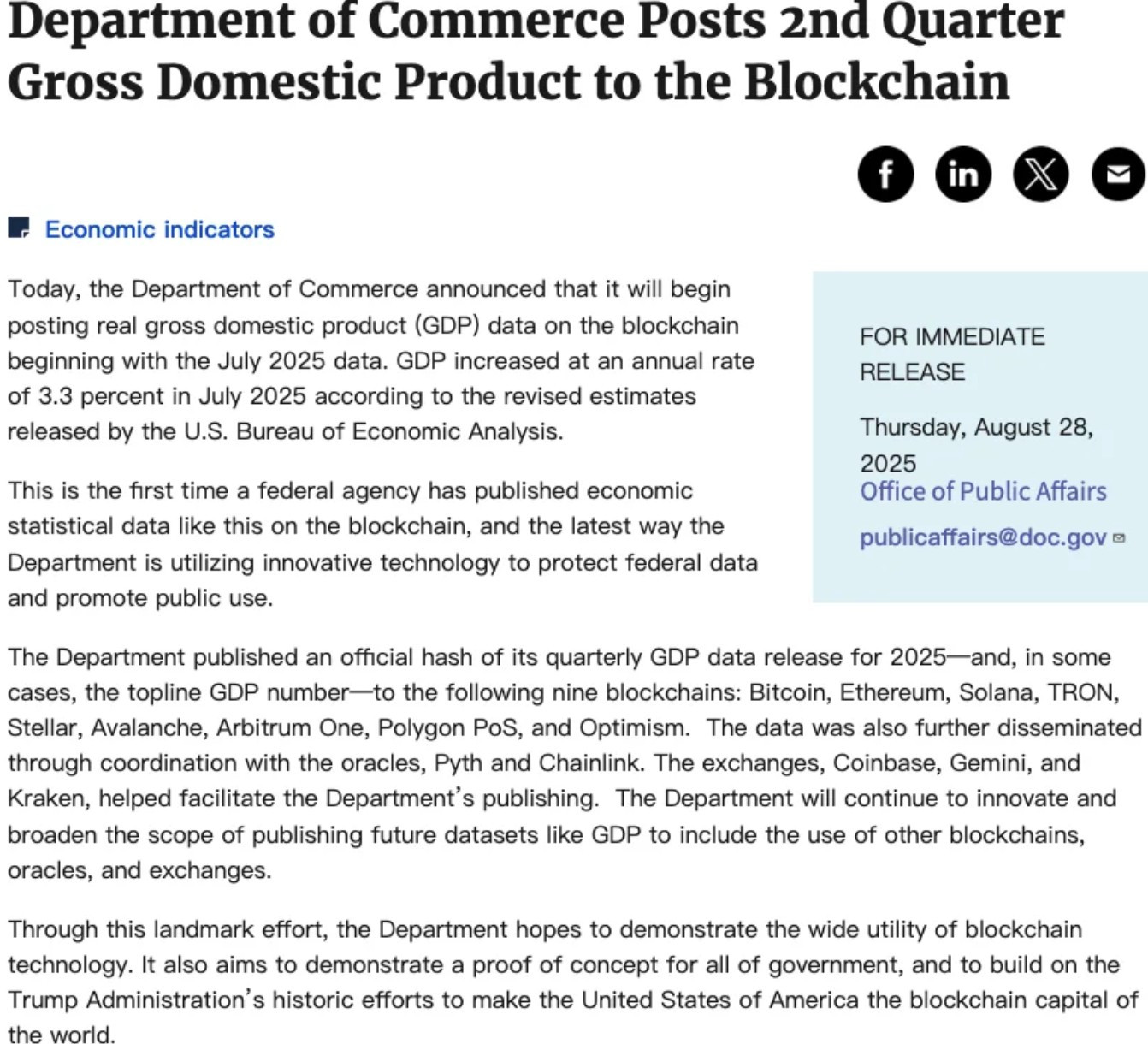
What exactly was put on-chain — and how?
The Commerce Department uploaded official hash values for quarterly GDP data (2025 series) to nine blockchains. The first hashed item released onto those chains was the July real GDP revision — reported as a 3.3% annualized quarterly rate.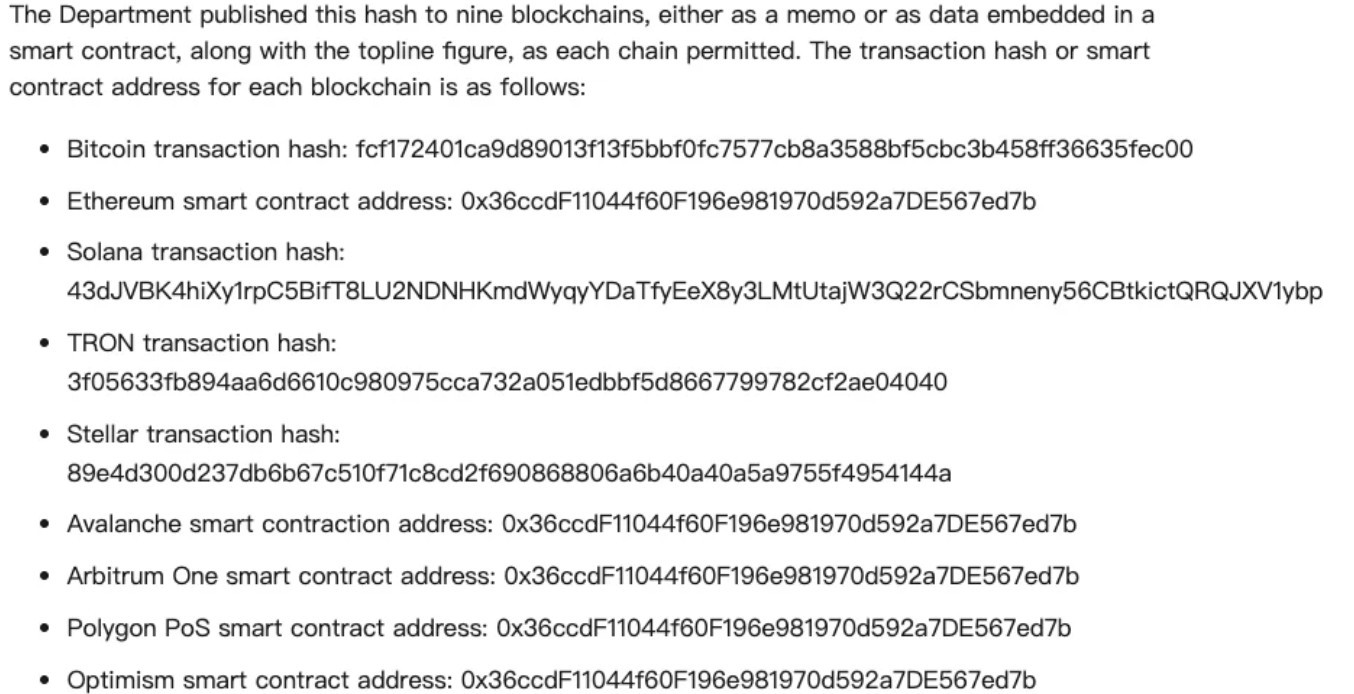
The package also included PCE price-index figures and domestic private final sales data and their respective annualized rates.
Those hashes are compact fingerprints. Anyone can compare the hash on-chain with a file’s computed hash to confirm authenticity. To propagate the information beyond single chains, the Commerce Department worked with Chainlink and Pyth — oracle networks that specialize in delivering off-chain data to on-chain consumers.
Who helped — and who paid for it?
The initiative wasn’t purely experimental. Coinbase, Kraken and Gemini collaborated with the Commerce Department; the government purchased cryptocurrency via these exchanges to cover transaction fees incurred when posting the hashes to public blockchains.
By working with established exchanges and oracle providers, the department ensured the hashes landed reliably on the targeted networks and were available to broader Web3 infrastructure.
Why builders and markets should pay attention
Chainlink framed the move as unlocking practical Web3 use cases. With official macro numbers available via verifiable on-chain anchors and distributed oracles, developers can create smart contracts that trigger on precise macro thresholds.
Examples include: lending protocols that adjust rates automatically to GDP trends; prediction markets that settle using the exact official figures; or automated trading strategies that react to PCE surprises.
These are not speculative hypotheticals. The availability of an authoritative on-chain pointer to official releases removes a long-standing technical hurdle: verifying that the “data feed” used by a contract exactly matches the government’s published number.
That verifiability reduces counterparty and oracle risk for on-chain applications that depend on macroeconomic truth.
Is this a technological advance — or a political message?
Both. Technically, it demonstrates a government agency experimenting with blockchain as a distribution and verification layer. Politically, it signals a degree of institutional acceptance: the Commerce Department has chosen public ledgers and decentralized oracles to anchor and disseminate market-moving statistics.
The move follows other federal and state experiments with blockchain for public services. Examples cited by officials include digital vehicle ownership trials and exploratory programs within homeland security. Anchoring GDP is arguably the most consequential experiment to date because macro releases directly move markets and policy expectations.
Limitations and caveats: hashes ≠ immutability of the underlying data
Important caveat: committing a hash to a blockchain does not make the data itself immutable on the government side. The production, revision, and methodology of GDP or PCE remain under the existing statistical processes.
Hashes provide proof that a particular published file existed at a given time and that its content corresponds to the stored fingerprint.
Critically, this does not resolve disagreements about methodology, nor does it prevent later revisions. If the Commerce Department revises a number, a new hash will reflect the revision — and markets will still need to interpret updates.
Skeptics who question the accuracy of official figures are not magically satisfied by on-chain publication; hash anchoring addresses provenance, not production.
Market and political implications: what to watch
For markets, the most immediate effect is lower friction for on-chain automated strategies and faster, more confident settlement in decentralized contracts.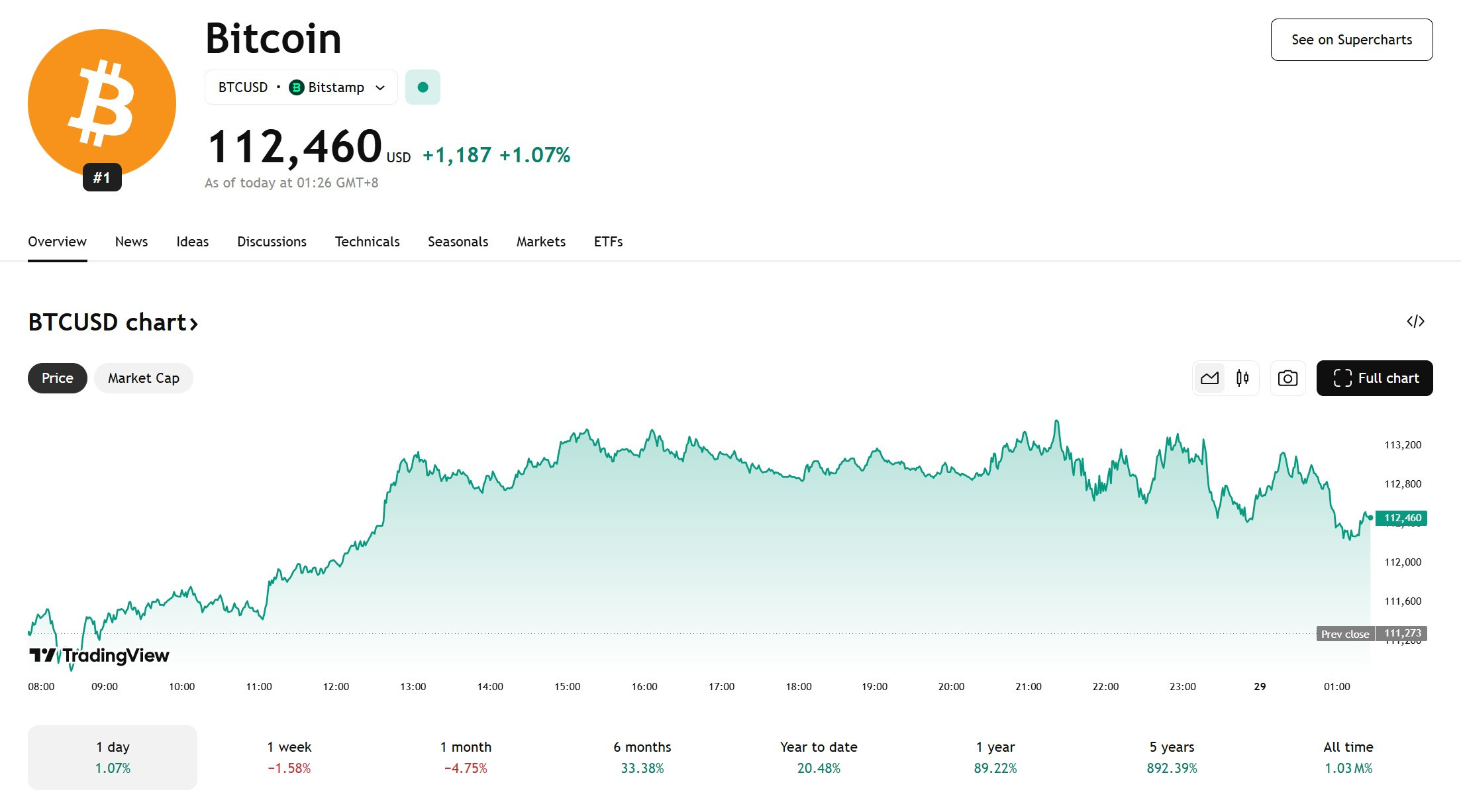 Prediction markets can now reference a government-signed anchor distributed across multiple oracle providers, reducing ambiguity at settlement.
Politically, this move is consistent with the current administration’s posture towards crypto infrastructure: the government is incorporating blockchain tools into its workflow while engaging industry players.
The involvement of major U.S. exchanges and oracle networks underscores how the private sector and regulators are co-designing new information pathways.
Risks, governance and concentration concerns
Anchoring official data to public chains raises governance questions. Which hashes should be trusted when multiple versions or revisions exist?
How will on-chain consumers handle conflicting or updated hashes? Reliance on particular oracle providers could introduce centralization risks; using multiple oracles mitigates but does not eliminate those concerns.
There are also operational questions: paying gas fees requires handling cryptocurrencies; government wallets and custody practices must be robust. The Commerce Department chose to buy crypto via exchanges for fee payment — an operational detail that invites scrutiny about custody, security, and transparency.
So what’s next — innovation or just proof-of-concept?
This rollout is a clear proof-of-concept with immediate practical consequences. DeFi protocols and automated systems now have a reliable anchor to build from. Expect developers to experiment with macro-triggered products, from inflation-indexed derivatives to GDP-linked debt instruments.
At the same time, adoption will be iterative. Not every DeFi builder will pivot immediately; many will wait to see how oracle reliability and revision handling evolve. Regulators and auditors will also study the approach to ensure audit trails and legal clarity for on-chain settlements tied to official statistics.
Bottom line: provenance unlocked, not data remade
By putting hashes of GDP and related statistics on multiple blockchains and working with Chainlink and Pyth, the Commerce Department has provided a verifiable provenance layer for some of the nation’s most important economic releases.
That matters for decentralized finance, prediction markets, and any application that needs an indisputable pointer to official macro data.
But the move is about trust in distribution, not about changing the numbers themselves. The underlying statistics still originate from the government’s standard processes.
What’s new is a practical, on-chain bridge between official macro data and programmable finance — and that bridge is likely to inspire a wave of experiments that test how far macro-driven smart contracts can go.