
Logic Shifts: Alibaba’s HK Stock Rises Over 18%

Alibaba has pulled off a small miracle in individual stock performance.
Last Friday, Alibaba’s U.S. stock surged 13%, and today it rose over 18% on the Hong Kong market.
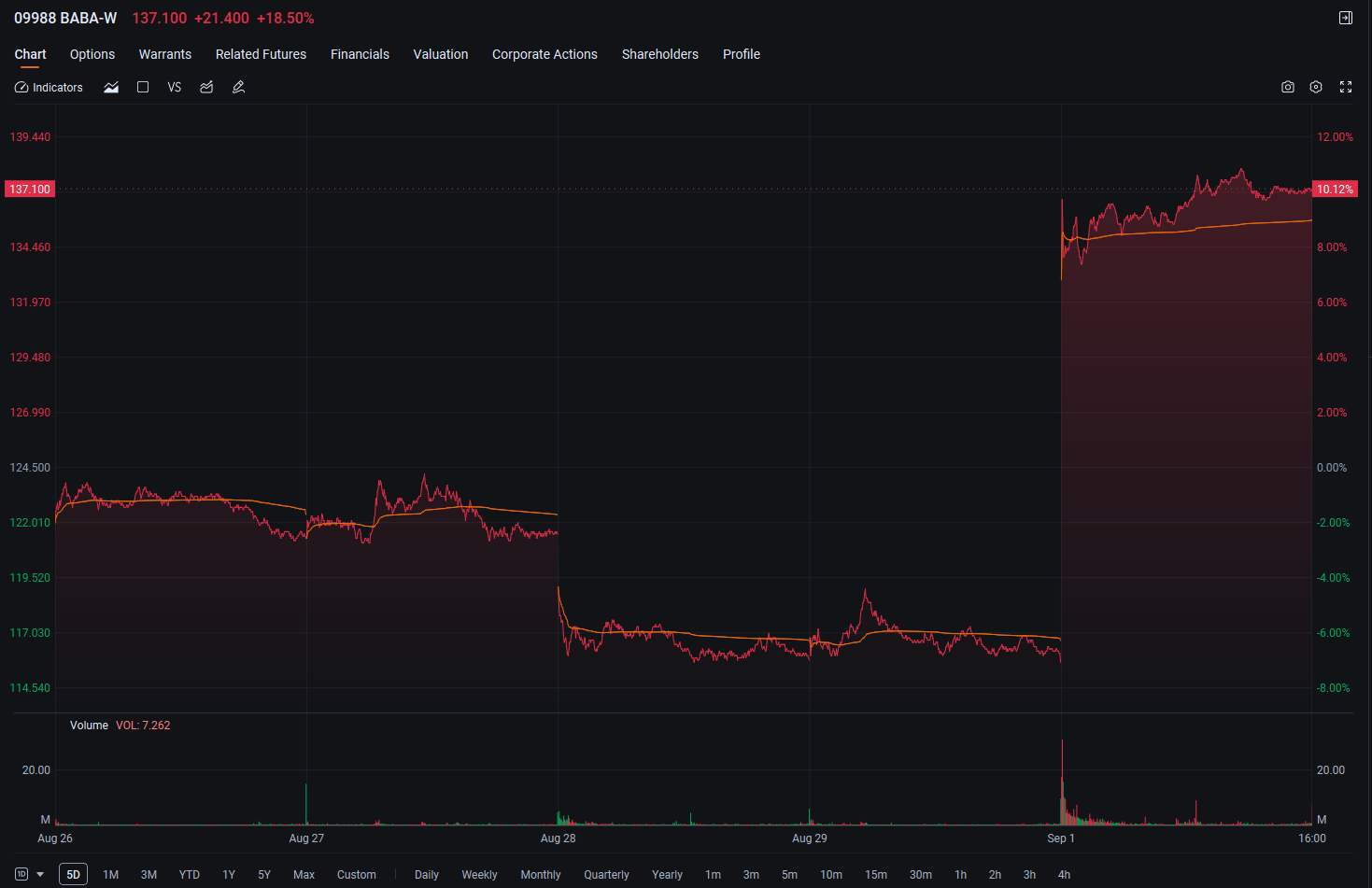
This turnaround follows the release of Alibaba’s impressive half-year results, shifting the market’s entire perception of the company.
The underlying logic of the market’s assessment has changed. Previously, investors viewed Alibaba as merely competing in food delivery price wars, at best a utility-like dividend stock. Now, it’s being repositioned as a tech growth stock.
Spotlight on Alibaba’s AI Business
Alibaba’s stock surge has refocused attention on the latest developments in its AI (artificial intelligence) business.
On August 29, Alibaba Group released its fiscal 2026 first-quarter results (for the three months ending June 30, 2025), reporting revenue of ¥247.652 billion, up 2% year-over-year.
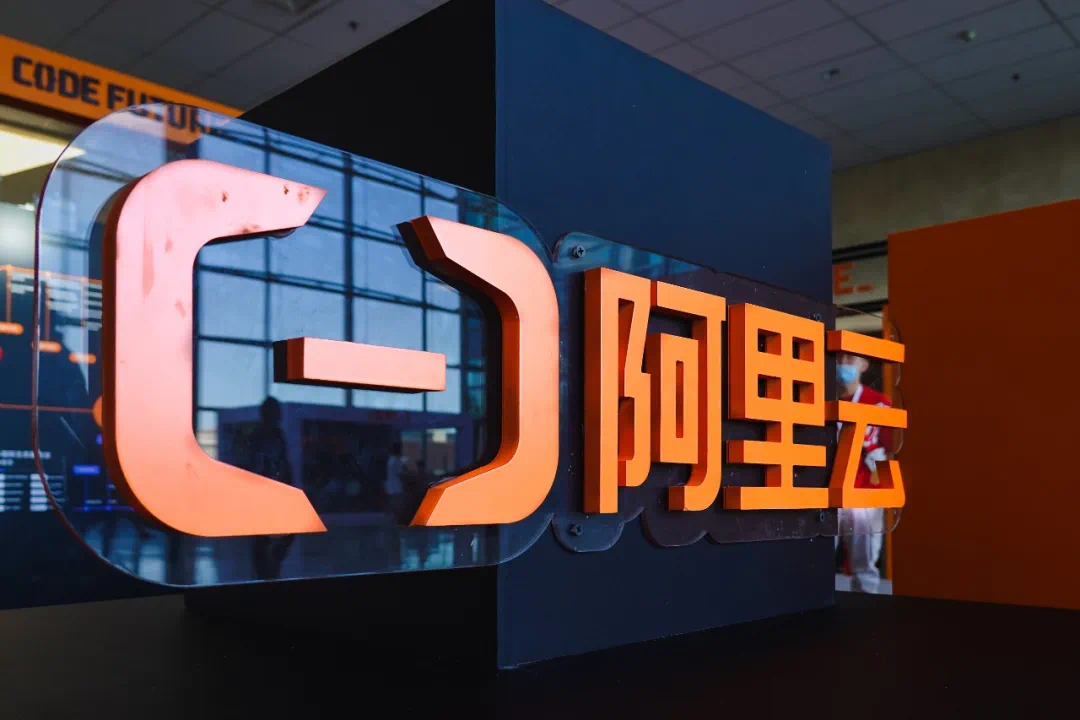
Excluding the impact of divested businesses, group revenue grew a steady 10% year-over-year. Non-GAAP net profit was ¥33.510 billion, down 18% year-over-year.
In this earnings report, Alibaba Cloud emerged as a major driver of group performance growth. The report highlighted that sustained investments in the “AI + Cloud” and consumption strategies have yielded strong results, with core business revenue growth remaining robust.
Alibaba Cloud revenue grew 26% to a three-year high, with over ¥100 billion invested in AI infrastructure and product development across the past four quarters. AI-related product revenue has achieved triple-digit year-over-year growth for eight consecutive quarters.
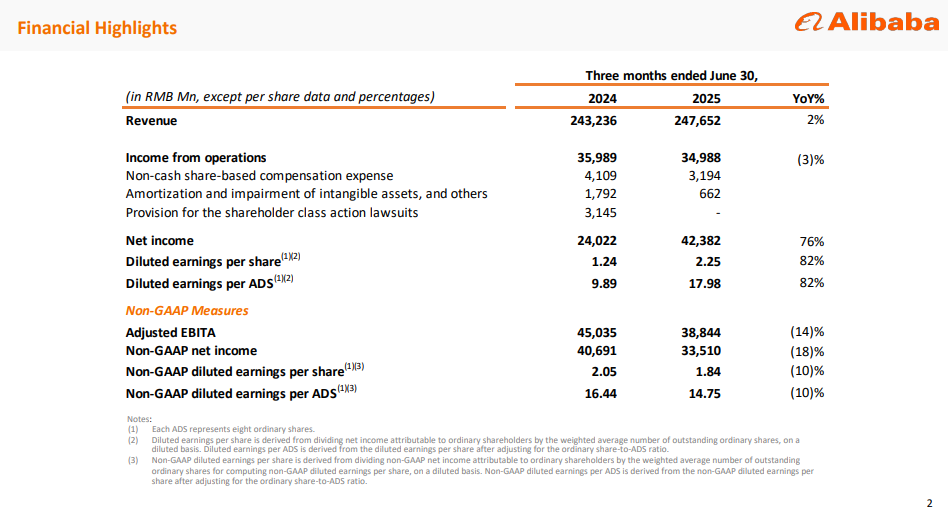
This quarter, Alibaba Cloud revenue rose 26% to ¥33.398 billion, with AI revenue now accounting for over 20% of external commercialized income. The company attributed the growth to the accelerating adoption of AI applications, increased customer acceptance, and rising demand for computing and storage products driven by AI.
During the earnings call that evening, Alibaba CEO Wu Yongming noted that the company invested ¥38.6 billion in Capex (capital expenditure) for “AI + Cloud” this quarter, with over ¥100 billion cumulatively spent on AI infrastructure and product development over the past four quarters.
On September 1, Alibaba (9988.HK) opened 14.95% higher at HK$133, a new high since March this year. By midday, the stock closed at HK$135.7, with gains expanding to 17.29%. Alibaba’s U.S. stock (BABA.N) rose 12.9% on August 29, closing at $135 with a market cap of $321.9 billion.
On August 29, foreign media reported that Alibaba is developing a new AI chip to fill the gap left by Nvidia in the Chinese market. The chip is currently in the testing phase, targeting a broader range of AI inference tasks and compatible with Nvidia’s architecture. Alibaba has not commented on this.
On the evening of August 31, market rumors claimed Alibaba procured 150,000 GPU chips from Cambricon. An Alibaba Cloud representative denied the rumor.
In late February, Alibaba announced a ¥380 billion investment over three years to build cloud and AI hardware infrastructure, launched its instant retail business in late April, and in July committed ¥50 billion to the consumption sector to seize growth opportunities in AI and consumption strategies.
During the post-earnings call, Wu Yongming emphasized the company’s commitment to its three-year plan, investing ¥380 billion in cloud computing and AI. He also noted that, given policy and supply changes in AI chips, the company has developed contingency plans, collaborating with diverse partners to handle supply chain disruptions.
Regardless of industry shifts, Alibaba will proceed with its ¥380 billion Capex plan.
This year, Alibaba Cloud has been active in AI model development. On July 22, its Qwen3 flagship model received a major update with the open-source Qwen3-235B-A22B-Instruct-2507, topping five key global rankings on the Chatbot Arena platform.
On July 23, the new AI coding model Qwen3-Coder was open-sourced. On July 25, the Qwen3 inference model was open-sourced, becoming the world’s strongest open-source inference model.
In infrastructure, Alibaba Cloud has added eight new data centers this year in Beijing, Shanghai, Hangzhou, Thailand, South Korea, Malaysia, Dubai, and Mexico. Its global infrastructure now spans 29 regions and 89 availability zones.
On September 1, international research firm Frost & Sullivan released its latest *China GenAI Market Insights: Enterprise-Level Large Model Invocation Panorama Study, 2025*, showing explosive growth in China’s enterprise-level large model usage.
The average daily invocation volume in the first half of 2025 grew 363% from the end of 2024, exceeding 10 trillion tokens, with Alibaba’s Tongyi holding a 17.7% share, ranking first as the most adopted model by Chinese enterprises.
CICC’s research report noted that Alibaba Cloud’s quarterly Capex reached ¥38.676 billion, up 220% year-over-year and 57% quarter-over-quarter, with both cloud revenue and Capex significantly exceeding expectations.
Combined with Tencent’s annual Capex plans, Tencent and Alibaba’s 2025 Capex will total ¥227 billion, a 52% increase, driving significant demand for AIDC (intelligent computing center) equipment. This will benefit the three key challenges of power supply, energy conversion, and cooling in a compute-power synergy model.
Has the Logic Changed?
The significance of this earnings report lies in its sudden revelation that Chinese internet companies share similarities with the U.S. “Magnificent Seven,” with AI now profitable and not just focused on current earnings but also making bold investments for future profits—a classic tech growth stock strategy.
The core of this shift is that the market once saw Alibaba, Meituan, and JD.com as low-tier players in the food delivery wars. Now, it recognizes them as tech growth companies at heart.

Overall, Alibaba not only provides cloud computing power to clients but also software services, system integration, management capabilities, and even chip services. Rumors from overseas media suggest Alibaba’s self-developed AI chips may be sold externally, though this remains unconfirmed or unrefuted. Alibaba’s self-developed chips are a fact, previously used internally.
If sold externally, per the Wall Street Journal, they might even replace Nvidia, though I consider this unlikely.
In summary, Chinese internet giants like Alibaba, through their Q2 reports, have prompted the market to realize they are not utility companies or “Hang Seng food delivery” firms but true tech growth companies. This is a significant shift—valued at 10x as a delivery player, they could fetch 30-40x as tech growth stocks.
In a research report dated August 31, Morgan Stanley gave Alibaba a positive “China’s Best AI Enabler” rating, raising its Alibaba Cloud valuation from $60 to $67 per share, reflecting its AI-era growth potential.
The report concluded that while market attention should focus on the return on investment in instant e-commerce, Morgan Stanley believes Alibaba, with China’s largest cloud infrastructure, is the primary channel to capture China’s AI demand growth. The revised target price of $165 signals confidence in its long-term profitability.