
How Much Should Gold Account for in a Portfolio? Top Hedge Fund Provides the Answer

As gold prices hit record highs and bond yields in the US, UK, and France rise due to various political issues, financial turbulence in September seems inevitable. As a traditional “safe haven,” gold has undoubtedly become a hot favorite among investors.
So, what should the optimal allocation of gold be in a portfolio to maximize its impact? In a newly released report, the renowned hedge fund DE Shaw delves into this question, concluding with a recommended range of 6.5% to 9%.
The report uses an uncommon acronym, “NPSOV” (non-productive store of value), to describe gold—a concept that could also apply to assets like Bitcoin, diamonds, fine wines, or famous artworks.
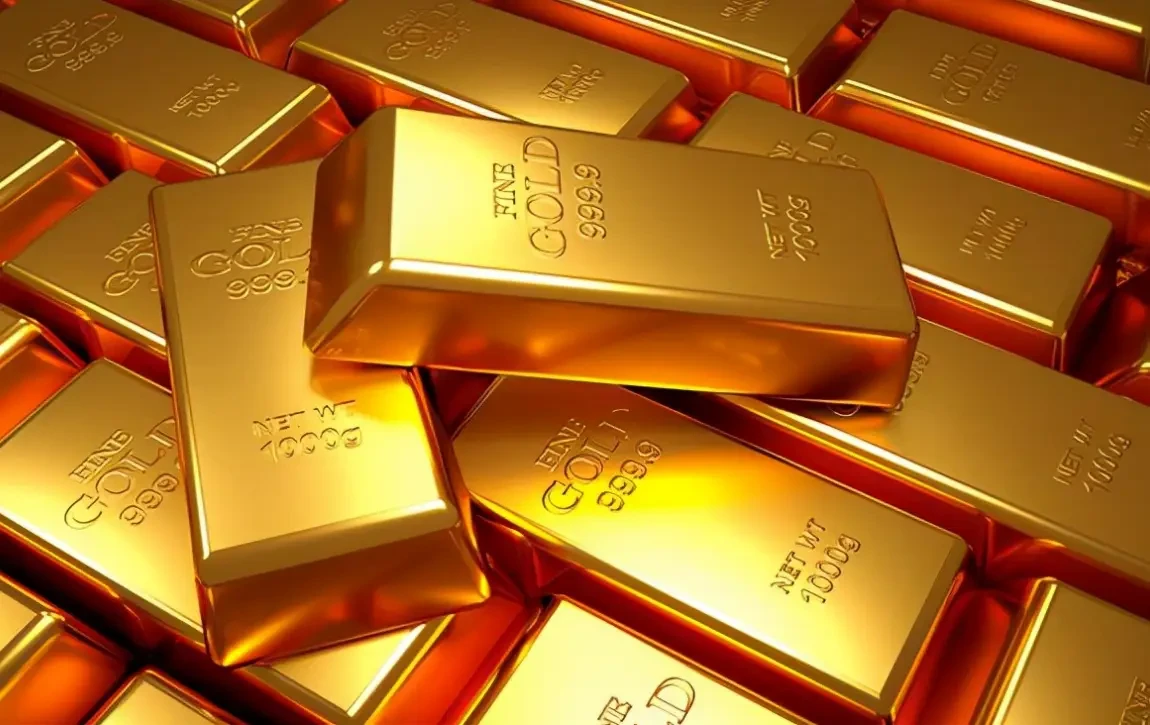
“As an NPSOV, gold presents unique modeling challenges. It generates no income, has limited industrial uses, its return drivers are variable, and its long-term upside potential remains unclear. Moreover, like all NPSOVs, if society collectively decides to stop attributing value to gold, it could become worthless at any moment,” noted the firm, which manages $55 billion in assets.
So, how should one begin valuing it? This starts with an intriguing perspective: gold’s value growth should align with the growth of global wealth.
DE Shaw points out that since 1975, when data became more reliable, gold’s share of total liquid wealth in developed markets has typically ranged between 1.8% and 7.3%, though it has occasionally exceeded this range, as it has now.
The question then becomes: what is the growth rate of wealth? GDP is a good starting point, but wealth growth has sometimes outpaced economic growth. Over the past 50 years, wealth has grown 2.4 percentage points faster than the economy. If this trend continues, it implies an annual wealth growth rate of about 5% (assuming a global economic growth rate of 3%).
However, the report cautions that the growth of gold supply must also be considered.
“During our study period, gold supply grew by about 1.6% annually, though some of this may already be reflected in prices. On the other hand, if central banks continue to boost reserves during geopolitical tensions, the increase in supply will be partially offset,” the hedge fund stated.
The report notes that gold’s value growth can be based on various assumptions. DE Shaw ultimately assumes a return premium of 0.5% above the inflation-adjusted risk-free rate annually, with volatility around 15%, consistent with historical averages. This may not sound particularly impressive.
The hedge fund then introduces another perspective: gold’s value depends on its correlation with stocks and bonds. At times, gold’s correlation with stocks, especially inflation-linked bonds, can be quite strong. However, over the long term, its correlation with stocks, bonds, and inflation is relatively loose.
“These (low) correlations matter. Gold’s lack of significant correlation with stock risk provides potential utility for a portfolio primarily composed of stocks and bonds. Even if, as noted earlier, gold’s risk-adjusted expected returns do not offer an advantage over traditional assets, this remains true,” the report states.
Additionally, the report highlights an important correlation point: gold’s role in a portfolio also depends on the correlation between stocks and bonds.
“Thus, all else being equal, in an environment where stocks and bonds are positively correlated, the potential portfolio utility of gold would increase, even if our forecasts for gold remain unchanged,” DE Shaw wrote.
Finally, DE Shaw assumes investors allocate to gold partly as a hedge against market crashes (if not for this purpose, gold’s utility would be greatly diminished).
The hedge fund concludes that if stocks and bonds are negatively correlated, the optimal allocation is 6.5%; if positively correlated, it rises to 9%.
“However, it’s troubling that the correlation between stocks and bonds over the past 12 months has been nearly zero,” the report added.