
When rates bite: is a 5% 30-year Treasury rewriting the Fed’s script?

A replay of late-cycle anxiety arrived this week when the U.S. 30-year Treasury yield rose to about 5% — a technical and psychological threshold that forced investors to reprice risk and drag U.S. equity indexes lower.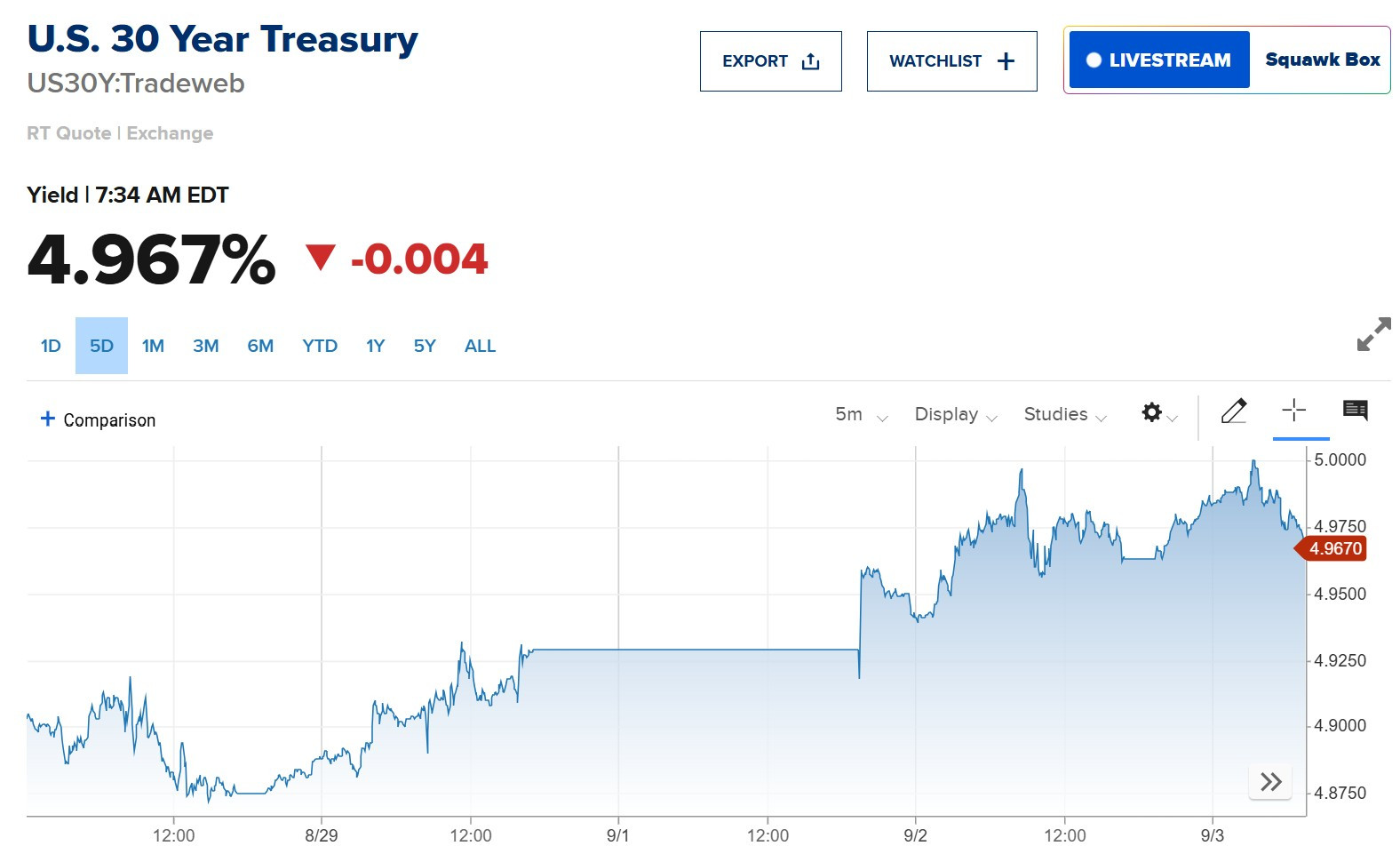
The immediate message is blunt: long-term borrowing costs are moving independently of short-term policy bets, and that disconnect complicates the Federal Reserve’s path. Global long-dated yields jumped alongside the U.S. move, reflecting wider fiscal and supply worries.
Equities felt it. Growth and tech shares — most sensitive to discount rates — led the slide as volatility measures ticked up, underscoring how a single pop in the long end can ripple through risk assets.
Key Points
- The U.S. 30-year Treasury yield touched roughly 5.0%, its highest since July.
- The move came amid a broader global selloff in long-dated government bonds driven by fiscal and supply concerns.
- Major U.S. equity indexes fell on the day, with tech names particularly affected and volatility rising.
- Markets still price a Federal Reserve rate cut in September, reflecting dovish signals from policy makers — but long yields are signaling different risks.
- Analysts highlight the coming nonfarm payrolls and the unemployment rate as decisive for whether a September cut remains likely.
What happened, in plain terms? — And why people are worried
The long end of the curve moved because investors demanded more compensation for holding long-dated government paper. That demand spike reflected two things: rising concerns about government finances and the prospect of heavier bond issuance.
Technically, the 5% mark is a round number that triggers behavioral and algorithmic thresholds. Market participants often treat such integer levels as psychological triggers, and that can accelerate selling once they are breached.
Equities reacted quickly. Higher long yields lift discount rates used in equity valuations, squeezing the present value of future profits — a particularly acute issue for growth and technology stocks. Volatility rose as investors reassessed risk premia.
Is this a policy failure or a fiscal story? — Which matters more now?
The short answer: both. The Fed’s near-term stance is focused on inflation and labor market data, while bond markets are increasingly signalling worries about fiscal sustainability and supply. Those are distinct drivers and can pull in different directions.
Policy-rate expectations have shifted toward a September cut because of dovish messaging from the Fed. But long yields reflect the return of supply concerns and inflation risk over the long haul — risks that monetary policy can only partially offset.
If fiscal dynamics force persistent higher long rates, the Fed faces a trade-off: easing to support growth while longer yields undercut that support by tightening financial conditions. That makes the policy path more complicated.
Who’s most exposed, and why should investors care? — Quick guide
Interest-rate sensitive sectors — notably high-growth tech — bear the brunt because higher yields reduce the present value of distant earnings. Even strong companies can suffer when discount rates jump.
Long-duration bond holders and mortgage markets also feel the pain: higher 30-year yields translate into higher borrowing costs for governments and, eventually, consumers. That raises worries about refinancing stress and broader economic drag.
Finally, volatility and algorithmic selling can amplify moves at round-number breakpoints. Market structure means a technical breach can quickly become a fundamental story.
The data to watch next: will nonfarm change everything? — What really matters this Friday
The employment report is the immediate pivot point. Economists expect modest payroll gains; but analysts say the unemployment rate and revisions will matter most for Fed calculus and market sentiment.
If unemployment ticks higher or prior months are revised down significantly, bond demand for safe, long-dated paper could rise — pressuring yields the other way. Conversely, stronger jobs could bolster confidence in growth, but might also reduce the case for an imminent Fed cut.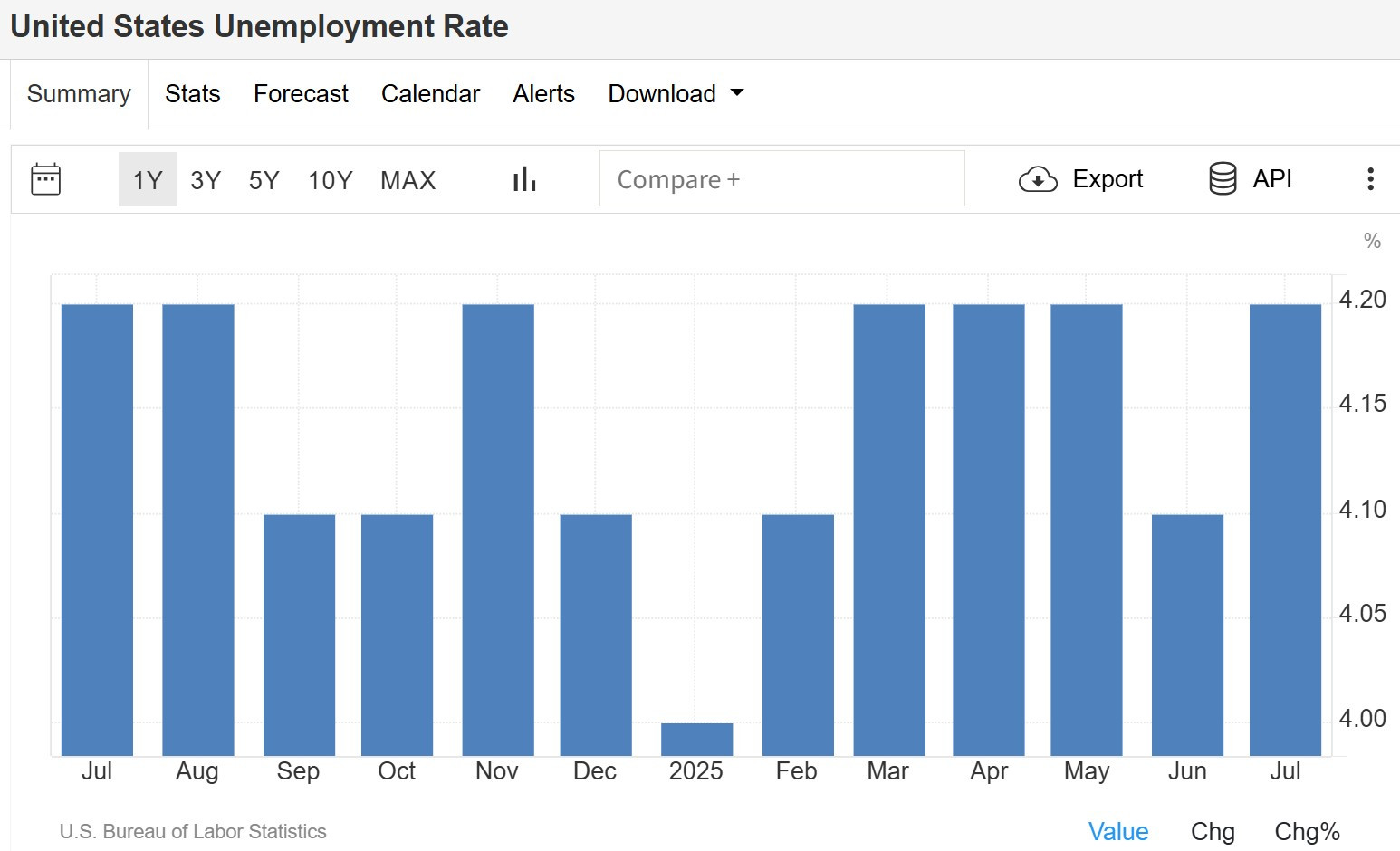
In short: markets will parse not just the headline payroll number, but the unemployment rate, sector composition, and revision pattern. Those three elements could determine whether the Fed’s expected path remains intact.
How policymakers and strategists are reacting — voices and warnings
Fed officials’ recent dovish remarks have lowered the bar for a September cut, but many strategists warn that the long end’s move complicates the narrative. Markets are now balancing a Fed likely to ease in the near term with a long bond market that isn’t convinced the inflation or fiscal story is settled.
Analysts caution that political or policy shocks (including tariff or revenue swings) could further unsettle bond investors — brightening the spotlight on fiscal credibility. That is part of why global long yields have climbed in unison.
Practical implications for portfolios — what investors might consider
Reassess duration exposure. If you’re overweight long bonds or ultra-growth stocks, a higher-yield regime matters. Shorter duration instruments can blunt sensitivity to further long-rate spikes.
Monitor cash and liquidity. Sharp yield moves can widen bid-ask spreads and reduce liquidity in stressed markets. Keep execution costs and stop-loss triggers in mind.
Diversify sources of return. In uncertain macro regimes, a mix of value, income, and real assets can offer resilience as yield dynamics and growth signals tug in different directions.
What could change the story — upside and downside scenarios
Upside (for risk assets): a clear, weaker jobs print, coupled with signs of easing inflation, could restore confidence in a Fed cut and push long yields back down. That would lift equities.
Downside (for risk assets): renewed fiscal angst, heavier-than-expected supply, or a surprise pickup in inflation expectations would keep long yields elevated, tightening financial conditions and pressuring asset valuations.
Either path keeps markets sensitive. The key is that short-term policy bets and long-term fiscal realities may not move together — and investors should plan accordingly.
Final word — don’t ignore the signal
A 5% 30-year yield is more than a headline; it’s a reminder that the long end can assert its own logic. For markets already stretched on valuation and sentiment, that assertion can prompt rapid reappraisals. Investors should watch the jobless rate, revisions to recent payrolls, and fiscal developments closely in the coming days.