
€10 billion: Europe’s Largest PE Buyout of the Year Emerges

Recently, Reuters reported that private equity firm CapVest Partners is in negotiations to acquire a majority stake in German pharmaceutical company Stada Arzneimittel.
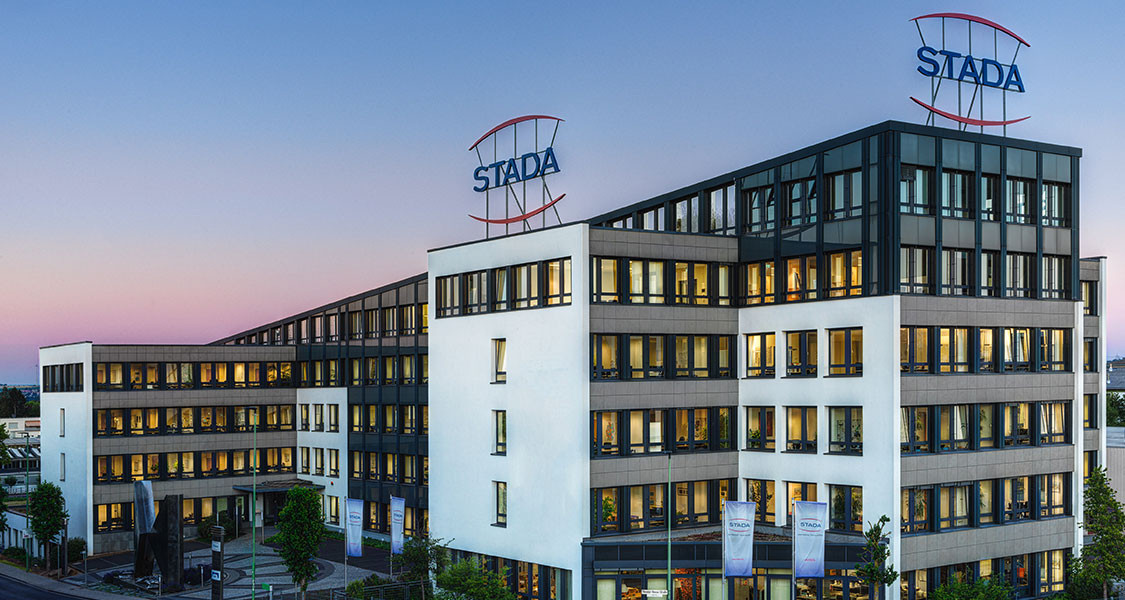
It is understood that CapVest will hold approximately 70% of Stada’s shares in the deal, with the company’s total valuation (including debt) potentially reaching around €10 billion (equivalent to nearly RMB 83.3 billion). The transaction is expected to close in early 2026.
Founded in 1999 and headquartered in London, CapVest has offices in New York and Dublin. To date, it has raised five main funds and two follow-on funds, totaling €4.2 billion in committed capital. Currently, CapVest manages approximately €5.5 billion in assets under management (AUM). For this acquisition of Stada, CapVest has garnered support from other institutional investors.
If the deal succeeds, it will rank among the largest mergers and acquisitions in Europe this year.
PE Giants in a Three-Way Battle, A Complex Merger Negotiation
Additionally, it’s known that PE giants Bain Capital and Cinven currently control Stada. In 2017, the two firms acquired Stada for €5.3 billion.
Prior to this transaction, Bain and Cinven had planned to take Stada public via an IPO, but for various reasons, Stada postponed its listing plans in March last year. The company had previously stated it was preparing for an IPO while also considering a potential sale.
Reports indicate that during this period, several investment firms were seen as potential buyers for Stada, including top PE players Clayton Dubilier & Rice, KKR, and CVC, as well as investment firm GTCR.
According to insiders, CapVest initially aimed to limit its stake in Stada to 50%. However, Bain and Cinven, the controlling shareholders, were reportedly “dissatisfied” with this proposal.
As a result, while Bain and Cinven engaged in deep negotiations with CapVest to push the deal forward, they also aggressively prepared Stada for an IPO to encourage CapVest to increase its stake. Ultimately, with support from existing institutional investors, CapVest raised its stake to 70%.
Further reports suggest that Bain and Cinven had planned to relist Stada on the Frankfurt Stock Exchange in Q2 2025, hiring Goldman Sachs and UBS as advisors. However, CapVest re-entered negotiations in September, raising its offer by about 12% above the IPO price range, prompting the sellers to abandon the listing.
Based on various reports, the process can be summarized as follows—though there may be gaps or inaccuracies, this is for reference only: Cinven initially sought to buy 50% of Stada, but Bain and Cinven pushed for a 70% stake.
However, Cinven’s offer for 70% didn’t satisfy Bain and Cinven, leading them to continue IPO preparations. Finally, CapVest increased its bid, sealing the deal. It was a winding road of repeated negotiations.
The transaction still requires routine approvals from German foreign investment and antitrust authorities.
Additionally, there’s speculation about whether Bain Capital is aggressively pursuing exits, as it is also handling the sale of its stake in Canada Goose around the same time.
A Temporary Slump, Snapped Up by PE Firms
Public records show that Stada Arzneimittel is a veteran drug manufacturer with several well-known over-the-counter (OTC) brands. Its origins trace back to 1895, giving it a 130-year history.
In 1895, pharmacists Rudolf Oetker and Gottfried Stada founded a pharmacy cooperative in Nuremberg, Germany, focusing on affordable generic drugs—the precursor to Stada.
After over 90 years of development, relying on a strategy of “decent quality at half the price,” Stada expanded its portfolio of over 200 generic drugs to 20 European countries. It earned the reputation as the “third pole” of Europe’s OTC market. In 1986, Stada successfully went public, listing on the Frankfurt Stock Exchange.
However, the good times didn’t last. Between 2000 and 2010, Stada acquired 3-4 regional drug factories annually, driving its debt levels sky-high. More critically, in 2016, the company faced management infighting and four consecutive downward financial forecasts, causing its stock to plummet 18% in a single day and its market value to shrink to just €3.4 billion.
Stada’s temporary downturn caught the eye of PE giants. In the eyes of private equity, a company like Stada—low-valued with high cash flow—is an ideal acquisition target.
Subsequently, under the leadership of PE giants Bain Capital and Cinven, Stada was privatized and delisted in 2017 for €5.3 billion, with the two controlling shareholders holding their stakes to this day.