
Europe’s Bond Market Is Flashing Red Again

Shearing sheep
September 4, 2025
GoGPT Summarizes Articles
September is usually busy for bond markets, but this year Europe has taken things to another level. On Tuesday, governments sold nearly €50 billion of debt in a single day — the largest daily issuance on record. At first glance, that may look like a success story, but the reality is more about the rising cost for European governments to borrow.
Yields Are Breaking Out
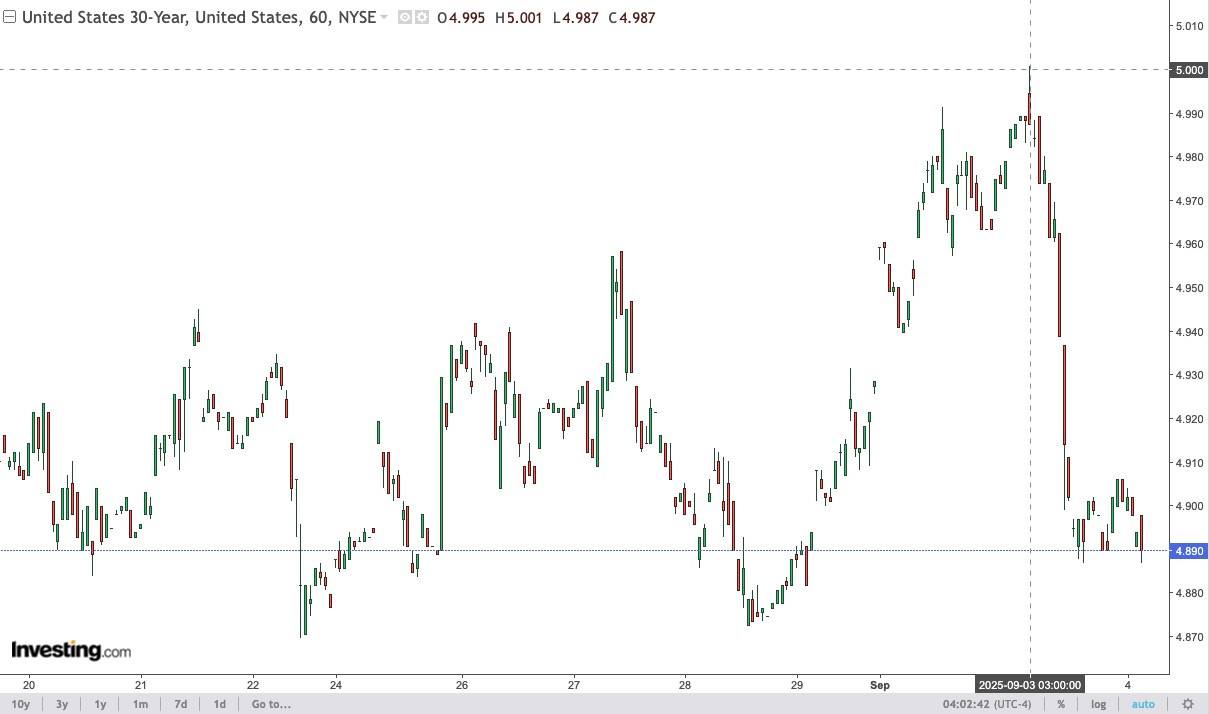
The global selloff has pushed long-dated government yields to levels we haven’t seen in years. The U.S. 30-year Treasury is again testing 5%, a psychological line that tends to reverberate across global curves. In Europe, the story is more acute. On Tuesday:
-
The UK’s 30-year gilt briefly touched 5.75%, the highest since 1998.
-
France’s 30-year bonds yield around 4.5%, a 16-year high.
-
Even German 30-year Bunds are near 3.4%, the highest in 14 years.
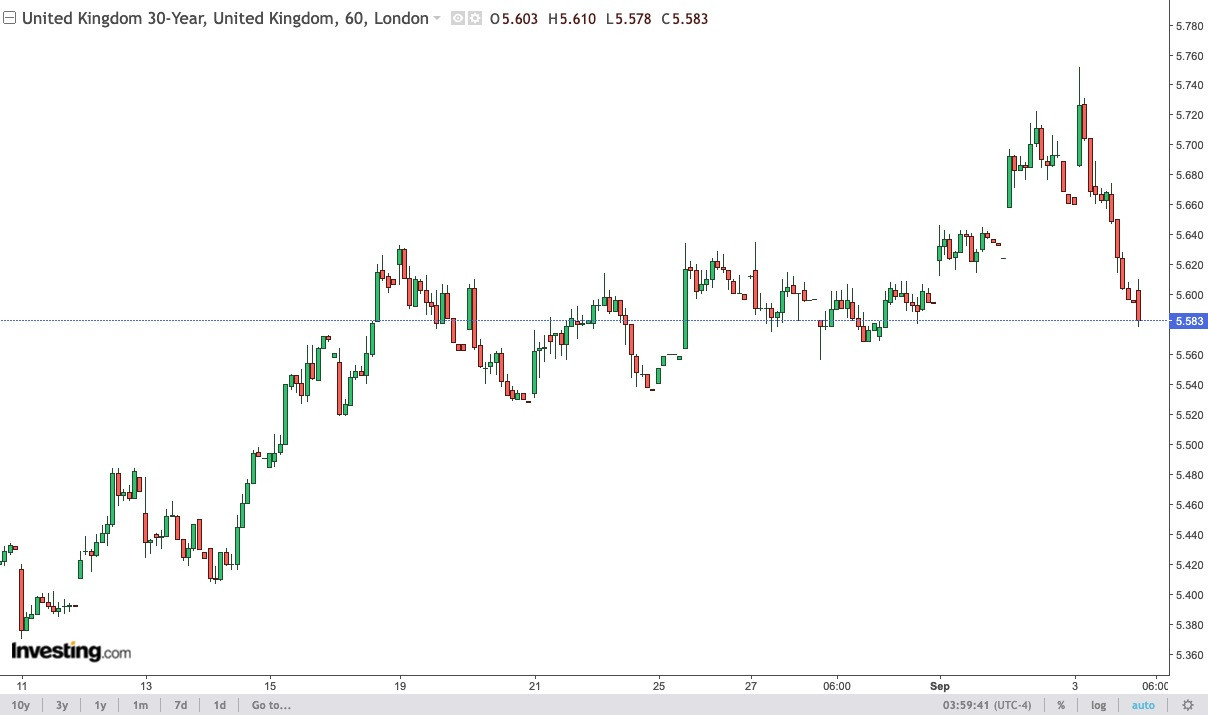
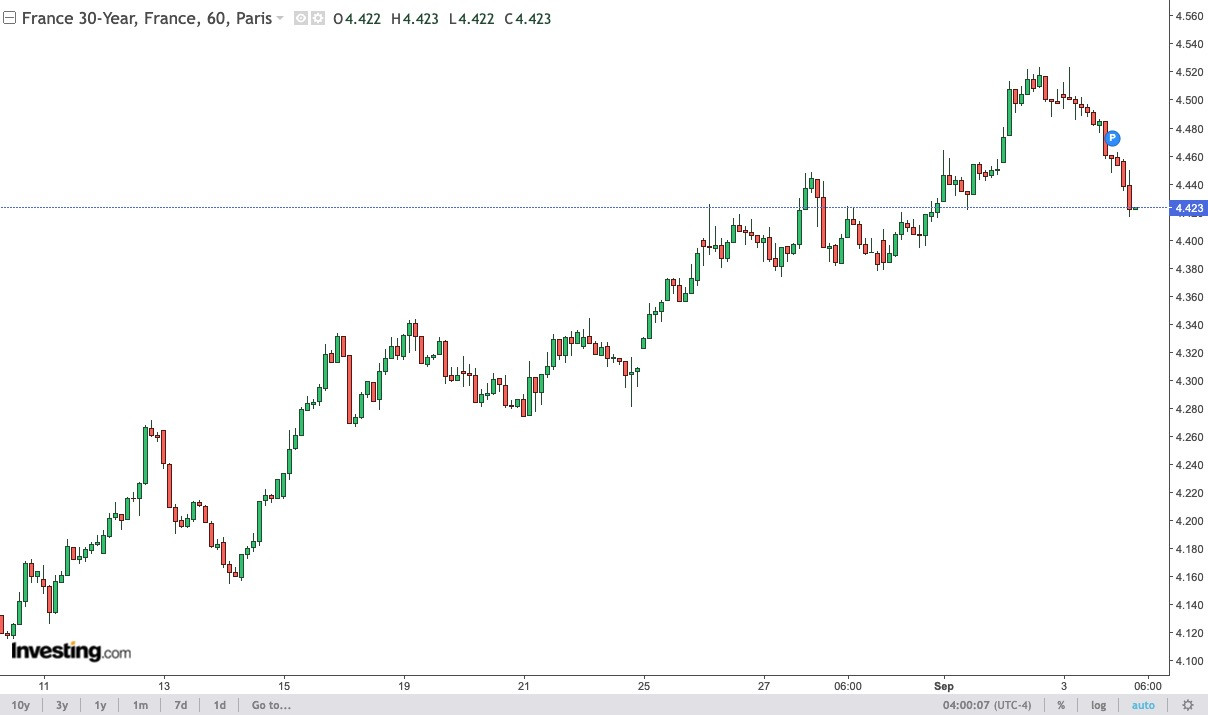
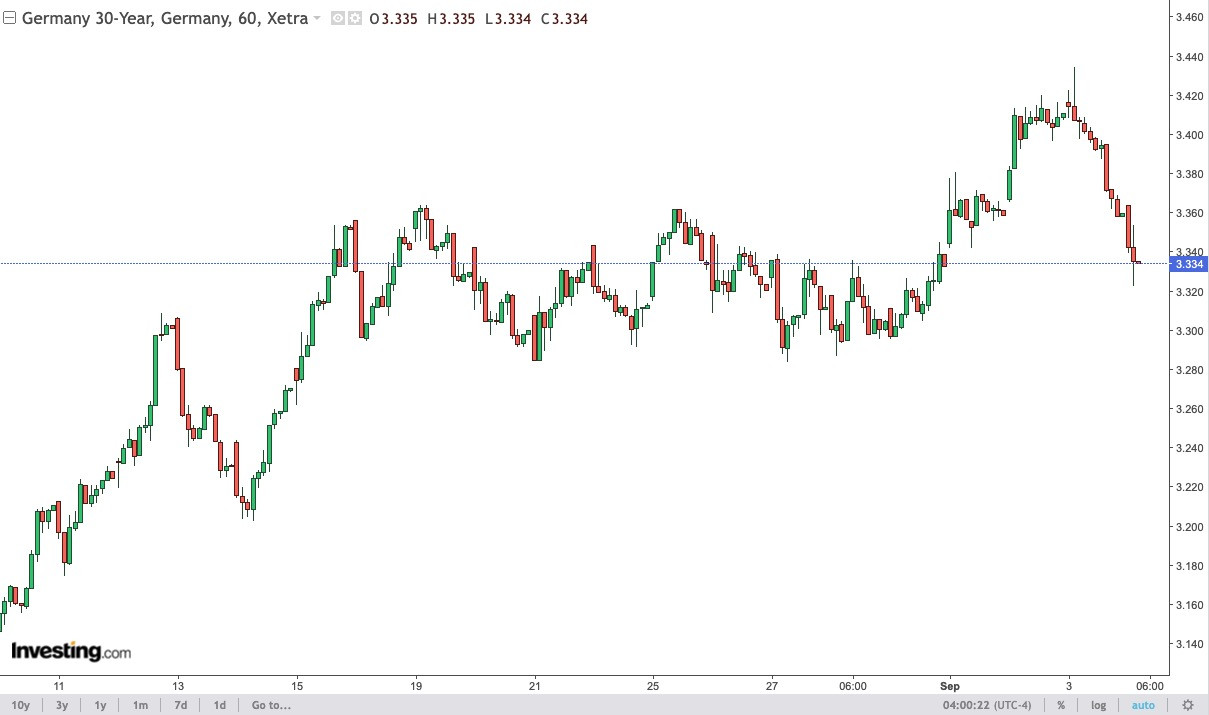
This isn’t just about one country. The entire long end of the curve is repricing. Investors want more compensation to hold bonds for 20–30 years, raising uncomfortable questions about debt sustainability. According to Guillaume Rigeade, Co-Head of Fixed Income at Carmignac, “If the political crisis in France worsens, the France-Germany yield spread could widen to 100 basis points for the first time since 2012.”
The market is pricing a higher term premium — essentially, extra yield investors demand for holding long-dated debt — amid sticky inflation, heavier public borrowing, and political noise around fiscal discipline (and, in the U.S., even around central-bank independence). The immediate price action has cooled at times, but the mood remains cautious with ultra-long borrowing costs near highs.
Demand Is There, But Supply Is Bigger
September is traditionally “back-to-work” for debt capital markets desks, and this year Europe is leaning hard into the window. Société Générale expects €100 billion+ of European sovereign issuance in September and October alone, on top of heavy supply from the U.S. and Japan.
Record issuance days may look impressive at first glance, but the reality is that yields are rising behind the headlines. Higher new-issue concessions are less necessary when the secondary market has already repriced. As Kenneth Broux, Head of FX and Rates Research at Société Générale, notes: “When supply surges, investors demand higher yields as compensation, which will likely amplify market volatility.”
Seasonality isn’t helping. Over the past decade, 10-year-plus government bonds have posted a median –2% return in September, the worst month for long-duration debt, as issuance spikes and macro data cluster. This year looks textbook.
Why the ECB Matters More Now
Part of the story is mechanical. The ECB’s balance sheet is shrinking: reinvestments under the pandemic emergency purchase program (PEPP) have ended, and the Eurosystem’s bond holdings are running off. IMF analysis estimates that the balance sheet began shrinking around €40 billion per month in 2025 after reinvestments stopped. This removes a price-insensitive buyer of last resort at the long end, leaving governments to absorb higher yields on their own.
As Paul Mielczarski, Macro Strategist at Brandywine Global, explains: “With inflation running high, investors need greater compensation to offset risks, and the lack of central bank support amplifies long-end pressure.”
France in the Crosshairs
Every crisis needs a weak link. In 2010–12 it was Greece; right now, markets are looking at France. Its debt-to-GDP ratio exceeds 110%, second only to Italy in the eurozone. Political instability, budget fights, and weak confidence in leadership have added a risk premium that’s starting to feel like the early days of the eurozone crisis.
We’re not suggesting France is the next Greece. But the widening France-Germany spread indicates that investors are starting to price political risk, not just economic fundamentals. Long-end yields are now acting as a political barometer, reflecting both fiscal pressures and policy uncertainty.
French Finance Minister Eric Lombard recently commented that seeking IMF support is “a risk on the table,” a statement that underscores market jitters about debt sustainability.
The Bigger Picture
It’s not just Europe. In the U.S., the 30-year Treasury is flirting with 5% again, and Japan is also ramping up long-dated issuance as the Bank of Japan gradually normalizes policy. Global investors — pension funds, reserve managers, insurers — have limited capacity. They can’t absorb all this supply without demanding higher yields.
Higher long-end yields feed back into multiple layers of the economy:
-
Governments face higher interest bills for decades.
-
Corporates see borrowing costs rise, slowing investment.
-
Politicians are forced into tough choices on spending and taxes.
What It Means
Europe isn’t in the middle of a 2010-style meltdown, but the warning signs are there. Bond markets are no longer treating European sovereign debt as a free lunch. Strong order books make headlines, but the reality is governments are paying up, and investors are testing just how much stress Europe’s finances can handle.
Record issuance is not a sign of strength; it’s a stress test. And right now, Europe’s bond market is flashing red.
From my perspective, investors need to be selective on duration and credit quality. Long-end yields may continue climbing, especially if fiscal discipline falters or inflation remains sticky. Europe’s high welfare commitments and geopolitical spending obligations suggest that markets are unlikely to get a reprieve soon. In other words, the euro bond market is signaling both risk and opportunity, but navigating it will require careful positioning.
#Breaking Macro Events: Market Impact & Analysis