
iPhone 17 Is Coming, Can Apple Spark the Market Again?

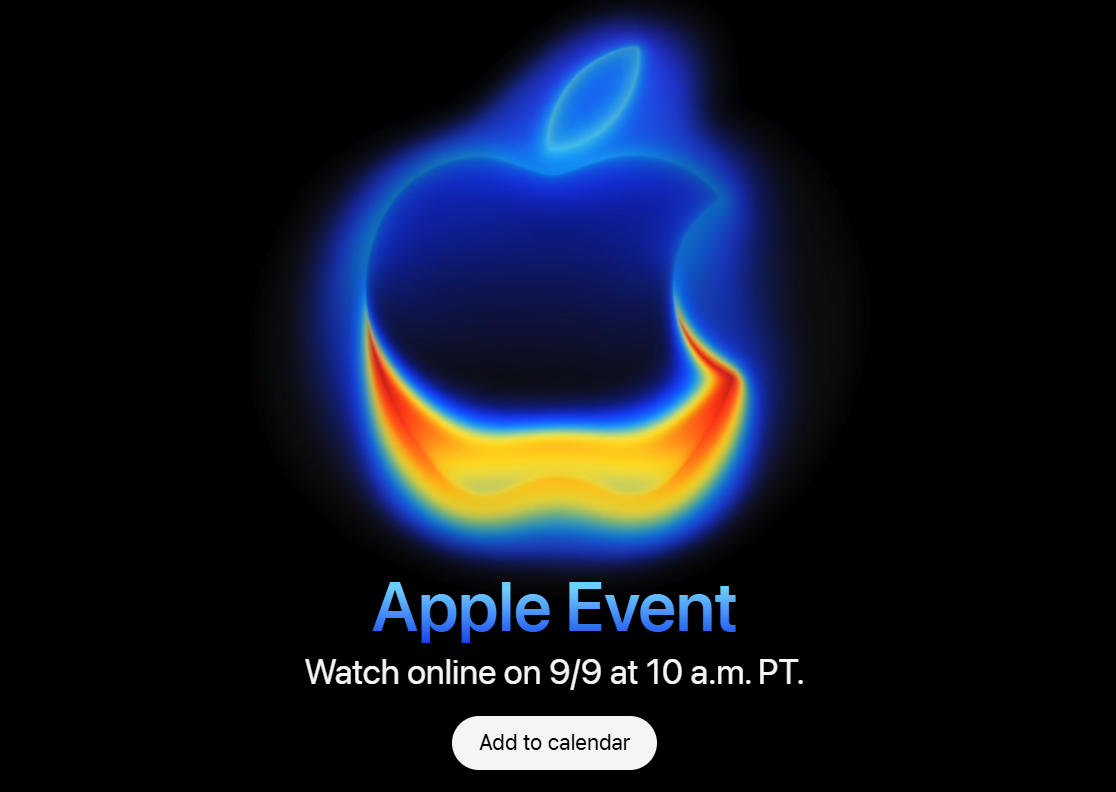
Apple has officially announced its annual fall event for September 9, with the theme “Awe Dropping.” As usual, the spotlight will be on the iPhone, this time the new iPhone 17 lineup. The big question is whether this launch will light up Apple’s stock again or if we will see the same old pattern of shares dipping on launch day before recovering later.
Four New Models With iPhone 17 Air Taking Center Stage
This year’s lineup will include four models: the standard iPhone 17, Pro, Pro Max, and a brand-new iPhone 17 Air. The Air replaces the Plus and is designed to be the thinnest and lightest iPhone ever.
The strategy is clear. The Pro series continues to target high-end users, while the Air is meant to attract a new group of customers who care most about sleek and lightweight design. For Apple, this marks the biggest upgrade to the iPhone lineup in three years.
Alongside the phones, Apple is expected to refresh the entire Apple Watch line with Series 11, Ultra 3, and SE 3, and could even unveil AirPods Pro 3. This is essentially a full-scale refresh of Apple’s core hardware ecosystem.
The Stock Market Pattern That Keeps Repeating
Here’s an interesting bit of history. On most iPhone launch days, Apple’s stock doesn’t rise—it falls. Since the iPhone 4, more than 70 percent of launch events have ended with a lower closing price. Why? Because expectations get priced in ahead of time, and no matter how exciting the event is, investors often focus on the negatives like higher prices, smaller batteries, or lack of a design surprise.
But the real story plays out after. Over the two months following an iPhone launch, Apple shares have risen 15 times, with 11 of those moves beating market performance, and gains reaching as much as 20 percent. The reason is simple. Consumers complain, but in the end, they buy. And the peak sales season runs from October into the holidays, which often drives the stock higher. For investors, the logic is clear: ride out the short-term dip, then enjoy the upside.
How Investors See This Launch
Wall Street has already staked out its positions.
Goldman Sachs expects the iPhone 17 upgrades and pricing to reignite replacement demand, projecting iPhone revenue growth of 5 percent in fiscal 2025 and 7 percent in 2026. But they remain cautious on the Air, worried that smaller batteries and downgraded cameras could limit its appeal.
JPMorgan is more upbeat. They see the Air as the potential star of the lineup and even a breakout hit. Apple is reportedly preparing 10 to 15 million units, which looks conservative. If demand surprises to the upside, the Air could unlock new momentum.
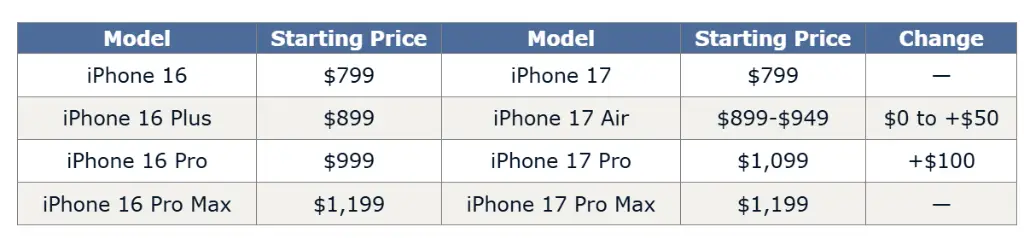
Pricing is expected to look like this:
-
iPhone 17 starting at $799 (unchanged)
-
Pro starting at $1,099 (up $100 but with doubled base storage)
-
Pro Max starting at $1,199 (unchanged)
-
Air priced between $899 and $949 (replacing Plus)
One key factor is the China market. Carrier and e-commerce subsidies kick in below 6,000 RMB, around $840. If the Air starts at $899, it won’t qualify for those subsidies, which could hold back sales. But if Apple sets the price closer to $800, it could significantly boost demand in China.
My Take
For me, the most important story this time is the Air. It has the potential to succeed where the Plus struggled, especially if pricing lands right. In China, it could even turn into a surprise bestseller.
On the stock side, I expect the familiar pattern to repeat. The share price may dip slightly on launch day, but as preorders and sales numbers roll in through October, sentiment should improve. By the end of the year, we could see momentum across consumer electronics stocks.
For long-term investors, Apple has followed the same script for more than a decade. Launch-day dips often turn into buying opportunities, and this year looks no different.