
August Nonfarm Report Imminent: How Do Markets and Wall Street View It?


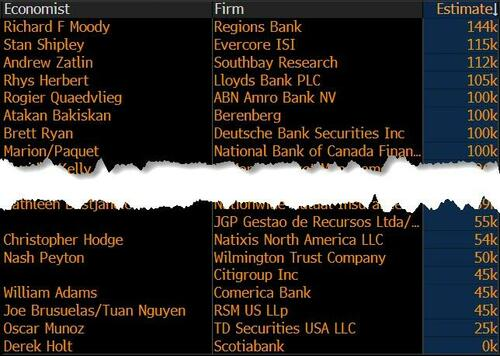
The US Bureau of Labor Statistics will release the August nonfarm employment report today, serving as a key reference for investors assessing the US economy and the Federal Reserve’s rate cut outlook. Economists expect US job growth in August to add 75,000 positions.
Top investment bank Goldman Sachs, however, forecasts an increase of 60,000 jobs, below the market’s widely expected 75,000 but above the three-month average of 35,000.

If the nonfarm data significantly underperforms expectations, it could reinforce doubts about a slowing US labor market, raising recession concerns and impacting markets. Conversely, if the data exceeds expectations, the market may see a reduced likelihood of a Fed rate cut.
Daniel Morris, Chief Market Strategist at BNP Paribas, believes the market won’t react significantly unless job growth deviates by about 150,000 from expectations, either higher or lower.
Market Expectations: Growth Slowing, Unemployment Rising
Based on a media-compiled market survey, economists predict 75,000 new nonfarm jobs in August, with a forecast range of 0 to 144,000.
The unemployment rate is expected to rise from 4.2% in July to 4.3%, still below the Fed’s projected year-end median of 4.5%. Wage growth is anticipated to increase 0.3% month-over-month, with the year-over-year rate slowing from 3.9% to 3.8%.
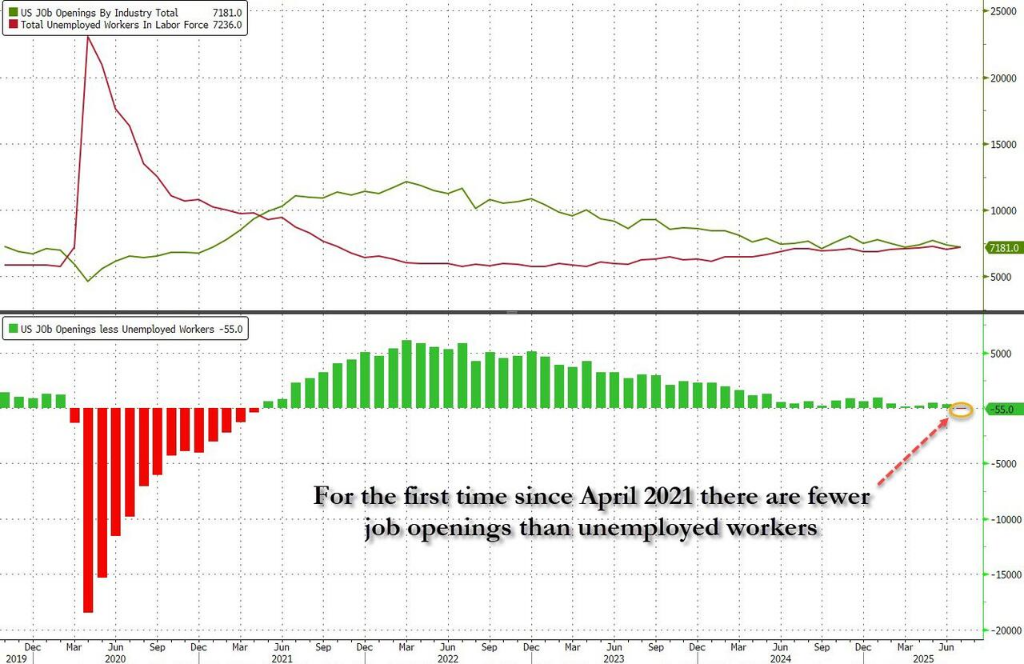
The market’s baseline expectation for this report is notably pessimistic. July’s nonfarm report was already weak, adding just 73,000 jobs, with a combined downward revision of 258,000 to the prior two months (May and June), revealing a labor market colder than initially thought. It was after this report that Powell acknowledged downside risks in the labor market, identifying unemployment as a core metric to watch.
When interpreting August data, several special factors need consideration. First, the “August initial bias” shows historical data where August nonfarm reports tend to be weak initially, often revised upward later. Over the past 15 years, August job growth has fallen short of expectations in 10 years, possibly due to seasonal adjustment factors.
Second, government policies are directly impacting the labor market. The Trump administration’s federal hiring freeze and layoffs are expected to continue dragging down government employment. Goldman predicts a 20,000 job loss in government sectors this August.
Additionally, a slowdown in immigration policy may affect industries heavily reliant on immigrant labor, where job growth has dropped from an average of 27,000 per month in 2024 to 4,000 per month in Q2 this year.
How High Is the 50 Basis Point Threshold?
With a 25 basis point rate cut in September fully priced into the market, all eyes are on the possibility of a 50 basis point cut. According to Standard Chartered, for a 50 basis point cut to be “on the table,” investors may need to see nonfarm job growth below 40,000, with unemployment at or above 4.4%.
JPMorgan’s market intelligence unit notes that a weaker-than-expected report will amplify calls for a 50 basis point cut. However, the real risk lies in unexpectedly strong data—such as job growth between 175,000 and 200,000—which could force the Fed to pause rate cuts.

The bank believes next week’s CPI data will be more critical than this nonfarm report, as a hot inflation figure combined with a strong jobs report is the most likely scenario to prompt a Fed pause.
Fed Governor and dovish dissenter Waller recently reiterated his call for rate cuts, suggesting the Fed should begin cutting this month and continue with multiple reductions over the coming months. However, he remains open to the specific pace, dependent on future economic data. Thus, tonight’s report will not only influence September’s decision but also shape market expectations for future rate cut paths.
Institutional Views
Kevin Simpson, Strategist at Capital Wealth Planning, notes that a September rate cut by the Fed is almost certain, which will impact refinancing and the real estate market, presenting opportunities in housing and real estate-related stocks, such as home improvement retailer Home Depot, a clear beneficiary of rate cuts.
Jimmy Lee from Wealth Consulting Group also sees a September rate cut as a done deal, with the market’s trading focus broadening. He advises investors to consider trimming positions in AI and past winners, expressing admiration for the performance of some top US companies but opting not to double down, instead ensuring a more diversified portfolio.

Matt Powers of Powers Advisory Group will focus on dividend-growth and dividend-paying stocks, such as FedEx and PNC Financial. Barbara Doran of BD8 Capital sees investment opportunities in cyclical consumer stocks, large retailers, and payment giant American Express.
Doran analyzes that since 2019, US household wealth has grown by about $40 trillion, with employment nearly full. Though many argue low-income households are under pressure, consumer spending data remains solid.
Tom Sosnoff, co-founder of options strategy firm Tastytrade, is shorting S&P 500 and Nasdaq 100 futures, predicting a market downturn on Friday. He added that he’s also shorting stocks he believes are overextended, including Microsoft and gaming company Roblox.