
AI Momentum or a Stretch Too Far?: Can Oracle’s Cloud Growth Justify a 40% Rally?

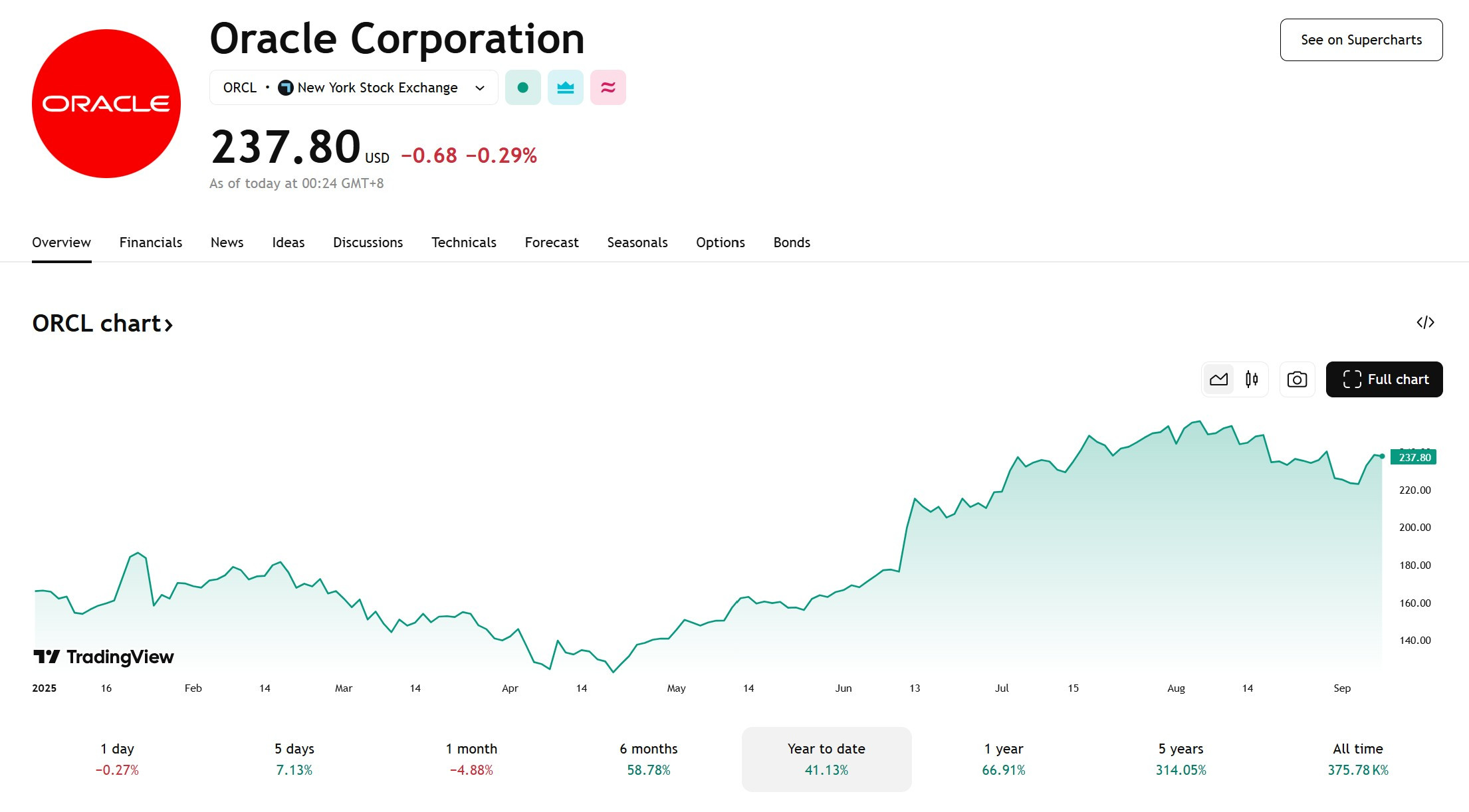
$ORCL needs to deliver another AI-driven acceleration in its upcoming fiscal quarter to validate this year’s more-than-40% stock surge. Analysts expect total sales to rise about 13% with cloud infrastructure sales expanding roughly 56% — results that would confirm AI demand is real rather than a temporary rerating.
Key Points
- Wall Street consensus: Q1 revenue ≈ +13%; cloud infrastructure (OCI) growth ≈ +56%.
- Oracle’s stock is up over 40% year-to-date, swelling market value by roughly $200 billion from recent highs.
- Prior quarter showed rapid cloud traction and a large remaining performance obligations (RPO) backlog (~$138 billion).
- Morgan Stanley and others have upped long-term revenue scenarios, with one base case nudging 2029 revenue toward $1.25 trillion under an AI-led ramp.
- Large multi-GW capacity deals with major AI tenants, including reported multi-year arrangements, are cited as a key demand driver.
Why expectations are so high — “What changed?”
$ORCL ’s cloud transformation accelerated last quarter, with infrastructure growth exceeding historic norms and a backlog signaling multi-year revenue visibility. That shift — and large reported cloud contracts — is the backbone of bullish forecasts.
Strategic deals with major AI tenants have amplified expectations. Reports of multi-year, multi-gigawatt capacity agreements have raised hopes Oracle will capture a sizable share of the AI compute market.
Numbers to watch — “What analysts are forecasting”
Consensus models peg fiscal Q1 top-line growth at roughly 13%, the fastest in over two years, with OCI forecast to expand about 56% year-over-year.
Adjusted EPS estimates sit modestly above last year’s level, reflecting revenue growth offset by higher capital spending.
Some research houses have ramped up long-run revenue scenarios, with one base case pushing 2029 revenue toward $1.25 trillion. These upside models hinge on AI infrastructure scaling and a material multi-year ramp in AI bookings.
What’s driving the revenue surge — “Where the growth is coming from”
Three engines fuel Oracle’s topline outlook: public cloud infrastructure rentals for AI workloads, cloud subscription conversions of legacy on-prem customers, and very large multi-year enterprise contracts that lift RPO.
OCI’s recent quarters already showed IaaS growth above 50%, reflecting both enterprise shifts and demand for GPU clusters. Management’s capex ramp and data-center buildouts are explicitly intended to turn demand into durable revenue.
Margin reality check — “Why more revenue can still mean lower margins”
AI compute is revenue-intensive and capital-heavy. Research firms warn that accelerating AI infrastructure will compress overall operating margins, even as revenue expands sharply. Lower gross margins on rented GPU capacity pull down blended profitability versus legacy software.
Analysts model Oracle’s non-GAAP operating margin easing from the mid-40s toward the high-30s by 2029 under an AI-heavy mix — a structural profitability shift investors must price in.
Customer concentration and dependency — “Is this growth durable?”
A sizable portion of forecasted AI revenue is linked to a handful of hyperscale AI customers; some estimates imply that one large AI customer could represent a meaningful slice of future receipts. That concentration raises execution and counterparty risk if client plans shift.
Oracle’s large RPO backlog offers visibility, but much of that value reflects contracted future capacity. Markets will want assurance that backlog converts to recurring consumption at expected margins.
Valuation tension — “Has the market overshot?”
Oracle’s forward P/E now trades well above its decade average and looks rich relative to large-cap tech peers, reflecting AI hopes baked into the price.
Some models suggest limited upside from current levels under base assumptions, though bull scenarios remain possible.
If revenue and margin trajectories match the most optimistic forecasts, multiple expansion is plausible. If growth disappoints, rapid multiple contraction is equally likely — a binary setup for investors.
Competitive landscape — “Who benefits if Oracle slips?”
Microsoft and AWS remain formidable incumbents for cloud compute and enterprise AI services. Competitors’ platform breadth and partner ecosystems mean Oracle must show not just large bookings but durable share gains in AI compute.
Smaller infrastructure providers and specialized GPU cloud vendors add supply options, pressuring pricing and customer choice. Oracle’s capital scale and customer contracts are key defenses, but they are not impregnable.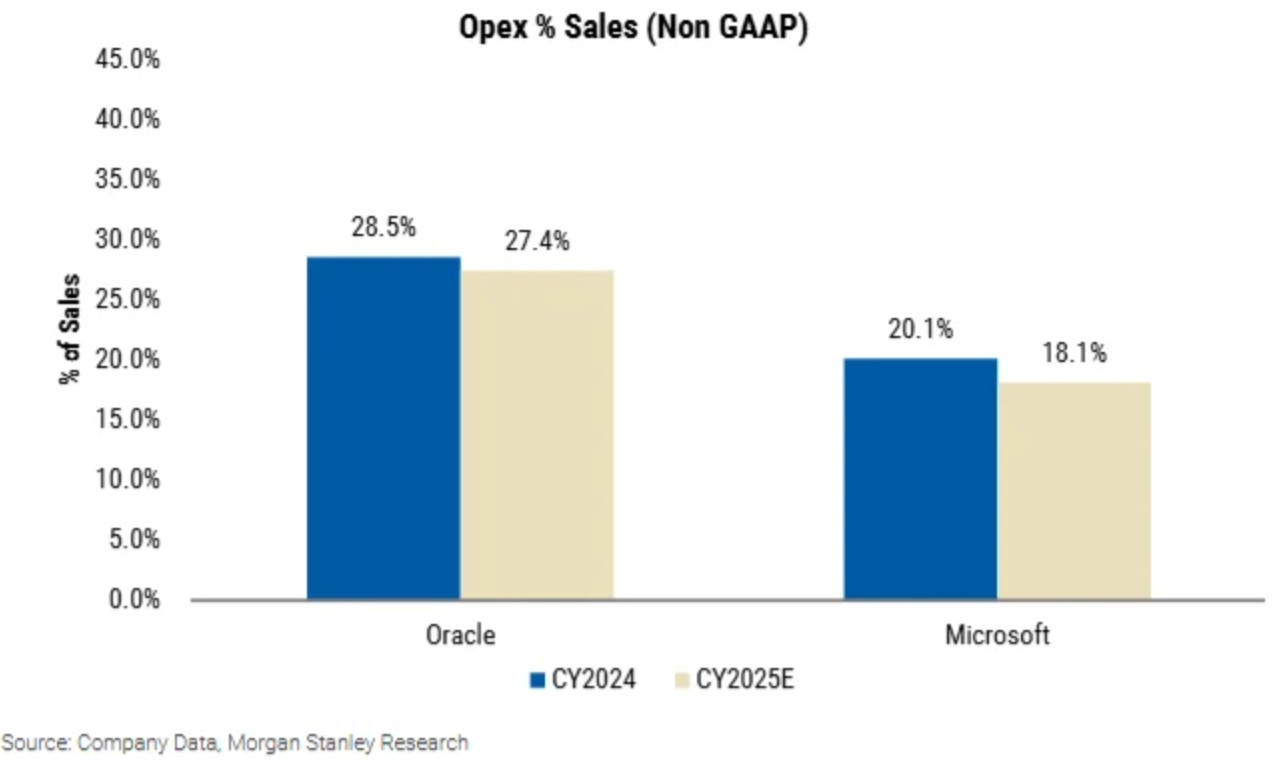
What to watch in the earnings release — the market’s checklist
1.OCI growth and sequential commentary on capacity constraints or timing.
2.RPO trends and clarity on when large contracts begin revenue recognition.
3.Capex cadence — how fast will Oracle spend to meet AI demand?
4.Margin commentary — will management set expectations for sustained margin pressure?
5.Client concentration disclosures and comments on multi-year deals tied to major AI customers.
Each item will shape whether investors reward Oracle with more multiple expansion or punish it for overreach.
Conclusion: rally built on durable demand — or a high-stakes bet?
Oracle’s shift from legacy software vendor to a major AI infrastructure provider has moved from possibility to visible reality. Recent quarters, backlog growth, and reported customer deals underpin bullish scenarios.
Yet the valuation now requires consistent execution: repeatable OCI growth, prudent capex deployment, and margin management. Earnings this quarter are the next inflection: deliver above expectations, and markets will reward; fall short, and the stock faces swift re-rating. For investors, Oracle is no longer a sleepy software cash machine — it’s a high-stakes growth story that must prove itself on the balance sheet.